The complete guide · Lesser Poland
Kraków
Poland's former royal capital and its best-preserved historic city, built around Europe's largest medieval market square and the cathedral on Wawel Hill.
Overview
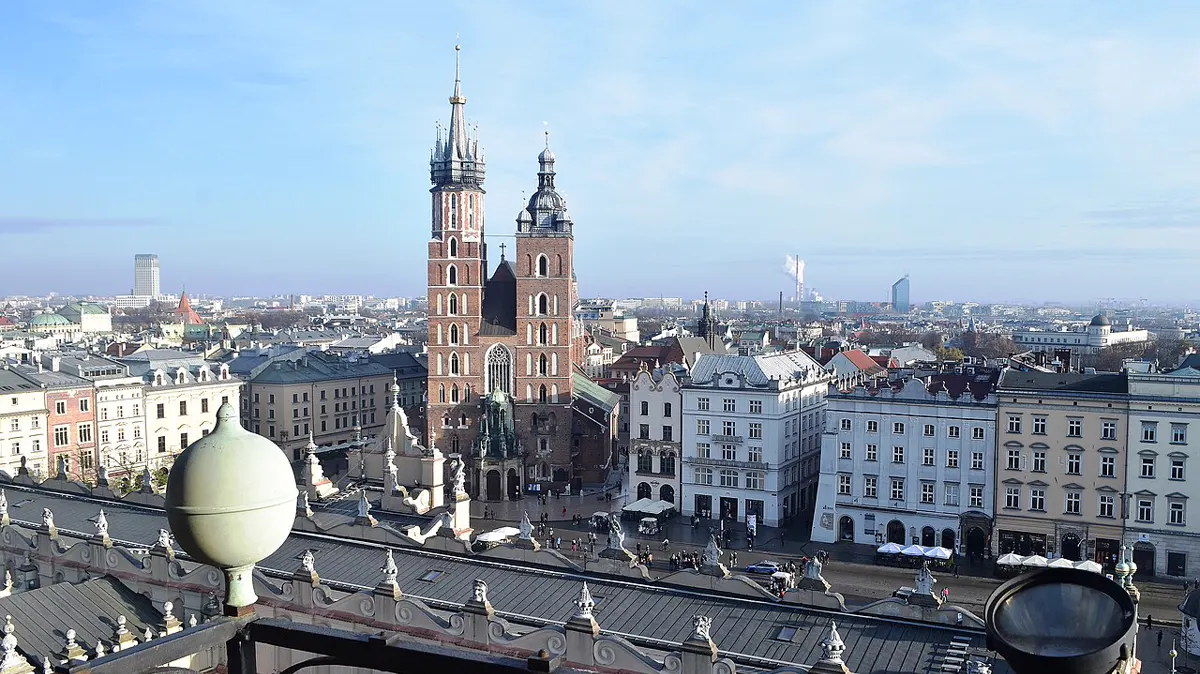
Krakow was Poland's royal capital from 1038 until 1596, when the court moved to Warsaw, and that head start left it with a medieval core that survived World War II largely intact. The Rynek Glowny, laid out in 1257, is one of the largest medieval market squares in Europe at roughly 200 metres a side, with the Sukiennice (Cloth Hall) running down its middle and the trumpeter's Hejnal sounding hourly from St Mary's Basilica. The whole Stare Miasto was among the first twelve sites inscribed on the UNESCO World Heritage List in 1978.
Wawel Hill anchors the south of the old town, holding the royal castle and the cathedral where Polish kings were crowned and buried. To the east, Kazimierz was a separate town until 1800 and Poland's Jewish heart for centuries; today its Renaissance synagogues sit among some of the city's best bars and cafes. Across the Vistula (Wisla), Podgorze holds the ground of the wartime ghetto and Oskar Schindler's factory, now a museum of the German occupation.
The city runs on students (the Jagiellonian University dates to 1364) and on visitors who use Krakow as a base for Wieliczka's salt mine and, more soberly, Auschwitz-Birkenau. The medieval walls were pulled down in the early 1800s and replaced by the Planty, a green ring that loops the old town in about half an hour on foot. Compact, walkable and served by an airport 11 km out, Krakow rewards travellers who slow down and look up at the doorways.
Kraków at a glance
Airport
John Paul II Krakow-Balice (KRK), 11 km west of the centre
Population
About 800,000 (city), roughly 1.4 million in the metropolitan area
Founded
First mentioned around 965; chartered under Magdeburg law in 1257
Good to know
UNESCO World Heritage Site since 1978 (Stare Miasto, Wawel, Kazimierz)
Currency
Polish zloty (PLN, zl). Not the euro.
Language
Polish. English is widely spoken in tourism and by younger people.
Time zone
Central European Time (UTC+1, or UTC+2 in summer).
Emergency
112 from any phone, free, English-speaking operators.
Tap water
Safe to drink everywhere in Poland.
Cards
Contactless is accepted almost everywhere, even for small amounts.
Sockets
Type E, 230V. UK and US visitors need an adapter.
Visas
Poland is in the Schengen Area and uses the EU entry rules.
Top things to see in Kraków
Main Market Square
Europe's largest medieval market square, the social centre of Krakow, with the Cloth Hall running down its middle.
Wieliczka Salt Mine
A UNESCO-listed salt mine worked for seven centuries, with underground chapels, lakes and chambers carved entirely from rock salt.
Sukiennice
The Renaissance Cloth Hall running down the centre of Rynek Glowny, once a hub of international cloth trade. Today its arcaded ground floor is lined w...
St Mary's Basilica
The brick Gothic church on the main square, famous for its mismatched towers and a carved wooden altarpiece by Veit Stoss.
Kazimierz
The historic Jewish quarter, once a separate town, now a district of atmospheric squares, old synagogues and cemeteries. Its cafes, galleries and Frid...
Barbakan
A circular Gothic fortified outpost from around 1499, one of the few surviving barbicans in Europe. It guarded the northern gate of the city and was o...
Planty
A green ring of parkland encircling the Old Town, laid out in the early 19th century where the medieval city walls once stood. The shaded path of roug...
Kopiec Kosciuszki
An artificial mound raised in the 1820s to honour national hero Tadeusz Kosciuszko, built partly with soil from his battlefields. From its summit and...
Ulica Florianska
The elegant medieval street running from the Barbican and Florian Gate down to the main square, part of the historic Royal Route. Lined with townhouse...
Museums, castles and nature in Kraków
Museums
Rynek Underground
An atmospheric archaeology museum beneath the Main Square, walking you through the medieval market on its original cobbles.
Auschwitz-Birkenau Memorial
The preserved site of the largest German Nazi concentration and extermination camp, now a memorial and museum to its victims, west of Krakow.
Oskar Schindler's Enamel Factory
The wartime enamelware factory, now a museum about Krakow under German occupation from 1939 to 1945.
Czartoryski Museum
Home to Leonardo da Vinci's "Lady with an Ermine", the star of Poland's oldest museum collection.
MOCAK Museum of Contemporary Art
Poland's leading contemporary-art museum, built beside the Schindler factory in Podgorze.
Castles
Wawel Castle
The royal castle and cathedral on the hill above the Vistula, the symbolic heart of the Polish nation for a thousand years.
Parks and nature
Zakrzowek
A flooded former limestone quarry with startling turquoise water and white cliffs, now a swimming park.
Blonia Meadow
A vast open meadow minutes from the centre, used for picnics, cycling and the biggest public gatherings.
Wolski Forest & Kosciuszko Mound
The city's big western woodland, with trails, the zoo and a viewpoint mound over the whole valley.
Where to base yourself: the neighbourhoods
Stare Miasto
The walled old town, centred on the Rynek Glowny with the Sukiennice, St Mary's Basilica and the Town Hall Tower. Ringed by the Planty park and threaded with Florianska and Grodzka streets, it holds the Jagiellonian University's Collegium Maius and most of the city's tourist traffic.
Wawel
The fortified limestone hill above the Vistula, holding the royal castle, the cathedral with its Sigismund Bell, and the dragon's den (Smocza Jama) at the base. This was the seat of Polish kings, and many of Poland's kings lie in the cathedral crypts.
Kazimierz
The former Jewish quarter, independent until 1800, built around Plac Nowy and its round Okraglak selling zapiekanki. Seven historic synagogues survive, including the Old Synagogue and the Remuh with its 16th-century cemetery, alongside the densest concentration of bars in the city.
Podgorze
South of the river, this was the site of the Krakow Ghetto from 1941 to 1943. It holds Plac Bohaterow Getta with its empty chairs memorial, the Eagle Pharmacy museum, and Schindler's Enamel Factory on Lipowa Street, now part of the Historical Museum.
Nowa Huta
A planned socialist-realist steel town built from 1949 around the Lenin Steelworks, laid out on a grand axial plan from Plac Centralny. Its wide avenues, the Arka Pana church and Cold War tours make it the counterweight to the medieval centre, reachable by tram in about 25 minutes.
Stradom
The narrow strip linking Wawel and Kazimierz along Stradomska and Dietla streets, once a marshy channel of the Vistula. It is a quieter transit zone of tenements and small hotels, useful as a base within a ten-minute walk of both the old town and Kazimierz.
How to spend one, two or three days in Kraków
Day 1
The royal core
- Morning: Start on the Rynek Glowny before the crowds, climb the Town Hall Tower, then go underground into Rynek Underground beneath the Sukiennice to see the excavated medieval market. Catch the Hejnal from St Mary's Basilica and step inside for the Veit Stoss altarpiece.
- Afternoon: Walk up Grodzka to Wawel Hill. Tour the State Rooms and the cathedral with the Sigismund Bell and royal tombs, then descend to the dragon's den by the river.
- Evening: Stroll the Planty ring back into the old town for pierogi and a beer near Plac Szczepanski, or take an aperitif at one of the cellar bars off Florianska.
Day 2
Kazimierz and Podgorze
- Morning: Explore Kazimierz on foot, taking in the Old Synagogue, the Remuh Synagogue and its cemetery, and Plac Nowy. Grab a zapiekanka from the Okraglak.
- Afternoon: Cross the Bernatek footbridge into Podgorze. Visit Schindler's Enamel Factory on Lipowa Street, then Plac Bohaterow Getta with the empty chairs memorial and the Eagle Pharmacy.
- Evening: Return to Kazimierz for dinner, then bar-hop around Plac Nowy and Estery Street, where the density of small bars is highest in the city.
Day 3
Salt mine or history day trip
- Morning: Take the train or bus to Wieliczka (about 14 km) for the Salt Mine's Tourist Route, descending past carved chapels to the St Kinga's Chapel 101 metres down. Book a timed slot in advance.
- Afternoon: Return to the city and use the quieter afternoon for Nowa Huta by tram, walking Plac Centralny and the axial avenues, or MOCAK and the Cricoteka on the Podgorze side.
- Evening: End with a milk-bar (bar mleczny) supper for value, or a proper sit-down dinner in the old town, followed by the view from a rooftop terrace over the rooftops.
Where to eat and drink in Kraków
Start with what the region does best: Obwarzanek krakowski, Zapiekanka, Pierogi and Maczanka po krakowsku.
Bottiglieria 1881
Krakow's Michelin-starred tasting-menu room, a modern Polish kitchen paired with a deep wine cellar.
Miod Malina
A warm, folk-painted room off Grodzka mixing hearty Polish plates with a few Italian touches.
Pod Wawelem
Big portions, house beer and a beer-hall buzz right under the castle hill.
Charlotte
A French bakery-café on Plac Szczepanski with morning croissants, fresh bread and coffee under the trees.
Pod Aniolami
A long-standing traditional Polish restaurant in a Gothic cellar on Grodzka, known for grilled meats and old-country cooking.
ZaKladka Food & Wine
A relaxed French-leaning bistro across the river in Podgorze, a local favourite for a long lunch.
Bar Mleczny Pod Temida
A classic milk bar on Grodzka: pierogi, soups and cutlets at prices that have barely moved in decades.
Glonojad
A bright, well-priced vegetarian kitchen by Plac Matejki with a menu spanning half the world.
Vegab
The go-to for a fast vegan kebab or falafel wrap between sights.
Café Camelot
A romantic, cluttered café on a quiet corner near St. John's, famous for its apple pie.
Alchemia
The candle-and-timber institution of Kazimierz's Plac Nowy, part bar, part live-music warren.
Forum Przestrzenie
A riverside bar inside a rescued communist-era hotel, all deckchairs and sunset views.
Mercy Brown
A hidden speakeasy behind an unmarked door, serving precise cocktails to a members-club hush.
Wodka Café Bar
A tiny room with dozens of infused and flavoured vodkas lined up behind the bar.
Endzior
The round pavilion on Plac Nowy griddling the giant open-faced zapiekanki Krakow is known for.
Andrus
A hole-in-the-wall doing maczanka krakowska, the city's pulled-pork-in-a-roll classic.
Bar Mleczny Tomasza
A modern milk bar off the Rynek plating pierogi, pancakes and soups at canteen prices. The go-to for a filling Polish lunch without the tourist markup...
Restauracja Pod Nosem
A Michelin-listed spot below Wawel serving modern Polish tasting menus with an old-Krakow sensibility. Small, candlelit and worth the splurge.
Where to stay in Kraków
Hotel Copernicus
A Relais & Châteaux townhouse on the oldest street in the city, with a rooftop terrace facing Wawel.
Hotel Stary
A restored 15th-century palace steps from the Square, with a spa dug into its stone cellars.
Hotel Pod Roza
The oldest hotel in Krakow on Florianska, once hosting Liszt and Tsar Alexander I.
PURO Krakow Kazimierz
A design hotel in the Jewish quarter with a buzzing bar and bikes for guests.
Hotel Wawel
A friendly, art-filled mid-range choice on Poselska, tucked inside the Planty ring.
Ibis Krakow Stare Miasto
A reliable budget base a short walk north of the Old Town by the main railway station.
Mundo Hostel
A calm, well-kept hostel in a courtyard building in Kazimierz, each room themed to a country.
Greg & Tom Hostel
A sociable backpacker favourite near the station, known for its included home-cooked dinners.
Old Town Apartments Krakow
Self-catering flats scattered through the Old Town for travellers who want their own kitchen.
Hotel Wentzl
A comfortable mid-range hotel right on the Rynek Glowny above a restaurant of the same name dating to 1792. Some rooms look straight onto the market s...
Aparthotel Stare Miasto
Serviced apartments on the Rynek's edge with kitchenettes, useful for families or longer stays. Central enough to walk everywhere yet quieter than a f...
What to eat and drink in Kraków
Local to Kraków
Obwarzanek krakowski
The ring-shaped, hand-twisted bread sold from blue street carts across the centre, protected by EU geographical indication. Topped with salt, poppy or sesame, it costs a few zloty and is the city's original street snack.
Zapiekanka
An open-faced toasted baguette with mushrooms, cheese and a stripe of sauce, the classic version served from the Okraglak on Plac Nowy in Kazimierz. It became a Polish staple in the lean 1980s and remains the late-night standard.
Pierogi
Filled dumplings served boiled or fried, with ruskie (potato and twarog cheese) the everyday favourite and meat, cabbage or seasonal fruit versions common. Milk bars and dedicated pierogarnie plate them by the dozen for a modest price.
Maczanka po krakowsku
A Krakow speciality of slow-braised pork neck in a caraway gravy, stuffed into a roll and dipped back into the sauce. It was once a cabbies' meal and has returned to menus around the old town.
Oscypek
Smoked sheep's-milk cheese from the Podhale highlands near Zakopane, spindle-shaped and stamped with a decorative pattern. In Krakow it is grilled and served with cranberry, a habit imported from the mountains.
Polish classics worth ordering
Polish cooking is hearty, seasonal and built on soups, dumplings and slow-cooked meat. These are the classics worth seeking out in any city, best at a milk bar or an old-school restaurant rather than a tourist trap.
Pierogi
Half-moon dumplings stuffed with anything from potato and curd cheese (ruskie) to meat, cabbage and mushroom, or sweet fruit. Boiled or pan-fried in butter.
Żurek
A tangy soup of soured rye flour, usually with white sausage and a boiled egg, sometimes served in a bread bowl. The taste of a Polish Easter.
Bigos
The "hunter's stew" of sauerkraut, fresh cabbage and several meats, simmered for days until deep and smoky. Better the second day.
Kotlet schabowy
A breaded, flattened pork cutlet, the Polish Sunday dinner, served with potatoes and mizeria (cucumber in cream) or cabbage.
Gołąbki
Cabbage leaves rolled around minced meat and rice, baked in a tomato or mushroom sauce. The name means "little pigeons".
Placki ziemniaczane
Crisp potato pancakes, eaten savoury with sour cream or, in the mountains, drowned in a goulash (placki po zbojnicku).
Rosol
A clear, golden chicken broth with fine noodles, the traditional start to a Polish Sunday lunch.
Sernik and paczki
For something sweet: sernik (a dense baked cheesecake made with twarog curd) and paczki (rose-jam doughnuts), devoured by the million on Fat Thursday.
Drinks
Poland is a vodka country first, but it also has a serious craft-beer scene and a tradition of homemade fruit liqueurs.
- Wodka
- Drunk cold and neat, in company, with a toast and a bite to follow. Clean rye or potato brands (Belvedere, Chopin, Wyborowa) are the benchmark.
- Nalewki
- Homemade fruit and herb liqueurs, from cherry (wisniowka) to honey-spiced krupnik, often stronger and smoother than they look.
- Craft beer
- Poland has hundreds of craft breweries and multitap bars in every city. Ask for a local piwo rzemieslnicze rather than the mass lagers.
- Non-alcoholic
- Kompot (a jug of stewed fruit) is the homemade soft drink, and in winter grzane piwo (mulled beer) and grzaniec (mulled wine) warm up the markets.
Best day trips from Kraków
Wieliczka Salt Mine
14 km · 30 min by train
A working salt mine from the 13th century until 1996, now a UNESCO site whose Tourist Route drops about 101 metres past chandeliered chambers to the St Kinga's Chapel carved entirely from salt. Trains from Krakow Glowny run direct to Wieliczka Rynek-Kopalnia.
Auschwitz-Birkenau
66 km · about 1h30 by bus
The former German Nazi concentration and extermination camp at Oswiecim, preserved as a memorial and museum. Entry is free but timed tickets are compulsory in peak season, and a guided tour of the two sites takes at least three and a half hours.
Zakopane and the Tatras
100 km · about 2h by bus
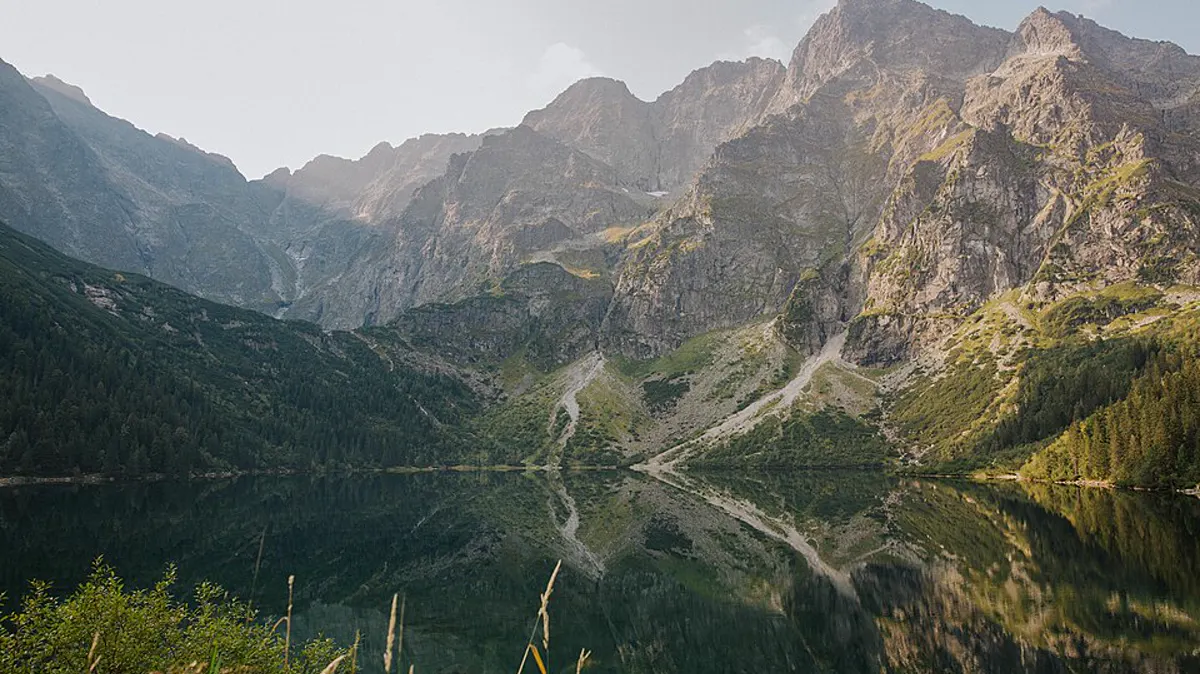
Poland's alpine resort at the foot of the Tatra Mountains, known for wooden Zakopane-style architecture, the Krupowki promenade and oscypek smoked sheep cheese. A funicular runs up Gubalowka, and Morskie Oko lake is the classic day hike.
Ojcow National Park
24 km · about 40 min by car
Poland's smallest national park, a limestone valley of caves, the Hercules' Club rock pillar and the ruined Ojcow Castle. The Pieskowa Skala castle at its northern end is a Renaissance fortress worth the extra few kilometres.
Tyniec Abbey
12 km · about 40 min by bus
A Benedictine abbey founded in 1044 on a limestone cliff above the Vistula, the oldest monastery in Poland still in use. Monks sell their own bread, honey and herbal liqueurs, and summer organ recitals fill the church.
Kalwaria Zebrzydowska
33 km · about 1h by bus
A UNESCO-listed Mannerist pilgrimage park of chapels laid out as Stations of the Cross across wooded hills around a 17th-century Bernardine monastery. It draws its largest crowds during the Holy Week passion plays.
When to visit Kraków
Krakow has a temperate continental climate with cold, sometimes smoggy winters and warm summers. The old town is busiest from June to August and over the December market; spring and early autumn give the best balance of weather and space.
April to May
Spring
Mild days, blossom in the Planty and Blonia meadow, and thin crowds before the summer rush. Some rain, but ideal for walking the old town and day trips without queues.
June to August
Summer
Warm to hot, with long evenings on Rynek terraces and a full festival calendar including the Jewish Culture Festival in Kazimierz. Expect the heaviest crowds, peak prices and the occasional thunderstorm.
September to October
Autumn
Crisp air, turning leaves along the Vistula and the Planty, and lighter tourist numbers. September still holds warmth, while October brings the first chill and the start of the smog season.
November to March
Winter
Cold and often grey, with the Christmas market on the Rynek Glowny from late November and mulled grzaniec warming the crowds. Snow can be pretty but the city sees genuine smog on windless days, and the Tatras are a two-hour ski option.
Getting to and around Kraków
By air
Krakow Airport (KRK) sits in Balice, 11 km west of the centre. The SKA1 train runs to Krakow Glowny in about 20 minutes; bus 208, 252 and night line 902 cover the same route. It is a Ryanair and Wizz Air base with legacy links across Europe.
By train
Krakow Glowny is right beside the Old Town and the Galeria Krakowska mall. Fast EIP/IC trains reach Warsaw in about 2h 20m, with regular services to Katowice, Wroclaw and the mountains at Zakopane.
By bus
The MDA coach station is stacked above the train platforms. FlixBus and regional carriers run frequent buses to Zakopane, Wieliczka and the Auschwitz-Birkenau memorial at Oswiecim.
By car
The A4 motorway skirts the city east to west. The Old Town is a restricted traffic zone, so leave the car at a Park & Ride or a guarded lot and walk or ride in.
Trams & buses
MPK runs a dense tram and bus network with frequent day lines and a full night service. Trams are the quickest way across the centre and out to Kazimierz and Nowa Huta.
Tickets
Buy from the app (jakdojade) or a machine on board and validate straight away. Time tickets (20, 60, 90 min) work across trams and buses; a 24-hour ticket pays off from four rides.
On foot
The Old Town is compact and ringed by the green Planty park. Almost everything inside the walls, plus Wawel and Kazimierz, is a comfortable walk apart. Electric carts are the one motorised exception in the pedestrian streets, and a cart tour covers the Old Town, Kazimierz and Podgorze in under an hour.
Staying connected
- EU roaming
- If you have an EU or UK SIM, roaming works at your normal domestic rate under the roam-like-at-home rules, so most European visitors need to do nothing.
- eSIM
- For visitors from outside Europe, an eSIM from a provider such as Airalo or Holafly is the simplest option, activated before you land with no shop visit.
- Local SIM
- A prepaid SIM from Play, Orange, Plus or T-Mobile costs little and gives generous data. You need your passport to register it, which is a legal requirement.
- Free wifi
- Cafés, hotels, malls and many trams and buses have free wifi, though speeds vary. Do not rely on it for anything sensitive.
Apps to download before you go
A short list of apps that make a Polish trip smoother. Download them before you fly; every link goes straight to the app.

Jakdojade
Public transport
Public transport routes, live departure times and mobile tickets for every Polish city. The first app to install.


Bolt
Rides and taxis
The most widely used ride-hailing app in Poland, usually cheaper than a street taxi, plus e-scooters and shared bikes.

Koleo
Train tickets
Buy Polish train tickets (PKP Intercity and regional) with seat selection, often cheaper than buying at the counter.
Google Maps
Maps and offline
Reliable for walking and public-transport directions nationwide. Download the offline area for your city before you land.

Google Translate
Translation
Install the Polish language pack for offline camera translation of menus and signs.

Revolut
Payments
Hold and spend zloty at the real exchange rate, sidestepping the airport kantor and card DCC markups.

Wise
Payments
A multi-currency account and card that also spends zloty at the real exchange rate, a strong alternative to Revolut.

Booking.com
Stays
The default for hotels and apartments in Poland, with the widest choice and free-cancellation options.
Money, costs and tipping
Poland runs on the zloty, not the euro, and it is one of the better-value city-break destinations in the EU. Cards work nearly everywhere, but a few local habits save you money.
- Pay in zloty, always
- When a card machine or ATM offers to charge you in your home currency, decline it and choose PLN. That "dynamic currency conversion" hides a poor exchange rate and can add 5 to 12 percent.
- Skip airport and street exchange
- Avoid the exchange desks at the airport and the Euronet ATMs in tourist zones, which give weak rates and push DCC. Withdraw from a normal bank ATM (PKO BP, Santander, ING, Pekao) or just pay by card.
- Cash for small things
- Keep a little cash for a milk bar (bar mleczny), a market stall, a toilet (1 to 3 zl), or a rural bus. Everything else takes contactless or Apple/Google Pay.
- Tipping
- Round up or leave about 10 percent in a restaurant if you were happy. Do not say "thank you" when handing over money if you want change back, as it can be taken to mean "keep it".
Safety and local etiquette
Staying safe
Poland is one of the safer countries in Europe, and its cities feel relaxed late into the evening. The risks are the ordinary big-city ones rather than anything unusual.
- Petty theft
- Pickpocketing happens in crowded tourist spots, on packed trams and at big events. Keep your phone and wallet in a front pocket or a zipped bag and you will almost certainly be fine.
- Taxis
- Use an app (Bolt, Uber or Free Now) rather than flagging a random taxi, especially near stations and airports, to avoid inflated fares. The price is fixed and shown up front.
- Nightlife
- Stick to established bars and clubs, watch your drink, and be wary of touts steering you to a "special" venue with a surprise bill. This is rare but worth knowing.
- Emergency number
- Dial 112 for police, ambulance or fire. Operators speak English. Pharmacies (apteka) are widespread and one is always open on a rota.
Local etiquette
Poles are warm once the ice breaks and appreciate a little effort. A few points of etiquette go a long way, especially at the country's many places of memory.
- Greetings
- A firm handshake and eye contact is standard. "Dzień dobry" (good day) and "dziękuję" (thank you) are always welcome, even if the rest is in English.
- Churches and memorials
- Cover shoulders and knees in churches and keep quiet during Mass. At sites such as Auschwitz-Birkenau, dress and behave soberly, and do not take smiling selfies.
- In a home
- If you are invited to someone's home, take off your shoes at the door and bring flowers (an odd number) or chocolates. Never bring an even number of flowers, which is for funerals.
- Toasts
- Vodka is drunk cold in one go with a toast of "na zdrowie" (to health), followed by something to eat. Pace yourself, as refusing every round can seem standoffish.
Who Kraków suits
A quick word on who each Polish city suits and how to make it work for you.
Families
Poland is easy with children: milk bars are cheap and quick, ice cream (lody) is everywhere, and museums and parks are stroller-friendly. Trams are free for small children.
Couples
Cobbled old towns, candlelit cellar restaurants and riverside bars make for an easy romantic weekend, and prices leave room for a proper dinner out.
Solo travellers
Cities are safe and walkable, hostels are sociable, and free walking tours are a good way to meet people. English gets you a long way.
Seniors
Compact centres, plenty of cafés to rest in and good public transport make for a gentle pace. Many museums offer reduced tickets.
Accessibility
Newer trams and buses are low-floor and stations are improving, but medieval cobbles and old tenement stairs can be hard going. Check ahead for lifts.
Kraków: frequently asked questions
Two full days cover the Old Town, Wawel and Kazimierz at a comfortable pace. Add a third day for Auschwitz-Birkenau or the Wieliczka Salt Mine, and a fourth if you want to reach Zakopane or Nowa Huta.
Yes, this is one of the most common day trips, about 66 km west and roughly 1.5 to 2 hours by bus or organized tour. Entry is free but a timed ticket is compulsory, and in peak season you must join a guided tour reserved ahead through the official museum site.
For most visitors, yes. The direct train from Krakow Glowny takes about 30 minutes, and the Tourist Route runs roughly two hours and 800 steps down to the St Kinga's Chapel carved entirely from salt. Book a timed slot in advance.
Yes, especially for the Rynek Glowny Christmas market from late November into early January, one of Poland's largest. The trade-off is short daylight and genuine smog on cold, windless days, so plan indoor sights like Schindler's Factory on the worst ones.
Yes. As one of Poland's biggest tourist and student cities, English is common in hotels, restaurants and sights, particularly among younger staff. A few Polish phrases are still appreciated in smaller shops.
It is cheaper than Western Europe but sits alongside Warsaw as Poland's priciest city. A main dish in a mid-range restaurant runs roughly 40 to 70 PLN, and terraces facing the Rynek charge a premium for the location.
The Stare Miasto puts you among the sights but is noisier and dearer. Kazimierz suits food and nightlife, while Stradom or Podgorze give a quieter, cheaper base within a short walk of both.
Guides to Kraków
Krakow Golf Cart Tours: The Four Routes, Compared
Four electric cart routes cover the Old Town, Kazimierz, the ghetto in Podgorze and Schindler's Factory. Here...
Read guide3 Days in Krakow
A practical three-day plan for Krakow, pairing the Old Town and Wawel with Kazimierz and one strong day trip.
Read guideThings to Do in Krakow
The sights, neighbourhoods and day trips that make Krakow worth several days, ranked by how essential each one...
Read guideHow to Pronounce Krakow, and Why It Looks Like That
The final letter is a v sound, not a w, and the accent on the o is doing real work.
Read guideIs Krakow Worth Visiting? An Honest Assessment
Krakow is worth it for most people, and the reasons it disappoints the rest are predictable enough to check in...
Read guideWas Krakow the Capital of Poland? The Short History
Krakow lost the court but kept the coronations, which is why it still feels like a capital that is pretending...
Read guideWhat Is Krakow Famous For? Nine Things That Made It
Krakow is famous for one thing above all: it is the Polish city the Second World War did not flatten.
Read guideWhat Is Open in Krakow on Sundays and Mondays
Two days of the week behave differently here, and a short trip that ignores them loses a morning.
Read guideWieliczka Salt Mine: Stairs, Booking and What to Bring
The mine tells you the numbers in advance, and the numbers are the reason some people should think twice.
Read guideKrakow at Easter: Markets, Closures and Wet Monday
Easter is the one weekend when a city that never seems to close does exactly that, and almost nobody warns vis...
Read guideKrakow Christmas Market: Dates, Location and What to Bring
The market fills the largest medieval square in Europe, which is the whole reason it works.
Read guideKrakow in Summer: Heat, Crowds and Where to Swim
July and August turn a walkable city into a hot one, and the people who enjoy it most rearrange the day rather...
Read guideAir Quality in Krakow: Smog, the Coal Ban and Winter
Krakow banned solid fuel heating in 2019, and winter here is measurably different from the reputation the city...
Read guideDo You Need Cash in Krakow? Where Cards Still Fail
You can spend three days in Krakow without touching a banknote, right up until the moment you cannot.
Read guideIs Krakow Safe at Night? What to Expect After Dark
Krakow is a low-crime city where the genuine night-time risks are drink, pickpockets and taxi pricing rather t...
Read guideDriving and Parking in Krakow: Do You Need a Car?
For a city break in Krakow a car is closer to a liability than an asset, and the Old Town settles the argument...
Read guideWalking Distances in Krakow: How Far Everything Really Is
Krakow looks bigger on a map than it is on foot. Two of these distances are the ones that catch people out.
Read guideKrakow Old Town: What It Is and Where It Begins
Old Town, city centre and Main Market Square are three names people use for roughly the same place, which is w...
Read guideTaxis and Ride Apps in Krakow: Costs, Cards and Uber
Uber, Bolt and FreeNow all work in Krakow, which quietly changed what a fair fare looks like.
Read guideKrakow Trams and Buses: Tickets, Zones and How to Pay
Krakow sells time, not journeys. Once you understand that, the tram network stops being confusing.
Read guideWhere to Drink in Krakow: Bars and Nightlife
Krakow splits its drinking between the Old Town's cellars and Kazimierz, the old Jewish quarter where the nigh...
Read guideKrakow vs Prague: Which to Visit?
A fair comparison of Krakow and Prague for a short city break, covering old towns, sights, food and beer, crow...
Read guideBest Restaurants in Krakow
A practical guide to eating in Krakow across every budget, from cash-only milk bars and Plac Nowy zapiekanki t...
Read guideHow Many Days Do You Need in Krakow?
Two days covers Krakow's Old Town and Kazimierz, three lets you add Wieliczka or Auschwitz, and four or more o...
Read guideWawel Castle Visitor Guide
A practical visitor guide to Wawel in Krakow: the Royal Castle State Rooms and Private Apartments, the Cathedr...
Read guideHow to Visit Auschwitz-Birkenau from Krakow
A practical guide to visiting the Auschwitz-Birkenau Memorial from Krakow, covering how to book a free timed e...
Read guideWhere to Stay in Krakow: Best Areas
Where you base yourself in Krakow shapes the whole trip. This guide compares the Old Town, Kazimierz, Podgorze...
Read guideCities near Kraków
About this guide
This guide to Kraków is researched and maintained by the ViewPoland editorial team, and was last reviewed in September 2026. We update it as venues, prices and transport change.