Attraction in Kraków
Main Market Square
Europe's largest medieval market square, the social centre of Krakow, with the Cloth Hall running down its middle.
Reviewed and updated July 2026
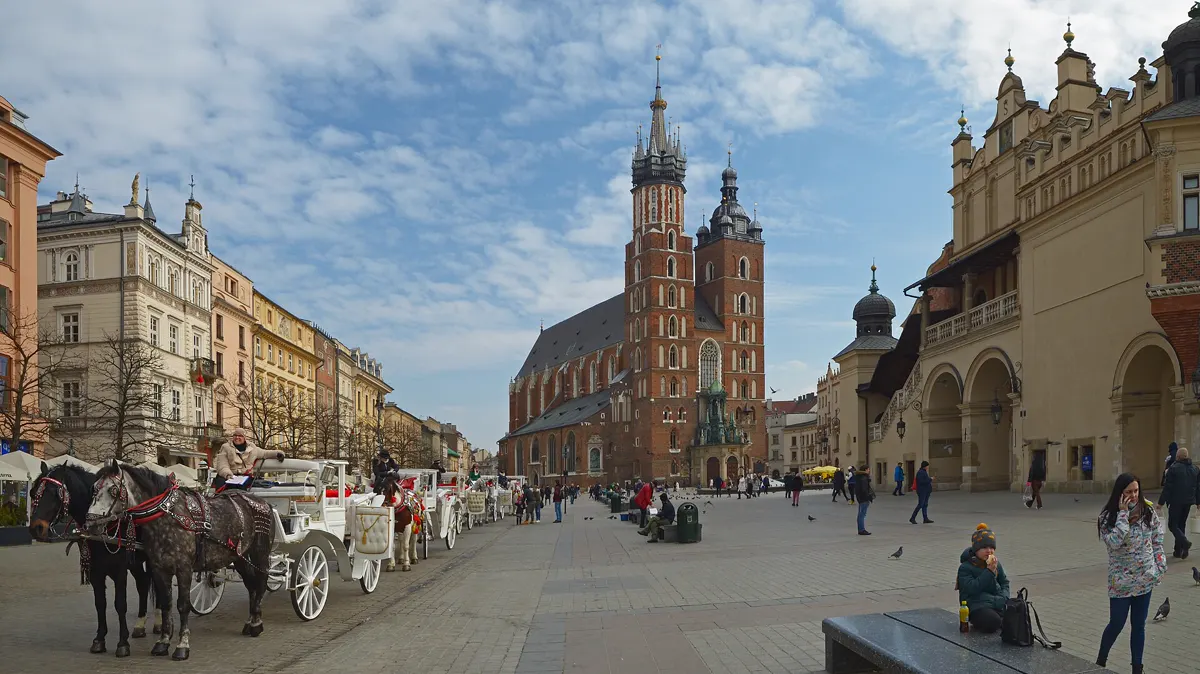
The Rynek Glowny is the largest medieval square in Europe, a near-square of about 3.8 hectares with each side running a little over 200 metres. It was set out in 1257, when Krakow was rebuilt and chartered under Magdeburg law after the Mongol raids of 1241. For almost eight centuries it has been the city's marketplace, stage and meeting point, and it still is.
Why visit the Main Market Square
This is where you start in Krakow. The square gathers the city's biggest sights in one place: the twin-towered St Mary's Basilica, the long Renaissance Cloth Hall down the middle, the lone Gothic Town Hall Tower, and a museum of the medieval city under the paving. The square is free and never closes. You can cross it in five minutes or spend half a day on what stands on and beneath it.
What stands on Krakow's square
St Mary's Basilica
St Mary's Basilica holds the north-east corner with two unequal towers, the taller 82 metres and the shorter 69. Every hour a trumpeter plays the hejnal from the taller tower, and the tune stops abruptly each time, by tradition recalling a medieval bugler said to have been shot mid-call while warning the city of a raid. The noon signal is broadcast live across Poland. Inside is the altarpiece of Veit Stoss, carved between 1477 and 1489, about 13 metres high and the largest Gothic altarpiece in the world. Its wings are opened each day in the late morning.
The Cloth Hall (Sukiennice)
The Cloth Hall runs down the centre of the square, rebuilt in its present Renaissance form in the years after the 1555 fire. The ground-floor arcade has been a trading hall for centuries and still sells amber, leather and souvenirs. Upstairs, the Gallery of 19th-Century Polish Art holds the national collection from the period, including the large canvases of Jan Matejko.
Town Hall Tower
The Gothic Town Hall Tower is all that survives of Krakow's medieval town hall, which was demolished in the 1820s. It stands 70 metres tall and leans about 55 centimetres, the legacy of a storm in 1703. In season you can climb it for a view over the square and a look at the old interior, now a branch of the Museum of Krakow.
Rynek Underground
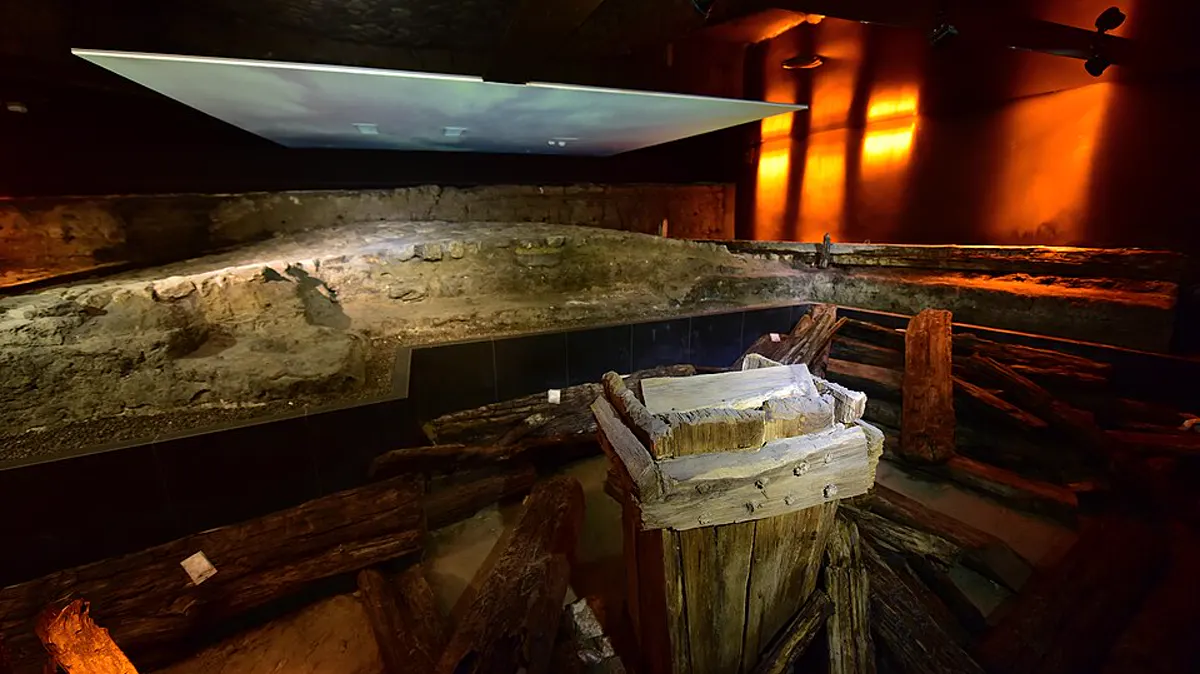
Under the eastern half of the square is Rynek Underground, a museum opened in 2010 on the excavated foundations of the medieval market. It walks you through Krakow's trading past with recovered objects, reconstructed streets and screens set into the old cellars. It is one of the best options in the centre in bad weather, and tickets are timed, so book ahead in summer.
St Adalbert's and the Mickiewicz monument
In the south-east corner sits the small Church of St Adalbert, one of the oldest churches in Poland, with roots in the 11th century. Near it stands the monument to the poet Adam Mickiewicz, unveiled in 1898 and the square's usual meeting point. The flower stalls beside it have been a fixture for generations.
How long to spend on the square
Give the square itself twenty minutes on a first pass. Add an hour or more for St Mary's and the Cloth Hall gallery, and about an hour for Rynek Underground. Seeing everything on and under the square runs to half a day.
Best time to visit the Rynek
Early morning is the square at its calmest, before the tour groups and the horse cabs. Late evening is the other good window, when the facades are lit and the cafe tables fill. Midday in July and August is the busiest and hottest. In December the square holds Krakow's Christmas market, with wooden stalls, mulled wine and grilled sausage; it is worth seeing but crowded. Wherever you are, listen for the hejnal on the hour.
Photographing the square
Shoot at first light for empty paving and warm colour on the Cloth Hall. St Mary's is hard to frame from directly below, so step back toward the Cloth Hall or down Grodzka Street for the towers. The Town Hall Tower gives the cleanest high view of the whole square. The hour after sunset balances the lit buildings against the sky.
Getting to the Main Market Square
The square sits at the centre of the Old Town and is closed to cars. From Krakow Glowny, the main station, it is about a ten-minute walk south through the Planty gardens and past the Florian Gate. Trams and buses stop around the edge of the Old Town, a few minutes away on foot; there is no closer stop because the whole centre is pedestrianised. For getting around the rest of the city, see the Krakow guide.
Accessibility on the square
The square is flat but paved with old cobbles and setts that are uneven underfoot and can be hard going for wheelchairs and prams. An electric cart tour is one way around that, as the carts are allowed into the pedestrian zone and some carry a ramp. The towers of St Mary's and the Town Hall are reached by stairs only. For Rynek Underground, which lies below the square, check the museum's access information before you go.
Around the Old Town
The square is the hub of the Old Town, so most of central Krakow is a short walk away:
- Wawel Castle and the cathedral, about ten minutes south along Grodzka Street.
- Kazimierz, the old Jewish quarter, roughly fifteen minutes on from Wawel.
- The Planty, the green ring that circles the Old Town on the line of the vanished walls.
- Wieliczka Salt Mine, a half-day trip to the south-east.
Good to know
Entry to the square is free and it is open at all hours. Ignore the tout menus and the costumed characters. The cafes under the arcades charge for the location, so check prices before you sit. The hejnal plays every hour, on the hour, from the taller tower of St Mary's.
Market Square questions
Is the Main Market Square free?
Yes. The square is a public space, open day and night at no charge. You only pay to go inside St Mary's, the Cloth Hall gallery, the Town Hall Tower or Rynek Underground.
What is the hejnal?
It is a short trumpet call played from St Mary's taller tower every hour. It breaks off mid-tune by tradition, recalling a trumpeter said to have been cut down while sounding the alarm. The midday call is broadcast nationally.
How long do I need?
Twenty minutes to take in the square, and up to half a day to visit everything on and under it.
Frequently asked questions
More attractions in Kraków
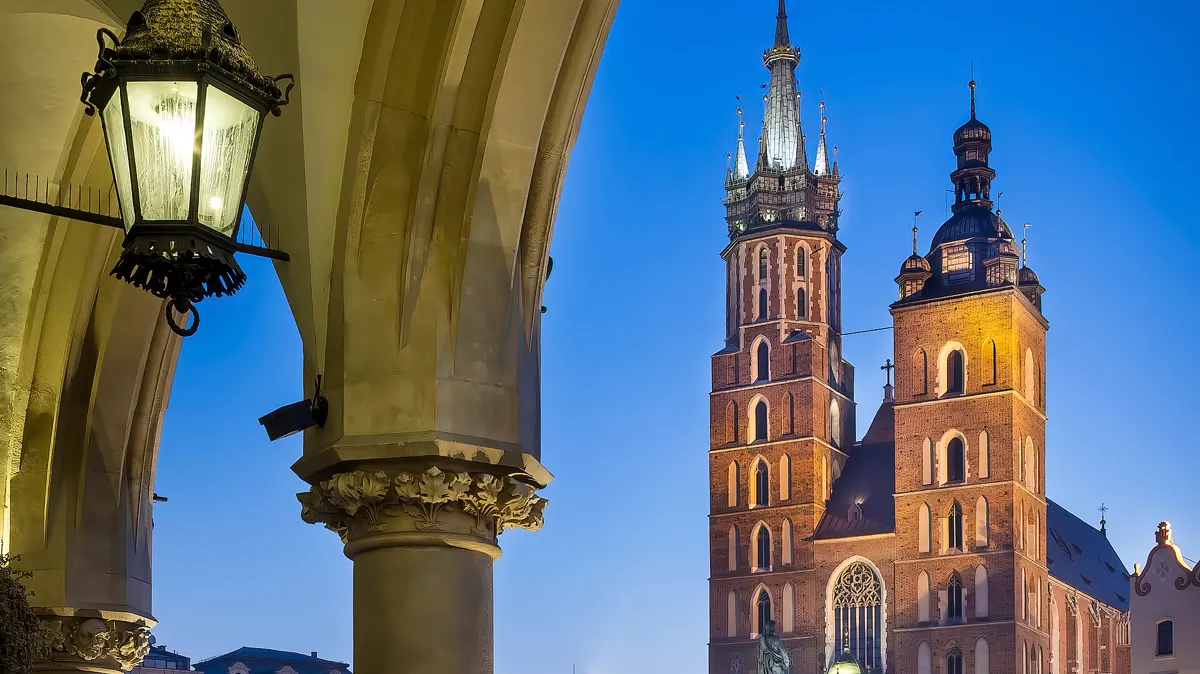
St Mary's Basilica
The brick Gothic church on the main square, famous for its mismatched towers and a carved wooden altarpiece by Veit Stoss.
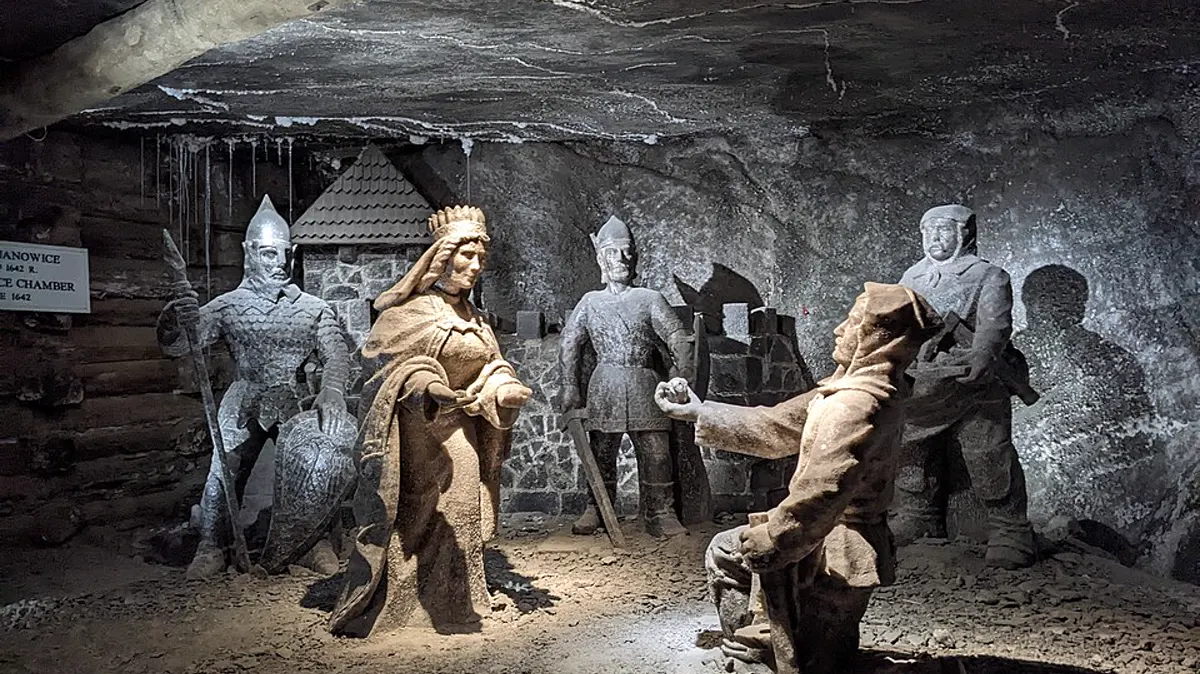
Wieliczka Salt Mine
A UNESCO-listed salt mine worked for seven centuries, with underground chapels, lakes and chambers carved entirely from rock salt.
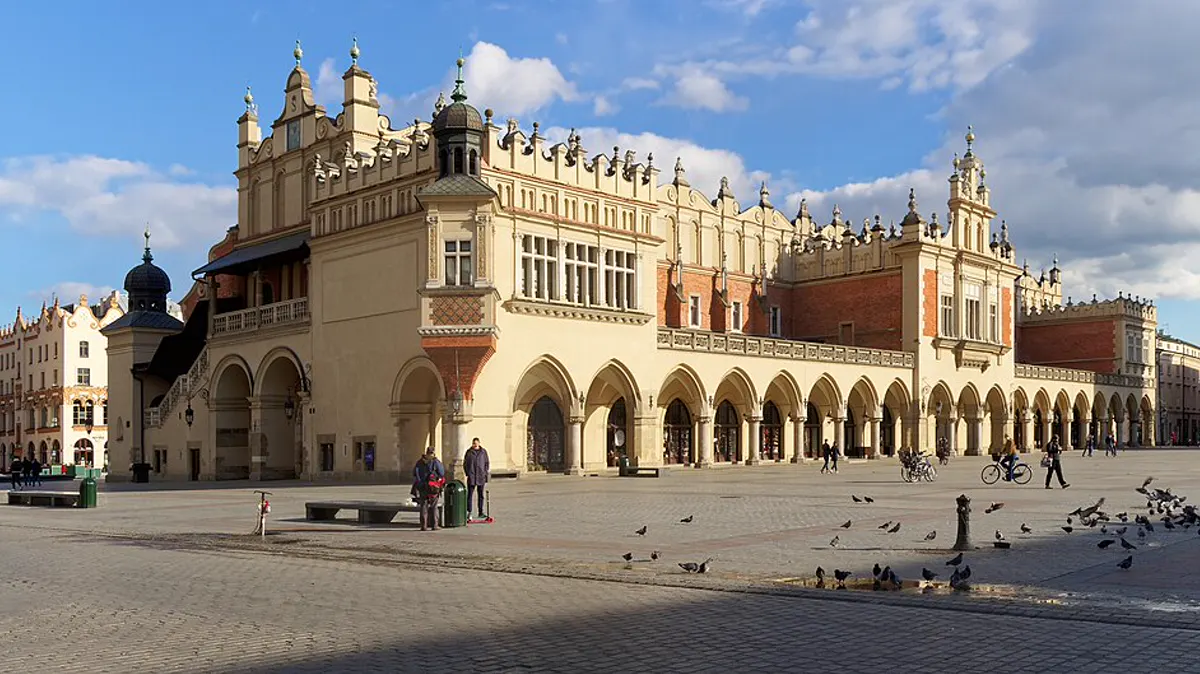
Sukiennice
The Renaissance Cloth Hall running down the centre of Rynek Glowny, once a hub of international cloth trade. Today its arcaded ground floor is lined with market stalls, while the upper floor houses a gallery of 19th-century Polish painting.
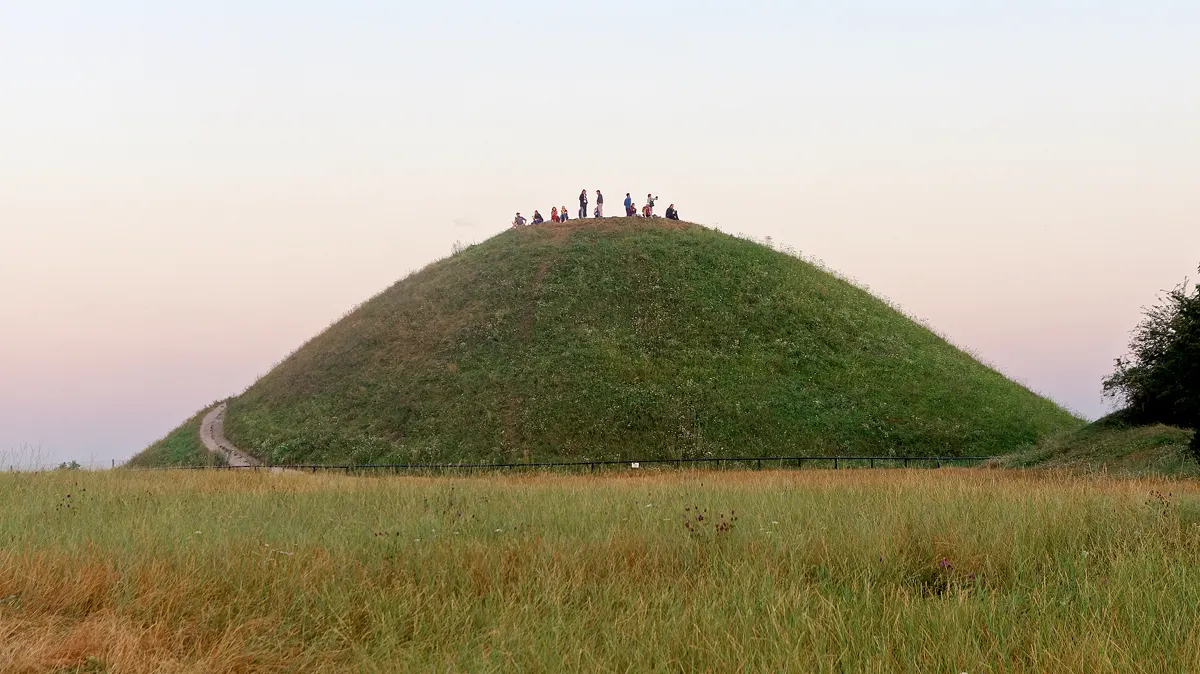
Krakus Mound (Kopiec Krakusa)
A prehistoric earthen mound on Lasota Hill in Podgorze, tied to Kraków's legendary founder and one of the best free viewpoints over the city.
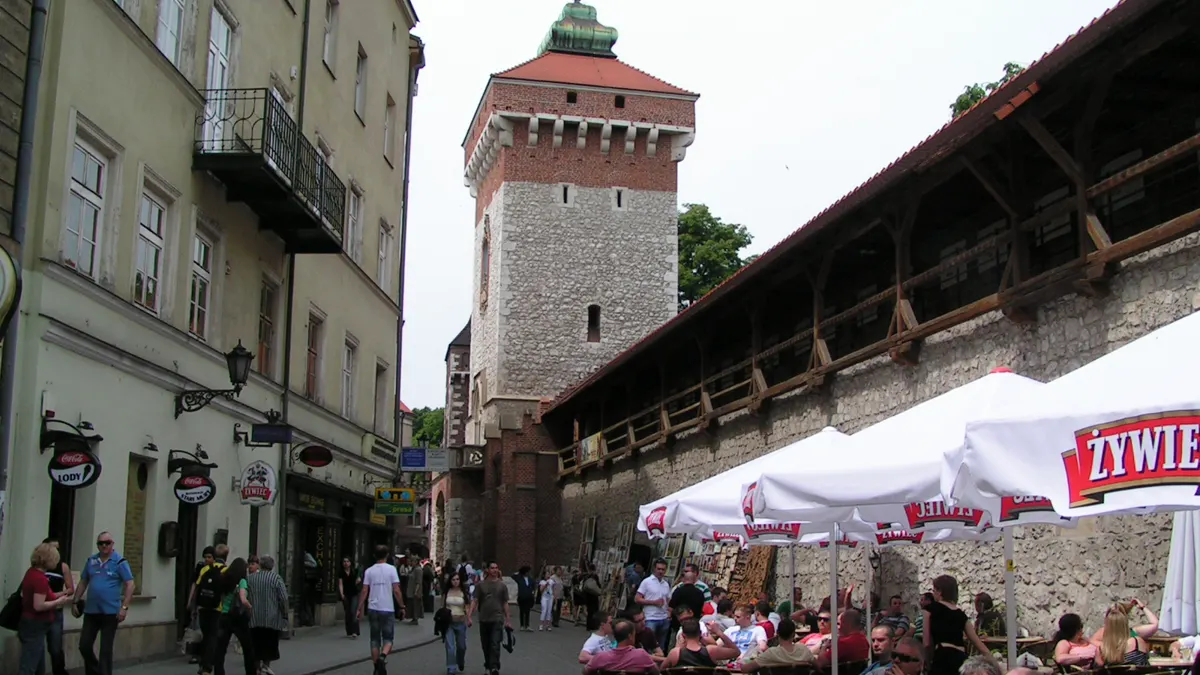
St. Florian's Gate (Brama Floriańska)
St. Florian's Gate is the last standing city gate of medieval Kraków and the northern start of the Royal Route. This Gothic gate-tower dates to 1307 and leads onto Florianska Street toward the Main Square.
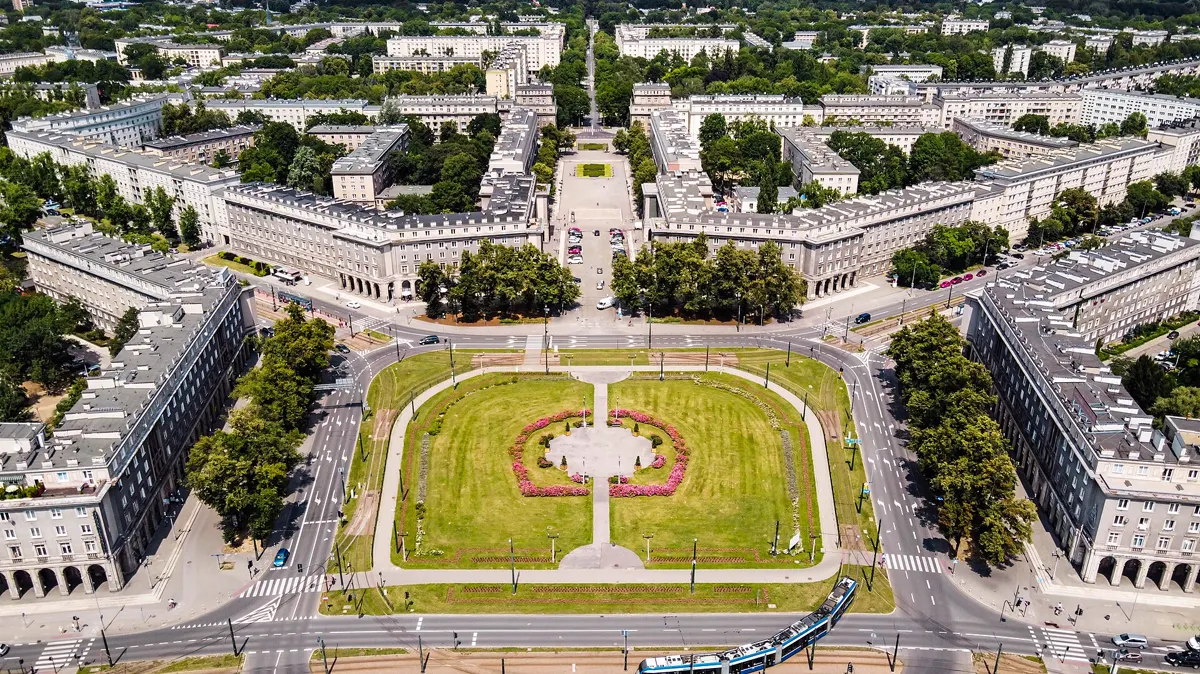
Nowa Huta
Nowa Huta is a planned socialist-realist district in eastern Kraków, begun in 1949 as a model workers' city around the Lenin Steelworks and now toured for its Stalinist architecture and Cold War history.
More to explore in Kraków
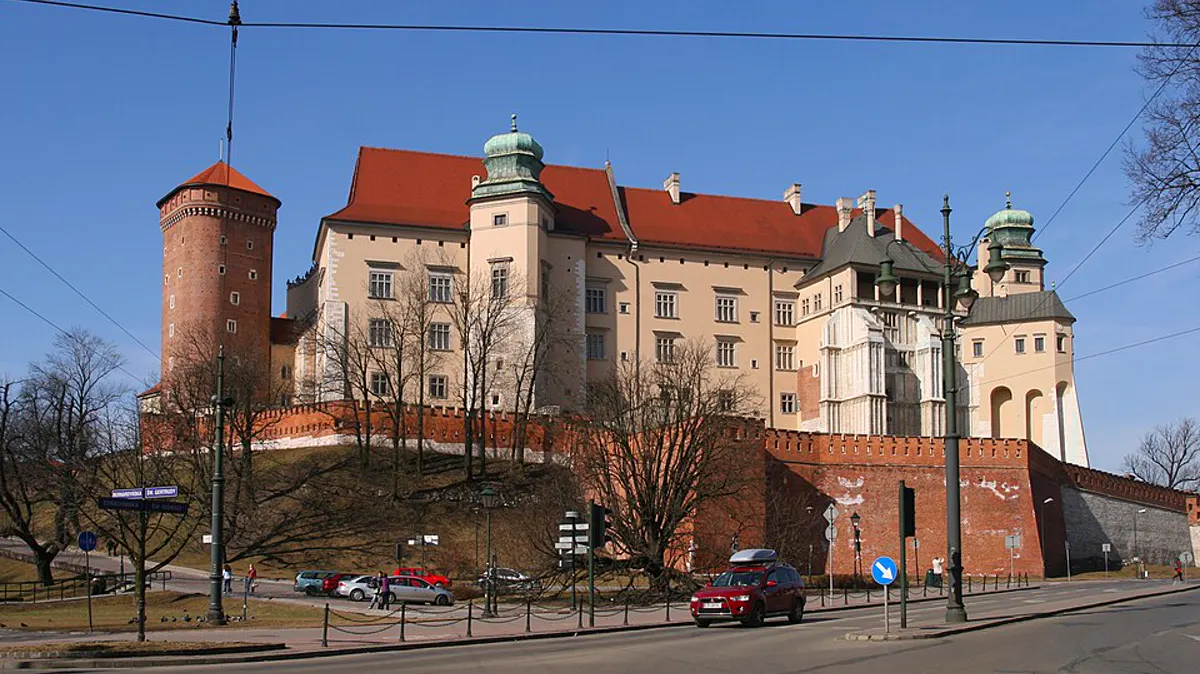
Castle
Wawel Castle
The royal castle and cathedral on the hill above the Vistula, the symbolic heart of the Polish nation for a thousand years.
Restaurant
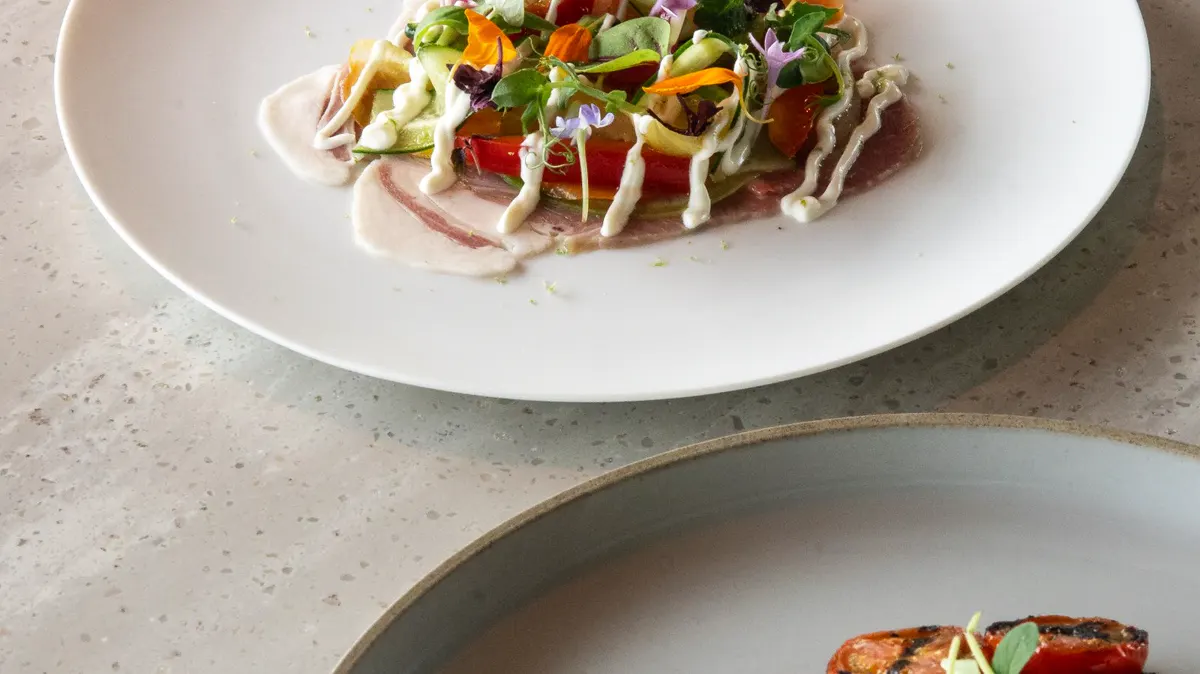
Bottiglieria 1881
Krakow's Michelin-starred tasting-menu room, a modern Polish kitchen paired with a deep wine cellar.
Hotel
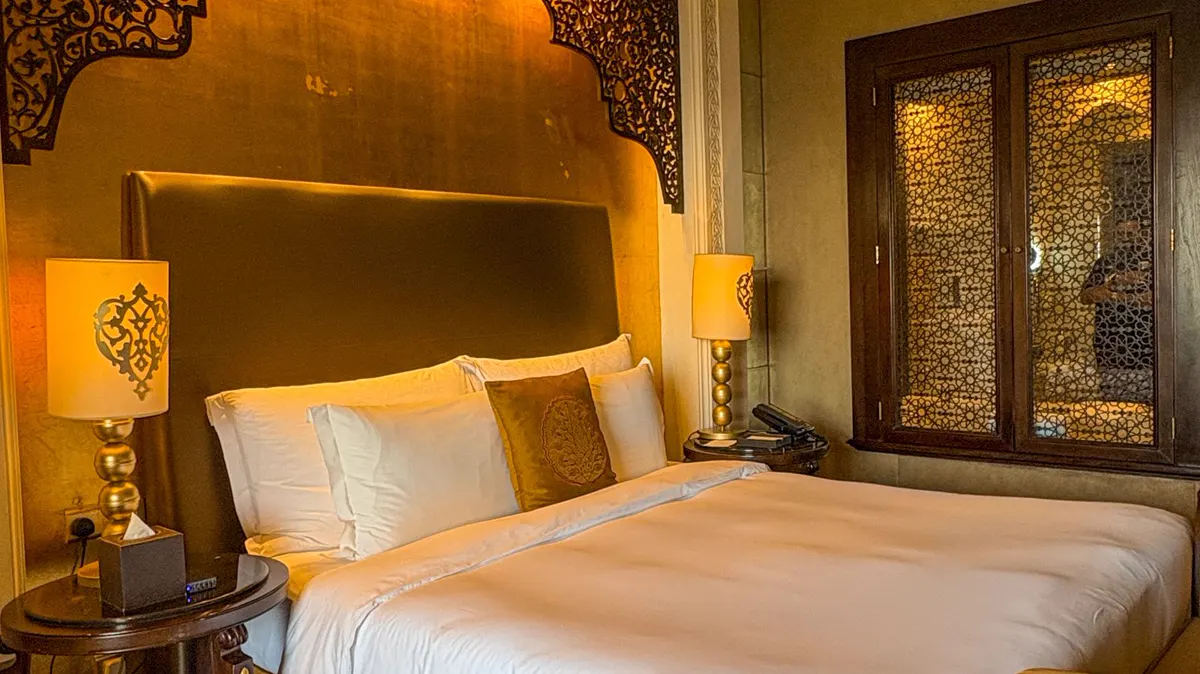
Hotel Copernicus
A Relais & Châteaux townhouse on the oldest street in the city, with a rooftop terrace facing Wawel.
Museum
Rynek Underground
An atmospheric archaeology museum beneath the Main Square, walking you through the medieval market on its original cobbles.
Hotel
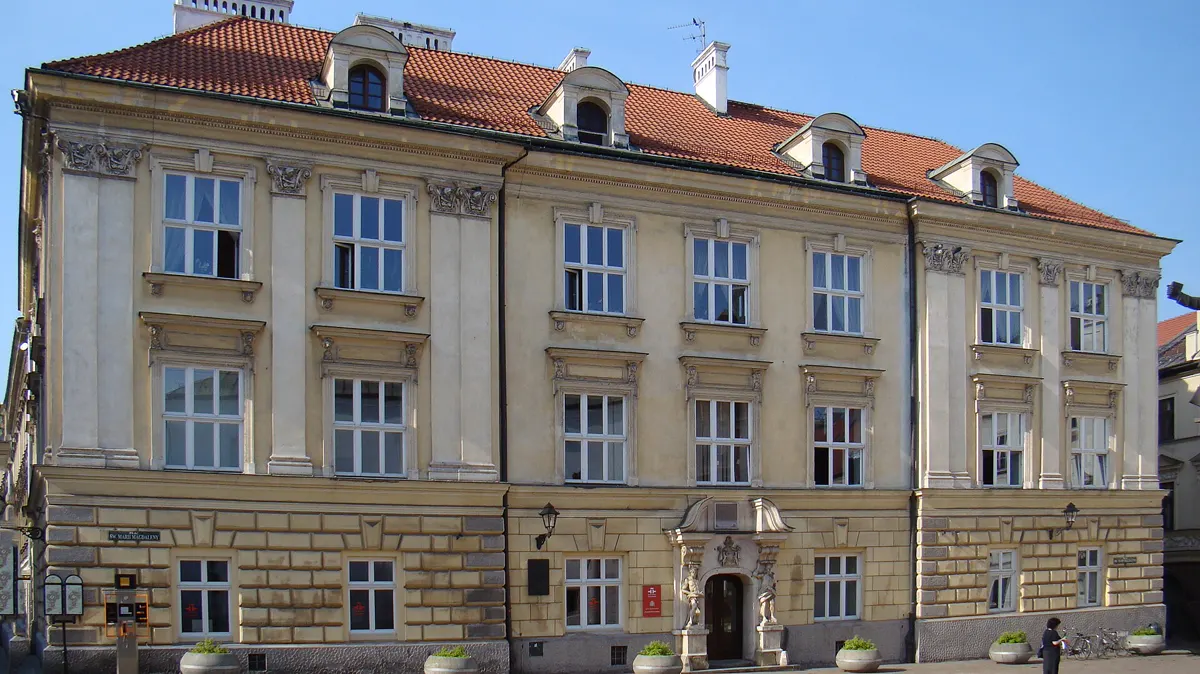
Hotel Stary
A restored 15th-century palace steps from the Square, with a spa dug into its stone cellars.
Hotel
Hotel Wentzl
A comfortable mid-range hotel right on the Rynek Glowny above a restaurant of the same name dating to 1792. Some rooms look straight onto the market square.