Day Trips
Easy escapes from Poland's cities
Some of Poland's best days out sit an hour or two from where you are already staying: a UNESCO salt mine, the largest castle in Europe, the Tatra mountains, the Baltic coast. Here is how the main day trips work, and how to reach each one without losing the day to logistics.
Getting around
Poland is straightforward to explore by public transport. Intercity trains and coaches link the big cities, while regional and commuter services reach most of the towns below. Where a trip is genuinely easier with a car, such as the Tatra foothills or the eastern forests, we say so. For the wider picture, see our guide to getting around Poland.
Day trips at a glance
Approximate one-way times by public transport. Distances are rounded, and times vary with the service, so treat them as a planning guide rather than a timetable.
| Trip | From | Distance | Best way | One-way time | Length |
|---|---|---|---|---|---|
| Auschwitz-Birkenau | Krakow | ~70 km | Bus or tour | ~1h 30m | Full day |
| Wieliczka Salt Mine | Krakow | ~14 km | Train or bus | ~30m | Half day |
| Zakopane | Krakow | ~100 km | Bus | ~2h | Long day or overnight |
| Malbork Castle | Gdansk | ~60 km | Train | under 1h | Half or full day |
| Sopot | Gdansk | ~12 km | SKM train | ~20m | Half day |
| Torun | Gdansk | ~170 km | Train | ~2h 20m | Full day |
| Lodz | Warsaw | ~135 km | Train | ~1h 30m | Full day |
| Kazimierz Dolny | Warsaw | ~130 km | Car | ~2h 15m | Full day |
From Krakow
Krakow has the densest cluster of day trips in the country, which is why it is the base for most first visits. Our full day trips from Krakow guide covers the timings in detail; these are the three most worth your day.
Auschwitz-Birkenau Memorial
About 70 km west, near Oswiecim. The former German Nazi concentration and extermination camp is now a memorial and museum. Entry is by timed reservation, with a guide required in busier hours, so book ahead and allow most of a day.
Wieliczka Salt Mine
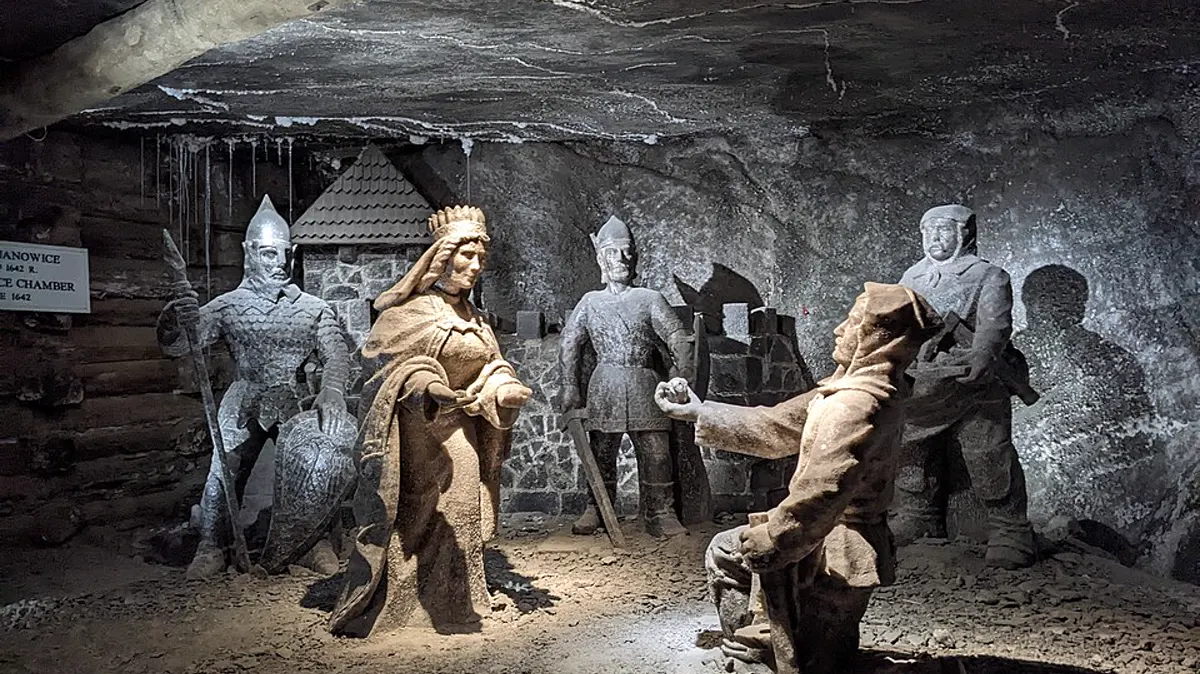
On Krakow's southeastern edge, about 14 km out. A UNESCO-listed mine visited on a guided underground route past salt-carved chapels and chambers. An easy half day, and a good choice in any weather.
Zakopane
Poland's mountain resort in the Tatras, roughly 100 km south and reached by bus or train. The base for hiking, highland food and wooden Zakopane-style architecture. Better as a long day or an overnight.
From Gdansk and the north
The Tri-City and its surroundings pack a castle, a beach resort and a Gothic old town into short train rides.
Malbork Castle
About 60 km southeast of Gdansk and under an hour by train. The vast red-brick castle of the Teutonic Order is a UNESCO site and the largest of its kind in Europe. A half or full day.
Sopot
The seaside resort between Gdansk and Gdynia, a short hop on the SKM commuter line. Known for its long wooden pier and Baltic beach, it is the easiest half day from the city.
Torun
A Gothic old town on the Vistula, the birthplace of Copernicus and a UNESCO site, reached by train. Compact enough to see its towers, gingerbread and riverfront in a day.
From Warsaw and central Poland
Lodz
Poland's former textile capital, about an hour and a half from Warsaw by train. The long Piotrkowska Street and the red-brick mills, several now reborn as culture and shopping venues, tell the story of the industrial city.
Kazimierz Dolny
A small artists' town on the Vistula, long a favourite weekend escape for its Renaissance market square, riverside walks and views from the ruined castle. Easiest with a car or a coach.
Wilder Poland
Bialowieza Forest
The last large stretch of primeval lowland forest in Europe, on the eastern border, and home to wild European bison. It is a UNESCO site and a long way from any city, so it rewards an overnight rather than a rushed day trip.
How to choose your day trip
History and memory
The Auschwitz-Birkenau Memorial asks for a full, unhurried day and a timed reservation. It is a place of reflection rather than sightseeing, so plan it on its own.
Easy half day
Short on time or travelling with children, pick the Wieliczka Salt Mine from Krakow or Sopot from Gdansk, both close and simple to reach.
Mountains and nature
Zakopane and the Tatras reward a long day or an overnight. The Bialowieza Forest is too far east for a rushed day, so give it a night.
Planning the wider trip first helps you slot day trips in. See Poland in ten days and, for timing and fares, getting around Poland.
Day trip guides
Common questions
Sources
- Timetable and fares, PKP Intercity
- Visiting and timed reservations, Auschwitz-Birkenau Memorial and Museum
- Tourist route and tickets, Wieliczka Salt Mine