Thematic in Kraków
Was Krakow the Capital of Poland? The Short History
Krakow lost the court but kept the coronations, which is why it still feels like a capital that is pretending otherwise.
By ViewPoland Editorial
3 min read
Updated August 2026
The short answer
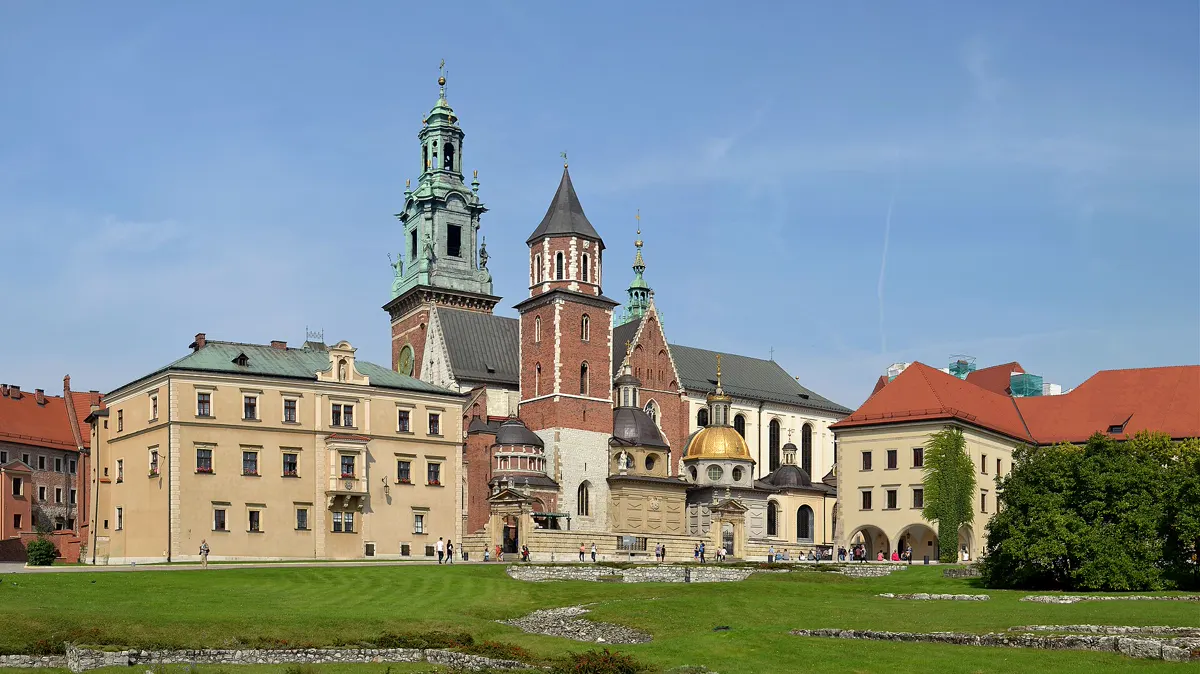
Yes. Krakow was the capital of Poland for centuries, until the royal court moved to Warsaw at the turn of the sixteenth and seventeenth centuries. Even after the move, Polish kings continued to be crowned and buried at Wawel, so the city kept the ceremony long after it lost the administration.
UNESCO's own description of the city begins by calling it the former capital of Poland, and that status explains almost everything a visitor sees on Wawel Hill. The interesting part is not that Krakow was the capital but how incompletely it stopped being one.
How Krakow became the centre
Krakow's rise came from position and trade. It sat on the routes running east to west across the continent, and it was chartered as a city in the thirteenth century with the grid and the enormous market square that still define it. Wawel Hill above the river gave it a defensible seat for a ruler, and the cathedral gave that seat religious authority.
The move to Warsaw
The shift happened around the turn of the sixteenth and seventeenth centuries, when the royal court relocated north. The usual explanation is geography: after the union with Lithuania the realm's centre of gravity had moved, and Warsaw sat closer to the middle of it. A fire at Wawel is often cited as the immediate trigger for the court's departure.
What did not move was the ceremony. Kings continued to be crowned in Wawel Cathedral and buried in its crypts, so the capital of government and the capital of kingship were separated for the rest of the monarchy's existence.
Why the tombs matter
Wawel Cathedral holds the royal necropolis, and burial there did not stop with the kings. National figures were laid there afterwards, which turned the cathedral into something closer to a national pantheon than a royal chapel. For Polish visitors this is the single most charged building in the country, and it is worth entering with that in mind.
The city that kept the trappings
Losing the court did not empty Krakow. The university continued, the church remained powerful, and in the nineteenth century, under Austrian rule, the city became a centre of Polish culture and memory precisely because it was not the administrative capital. That period is when the walls came down and the Planty ring was planted in their place, as our page on the Old Town explains.
What to see if this is the reason you came
Wawel Cathedral and the royal tombs first, then the state rooms in the castle, then the Cloth Hall and the square that made the city rich in the first place. The rest of what the city is known for is in what Krakow is famous for, and the pronunciation of these names is in how to pronounce Krakow. Our Wawel visitor guide covers the tickets, which are sold separately for each part of the hill and run out early in season.
If you want the comparison with the city that took the title, our Krakow or Warsaw page sets the two against each other.
Sources
UNESCO World Heritage Centre, which describes Kraków as the former capital of Poland and Wawel Hill as a former royal residence and necropolis. Wawel Royal Castle for the castle and cathedral's own history. Jagiellonian University for the city's continuity as a centre of learning after the court left.
Written by ViewPoland Editorial for ViewPoland, an independent English-language guide to Poland. Published 28 August 2026. Last updated 28 August 2026.
Frequently asked questions
Yes, for centuries, before the royal court moved to Warsaw at the turn of the sixteenth and seventeenth centuries. UNESCO's description of the city still opens by calling it the former capital of Poland.
The court relocated north around the turn of the sixteenth and seventeenth centuries. The move is usually explained by the realm's centre of gravity shifting after the union with Lithuania, with a fire at Wawel as the immediate trigger.
Yes. Coronations continued in Wawel Cathedral and kings went on being buried in its crypts, so the ceremonial capital stayed in Krakow long after the administrative one left.
Polish monarchs, and later national figures as well, which turned the cathedral into a national pantheon rather than only a royal burial place. It is the most emotionally charged building in the country for many Polish visitors.
The university, the church and the royal tombs all remained. In the nineteenth century, under Austrian rule, the city became a centre of Polish culture and memory partly because it was not the seat of administration.
Yes, particularly the cathedral and the royal tombs. Tickets for the different parts of the hill are sold separately and the timed slots sell out in season, so book ahead.