Thematic in Kraków
Krakow in Summer: Heat, Crowds and Where to Swim
July and August turn a walkable city into a hot one, and the people who enjoy it most rearrange the day rather than the itinerary.
By ViewPoland Editorial
4 min read
Updated August 2026
The short answer
Krakow summers are warm rather than Mediterranean, with July and August the hottest months and afternoon thunderstorms common. The Old Town is at its busiest, the river boulevards and Zakrzówek become the places people actually go, and evenings stay light and pleasant until late.
Summer is peak season, and it changes the city more than the weather alone would suggest. The squares fill, the terraces spill outward, and the sights that are comfortable in April develop queues. None of that is a reason to stay away, but it does reward a different daily rhythm.
How hot it actually gets
Krakow has a continental climate, so summer is warm and humid rather than dry, and heat arrives in spells rather than as a constant. July and August are the warmest months, and both are also among the wettest, because the heat breaks in afternoon storms. The national meteorological institute publishes the climate record, and it is the number to trust rather than a monthly average copied between travel sites.
The practical consequence is that you should carry water and a light layer for the evening, and treat a spectacular afternoon downpour as normal rather than as a ruined day.
The crowd problem, and the hours that solve it
The Main Market Square between eleven and four in July is as busy as Krakow gets. Evenings are the compensation, and they are safe and busy late, as we cover in is Krakow safe at night. The same square at eight in the morning is nearly empty, and the light is better. Early mornings and late evenings are when the historic centre belongs to the people staying in it, which is the single most useful thing to know about visiting in summer. In the heat of the afternoon a cart tour covers the same ground in forty minutes instead of four hours.
Book timed entry where it exists. Wawel, Schindler's Factory and the Rynek Underground all run on limited slots and all sell out in season, which our Wawel visitor guide covers in more detail.
Where people go to cool down
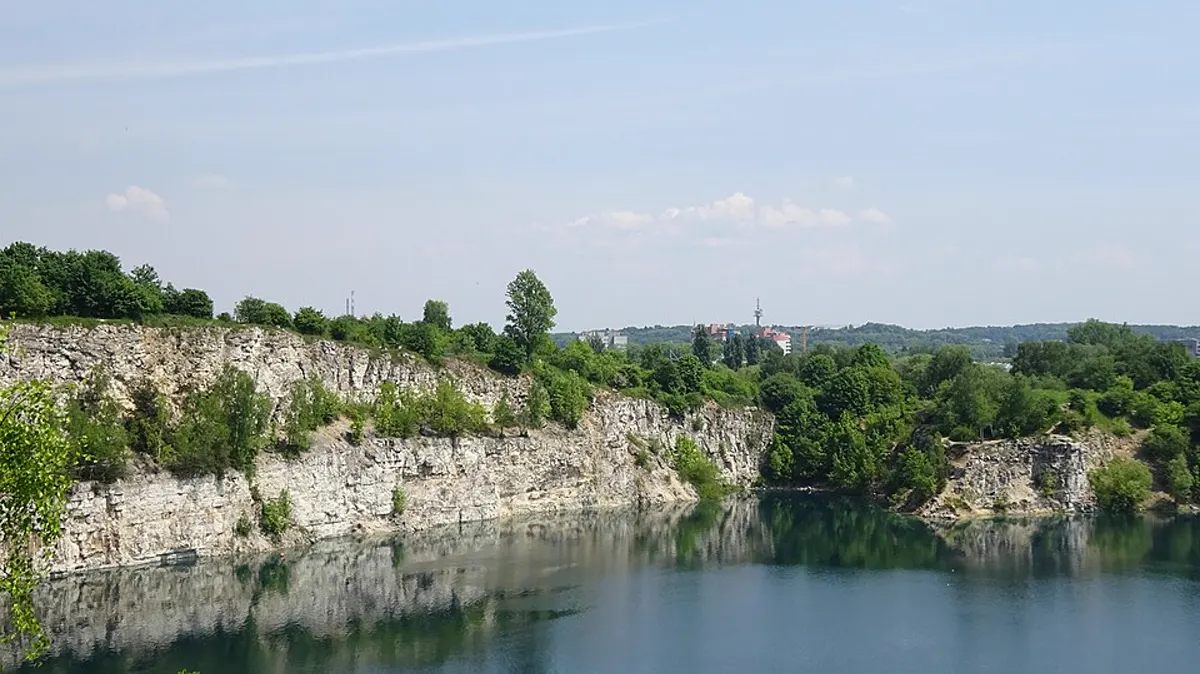
Zakrzówek, a flooded limestone quarry on the western side of the city, is the summer destination locals name first, with water an improbable shade of turquoise beneath white cliffs. The Vistula boulevards fill with people in the evening. Las Wolski, the forest on the edge of the city, is several degrees cooler than the centre and has the zoo and the Kościuszko Mound inside it.
Our pages on Zakrzówek and Las Wolski cover both, and neither is more than half an hour from the centre.
The day trips change too
Wieliczka is a constant seventeen to eighteen degrees underground whatever the surface is doing, which makes it the obvious refuge on the hottest afternoon of a trip. Our practical guide to the salt mine covers the booking, which matters more in July than in any other month.
Zakopane and the Tatras, on the other hand, are at their most crowded exactly when Krakow is, and the road south is slow at weekends. If the mountains are the point of the trip, go on a weekday.
Is summer the right time for a first visit?
For long evenings, an outdoor city and full opening hours, yes. For quiet and lower prices, May, June and September deliver most of the same weather with a fraction of the crowd. Our national page on the best time to visit Poland sets out the trade-off across the year.
Sources
IMGW, the Institute of Meteorology and Water Management, for the climate record. Wieliczka Salt Mine practical information for the underground temperature of 17 to 18 degrees. Kraków official tourism portal for seasonal opening and events.
Written by ViewPoland Editorial for ViewPoland, an independent English-language guide to Poland. Published 28 August 2026. Last updated 28 August 2026.
Frequently asked questions
July and August are the warmest months, warm and humid rather than dry, with heat arriving in spells. They are also among the wettest months, because the heat tends to break in afternoon thunderstorms. Check the meteorological institute's climate record rather than an averaged figure from a travel site.
Yes, the Old Town is at its busiest between late June and August. The crowd is concentrated between late morning and late afternoon, so early mornings and evenings on the Main Market Square are dramatically quieter.
Zakrzowek, a flooded limestone quarry on the western side of the city, is the place locals name first. Las Wolski, the forest on the city edge, is the other summer escape and runs several degrees cooler than the centre.
July and August are among the wettest months of the year, but the rain usually comes as short, heavy afternoon storms rather than all-day drizzle. Plan around the afternoon rather than abandoning the day.
The Wieliczka Salt Mine, which stays between 17 and 18 degrees underground regardless of the surface temperature. Book ahead, because summer slots go early.
Summer gives the longest evenings and full opening hours. May, June and September give similar weather with noticeably fewer people and lower accommodation prices, which is why they suit a first visit if the dates are flexible.