The complete guide · Lesser Poland
Zakopane
Poland's mountain capital at the foot of the Tatras, with a distinctive wooden building tradition, serious hiking and a busy winter ski scene.
Overview
Zakopane sits at roughly 800 metres in the Podhale region of Lesser Poland, directly beneath the granite wall of the Tatra Mountains and about 100 km south of Krakow. It is Poland's highest town and its unofficial winter capital, with the Kasprowy Wierch cable car, the Gubalowka funicular and dozens of ski runs all inside the town limits or a short bus ride away. The core of the resort is Krupowki, a pedestrian street lined with karczmas, mountain outfitters and grilled oscypek stalls.
The town is the gateway to Tatrzanski Park Narodowy (TPN), the national park that protects the Polish Tatras and their glacial lakes, including Morskie Oko. Entry to the park costs 11 PLN for adults and 5.50 PLN reduced, paid at trailhead gates such as Kuznice and Palenica Bialczanska. From the town you can reach Kasprowy Wierch (1987 m) by cable car, or hike the ridge trails toward Giewont (1894 m), the reclining peak topped by an iron cross that dominates the skyline.
Zakopane's identity is bound to its wooden architecture. In the 1890s the painter and architect Stanislaw Witkiewicz codified the Zakopane Style, seen in landmark villas such as Willa Koliba and Willa Pod Jedlami and in the shingled Jaszczurowka chapel. Off the mountains, the surrounding villages of Koscielisko, Bukowina Tatrzanska and Chocholow keep the highlander culture alive through sheep herding, folk music and thermal bath complexes fed by geothermal water.
Zakopane at a glance
Airport
Krakow (KRK), about 2 hours north via the Zakopianka (DK47); regular buses and minibuses run from Krakow MDA bus station
Population
About 27,000 permanent residents, swelling several times over in peak ski and summer weeks
Founded
First recorded in the 17th century; developed as a health and mountaineering resort from the 1870s
Good to know
Poland's winter capital at ~800 m; Kasprowy Wierch cable car reaches 1987 m
Currency
Polish zloty (PLN, zl). Not the euro.
Language
Polish. English is widely spoken in tourism and by younger people.
Time zone
Central European Time (UTC+1, or UTC+2 in summer).
Emergency
112 from any phone, free, English-speaking operators.
Tap water
Safe to drink everywhere in Poland.
Cards
Contactless is accepted almost everywhere, even for small amounts.
Sockets
Type E, 230V. UK and US visitors need an adapter.
Visas
Poland is in the Schengen Area and uses the EU entry rules.
Top things to see in Zakopane
Krupowki
The main pedestrian street of Zakopane, lined with restaurants, highland-cheese stalls, shops and the buzz of the mountain resort.
Giewont
The 1,894 metre mountain overlooking Zakopane, crowned by a 15 metre iron cross erected in 1901. Its silhouette is said to resemble a sleeping knight...
Wielka Krokiew
Zakopane's large ski jump on the slopes of Krokiew, with an in-run tower rising above the town. It regularly hosts FIS Ski Jumping World Cup competiti...
Stary Cmentarz na Peksowym Brzyzku
A historic cemetery beside the wooden church on Koscieliska street, resting place of many notable Polish artists, writers, and mountaineers. Its hand-...
Willa Koliba
The first house built in the Zakopane Style, designed by Stanislaw Witkiewicz in 1892 to 1893. It now houses a museum of the style and highland decora...
Chochołowska Valley (Dolina Chochołowska)
Chochołowska Valley is the longest and largest valley in the Polish Tatras, best known for the roughly 14 million crocuses that bloom across its meado...
Chochołowskie Termy (Chochołów Thermal Baths)
Chochołowskie Termy is Poland's largest thermal pool complex, sitting about a 20-minute drive from Zakopane in the village of Chochołów. Around 50 poo...
Chapel of the Sacred Heart of Jesus at Jaszczurowka
A wooden log chapel from 1907 designed by Stanislaw Witkiewicz, widely regarded as one of the finest examples of Zakopane Style architecture and the m...
Strazyska Valley (Dolina Strazyska)
A short, easy valley walk that starts right in Zakopane and follows a stream through forest to the Siklawica waterfall below Giewont.
Museums, castles and nature in Zakopane
Parks and nature
Tatra National Park
Poland's highest mountains, protected as a national park, with alpine peaks, glacial lakes and the country's most demanding trails.
Kasprowy Wierch
A 1,987 m summit on the Slovak border, reached by the cable car from Kuznice for a ridge-top panorama.
Dolina Koscieliska
A broad, gentle valley of meadows, caves and limestone walls, the easiest of the great Tatra walks.
Gubalowka
The ridge above town, up a funicular, for the classic postcard panorama of the Tatra skyline.
Morskie Oko
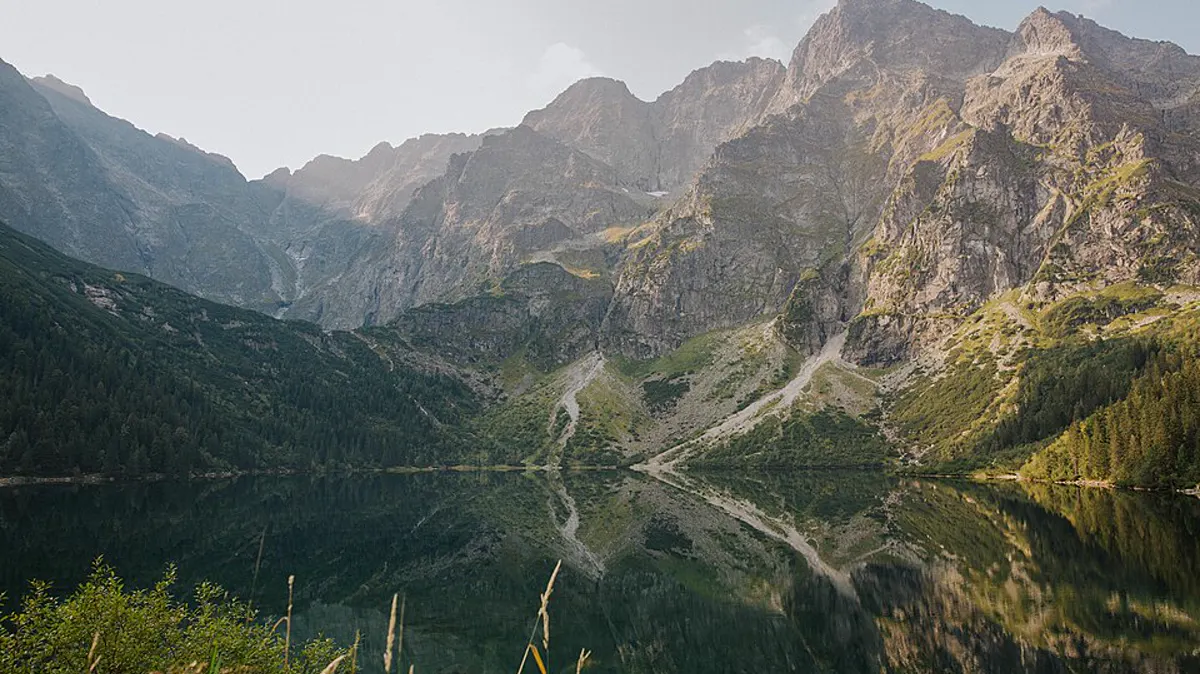
The largest lake in the Tatras, a glacial pool ringed by high peaks and the most popular mountain destination in Poland.
Where to base yourself: the neighbourhoods
Krupowki
The main pedestrian artery running through the town centre, packed with karczmas, ice cream and oscypek stalls, ski rental shops and the small parish church of the Holy Family. It is the natural meeting point and the start of the walk up to Gubalowka.
Gubalowka
The grassy ridge north of the centre, reached by a funicular from near Krupowki that climbs to 1120 m in a few minutes. The top has a panoramic terrace facing the full Tatra ridge, a summer toboggan run and rows of stalls selling grilled highlander cheese.
Kuznice
A former ironworks hamlet at the southern edge of town and the lower station of the Kasprowy Wierch cable car. It is also a major TPN trailhead, with paid park entry gates and routes toward Hala Gasienicowa and Giewont.
Zakopane centre
The area around Koscieliska street and the old wooden villas, including Willa Koliba (now the Zakopane Style museum) and the historic Peksowy Brzyzek cemetery. This is the heart of Witkiewicz-era architecture and the town's cultural life.
Koscielisko
A long village strung along the ridge west of Zakopane, quieter and more residential, with wooden pensions and views over the Dolina Koscieliska. It gives fast access to that valley and to Dolina Chocholowska.
Bukowina Tatrzanska
A highland village about 15 km east of Zakopane, best known for the large Terma Bukovina thermal complex and its position on the route to Palenica Bialczanska for Morskie Oko. It offers wide open views and a calmer base than the town centre.
How to spend one, two or three days in Zakopane
Day 1
Town, Gubalowka and Krupowki
- Morning: Walk Krupowki from top to bottom, then visit Willa Koliba to see the Zakopane Style museum and the story of Stanislaw Witkiewicz.
- Afternoon: Ride the Gubalowka funicular (about 26 PLN return) up to 1120 m for the panoramic Tatra terrace, then walk the ridge path or take the toboggan run back down.
- Evening: Dinner in a Krupowki karczma such as Karczma Zapiecek, with kwasnica and grilled oscypek, followed by a stroll past the illuminated wooden church.
Day 2
Kasprowy Wierch and the high Tatras
- Morning: Take an early bus or taxi to Kuznice and book the Kasprowy Wierch cable car in advance (around 119 PLN return in high season) to reach 1987 m.
- Afternoon: From the summit walk a stretch of the ridge toward Beskid or descend on the marked trail to Hala Gasienicowa, passing the green Czarny Staw Gasienicowy lake if time and fitness allow.
- Evening: Return to Zakopane and rest tired legs at Chocholowskie Termy or the closer Aqua Park, then eat at Bakowo Zohylina Wyznia.
Day 3
Morskie Oko lake day
- Morning: Bus or drive to Palenica Bialczanska (about 25 km east), pay the 11 PLN TPN entry and start the 9 km asphalt road up to Morskie Oko.
- Afternoon: Walk the roughly 2 hour ascent (or take a horse cart part way) to the lake at 1395 m, circle its shore, and optionally climb 45 minutes higher to Czarny Staw pod Rysami.
- Evening: Descend, return to town and finish with a highlander platter and live folk music at Gazdowo Kuznia.
Where to eat and drink in Zakopane
Start with what the region does best: Oscypek, Kwasnica, Moskole and Bundz and bryndza.
Bakowo Zohylina
A proper highlander karczma with open-fire grilling, live folk music and oscypek cheese.
Karczma Zapiecek
A cosy timber inn on Krupowki serving mountain classics after a day on the trails.
Bakowo Zohylina Wyznio
A large timber karczma decked with folk carvings, serving kwasnica, roast meats and highlander platters with live goral music most evenings. One of th...
Gazdowo Kuznia
A rustic wooden karczma near Krupowki with an open grill, roasted lamb and pork knuckle, and regular folk bands. Popular with groups for a full highla...
Cafe Piano
A small, characterful central cafe on Krupowki, a quiet spot for a coffee or a drink away from the busy street stalls.
Bar Mleczny
Classic Polish milk bar fare, cheap plates of pierogi, soups and cutlets aimed at filling hungry hikers without ceremony. Cash-friendly and fast.
Cafe Antrakt
A relaxed bar and cafe off Krupowki serving regional beers, mulled wine in winter and light bites. A good spot to unwind after a day on the ridge.
Krupowki oscypek grills
The row of open charcoal stalls along Krupowki grilling oscypek to order with cranberry jam. The definitive quick Zakopane snack, eaten on the move.
Where to stay in Zakopane
Aries Hotel & Spa
A large alpine-luxe hotel with an extensive spa, near the bottom of the Krupowki.
Nosalowy Dwor Resort & Spa
A mountain resort in timber and stone at the foot of Nosal, with pools and spa.
Grand Hotel Stamary
A restored historic hotel dating to 1905 near the town centre, with a wellness area, indoor pool and classic interiors. A landmark address within walk...
Willa Marilor
A restored early 20th century villa turned boutique hotel with period rooms and a quiet garden near the centre. A characterful alternative to the big...
Hotel Sabala
A wooden Zakopane-style hotel right on Krupowki with a pool, sauna and its own karczma. Central and well placed for the town's main sights.
Goodbye Lenin Hostel
A friendly budget hostel in a wooden house on the edge of town, popular with hikers and backpackers. Dorms and simple private rooms at low rates.
What to eat and drink in Zakopane
Local to Zakopane
Oscypek
A protected smoked sheep's milk cheese hand pressed into a spindle shape and grilled over charcoal on Krupowki. It is usually served hot with a spoonful of cranberry jam.
Kwasnica
A sour soup made from soured cabbage stock and smoked pork ribs, the signature Podhale first course. It is served in almost every karczma, often in a bread bowl.
Moskole
Flat griddle cakes of mashed potato and flour, cooked on a hot plate and served with butter, oscypek or bryndza. A cheap, filling highlander snack sold at market stalls.
Bundz and bryndza
Fresh unsalted sheep's cheese (bundz) and its salted, spreadable form (bryndza), both made in mountain shepherd huts. They appear on breakfast platters and stuffed into moskole.
Grilled oscypek with cranberry
The street food emblem of Zakopane, smoked cheese charred on an open grill and topped with tart cranberry sauce. Stalls line Krupowki and the Gubalowka ridge.
Polish classics worth ordering
Polish cooking is hearty, seasonal and built on soups, dumplings and slow-cooked meat. These are the classics worth seeking out in any city, best at a milk bar or an old-school restaurant rather than a tourist trap.
Pierogi
Half-moon dumplings stuffed with anything from potato and curd cheese (ruskie) to meat, cabbage and mushroom, or sweet fruit. Boiled or pan-fried in butter.
Żurek
A tangy soup of soured rye flour, usually with white sausage and a boiled egg, sometimes served in a bread bowl. The taste of a Polish Easter.
Bigos
The "hunter's stew" of sauerkraut, fresh cabbage and several meats, simmered for days until deep and smoky. Better the second day.
Kotlet schabowy
A breaded, flattened pork cutlet, the Polish Sunday dinner, served with potatoes and mizeria (cucumber in cream) or cabbage.
Gołąbki
Cabbage leaves rolled around minced meat and rice, baked in a tomato or mushroom sauce. The name means "little pigeons".
Placki ziemniaczane
Crisp potato pancakes, eaten savoury with sour cream or, in the mountains, drowned in a goulash (placki po zbojnicku).
Rosol
A clear, golden chicken broth with fine noodles, the traditional start to a Polish Sunday lunch.
Sernik and paczki
For something sweet: sernik (a dense baked cheesecake made with twarog curd) and paczki (rose-jam doughnuts), devoured by the million on Fat Thursday.
Drinks
Poland is a vodka country first, but it also has a serious craft-beer scene and a tradition of homemade fruit liqueurs.
- Wodka
- Drunk cold and neat, in company, with a toast and a bite to follow. Clean rye or potato brands (Belvedere, Chopin, Wyborowa) are the benchmark.
- Nalewki
- Homemade fruit and herb liqueurs, from cherry (wisniowka) to honey-spiced krupnik, often stronger and smoother than they look.
- Craft beer
- Poland has hundreds of craft breweries and multitap bars in every city. Ask for a local piwo rzemieslnicze rather than the mass lagers.
- Non-alcoholic
- Kompot (a jug of stewed fruit) is the homemade soft drink, and in winter grzane piwo (mulled beer) and grzaniec (mulled wine) warm up the markets.
Best day trips from Zakopane
Morskie Oko
25 km · road walk 9 km one way
The largest lake in the Polish Tatras at 1395 m, reached by an asphalt road from Palenica Bialczanska after paying TPN entry. Cars are banned on the road, so it is walked in about 2 hours each way or done partly by horse cart.
Kasprowy Wierch
4 km to Kuznice · cable car to 1987 m
The classic Tatra viewpoint, served by a cable car from Kuznice that gains over 900 m. In winter it is a lift-served off-piste ski area; in summer it is the launch point for ridge hikes.
Dolina Chocholowska
About 20 km · valley walk to 8 km
The longest valley in the Polish Tatras, famous for a spectacular crocus bloom in late April and early May. It is a gentle, mostly flat walk or bike ride, with the Chocholowskie Termy thermal baths near its mouth.
Chocholow
About 20 km · village
A preserved highlander village of blackened larch cottages scrubbed white every spring, one of the best surviving examples of Podhale wooden building. Its 18th century houses line a single long street.
Dolina Koscieliska
About 8 km · valley walk
A broad limestone valley with caves, meadows and the Mnikowska and Pisana clearings, easily combined with a horse cart ride. Trails branch off to the Smreczynski Staw lake and up to higher passes.
Ždiar (Slovak Tatras)
About 35 km · cross-border village
A Slovak highland village just over the Lysa Polana border crossing, with traditional painted timber houses, gateway to the Belianske Tatry and its quieter trails. It pairs well with the thermal parks on the Slovak side of the mountains.
When to visit Zakopane
Zakopane runs on two peak seasons, deep winter for skiing and midsummer for hiking, with quieter and cheaper shoulder months between. Mountain weather changes fast, so check TPN and IMGW forecasts before any high trail and carry layers year round.
April to May
Spring
Snow lingers on the high ridges while the valleys green up, and late April brings the famous crocus bloom to Dolina Chocholowska. Trails above 1500 m can still be icy, so lower valley walks and thermal baths are the safe choice.
June to August
Summer
The main hiking season, with long days and access to Morskie Oko, Kasprowy Wierch and the ridge trails, but also the biggest crowds and afternoon thunderstorms. Start high routes early and book cable car slots and Morskie Oko transport ahead.
September to October
Autumn
Golden larches, clearer air and thinner crowds make this many hikers' favourite window, though nights turn cold and early snow can dust the peaks by late October. Book accommodation for the long weekends around Polish public holidays.
December to March
Winter
Ski season on Kasprowy Wierch, Gubalowka, Nosal and nearby Bialka Tatrzanska, with the town at its busiest around Christmas, New Year and the February school breaks. High trails need winter gear and avalanche awareness; the thermal pools are at their most popular.
Getting to and around Zakopane
By air
There is no local airport; the gateway is Krakow (KRK), roughly two hours away. Direct airport-to-Zakopane shuttles run in season alongside the standard bus route.
By bus
Buses from Krakow's MDA station are the usual way in, taking about two hours. FlixBus and minibus lines run frequently, especially at weekends.
By train
Trains reach Zakopane station but are slower than the bus. They can be a scenic option off-peak when the road is jammed.
By car
The DK47 "Zakopianka" is the single main road up from Krakow and clogs on sunny weekends. Time your drive early or late, and expect to pay for central parking.
On foot
The centre around Krupowki is small and walkable, with restaurants, shops and the market all within a few minutes.
To the trailheads
Local buses and shared minibuses (buses) run to the trailheads: Kuznice for Kasprowy, and Palenica Bialczanska for the walk up to Morskie Oko.
Cable cars
The Gubalowka funicular and the Kasprowy Wierch cable car lift you to the ridgelines without the full climb; book Kasprowy ahead in peak season.
Staying connected
- EU roaming
- If you have an EU or UK SIM, roaming works at your normal domestic rate under the roam-like-at-home rules, so most European visitors need to do nothing.
- eSIM
- For visitors from outside Europe, an eSIM from a provider such as Airalo or Holafly is the simplest option, activated before you land with no shop visit.
- Local SIM
- A prepaid SIM from Play, Orange, Plus or T-Mobile costs little and gives generous data. You need your passport to register it, which is a legal requirement.
- Free wifi
- Cafés, hotels, malls and many trams and buses have free wifi, though speeds vary. Do not rely on it for anything sensitive.
Apps to download before you go
A short list of apps that make a Polish trip smoother. Download them before you fly; every link goes straight to the app.

Jakdojade
Public transport
Public transport routes, live departure times and mobile tickets for every Polish city. The first app to install.


Bolt
Rides and taxis
The most widely used ride-hailing app in Poland, usually cheaper than a street taxi, plus e-scooters and shared bikes.

Koleo
Train tickets
Buy Polish train tickets (PKP Intercity and regional) with seat selection, often cheaper than buying at the counter.
Google Maps
Maps and offline
Reliable for walking and public-transport directions nationwide. Download the offline area for your city before you land.

Google Translate
Translation
Install the Polish language pack for offline camera translation of menus and signs.

Revolut
Payments
Hold and spend zloty at the real exchange rate, sidestepping the airport kantor and card DCC markups.

Wise
Payments
A multi-currency account and card that also spends zloty at the real exchange rate, a strong alternative to Revolut.

Booking.com
Stays
The default for hotels and apartments in Poland, with the widest choice and free-cancellation options.
Money, costs and tipping
Poland runs on the zloty, not the euro, and it is one of the better-value city-break destinations in the EU. Cards work nearly everywhere, but a few local habits save you money.
- Pay in zloty, always
- When a card machine or ATM offers to charge you in your home currency, decline it and choose PLN. That "dynamic currency conversion" hides a poor exchange rate and can add 5 to 12 percent.
- Skip airport and street exchange
- Avoid the exchange desks at the airport and the Euronet ATMs in tourist zones, which give weak rates and push DCC. Withdraw from a normal bank ATM (PKO BP, Santander, ING, Pekao) or just pay by card.
- Cash for small things
- Keep a little cash for a milk bar (bar mleczny), a market stall, a toilet (1 to 3 zl), or a rural bus. Everything else takes contactless or Apple/Google Pay.
- Tipping
- Round up or leave about 10 percent in a restaurant if you were happy. Do not say "thank you" when handing over money if you want change back, as it can be taken to mean "keep it".
Safety and local etiquette
Staying safe
Poland is one of the safer countries in Europe, and its cities feel relaxed late into the evening. The risks are the ordinary big-city ones rather than anything unusual.
- Petty theft
- Pickpocketing happens in crowded tourist spots, on packed trams and at big events. Keep your phone and wallet in a front pocket or a zipped bag and you will almost certainly be fine.
- Taxis
- Use an app (Bolt, Uber or Free Now) rather than flagging a random taxi, especially near stations and airports, to avoid inflated fares. The price is fixed and shown up front.
- Nightlife
- Stick to established bars and clubs, watch your drink, and be wary of touts steering you to a "special" venue with a surprise bill. This is rare but worth knowing.
- Emergency number
- Dial 112 for police, ambulance or fire. Operators speak English. Pharmacies (apteka) are widespread and one is always open on a rota.
Local etiquette
Poles are warm once the ice breaks and appreciate a little effort. A few points of etiquette go a long way, especially at the country's many places of memory.
- Greetings
- A firm handshake and eye contact is standard. "Dzień dobry" (good day) and "dziękuję" (thank you) are always welcome, even if the rest is in English.
- Churches and memorials
- Cover shoulders and knees in churches and keep quiet during Mass. At sites such as Auschwitz-Birkenau, dress and behave soberly, and do not take smiling selfies.
- In a home
- If you are invited to someone's home, take off your shoes at the door and bring flowers (an odd number) or chocolates. Never bring an even number of flowers, which is for funerals.
- Toasts
- Vodka is drunk cold in one go with a toast of "na zdrowie" (to health), followed by something to eat. Pace yourself, as refusing every round can seem standoffish.
Who Zakopane suits
A quick word on who each Polish city suits and how to make it work for you.
Families
Poland is easy with children: milk bars are cheap and quick, ice cream (lody) is everywhere, and museums and parks are stroller-friendly. Trams are free for small children.
Couples
Cobbled old towns, candlelit cellar restaurants and riverside bars make for an easy romantic weekend, and prices leave room for a proper dinner out.
Solo travellers
Cities are safe and walkable, hostels are sociable, and free walking tours are a good way to meet people. English gets you a long way.
Seniors
Compact centres, plenty of cafés to rest in and good public transport make for a gentle pace. Many museums offer reduced tickets.
Accessibility
Newer trams and buses are low-floor and stations are improving, but medieval cobbles and old tenement stairs can be hard going. Check ahead for lifts.
Zakopane: frequently asked questions
Yes, summer is peak hiking season, with trails to Morskie Oko, the Chocholowska and Koscieliska valleys and the Kasprowy Wierch cable car all in reach. It is as busy in summer as it is in ski season.
Take a bus or minibus from Zakopane to the Palenica Bialczanska trailhead, then walk about 9 km (roughly two hours) up a paved road to the lake. Horse carts and seasonal electric carts cover part of the route, but no private cars go to the lake.
Yes, it is Poland's main ski town, with the Kasprowy Wierch cable car and runs at Gubalowka and nearby resorts. Expect heavy crowds and higher prices around Christmas and the February school break.
Two to three days: one for Krupowki and Gubalowka, one for Morskie Oko or a valley walk, and more if you want serious ridge hikes toward Giewont or Kasprowy Wierch.
Buses and minibuses run roughly every 30 to 60 minutes and take about two to 2.5 hours on the Zakopianka road. Winter and summer weekend traffic can add a fair bit to that.
Reserve the Kasprowy Wierch cable car online in peak season, as timed slots sell out. Book accommodation early for Christmas, the February break and August; Tatra park entry is around 11 PLN (check current rates), paid at the trailhead gates.
Krupowki restaurants and peak-season rooms cost more than lowland towns, but the mountains themselves are cheap. Park entry is around 11 PLN, and highlander karczmas off the main street stay good value.
Yes, the marked Tatra National Park trails are self-guided. Check the forecast first, as the exposed Giewont summit and its iron cross draw dangerous lightning in summer storms.
Guides to Zakopane
Where to Stay in Zakopane: Best Areas
Zakopane is small enough that no base is truly wrong, but the gap between a room on Krupowki and one on the we...
Read guideHow to Get to Zakopane
Almost everyone reaches Zakopane by bus from Kraków, a road journey of roughly two to two and a half hours, th...
Read guideThings to Do in Zakopane
A practical guide to the best things to do in Zakopane, from Krupowki and the Kasprowy Wierch cable car to hik...
Read guideCities near Zakopane
About this guide
This guide to Zakopane is researched and maintained by the ViewPoland editorial team, and was last reviewed in September 2026. We update it as venues, prices and transport change.