The complete guide · Masovia
Warsaw
The capital, rebuilt from near-total ruin after 1945. A working modern city where a reconstructed old town sits beside glass towers and serious museums.
Overview
Warsaw was 85 percent rubble in 1945, and the version you walk today is a deliberate act of reconstruction. The Old Town (Stare Miasto) was rebuilt brick by brick from Bernardo Bellotto's 18th-century paintings, and UNESCO listed it in 1980 precisely for that resurrection. This is a capital that decided to look backward and forward at once, and the seam between the two is where the city gets interesting.
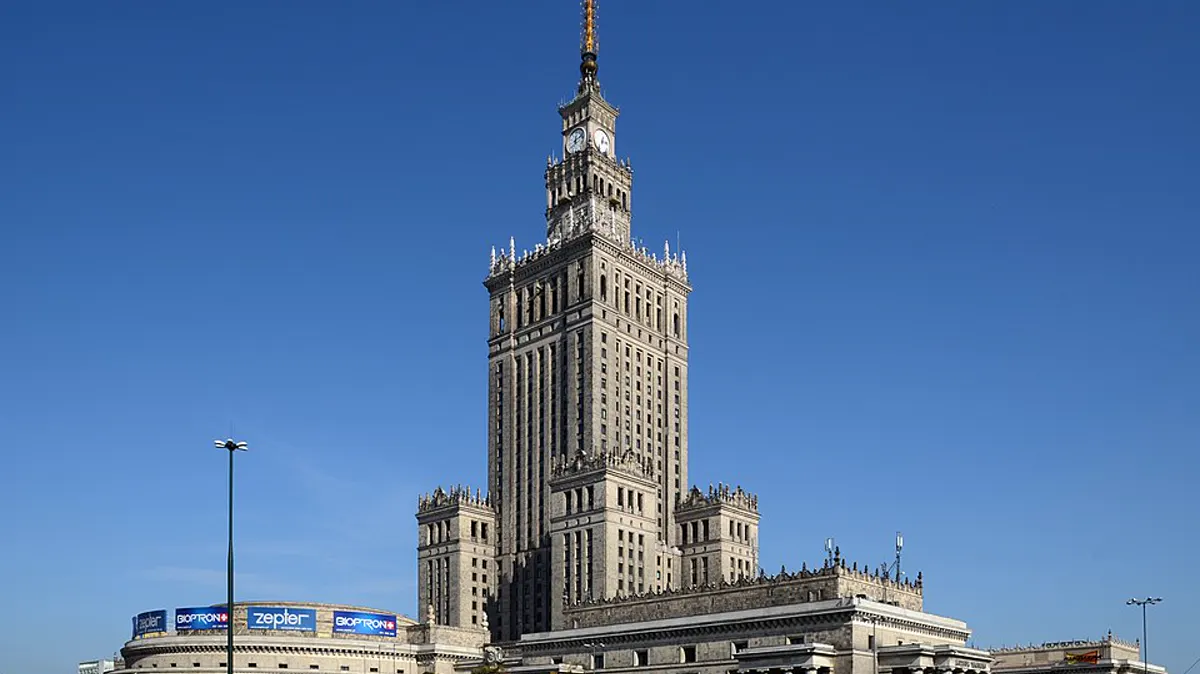
The geography is simple: the Vistula (Wisla) splits the city north to south. The left bank holds the reconstructed core, the Royal Route along Krakowskie Przedmiescie, the government district of Srodmiescie, and the Stalinist Palace of Culture. The right bank is Praga, the district the war spared, now full of pre-war tenements, vodka bars, and converted factories like Koneser and Soho Factory.
Warsaw rewards a traveller who moves between registers. You can stand in the POLIN museum tracing 1,000 years of Polish Jewish history in the morning, eat a 12 zl pierogi lunch at a milk bar, and end the night in a cocktail bar on Nowy Swiat. It is cheaper than Prague or Vienna, faster-moving than Krakow, and it does not perform charm for tourists.
Warsaw at a glance
Airport
Warsaw Chopin (WAW), 8 km south of centre; Modlin (WMI) low-cost, 40 km north
Population
About 1.86 million (metro area around 3.1 million)
Founded
Town rights around 1300; capital of Poland since 1596
Good to know
Old Town (Stare Miasto), UNESCO-listed reconstruction
Currency
Polish zloty (PLN, zl). Not the euro.
Language
Polish. English is widely spoken in tourism and by younger people.
Time zone
Central European Time (UTC+1, or UTC+2 in summer).
Emergency
112 from any phone, free, English-speaking operators.
Tap water
Safe to drink everywhere in Poland.
Cards
Contactless is accepted almost everywhere, even for small amounts.
Sockets
Type E, 230V. UK and US visitors need an adapter.
Visas
Poland is in the Schengen Area and uses the EU entry rules.
Top things to see in Warsaw
Stare Miasto (Warsaw)
Warsaw's Old Town was rebuilt from rubble after World War II so faithfully that UNESCO added it to the World Heritage list. Its Market Square is lined...
Muzeum Powstania Warszawskiego
The Warsaw Uprising Museum documents the 63-day insurrection of 1944 through survivor recordings, a replica Liberator bomber, and a beating-heart soun...
Old Town Market Square
The reconstructed heart of Warsaw Old Town, a UNESCO-listed feat of post-war rebuilding ringed by colourful townhouses.
Palac w Wilanowie
Wilanow Palace was the baroque summer residence of King Jan III Sobieski and survived the war intact, earning it the nickname the Polish Versailles. I...
Palac Kultury i Nauki
The Palace of Culture and Science is Poland's tallest building at 237 metres, a Stalinist gift from the Soviet Union completed in 1955. Its 30th-floor...
Krakowskie Przedmiescie (Warsaw)
This elegant Royal Route boulevard links the Old Town to the university and is lined with churches, palaces and the Presidential Palace. The Holy Cros...
Centrum Nauki Kopernik
The Copernicus Science Centre on the Vistula riverbank offers hundreds of hands-on physics and biology exhibits plus a planetarium under a spherical d...
Castle Square and Sigismund's Column
Castle Square is the triangular plaza at the entrance to Warsaw's Old Town, centred on Sigismund's Column, the city's oldest secular monument and one...
St. John's Archcathedral
St. John's Archcathedral is Warsaw's oldest church, a Masovian Gothic cathedral in the Old Town where Poland's 1791 constitution was sworn and Masovia...
Museums, castles and nature in Warsaw
Museums
POLIN Museum of the History of Polish Jews
An award-winning museum tracing a thousand years of Jewish life in Poland, on the site of the former Warsaw Ghetto.
Castles
Royal Castle
The reconstructed seat of Polish kings and parliament on Castle Square, rebuilt from rubble after wartime destruction.
Parks and nature
Lazienki Park
Warsaw's largest park, a landscaped royal garden with a palace on an island, peacocks and free Chopin concerts in summer.
Vistula Boulevards
The revamped riverfront promenade, all bars and beaches on one bank facing wild woods on the other.
Where to base yourself: the neighbourhoods
Stare Miasto (Old Town)
The rebuilt medieval core, centred on the Rynek Starego Miasta square with the Mermaid (Syrenka) statue and the Royal Castle (Zamek Krolewski). Compact enough to cross in fifteen minutes, ringed by the reconstructed Barbican and city walls.
Srodmiescie
The dense downtown around the Palace of Culture and Science and Warszawa Centralna station. Home to the Royal Route, the university, high-rise offices, and most of the big museums; this is where you sleep and change trams.
Praga-Polnoc
The right-bank district that survived the war mostly intact, so its brick tenements and courtyard shrines are original. The Koneser vodka distillery complex and Zabkowska street bars make it the city's grittier nightlife anchor.
Powisle
The riverside strip below the escarpment, revived around the Copernicus Science Centre and the University Library rooftop garden. In summer the Vistula boulevards and beach bars here are the city's outdoor living room.
Wilanow
A leafy southern district built around the Baroque Wilanow Palace, King Jan III Sobieski's summer residence, sometimes called the Polish Versailles. Formal gardens, a poster museum, and the modern Temple of Divine Providence sit nearby.
Mokotow
A large residential district south of the centre, mixing pre-war villas around Plac Unii Lubelskiej with the Stary Mokotow cafe scene. Lazienki Park spills into its northern edge.
How to spend one, two or three days in Warsaw
Day 1
Old Town and the Royal Route
- Morning: Start at the Royal Castle (Zamek Krolewski) on Plac Zamkowy, then wander the Rynek Starego Miasta, the Barbican, and the New Town (Nowe Miasto) up to Maria Sklodowska-Curie's birthplace.
- Afternoon: Walk south down Krakowskie Przedmiescie past the University of Warsaw and the Presidential Palace, pausing at the Chopin bench that plays his music. Lunch at a milk bar such as Bar Mleczny Prasowy on Marszalkowska.
- Evening: Continue down Nowy Swiat, the city's smart cafe and cocktail street, and finish with dinner near Plac Trzech Krzyzy.
Day 2
20th-century history and the Vistula
- Morning: Spend two to three hours at POLIN, the Museum of the History of Polish Jews, in the former ghetto district around Muranow.
- Afternoon: Cross to Powisle for the Copernicus Science Centre and the University Library rooftop garden, then walk the Vistula boulevards. Alternatively, tackle the Warsaw Rising Museum (Muzeum Powstania Warszawskiego) in Wola.
- Evening: Take the tram to Praga for dinner at the Koneser complex, home to the Polish Vodka Museum, then bars on Zabkowska street.
Day 3
Palaces, parks and the Palace of Culture
- Morning: Ride the lift up the Palace of Culture and Science for the 30th-floor terrace, then browse the surrounding Srodmiescie.
- Afternoon: Head to Lazienki Park for the Palace on the Isle and the Chopin monument; free open-air Chopin concerts run Sunday afternoons from mid-May to late September.
- Evening: Continue south to Wilanow Palace and its gardens (last entry mid-afternoon in winter), then dinner back in Mokotow or Srodmiescie.
Where to eat and drink in Warsaw
Start with what the region does best: Pierogi, Paczki, Żurek and Flaki.
Nolita
A Michelin Guide-listed kitchen turning Polish produce into precise modern tasting menus.
Zapiecek
A dependable chain of folk-styled pierogi houses along the Royal Route, good for a first taste of Polish dumplings.
Charlotte Menora
A French bakery on Plac Grzybowski with sun-trap tables, ideal for a slow morning.
Restauracja Podwale 25
A beer hall and grill just outside the Old Town walls, known for giant pork knuckle (golonka) and Masovian dishes. Big portions, garden seating, and a...
Epoka
A two-Michelin-star restaurant beside the Hotel Europejski, rebuilding historic Polish court recipes from old cookbooks into a modern tasting menu. Re...
Bar Mleczny Prasowy
A revived communist-era milk bar on Marszalkowska serving żurek, pierogi, and cutlets at low prices. Order at the counter and eat under retro tiling.
Hala Koszyki
A restored 1909 market hall turned food hall with stalls covering ramen, tacos, Polish grill, and craft beer under one glass roof. Good for groups who...
Relaks
A pioneering third-wave coffee spot in Srodmiescie with a small, focused menu and serious espresso. A neighbourhood favourite for a mid-walk break.
Woda Ognista
An intimate cocktail bar off Plac Zbawiciela mixing seasonal drinks with Polish spirits and infusions. Small, dim, and best booked at weekends.
Cud nad Wisla
A riverside bar on the Praga bank of the Vistula, open in warmer months with deckchairs, DJs, and a sunset view of the left-bank skyline. Casual and s...
Where to stay in Warsaw
Raffles Europejski Warsaw
A landmark 19th-century hotel on the Royal Route, reborn with a serious art collection.
Hotel Bristol
The city's grande dame, a grand turn-of-the-century institution next to the Presidential Palace.
PURO Warszawa Centrum
A design hotel by the Palace of Culture with skyline views and a lively lobby bar.
Oki Doki Hostel
A colourful, long-running hostel right on Plac Dabrowskiego in the centre.
Hotel Verte, Autograph Collection
A design-led boutique hotel inside restored Old Town tenements on Plac Zamkowy, blending exposed brick with contemporary interiors. About as close as...
P&O Apartments Chmielna
Serviced apartments in Srodmiescie near Nowy Swiat and Centralna station, useful for families or longer stays wanting a kitchen. Central without hotel...
Oki Doki Old Town Hostel
A long-running, art-themed hostel on ulica Dluga by the Old Town, with private rooms as well as dorms. Sociable, central, and budget-friendly.
What to eat and drink in Warsaw
Local to Warsaw
Pierogi
Boiled or pan-fried dumplings stuffed with potato and curd (ruskie), meat, cabbage and mushroom, or seasonal fruit. A plate of eight runs around 20 to 30 zl at a milk bar.
Paczki
Deep-fried yeast doughnuts filled with rose-petal jam (konfitura rozana), a Warsaw obsession peaking on Fat Thursday (Tlusty Czwartek). E. Wedel and A. Blikle on Nowy Swiat are the classic addresses.
Żurek
A sour rye soup with white sausage and a hard-boiled egg, often served in a bread bowl. The tang comes from fermented rye starter, and it is a fixture on milk bar menus.
Flaki
A peppery tripe soup, flaki po warszawsku being the Warsaw version seasoned with marjoram and nutmeg. A hearty, old-school dish still found in traditional Polish restaurants.
Wuzetka
A Warsaw chocolate cream cake said to be named after the W-Z (East-West) route built in 1949. Layers of chocolate sponge, cream, and jam, topped with a whipped-cream rosette.
Polish classics worth ordering
Polish cooking is hearty, seasonal and built on soups, dumplings and slow-cooked meat. These are the classics worth seeking out in any city, best at a milk bar or an old-school restaurant rather than a tourist trap.
Pierogi
Half-moon dumplings stuffed with anything from potato and curd cheese (ruskie) to meat, cabbage and mushroom, or sweet fruit. Boiled or pan-fried in butter.
Żurek
A tangy soup of soured rye flour, usually with white sausage and a boiled egg, sometimes served in a bread bowl. The taste of a Polish Easter.
Bigos
The "hunter's stew" of sauerkraut, fresh cabbage and several meats, simmered for days until deep and smoky. Better the second day.
Kotlet schabowy
A breaded, flattened pork cutlet, the Polish Sunday dinner, served with potatoes and mizeria (cucumber in cream) or cabbage.
Gołąbki
Cabbage leaves rolled around minced meat and rice, baked in a tomato or mushroom sauce. The name means "little pigeons".
Placki ziemniaczane
Crisp potato pancakes, eaten savoury with sour cream or, in the mountains, drowned in a goulash (placki po zbojnicku).
Rosol
A clear, golden chicken broth with fine noodles, the traditional start to a Polish Sunday lunch.
Sernik and paczki
For something sweet: sernik (a dense baked cheesecake made with twarog curd) and paczki (rose-jam doughnuts), devoured by the million on Fat Thursday.
Drinks
Poland is a vodka country first, but it also has a serious craft-beer scene and a tradition of homemade fruit liqueurs.
- Wodka
- Drunk cold and neat, in company, with a toast and a bite to follow. Clean rye or potato brands (Belvedere, Chopin, Wyborowa) are the benchmark.
- Nalewki
- Homemade fruit and herb liqueurs, from cherry (wisniowka) to honey-spiced krupnik, often stronger and smoother than they look.
- Craft beer
- Poland has hundreds of craft breweries and multitap bars in every city. Ask for a local piwo rzemieslnicze rather than the mass lagers.
- Non-alcoholic
- Kompot (a jug of stewed fruit) is the homemade soft drink, and in winter grzane piwo (mulled beer) and grzaniec (mulled wine) warm up the markets.
Best day trips from Warsaw
Zelazowa Wola
54 km · about 1 hr by bus (no direct train)
The manor where Fryderyk Chopin was born in 1810, now a museum set in a landscaped park. Piano recitals play on the terrace on summer Sundays.
Kampinos National Park
20 km · about 40 min by bus to Truskaw
A vast forest and dune wilderness on Warsaw's north-western edge, laced with marked hiking and cycling trails. One of very few national parks bordering a European capital.
Lodz
135 km · about 1 hr 20 min by train
Poland's old textile capital, rebuilt around the 4 km Piotrkowska street and the Manufaktura factory complex. Strong film-school and street-art scene, and cheaper than Warsaw.
Kazimierz Dolny
120 km · about 2 hr 15 min by bus
A postcard Renaissance town on the Vistula, ringed by loess ravines and a ruined castle. Famous for its market square, artists' galleries, and rooster-shaped bread.
Treblinka
100 km · about 1 hr 45 min by car
The site of the Nazi extermination camp where more than 800,000 people were murdered, now a sombre memorial of standing stones. A demanding but important day out; a car is far easier than public transport.
Modlin Fortress
40 km · about 40 min by train to Modlin
A sprawling 19th-century Napoleonic and Russian fortress at the confluence of the Vistula and Narew rivers. Its 2.25 km barracks building is among the longest in Europe.
When to visit Warsaw
Warsaw has a full continental climate: cold, dark winters and warm summers, with big swings year to year. Late spring and early autumn are the sweet spots for walking and outdoor bars, while winter suits museums and Christmas markets.
April to May
Spring
Parks like Lazienki and the Saxon Garden green up, and the Vistula boulevards start filling. Pack layers; April can still turn cold and wet, but crowds and prices stay low.
June to August
Summer
Long days, riverside beach bars, and free Sunday Chopin concerts in Lazienki. Warm but rarely oppressive, though July and August bring afternoon thunderstorms and peak hotel rates.
September to October
Autumn
Arguably the best light of the year, with gold on the park trees and thinner crowds. September stays mild; October cools fast and museum season begins.
November to March
Winter
Short, grey days and temperatures often below freezing, with occasional snow. The Old Town Christmas market and warm milk bars are the payoff; January and February are the cheapest months to visit.
Getting to and around Warsaw
By air
Warsaw Chopin (WAW) is 8 km south of the centre, linked by S2/S3 trains and city buses. Low-cost flights often land at Modlin (WMI), 40 km north, with a shuttle-plus-train transfer.
By train
Warszawa Centralna is the national rail hub. EIP express trains reach Krakow and Gdansk in about 2.5 hours, with international links toward Berlin and Prague.
By bus
FlixBus and coach carriers use Warszawa Zachodnia, a short train hop from the centre and now a modern terminal.
By car
The A2 motorway arrives from the west. Downtown is a paid parking zone with heavy traffic, so a hotel with parking or a Park & Ride is the calmer choice.
Metro, trams & buses
Two metro lines cross at Swietokrzyska and move you fastest north to south. Trams and buses fill in the rest, running late into the night.
Tickets
One ZTM ticket covers metro, tram and bus. Buy in the app or at machines; a 20 or 75-minute ticket suits most single trips, a 24-hour ticket most days out.
Bikes & walking
The Royal Route from the Old Town to Lazienki is a fine walk, and the seasonal Veturilo bike share is handy along the Vistula boulevards.
Staying connected
- EU roaming
- If you have an EU or UK SIM, roaming works at your normal domestic rate under the roam-like-at-home rules, so most European visitors need to do nothing.
- eSIM
- For visitors from outside Europe, an eSIM from a provider such as Airalo or Holafly is the simplest option, activated before you land with no shop visit.
- Local SIM
- A prepaid SIM from Play, Orange, Plus or T-Mobile costs little and gives generous data. You need your passport to register it, which is a legal requirement.
- Free wifi
- Cafés, hotels, malls and many trams and buses have free wifi, though speeds vary. Do not rely on it for anything sensitive.
Apps to download before you go
A short list of apps that make a Polish trip smoother. Download them before you fly; every link goes straight to the app.

Jakdojade
Public transport
Public transport routes, live departure times and mobile tickets for every Polish city. The first app to install.



Bolt
Rides and taxis
The most widely used ride-hailing app in Poland, usually cheaper than a street taxi, plus e-scooters and shared bikes.

Koleo
Train tickets
Buy Polish train tickets (PKP Intercity and regional) with seat selection, often cheaper than buying at the counter.
Google Maps
Maps and offline
Reliable for walking and public-transport directions nationwide. Download the offline area for your city before you land.

Google Translate
Translation
Install the Polish language pack for offline camera translation of menus and signs.

Revolut
Payments
Hold and spend zloty at the real exchange rate, sidestepping the airport kantor and card DCC markups.

Wise
Payments
A multi-currency account and card that also spends zloty at the real exchange rate, a strong alternative to Revolut.

Booking.com
Stays
The default for hotels and apartments in Poland, with the widest choice and free-cancellation options.
Money, costs and tipping
Poland runs on the zloty, not the euro, and it is one of the better-value city-break destinations in the EU. Cards work nearly everywhere, but a few local habits save you money.
- Pay in zloty, always
- When a card machine or ATM offers to charge you in your home currency, decline it and choose PLN. That "dynamic currency conversion" hides a poor exchange rate and can add 5 to 12 percent.
- Skip airport and street exchange
- Avoid the exchange desks at the airport and the Euronet ATMs in tourist zones, which give weak rates and push DCC. Withdraw from a normal bank ATM (PKO BP, Santander, ING, Pekao) or just pay by card.
- Cash for small things
- Keep a little cash for a milk bar (bar mleczny), a market stall, a toilet (1 to 3 zl), or a rural bus. Everything else takes contactless or Apple/Google Pay.
- Tipping
- Round up or leave about 10 percent in a restaurant if you were happy. Do not say "thank you" when handing over money if you want change back, as it can be taken to mean "keep it".
Safety and local etiquette
Staying safe
Poland is one of the safer countries in Europe, and its cities feel relaxed late into the evening. The risks are the ordinary big-city ones rather than anything unusual.
- Petty theft
- Pickpocketing happens in crowded tourist spots, on packed trams and at big events. Keep your phone and wallet in a front pocket or a zipped bag and you will almost certainly be fine.
- Taxis
- Use an app (Bolt, Uber or Free Now) rather than flagging a random taxi, especially near stations and airports, to avoid inflated fares. The price is fixed and shown up front.
- Nightlife
- Stick to established bars and clubs, watch your drink, and be wary of touts steering you to a "special" venue with a surprise bill. This is rare but worth knowing.
- Emergency number
- Dial 112 for police, ambulance or fire. Operators speak English. Pharmacies (apteka) are widespread and one is always open on a rota.
Local etiquette
Poles are warm once the ice breaks and appreciate a little effort. A few points of etiquette go a long way, especially at the country's many places of memory.
- Greetings
- A firm handshake and eye contact is standard. "Dzień dobry" (good day) and "dziękuję" (thank you) are always welcome, even if the rest is in English.
- Churches and memorials
- Cover shoulders and knees in churches and keep quiet during Mass. At sites such as Auschwitz-Birkenau, dress and behave soberly, and do not take smiling selfies.
- In a home
- If you are invited to someone's home, take off your shoes at the door and bring flowers (an odd number) or chocolates. Never bring an even number of flowers, which is for funerals.
- Toasts
- Vodka is drunk cold in one go with a toast of "na zdrowie" (to health), followed by something to eat. Pace yourself, as refusing every round can seem standoffish.
Who Warsaw suits
A quick word on who each Polish city suits and how to make it work for you.
Families
Poland is easy with children: milk bars are cheap and quick, ice cream (lody) is everywhere, and museums and parks are stroller-friendly. Trams are free for small children.
Couples
Cobbled old towns, candlelit cellar restaurants and riverside bars make for an easy romantic weekend, and prices leave room for a proper dinner out.
Solo travellers
Cities are safe and walkable, hostels are sociable, and free walking tours are a good way to meet people. English gets you a long way.
Seniors
Compact centres, plenty of cafés to rest in and good public transport make for a gentle pace. Many museums offer reduced tickets.
Accessibility
Newer trams and buses are low-floor and stations are improving, but medieval cobbles and old tenement stairs can be hard going. Check ahead for lifts.
Warsaw: frequently asked questions
Two days cover the rebuilt Old Town, the Royal Route, the POLIN museum and a wander through Praga. A third day makes room for Wilanow Palace or Lazienki Park.
It is worth visiting for different reasons. Warsaw trades a medieval core for a meticulously rebuilt Old Town, strong museums like POLIN and the Warsaw Rising Museum, and a faster, more lived-in feel than Krakow.
The train or bus line 175 reaches Srodmiescie in about 20 to 25 minutes from Warsaw Chopin (WAW), 8 km south. The low-cost Modlin airport (WMI) is 40 km north, reached by train to Modlin plus a shuttle bus.
Easily. Fast EIP and IC trains link the two in about 2.5 hours several times a day, so many travelers split a week between them.
The center, from the Old Town down Nowy Swiat to Srodmiescie, walks well. The city is large, though, so use the metro, trams and buses for districts like Wilanow, Mokotow or Praga.
Yes. As the capital and largest city, English is common in hospitality, transport and among younger residents, and most menus and signs in tourist areas are bilingual.
It is Poland's priciest city but still cheaper than Prague or Vienna. A milk-bar plate of pierogi runs around 12 to 20 PLN, while mid-range restaurant mains sit at roughly 40 to 70 PLN.
Srodmiescie near Nowy Swiat keeps the center walkable, Powisle offers riverside cafes, and Praga across the Vistula gives pre-war character and nightlife at lower prices.
Guides to Warsaw
Where to Stay in Warsaw: Best Areas
A practical breakdown of where to stay in Warsaw, comparing the Old Town and Royal Route, Srodmiescie near the...
Read guide2 Days in Warsaw
A practical two-day Warsaw itinerary that pairs the rebuilt Old Town and Royal Route on day one with parks, a...
Read guideThings to Do in Warsaw
The sights that make Warsaw worth two or three days, from the rebuilt Old Town and the Royal Route to POLIN, L...
Read guideCities near Warsaw
About this guide
This guide to Warsaw is researched and maintained by the ViewPoland editorial team, and was last reviewed in September 2026. We update it as venues, prices and transport change.