Attraction in Warsaw
Palac w Wilanowie
Wilanow Palace was the baroque summer residence of King Jan III Sobieski and survived the war intact, earning it the nickname the Polish Versailles. Its formal gardens and gilded interiors draw crowds year round.
Reviewed and updated July 2026
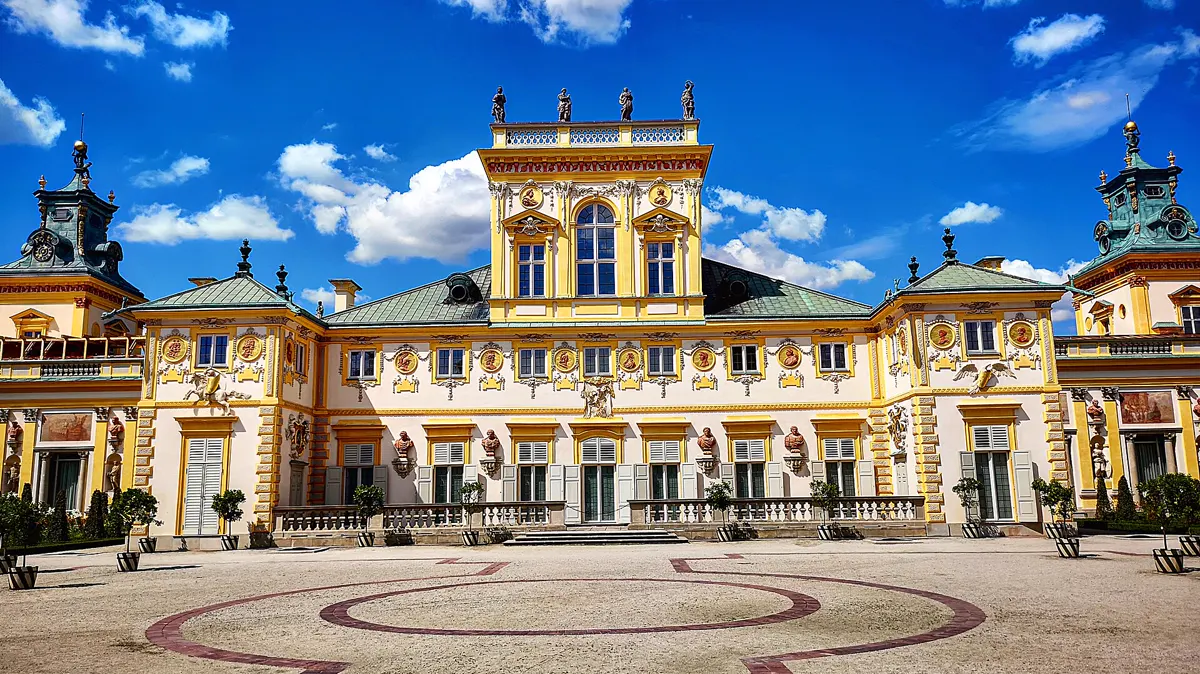
Wilanow Palace (Palac w Wilanowie) was the baroque summer residence of King Jan III Sobieski, built at the edge of Warsaw in the late seventeenth century. It survived the Second World War almost intact, which is rare in this city, and its royal interiors and formal gardens have earned it the nickname the Polish Versailles. It lies in the Wilanow district, south of the centre.
Why visit Wilanow Palace
This is the best-preserved royal residence in Warsaw and one of the few places where you see original historic interiors rather than post-war reconstruction. The palace pairs gilded state rooms with a portrait collection and formal grounds, and it works as a half-day trip out from the centre. It suits anyone interested in the era of Jan III Sobieski, the king who led the relief of Vienna in 1683.
The palace and its gardens
The visit divides between the palace and its gardens:
- The royal apartments, with baroque ceilings, gilding and period furnishings.
- A gallery of Polish portraits and old-master paintings.
- The formal Italian and other gardens laid out behind the palace, above the lake.
- Outbuildings and, in the grounds, a poster museum in the former riding school.
Sobieski's baroque residence
The palace was built for King Jan III Sobieski from 1677 to 1696, to designs by Augustyn Locci, and extended by later owners. It became a museum as early as the start of the nineteenth century, one of the first public museums in Poland. Unlike most of Warsaw, it survived the war, though it was plundered by the retreating Germans in 1944 and restored afterwards, and much of its fabric is original.
How long to spend
Allow about two hours for the palace interiors and the gardens together. With the journey from the centre and a stop nearby, it makes a comfortable half day.
Best time to visit
The gardens are at their best in late spring and summer. In winter the palace is often lit for a seasonal light show in the grounds after dark. Weekday mornings are calmest. The palace usually closes on one weekday, so check first.
Getting to Wilanow
Wilanow is at the southern end of the Royal Route, several kilometres from the centre. Buses run directly to the palace from central Warsaw in around half an hour. For wider transport, see the Warsaw guide.
What's nearby
Wilanow anchors the far end of the Royal Route:
- The palace gardens and park, free or ticketed depending on the season.
- Lazienki Krolewskie, the other royal park, back towards the centre.
- Krakowskie Przedmiescie, the grand start of the same route by the Old Town.
Good to know
The palace interiors and the gardens are ticketed, sometimes separately, and the palace closes one day a week. Check the official Wilanow site for current hours, prices and the winter light-show dates.
Common questions
Did Wilanow survive the war?
Yes, largely. Unlike most of Warsaw, the palace came through the Second World War almost intact, so its interiors and collections are mostly original rather than rebuilt.
Is it worth the trip from the centre?
If you have half a day and want to see genuine royal interiors and formal gardens, yes. The direct bus makes it straightforward, and it pairs the palace with a walk in the grounds.
Frequently asked questions
More attractions in Warsaw
Old Town Market Square
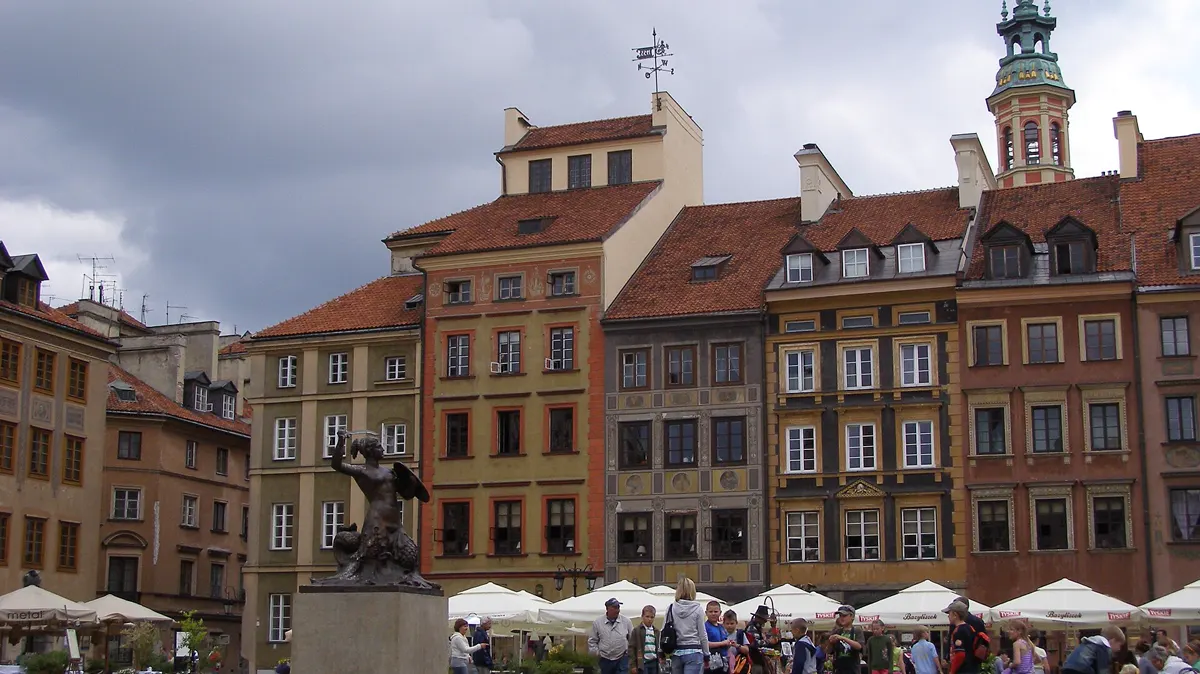
The reconstructed heart of Warsaw Old Town, a UNESCO-listed feat of post-war rebuilding ringed by colourful townhouses.
Stare Miasto (Warsaw)
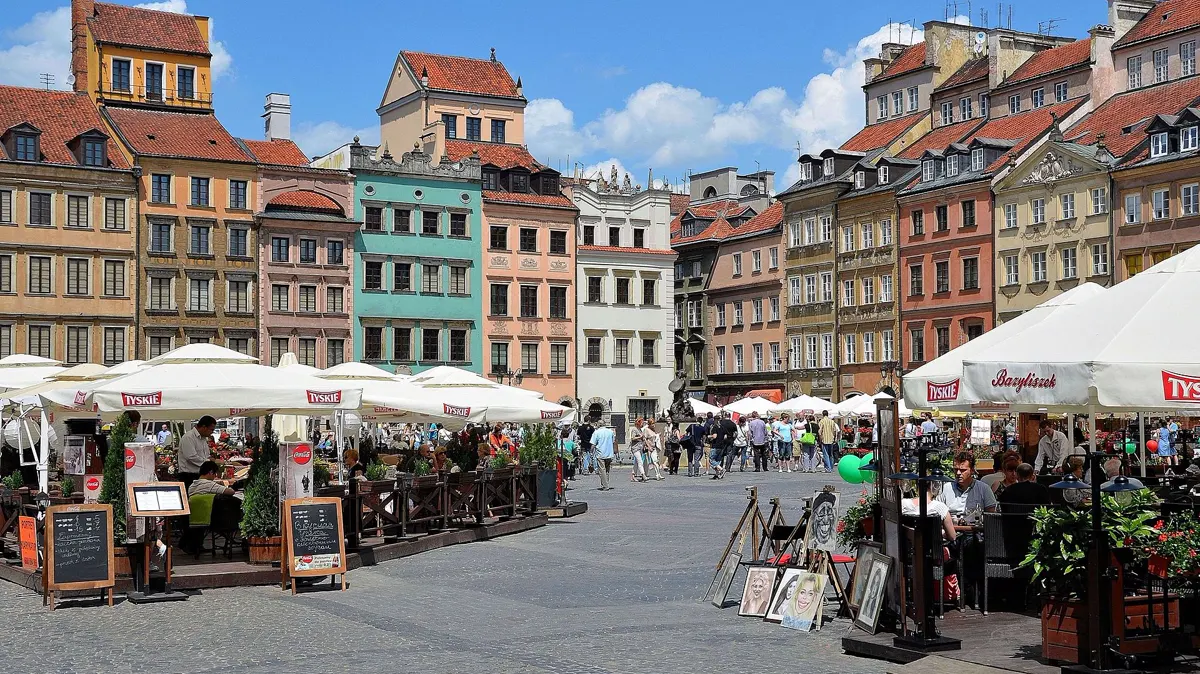
Warsaw's Old Town was rebuilt from rubble after World War II so faithfully that UNESCO added it to the World Heritage list. Its Market Square is lined with pastel merchant houses and centred on the bronze Mermaid statue, the city's symbol.
Muzeum Powstania Warszawskiego
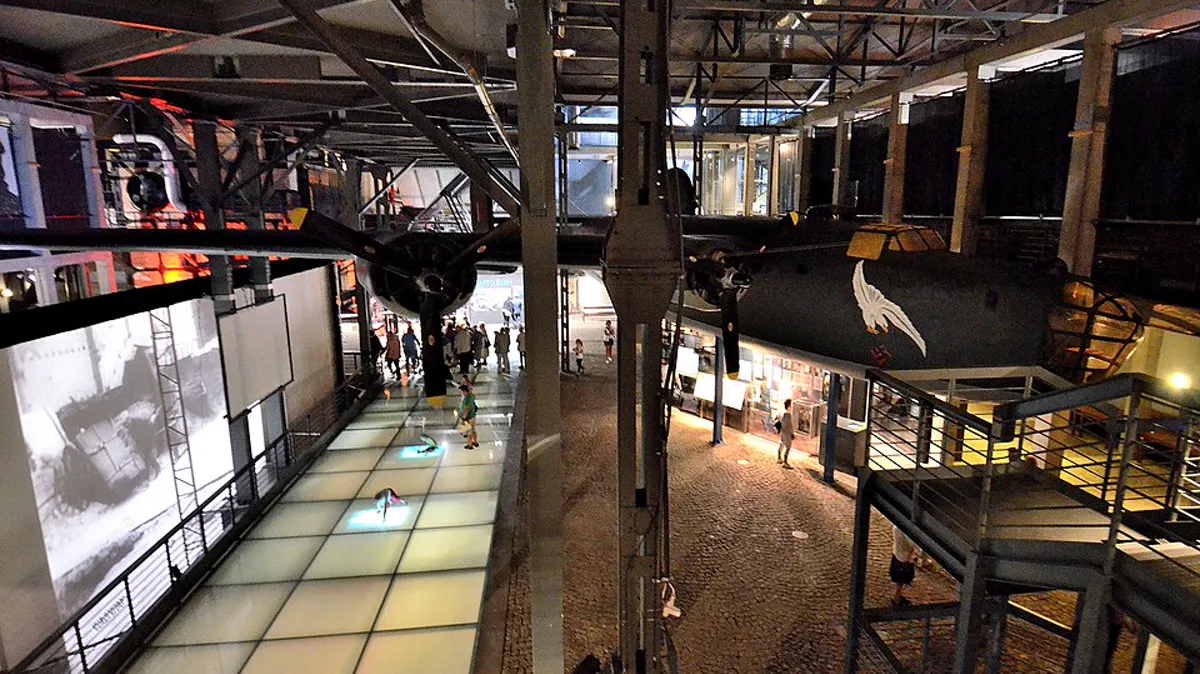
The Warsaw Uprising Museum documents the 63-day insurrection of 1944 through survivor recordings, a replica Liberator bomber, and a beating-heart sound installation. It sits in a former tram power station in the Wola district.
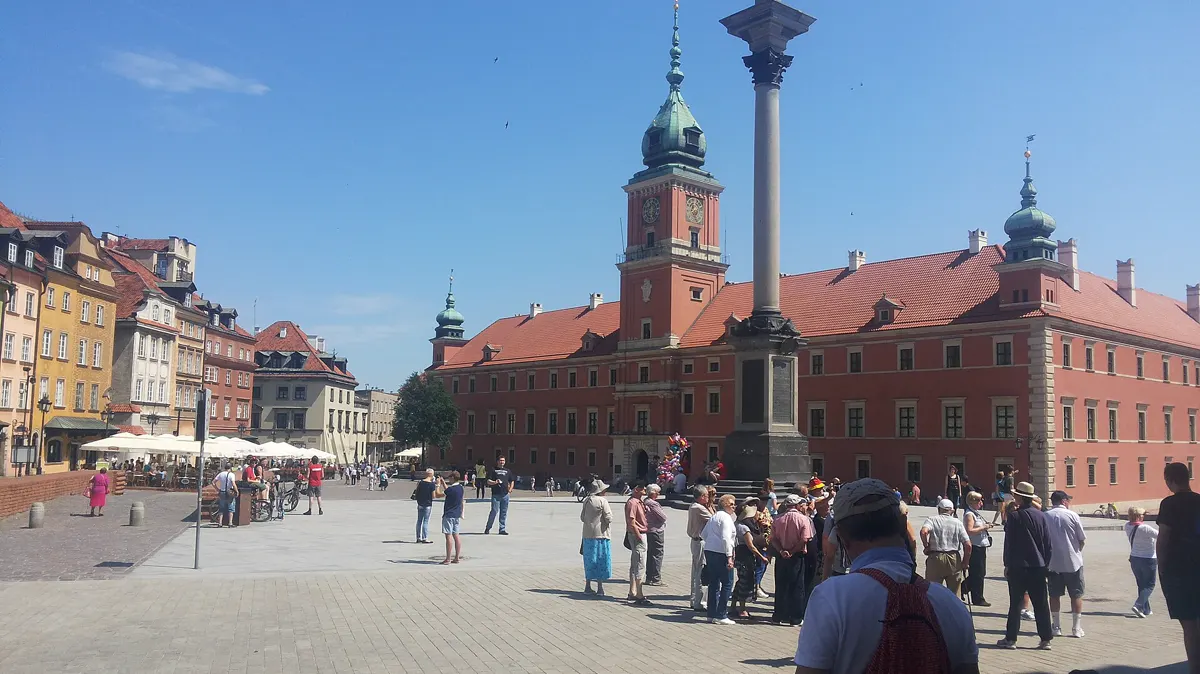
Castle Square and Sigismund's Column
Castle Square is the triangular plaza at the entrance to Warsaw's Old Town, centred on Sigismund's Column, the city's oldest secular monument and one of its most recognisable landmarks.
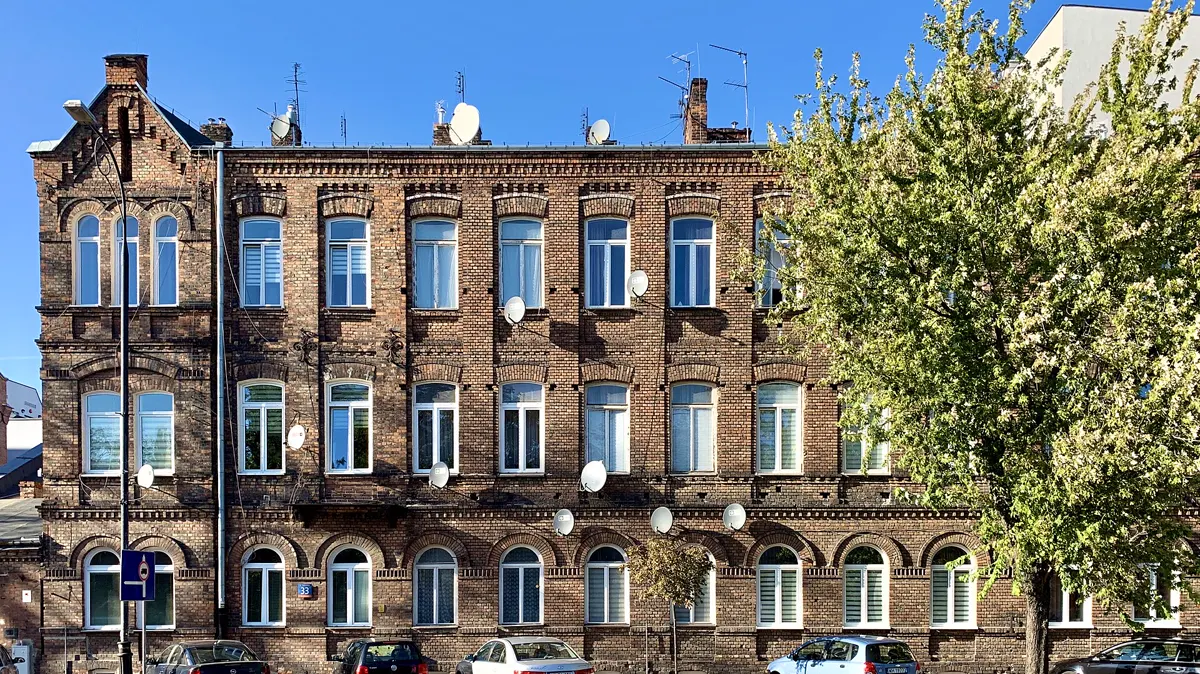
Praga District
Praga is Warsaw's district on the eastern bank of the Vistula, one of the few areas to survive the war intact, now a centre for artists, galleries and nightlife set among genuine pre-war tenements.
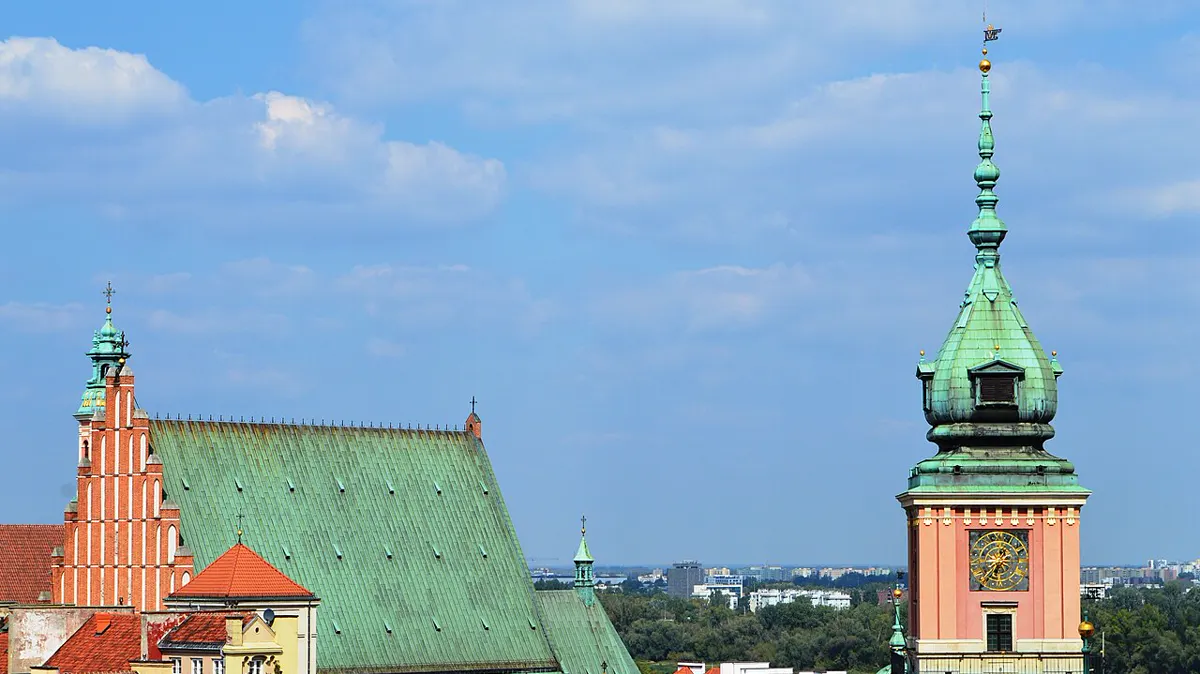
St. John's Archcathedral
St. John's Archcathedral is Warsaw's oldest church, a Masovian Gothic cathedral in the Old Town where Poland's 1791 constitution was sworn and Masovian dukes were crowned and buried.
More to explore in Warsaw

Restaurant
Nolita
A Michelin Guide-listed kitchen turning Polish produce into precise modern tasting menus.
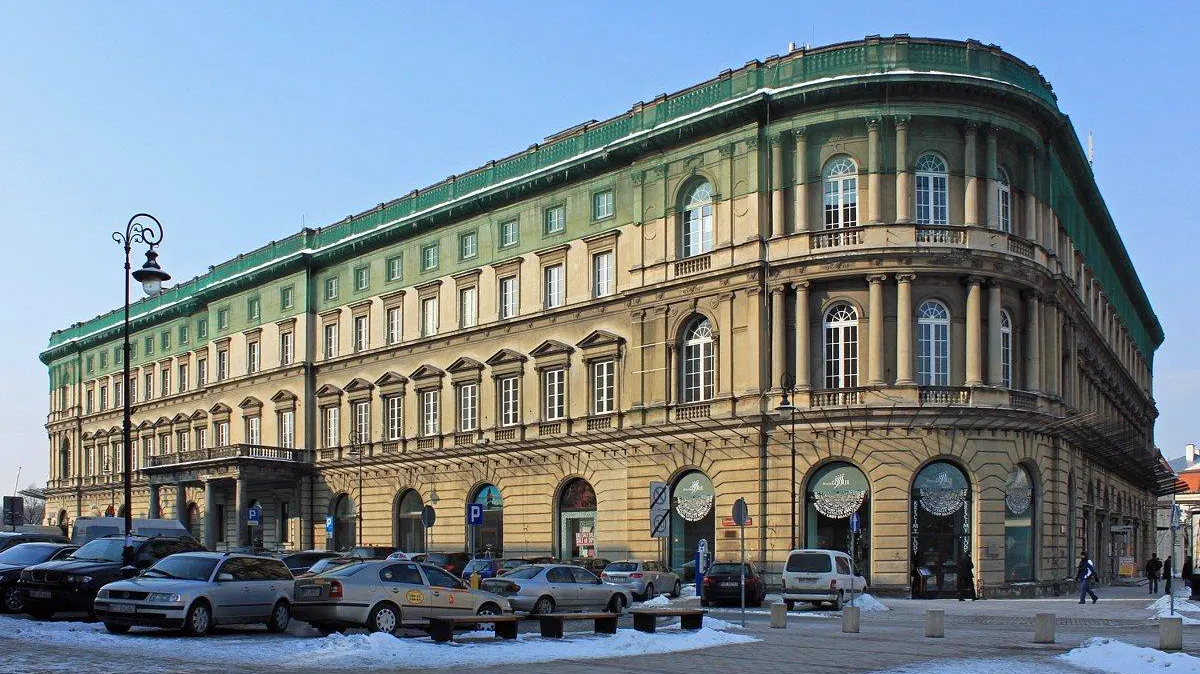
Hotel
Raffles Europejski Warsaw
A landmark 19th-century hotel on the Royal Route, reborn with a serious art collection.
Castle
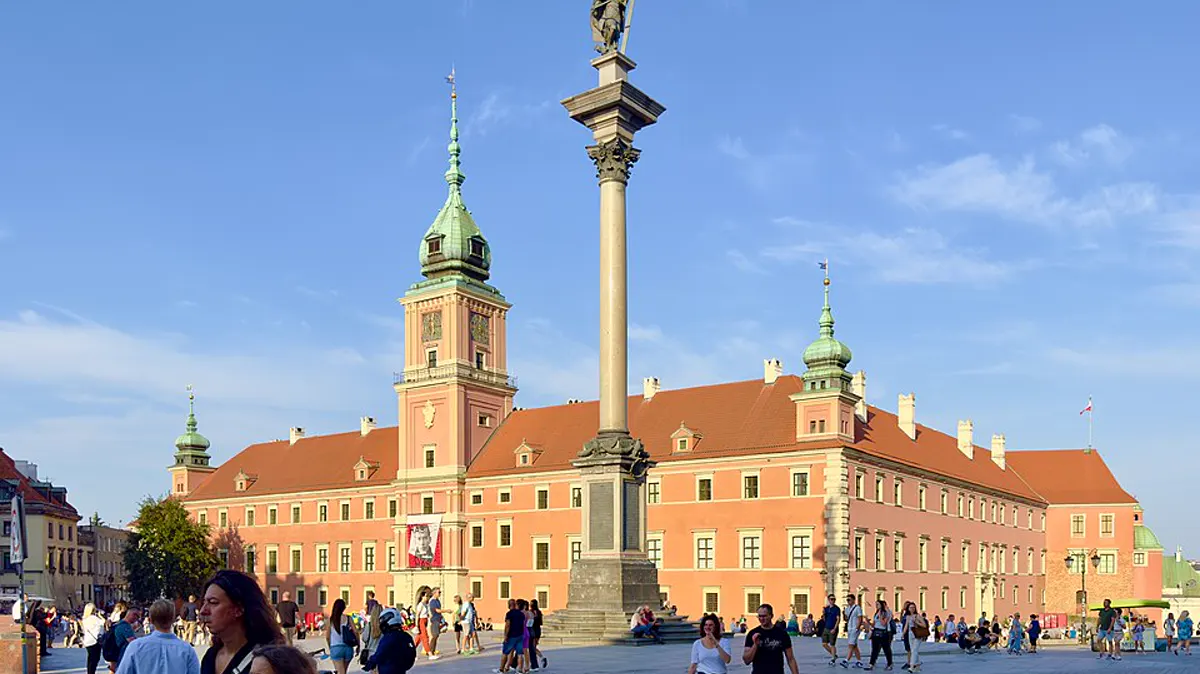
Royal Castle
The reconstructed seat of Polish kings and parliament on Castle Square, rebuilt from rubble after wartime destruction.
Museum
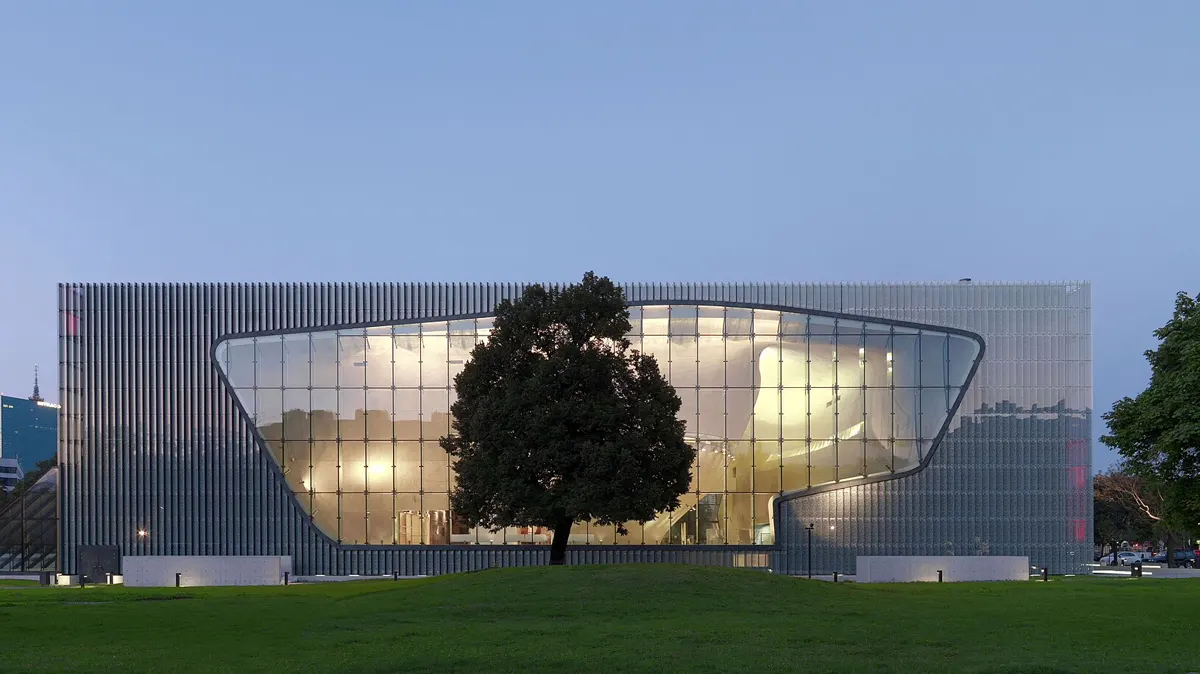
POLIN Museum of the History of Polish Jews
An award-winning museum tracing a thousand years of Jewish life in Poland, on the site of the former Warsaw Ghetto.

Restaurant
STOR
A speciality-coffee bar with several outposts, a favourite of the city's coffee crowd.
Restaurant
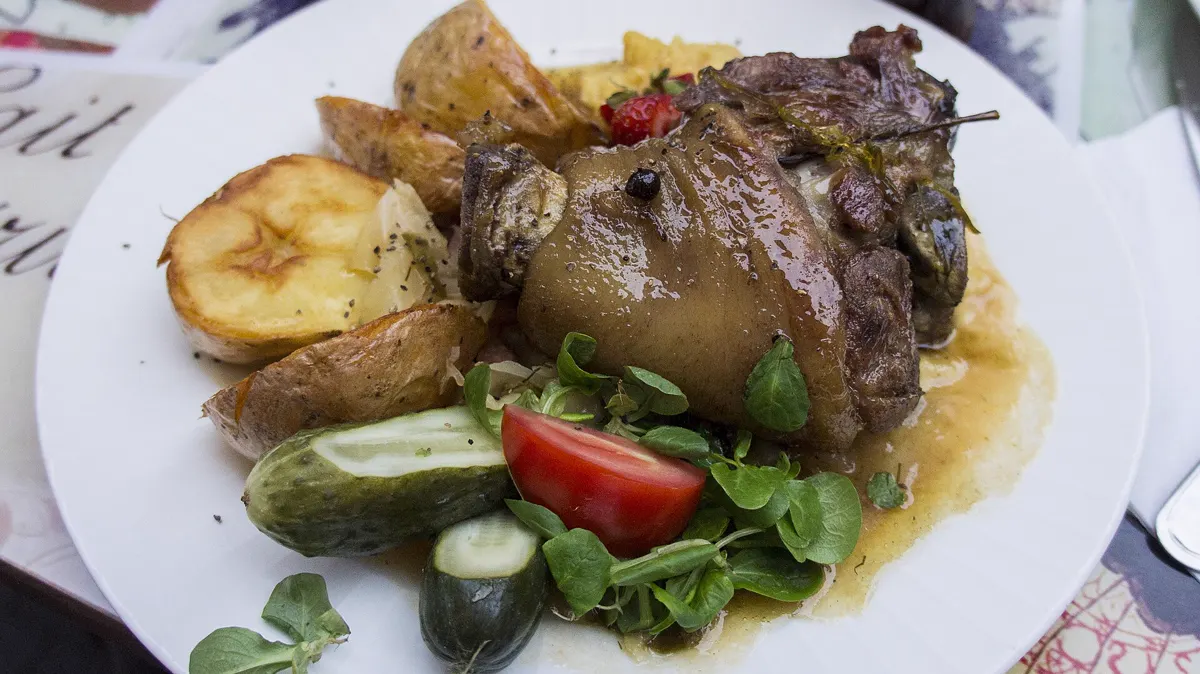
Restauracja Podwale 25
A beer hall and grill just outside the Old Town walls, known for giant pork knuckle (golonka) and Masovian dishes. Big portions, garden seating, and a good beer selection.