The complete guide · Kuyavia-Pomerania
Toruń
A Gothic brick city on the Vistula that came through the war intact, birthplace of Copernicus and home of Poland's most famous gingerbread.
Overview
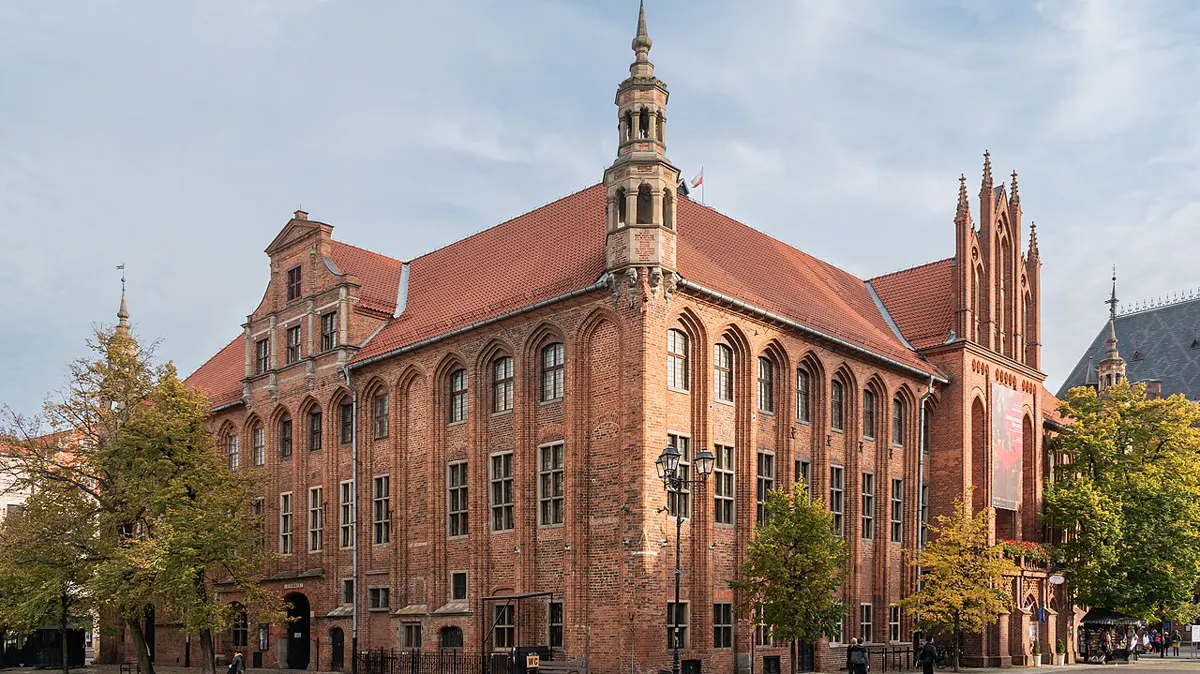
Torun sits on the Vistula in Kuyavia-Pomerania, a Gothic red-brick city that never fell to the bombs of 1945, so its medieval core stands more or less as the Hanseatic merchants left it. UNESCO listed the Old Town in 1997 for exactly this reason: a working Rynek Staromiejski, an Old Town Hall from the 13th century, patrician houses, and defensive walls that mostly survive along the river. Nicolaus Copernicus (Mikolaj Kopernik) was born here in 1473, and the city has traded on both astronomy and gingerbread ever since.
The two industries meet at the river. From the Bulwar Filadelfijski you get the classic postcard: a spiky skyline of church spires and brick granaries reflected in the Vistula, best at sunset. Behind it the streets smell of pierniki, the honey-and-spice gingerbread that Torun has baked since at least the 14th century and still sells everywhere from supermarket shelves to the Muzeum Piernika.
It is a compact city of roughly 195,000 people, walkable end to end in half an hour, which makes it an easy two or three day trip rather than a rushed day out. Trains from Warsaw take about two and a half hours; Gdansk is a similar run north. The nearest airport is Bydgoszcz (BZG), around 45 km west, though most international visitors arrive via Warsaw or Gdansk and take the rail.
Toruń at a glance
Airport
Bydgoszcz Ignacy Jan Paderewski Airport (BZG), about 45 km west; Warsaw and Gdansk airports are common alternatives via train
Population
About 195,000
Founded
1233 (Teutonic charter)
Good to know
UNESCO-listed medieval Old Town, birthplace of Nicolaus Copernicus, home of Torun gingerbread (pierniki)
Currency
Polish zloty (PLN, zl). Not the euro.
Language
Polish. English is widely spoken in tourism and by younger people.
Time zone
Central European Time (UTC+1, or UTC+2 in summer).
Emergency
112 from any phone, free, English-speaking operators.
Tap water
Safe to drink everywhere in Poland.
Cards
Contactless is accepted almost everywhere, even for small amounts.
Sockets
Type E, 230V. UK and US visitors need an adapter.
Visas
Poland is in the Schengen Area and uses the EU entry rules.
Top things to see in Toruń
Torun Old Town
A genuine, war-survived medieval centre of brick Gothic churches, granaries and gabled houses around the Old Town Market Square.
Ratusz Staromiejski
One of the finest municipal Gothic buildings in Central Europe, the Old Town Hall dates from the late 14th century and now houses the District Museum....
Dom Kopernika
A pair of Gothic burgher houses believed to be the birthplace of Nicolaus Copernicus in 1473, now a museum devoted to the astronomer's life and era. E...
Krzywa Wieza
The Leaning Tower is a 14th-century defensive tower that tilts about 1.5 metres from vertical due to its foundation on unstable riverside ground. Loca...
Katedra sw. Janow
The soaring Cathedral of Saints John the Baptist and John the Evangelist is a monumental brick Gothic church begun in the 13th century. It holds the T...
Ruiny zamku krzyzackiego
The ruins of the Teutonic Knights' castle, the order's first stronghold in the Chelmno Land, were destroyed by townspeople in a 1454 revolt. The prese...
Zywe Muzeum Piernika
At the Living Museum of Gingerbread, visitors knead and bake their own pierniki using medieval recipes under the guidance of costumed masters. Torun's...
Planetarium
Housed in a former 19th-century gas holder, Torun's planetarium projects astronomy shows under a large dome in fitting tribute to the birthplace of Co...
Nicolaus Copernicus Monument
A bronze statue of the astronomer Nicolaus Copernicus standing in front of Toruń's Old Town Hall, unveiled in 1853 and the city's classic meeting poin...
Museums, castles and nature in Toruń
Parks and nature
Vistula Boulevard
The riverside walk that frames the classic view of Torun's medieval waterfront.
Kepa Bazarowa
A wooded island opposite the old town, with the postcard panorama from its far bank.
Where to base yourself: the neighbourhoods
Stare Miasto (Old Town)
The UNESCO core around Rynek Staromiejski, dominated by the Old Town Hall and its viewing tower. Copernicus House, the Muzeum Piernika, and most restaurants and cafes cluster within a five minute walk here.
Nowe Miasto (New Town)
Medieval in fact despite the name, laid out in 1264 as a separate town for craftsmen. Quieter than the Old Town, centred on Rynek Nowomiejski and the Gothic Church of St James (Kosciol sw. Jakuba).
Bulwar Filadelfijski
The Vistula boulevard running along the southern edge of the walls, named after Torun's twin city Philadelphia. This is where you walk for the gingerbread-skyline view, board river cruises, and cross to Kepa Bazarowa island.
Bydgoskie Przedmiescie
A leafy residential district west of the centre, full of eclectic 19th and early 20th century villas. Bordered by Park Miejski, it is the pleasant walking-and-cafe neighbourhood locals actually live in.
Chelminskie Przedmiescie
The area north of the Old Town around Plac sw. Katarzyny, home to the neo-Gothic garrison church and student life spilling out of Nicolaus Copernicus University buildings.
Jakubskie Przedmiescie
East of the New Town, a former industrial and railway district now mixing tenements with green space. Handy for reaching Torun Wschodni station and the eastern approaches to the river.
How to spend one, two or three days in Toruń
Day 1
The Gothic core and Copernicus
- Morning: Start on Rynek Staromiejski and climb the Old Town Hall tower for the rooftop panorama, then tour the museum inside. See the Copernicus statue in front and the Flisak (raftsman) fountain.
- Afternoon: Visit the Copernicus House (Dom Mikolaja Kopernika) on ul. Kopernika, then walk to the Leaning Tower (Krzywa Wieza) and along the surviving city walls. Grab a quick pierniki tasting at a shop on Zeglarska.
- Evening: Head to Bulwar Filadelfijski for sunset over the Vistula skyline, then dinner in the Old Town. Try a Kujawy-region duck or a beer at a cellar bar near the Rynek.
Day 2
Gingerbread, castles and the New Town
- Morning: Bake your own gingerbread at the Muzeum Piernika (Living Museum of Gingerbread), a hands-on session in medieval baker's costume. Then explore the Teutonic castle ruins (Ruiny Zamku Krzyzackiego) nearby.
- Afternoon: Cross to Rynek Nowomiejski in the New Town, see the Church of St James, and wander the quieter lanes. Visit the Gothic granaries (spichlerze) along the way.
- Evening: Take an early-evening Vistula cruise from the boulevard, or cross to Kepa Bazarowa island for the postcard view back at the illuminated Old Town, then a late supper.
Day 3
Spa day trip to Ciechocinek
- Morning: Take the train or drive 25 km south to Ciechocinek, Poland's best-known spa town. Walk the teznie, the vast 19th century salt graduation towers, and breathe the brine-laden air.
- Afternoon: Stroll the flower carpets and fountain in the spa park, sample a brine bath or drink at the pump room, and lunch in town.
- Evening: Return to Torun for a final dinner. Pick up boxed pierniki from Kopernik's shop on the Rynek as gifts before you leave.
Where to eat and drink in Toruń
Start with what the region does best: Torunskie pierniki, Kaczka po kujawsku, Czernina and Zapiekanka.
Manekin
A local legend for enormous sweet and savoury pancakes at gentle prices.
Karczma Gesia Szyja
A rustic inn in the old town leaning into goose and other regional specialities.
Szeroka 9
One of Torun's most polished kitchens, plating modern Polish and European dishes on the central Szeroka street.
Bar Mleczny Malgoska
A genuine milk bar dishing out cheap, filling Polish home cooking like tomato soup, cutlets, and pierogi at throwback prices.
Oberza
A homely spot near the Rynek with a strong meat-free selection of pierogi, soups, and Polish plates alongside the classics.
Cafe Lenkiewicz
A historic Torun confectioner and cafe pairing good coffee with cakes and its own gingerbread specialities.
Jan Olbracht Browar Staromiejski
A brewpub inside a Gothic granary on Szczytna, brewing its own beer served in vaulted brick cellars with pub food.
Where to stay in Toruń
1231 Hotel
A design hotel inside a 13th-century mill by the moat, with a spa and a well-regarded restaurant.
Hotel Bulwar
A comfortable hotel on the Vistula boulevard with the best gingerbread-skyline views.
Hotel Gotyk
A small, characterful hotel inside a 14th century townhouse on ul. Piekary, inside the Old Town.
Hotel Petite Fleur
A cosy Old Town hotel in a historic tenement, known for its French cellar restaurant and central location near the Rynek.
Hotel Filmar
A reliable four-star business hotel a short walk from the Old Town, with two restaurants and a wellness zone.
Hostel Orange
A clean, well-run budget hostel close to the Old Town with dorms and private rooms, popular with backpackers and families.
What to eat and drink in Toruń
Local to Toruń
Torunskie pierniki
The city's defining product: honey-and-spice gingerbread baked here since the Middle Ages, from soft glazed katarzynki to hard decorative shapes. Kopernik has produced them industrially since 1763, but you can also bake your own at the Muzeum Piernika.
Kaczka po kujawsku
Kuyavia-style roast duck, typically served with apple, marjoram, and potato dumplings. A regional Sunday classic that turns up on Old Town menus.
Czernina
A dark, sweet-and-sour duck-blood soup traditional to Kuyavia and Greater Poland, thickened and served with noodles or dried fruit. An acquired taste that older regional restaurants still make.
Zapiekanka
The Polish open-faced baguette pizza, loaded with mushrooms, cheese, and ketchup, sold from stalls as cheap street food. Reliable late-night fuel after the bars.
Piernikowe pierogi and honey liqueurs
Look for pierogi and desserts spiced with the local gingerbread flavour, plus honey- and spice-based nalewki liqueurs sold in the Old Town shops. A gingerbread-flavoured take on Polish staples.
Polish classics worth ordering
Polish cooking is hearty, seasonal and built on soups, dumplings and slow-cooked meat. These are the classics worth seeking out in any city, best at a milk bar or an old-school restaurant rather than a tourist trap.
Pierogi
Half-moon dumplings stuffed with anything from potato and curd cheese (ruskie) to meat, cabbage and mushroom, or sweet fruit. Boiled or pan-fried in butter.
Żurek
A tangy soup of soured rye flour, usually with white sausage and a boiled egg, sometimes served in a bread bowl. The taste of a Polish Easter.
Bigos
The "hunter's stew" of sauerkraut, fresh cabbage and several meats, simmered for days until deep and smoky. Better the second day.
Kotlet schabowy
A breaded, flattened pork cutlet, the Polish Sunday dinner, served with potatoes and mizeria (cucumber in cream) or cabbage.
Gołąbki
Cabbage leaves rolled around minced meat and rice, baked in a tomato or mushroom sauce. The name means "little pigeons".
Placki ziemniaczane
Crisp potato pancakes, eaten savoury with sour cream or, in the mountains, drowned in a goulash (placki po zbojnicku).
Rosol
A clear, golden chicken broth with fine noodles, the traditional start to a Polish Sunday lunch.
Sernik and paczki
For something sweet: sernik (a dense baked cheesecake made with twarog curd) and paczki (rose-jam doughnuts), devoured by the million on Fat Thursday.
Drinks
Poland is a vodka country first, but it also has a serious craft-beer scene and a tradition of homemade fruit liqueurs.
- Wodka
- Drunk cold and neat, in company, with a toast and a bite to follow. Clean rye or potato brands (Belvedere, Chopin, Wyborowa) are the benchmark.
- Nalewki
- Homemade fruit and herb liqueurs, from cherry (wisniowka) to honey-spiced krupnik, often stronger and smoother than they look.
- Craft beer
- Poland has hundreds of craft breweries and multitap bars in every city. Ask for a local piwo rzemieslnicze rather than the mass lagers.
- Non-alcoholic
- Kompot (a jug of stewed fruit) is the homemade soft drink, and in winter grzane piwo (mulled beer) and grzaniec (mulled wine) warm up the markets.
Best day trips from Toruń
Ciechocinek
25 km · 30 min by car or train
Poland's premier lowland spa town, famous for its monumental wooden teznie (salt graduation towers) that filter brine and perfume the air. Add manicured spa gardens, a pump room, and Art Nouveau villas.
Golub-Dobrzyn
40 km · 45 min by car
A well-preserved Gothic-Renaissance Teutonic castle above the Drweca river, once home to King Sigismund III's sister Anna Vasa. Known for its annual knights' tournament each summer.
Chelmno
45 km · 50 min by car
The self-styled City of Lovers, a hilltop medieval town with a complete ring of walls and a relic of St Valentine in the parish church. Its grid was the model for the Chelmno Law that founded dozens of Polish towns.
Bydgoszcz
45 km · 40 min by train
A larger neighbour with a walkable Brda riverfront, the Mill Island, and the 'Man Crossing the River' sculpture strung on a wire above the water. Home to the nearest airport.
Biskupin
60 km · 1 h by car
A reconstructed Iron Age fortified settlement from around 700 BC, one of Europe's most important archaeological sites, set on a peninsula in Lake Biskupinskie. Its September archaeology festival is the busiest time.
Kruszwica
60 km · 1 h by car
A tiny town on Lake Goplo crowned by the Mysia Wieza (Mouse Tower), tied to the legend of the cruel King Popiel. A quiet detour into the semi-mythical birthplace of the Piast dynasty.
When to visit Toruń
Torun is compact and walkable year-round, but the river light, festivals, and outdoor cafes make late spring through early autumn the sweet spot. Winter has its own draw around the Christmas market and the smell of fresh pierniki.
April to May
Spring
Mild days, blossom in Park Miejski, and thin crowds before the summer coaches arrive. River cruises restart and the Old Town cafes put out their tables.
June to August
Summer
Warmest and busiest, with the boulevard full and the June Bella Skyway light festival painting the Gothic facades. Book accommodation ahead and expect queues at the gingerbread museum.
September to October
Autumn
Golden light on the brick, comfortable sightseeing temperatures, and fewer visitors. A strong time for photography from Kepa Bazarowa and along the Vistula.
November to March
Winter
Cold and often grey, but the Christmas market on the Rynek, warm gingerbread, and floodlit spires reward a short break. Some river attractions close for the season.
Getting to and around Toruń
By train
Intercity trains link Torun with Warsaw in about 2.5 hours. Torun Miasto station is closest to the Old Town, while Torun Glowny sits across the Vistula with a bus link over the bridge.
By bus
FlixBus and regional coaches serve Torun, with easy connections to Bydgoszcz and Gdansk.
By air
The nearest airports are Bydgoszcz (BZG), about 45 km away, and the larger hubs at Gdansk and Warsaw within train reach.
By car
The A1 motorway runs close by. The medieval core is largely pedestrian, so use a lot on the edge of the old walls.
On foot
The UNESCO-listed medieval town is small and flat, best explored entirely on foot between the market squares, the leaning tower and the riverbank.
Buses & trams
City buses and trams reach the outer districts and both stations; single tickets cover short hops well.
By the river
The Vistula boulevard gives the classic postcard view of the gingerbread skyline, an easy stroll from the centre.
Staying connected
- EU roaming
- If you have an EU or UK SIM, roaming works at your normal domestic rate under the roam-like-at-home rules, so most European visitors need to do nothing.
- eSIM
- For visitors from outside Europe, an eSIM from a provider such as Airalo or Holafly is the simplest option, activated before you land with no shop visit.
- Local SIM
- A prepaid SIM from Play, Orange, Plus or T-Mobile costs little and gives generous data. You need your passport to register it, which is a legal requirement.
- Free wifi
- Cafés, hotels, malls and many trams and buses have free wifi, though speeds vary. Do not rely on it for anything sensitive.
Apps to download before you go
A short list of apps that make a Polish trip smoother. Download them before you fly; every link goes straight to the app.

Jakdojade
Public transport
Public transport routes, live departure times and mobile tickets for every Polish city. The first app to install.


Bolt
Rides and taxis
The most widely used ride-hailing app in Poland, usually cheaper than a street taxi, plus e-scooters and shared bikes.

Koleo
Train tickets
Buy Polish train tickets (PKP Intercity and regional) with seat selection, often cheaper than buying at the counter.
Google Maps
Maps and offline
Reliable for walking and public-transport directions nationwide. Download the offline area for your city before you land.

Google Translate
Translation
Install the Polish language pack for offline camera translation of menus and signs.

Revolut
Payments
Hold and spend zloty at the real exchange rate, sidestepping the airport kantor and card DCC markups.

Wise
Payments
A multi-currency account and card that also spends zloty at the real exchange rate, a strong alternative to Revolut.

Booking.com
Stays
The default for hotels and apartments in Poland, with the widest choice and free-cancellation options.
Money, costs and tipping
Poland runs on the zloty, not the euro, and it is one of the better-value city-break destinations in the EU. Cards work nearly everywhere, but a few local habits save you money.
- Pay in zloty, always
- When a card machine or ATM offers to charge you in your home currency, decline it and choose PLN. That "dynamic currency conversion" hides a poor exchange rate and can add 5 to 12 percent.
- Skip airport and street exchange
- Avoid the exchange desks at the airport and the Euronet ATMs in tourist zones, which give weak rates and push DCC. Withdraw from a normal bank ATM (PKO BP, Santander, ING, Pekao) or just pay by card.
- Cash for small things
- Keep a little cash for a milk bar (bar mleczny), a market stall, a toilet (1 to 3 zl), or a rural bus. Everything else takes contactless or Apple/Google Pay.
- Tipping
- Round up or leave about 10 percent in a restaurant if you were happy. Do not say "thank you" when handing over money if you want change back, as it can be taken to mean "keep it".
Safety and local etiquette
Staying safe
Poland is one of the safer countries in Europe, and its cities feel relaxed late into the evening. The risks are the ordinary big-city ones rather than anything unusual.
- Petty theft
- Pickpocketing happens in crowded tourist spots, on packed trams and at big events. Keep your phone and wallet in a front pocket or a zipped bag and you will almost certainly be fine.
- Taxis
- Use an app (Bolt, Uber or Free Now) rather than flagging a random taxi, especially near stations and airports, to avoid inflated fares. The price is fixed and shown up front.
- Nightlife
- Stick to established bars and clubs, watch your drink, and be wary of touts steering you to a "special" venue with a surprise bill. This is rare but worth knowing.
- Emergency number
- Dial 112 for police, ambulance or fire. Operators speak English. Pharmacies (apteka) are widespread and one is always open on a rota.
Local etiquette
Poles are warm once the ice breaks and appreciate a little effort. A few points of etiquette go a long way, especially at the country's many places of memory.
- Greetings
- A firm handshake and eye contact is standard. "Dzień dobry" (good day) and "dziękuję" (thank you) are always welcome, even if the rest is in English.
- Churches and memorials
- Cover shoulders and knees in churches and keep quiet during Mass. At sites such as Auschwitz-Birkenau, dress and behave soberly, and do not take smiling selfies.
- In a home
- If you are invited to someone's home, take off your shoes at the door and bring flowers (an odd number) or chocolates. Never bring an even number of flowers, which is for funerals.
- Toasts
- Vodka is drunk cold in one go with a toast of "na zdrowie" (to health), followed by something to eat. Pace yourself, as refusing every round can seem standoffish.
Who Toruń suits
A quick word on who each Polish city suits and how to make it work for you.
Families
Poland is easy with children: milk bars are cheap and quick, ice cream (lody) is everywhere, and museums and parks are stroller-friendly. Trams are free for small children.
Couples
Cobbled old towns, candlelit cellar restaurants and riverside bars make for an easy romantic weekend, and prices leave room for a proper dinner out.
Solo travellers
Cities are safe and walkable, hostels are sociable, and free walking tours are a good way to meet people. English gets you a long way.
Seniors
Compact centres, plenty of cafés to rest in and good public transport make for a gentle pace. Many museums offer reduced tickets.
Accessibility
Newer trams and buses are low-floor and stations are improving, but medieval cobbles and old tenement stairs can be hard going. Check ahead for lifts.
Toruń: frequently asked questions
A full day covers the UNESCO-listed Old Town on foot. An overnight lets you slow down and catch the brick skyline reflected in the Vistula at sunset from the Bulwar Filadelfijski.
Both work. It is compact enough for a day from Gdansk or Warsaw, but staying over lets the day-tripper crowds thin out and puts the riverside views at golden hour within reach.
The city has baked pierniki, a honey and spice gingerbread, since at least the 14th century, and still sells it everywhere. At the Muzeum Piernika you can press and bake your own by hand.
Nicolaus Copernicus was born here in 1473. His birthplace on Kopernika street is now a museum, and a statue of him stands on the Rynek Staromiejski.
Yes. The whole medieval Old Town can be crossed in about half an hour on foot, and it survived the war intact, so the streets read much as the Hanseatic merchants left them.
No, it is noticeably cheaper than Krakow or Warsaw. A mid-range restaurant main runs roughly 35 to 55 PLN.
In the tourist core and among students, yes. In everyday shops it is a little less common than in Poland's biggest cities, so a few Polish phrases help.
Guides to Toruń
Cities near Toruń
About this guide
This guide to Toruń is researched and maintained by the ViewPoland editorial team, and was last reviewed in September 2026. We update it as venues, prices and transport change.