The complete guide · Pomerania
Gdańsk
A Baltic port with a thousand years of trade behind it, a reconstructed brick Gothic centre, and the shipyard where Solidarity changed Europe.
Overview
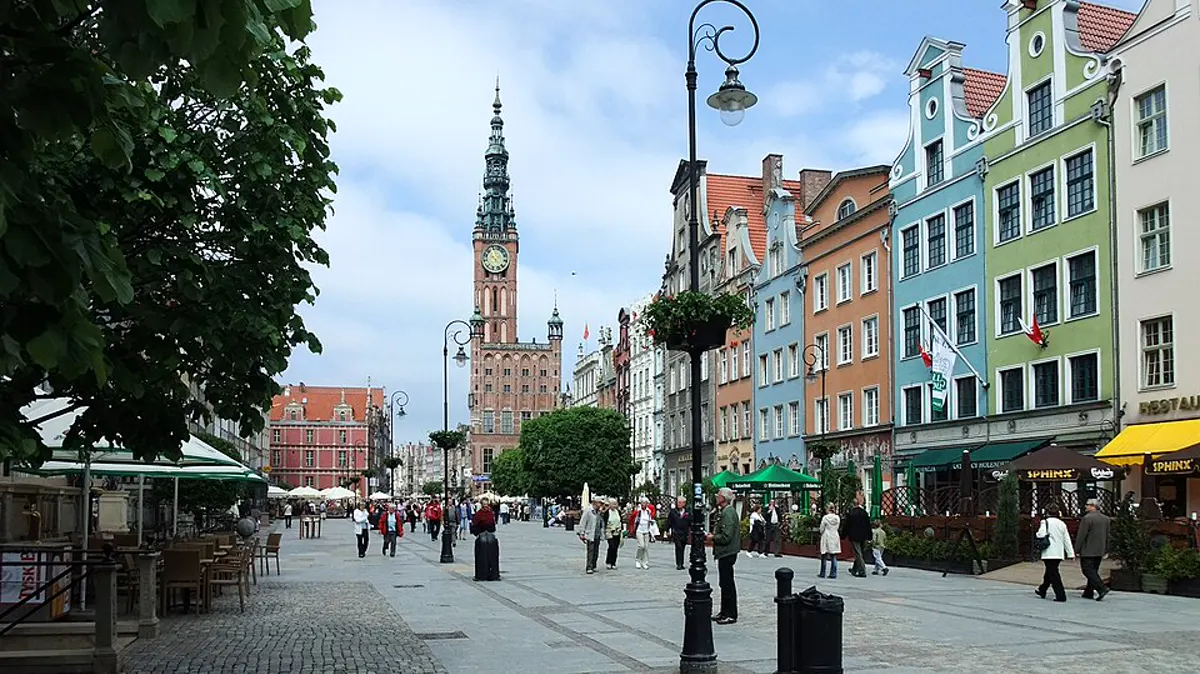
Gdansk sits at the mouth of the Motlawa where it feeds the Baltic, a port city that ran the medieval grain trade for the Hanseatic League and grew rich on it. The tall merchant houses of Dlugi Targ and Dluga were rebuilt brick by brick after 1945, when the old town was left almost totally flattened, so what looks centuries old is in fact a meticulous postwar reconstruction. This is where the first shots of the Second World War were fired at Westerplatte in September 1939, and where the Solidarity movement started in the Lenin Shipyard in 1980.
The city forms the western anchor of the Tricity (Trojmiasto), sharing an urban stretch of coastline with the spa town of Sopot and the modernist port of Gdynia. The SKM commuter train links all three in under 40 minutes, so a base in Gdansk puts a beach pier, a naval museum and a Gothic castle all within a short ride. Amber (bursztyn) has been washing up on these shores for millennia, and Mariacka street is still lined with amber workshops and stalls.
Gdansk rewards slow walking. Cross the Motlawa on the footbridge by the Zuraw crane, climb the tower of St Mary's Church for the roofline, and take the tram out to Oliwa to hear the 18th-century organ in the cathedral. Prices remain well below Warsaw or Krakow for food and beer, and the Baltic light in late summer is worth the trip on its own.
Gdańsk at a glance
Airport
Gdansk Lech Walesa (GDN), 12 km west of the centre, linked by SKM/PKM train and bus 210
Population
About 486,000 (roughly 750,000 across the Tricity)
Founded
First recorded in 997; granted Lübeck town rights in 1263
Good to know
Dlugi Targ and the Motlawa riverfront with the Zuraw crane
Currency
Polish zloty (PLN, zl). Not the euro.
Language
Polish. English is widely spoken in tourism and by younger people.
Time zone
Central European Time (UTC+1, or UTC+2 in summer).
Emergency
112 from any phone, free, English-speaking operators.
Tap water
Safe to drink everywhere in Poland.
Cards
Contactless is accepted almost everywhere, even for small amounts.
Sockets
Type E, 230V. UK and US visitors need an adapter.
Visas
Poland is in the Schengen Area and uses the EU entry rules.
Top things to see in Gdańsk
Long Market
The grand main thoroughfare of Gdansk, a wide promenade of merchant facades running from the Golden Gate to the river.
Fontanna Neptuna
The bronze Neptune Fountain, cast in the early 17th century, has stood in front of the Artus Court since 1633 and became the symbol of Gdansk. Local l...
Bazylika Mariacka
One of the largest brick churches in the world, this vast Gothic basilica can hold up to 25,000 people. Climb its 405 steps to a viewing terrace for a...
Zuraw
The medieval port crane on the Motlawa riverfront is the largest medieval port crane in Europe, once able to lift loads of up to two tonnes using gian...
Muzeum II Wojny Swiatowej
One of the largest museums devoted to the Second World War, housed in a dramatic leaning tower of glass and concrete. Its main exhibition spreads acro...
Oliwa
A leafy district north of the centre known for its Oliwa Cathedral and famous 18th-century organ, whose animated figures move during daily recitals. T...
Mariacka Street (ulica Mariacka)
A short cobbled lane in Gdansk running between St. Mary's Basilica and the Motlawa waterfront, lined with reconstructed patrician houses and amber sho...
Long Street and the Royal Route (ulica Długa)
Długa (Long Street) is the main pedestrian street of Gdańsk's Main Town and the western stretch of the historic Royal Route, lined with tall reconstru...
Main Town Hall (Museum of Gdansk)
The Main Town Hall in Gdansk is a Gothic and Renaissance civic building at the corner of Dluga Street and the Long Market, now the main branch of the...
Museums, castles and nature in Gdańsk
Museums
European Solidarity Centre
A museum beside the Gdansk shipyard charting the rise of the Solidarity movement and the fall of communism in Europe.
Castles
Malbork Castle
The largest castle in the world by land area, a vast red-brick fortress built by the Teutonic Knights on the Nogat river.
Parks and nature
Westerplatte
The seaside peninsula where WWII began, now a memorial park reached by a summer river boat.
Where to base yourself: the neighbourhoods
Glowne Miasto (Main Town)
The reconstructed Gothic core built around Dluga and Dlugi Targ, running from the Golden Gate past the Neptune Fountain and Artus Court to the Green Gate on the river. St Mary's Church, the Town Hall tower and the amber stalls of Mariacka are all here.
Motlawa riverfront and Olowianka
The waterfront quay where the medieval Zuraw crane still hangs over the water, now lined with restaurant terraces and moored boats. Across a short bridge, Olowianka island holds the Baltic Philharmonic and the National Maritime Museum ships.
Stare Miasto (Old Town)
North of the Main Town, home to the Great Mill, St Catherine's and St Bridget's churches and the enormous white European Solidarity Centre next to the shipyard gates. Quieter and more workaday than the tourist core.
Oliwa
A leafy northern suburb built around the Oliwa Cathedral and its famous Baroque organ, with regular short recitals. The adjoining Oliwa Park and its palace make an easy half day away from the crowds.
Wrzeszcz
Gdansk's lively residential district and the birthplace of writer Günter Grass, with the Garnizon quarter's bars and the Manhattan and Galeria Baltycka shopping centres. Good for cafes and everyday city life on the SKM line.
Westerplatte and the port
The peninsula at the harbour mouth where the German battleship Schleswig-Holstein opened fire in 1939, marked today by a hilltop monument and ruined barracks. Reached by a scenic Motlawa boat cruise or bus from the centre.
How to spend one, two or three days in Gdańsk
Day 1
The Main Town and the Motlawa
- Morning: Enter through the Golden Gate and walk Dluga to Dlugi Targ, stopping at the Neptune Fountain and Artus Court. Climb the Main Town Hall tower for the rooftops, then visit St Mary's Church, one of the largest brick churches in the world.
- Afternoon: Browse the amber workshops on Mariacka street, then cross the Green Gate to the Motlawa quay and see the Zuraw crane up close. Lunch on the riverfront terraces, then walk to the European Solidarity Centre for its exhibition on the 1980 strike.
- Evening: Dinner near the river, then a drink at one of the cocktail bars off Piwna. Walk the illuminated waterfront and the footbridge by the crane after dark.
Day 2
Oliwa and the beaches
- Morning: Take the tram or SKM to Oliwa for the cathedral organ recital, then stroll Oliwa Park and its palace grounds.
- Afternoon: Ride the SKM to Sopot, walk Bohaterow Monte Cassino to the wooden pier (Molo), the longest in Europe, and have coffee overlooking the bay. In summer, swim off the Sopot or Brzezno beaches.
- Evening: Return to Gdansk for dinner in Wrzeszcz or the Garnizon quarter, which has a younger bar scene than the tourist core.
Day 3
Malbork Castle or Westerplatte
- Morning: Take the train to Malbork (about 50 minutes) to tour Malbork Castle, the largest brick castle in the world and a UNESCO site. Allow two to three hours for the interiors and courtyards.
- Afternoon: Return to Gdansk and take a Motlawa boat cruise down to Westerplatte to see the memorial and battlefield ruins where the Second World War began.
- Evening: Back in the centre, finish with pierogi and a local beer, or seafood on the Motlawa if the weather holds.
Where to eat and drink in Gdańsk
Start with what the region does best: Sledz (Baltic herring), Ryba z Baltyku (fresh Baltic fish), Pierogi and Goldwasser.
Eliksir
A refined tasting-menu restaurant in the Garnizon district of Wrzeszcz, making the most of Baltic ingredients.
Pierogarnia Mandu
A much-loved dumpling house handmaking both Polish pierogi and Georgian khinkali.
Gdanski Bowke
A riverside tavern on the Motlawa serving Pomeranian classics and its own beer.
Restauracja Gvara
Modern Polish tasting menus using Pomeranian and Baltic ingredients, one of the city's more ambitious kitchens. Set several courses at a calmer remove...
Kubicki
A Gdansk institution on the Motlawa since 1918, serving classic Polish and Baltic dishes including duck and fresh fish. Old-school dining rooms with r...
Mercato (Hotel Hilton)
The Hilton's riverside restaurant on the Motlawa, Italian-leaning with a strong seafood list and terrace views of the crane. A polished option right o...
Bar Mleczny Neptun
A classic milk bar on Dluga serving pierogi, soups and cutlets at low prices in a self-service canteen setting. The cheapest honest Polish food in the...
Targ Rybny area stalls and fish spots
The old fish market quarter by the Motlawa has casual fried-fish and seafood counters near the water. Baltic cod and herring served fast and simple.
Drukarnia Kawa i Wino
A well-regarded speciality coffee and wine spot in the Main Town, good for a proper flat white away from the chains. Relaxed and design-led interior.
Sztuka Wyboru
A bar, bookshop and cafe hybrid in Garnizon Kultury in Gdansk's Wrzeszcz district, drawing a creative crowd for coffee, cocktails and a changing run o...
Jozef K
A characterful cocktail bar off the main drag with a literary theme and inventive drinks. Popular with locals for an evening away from the riverfront...
Piwna and Garnizon bars
Piwna street in the Main Town and the Garnizon quarter in Wrzeszcz hold the densest cluster of craft-beer bars and pubs. Good for sampling Polish craf...
Where to stay in Gdańsk
Hotel Podewils
A baroque townhouse hotel right on the marina, facing the old crane across the water.
PURO Gdansk Stare Miasto
A design hotel a short walk from the Main Town with a rooftop and bikes.
Hotel Hilton Gdansk
A modern five-star on the Motlawa by the old crane, with a rooftop pool and terrace overlooking the river and the Main Town roofline. The best waterfr...
Radisson Blu Hotel Gdansk
A refined five-star just off Dluga in the Main Town, steps from the Neptune Fountain, with spacious rooms and a spa.
Hotel Number One by Grano
A design-led boutique hotel on the Motlawa island of Granary Island (Wyspa Spichrzow), with rooftop views of the Main Town. Contemporary interiors rig...
Hotel Fahrenheit
A simple, well-located budget hotel in the Main Town within walking distance of Dlugi Targ. Basic but clean rooms at a fair price.
La Guitarra Hostel
A friendly, central hostel in the old town with dorms and private rooms, popular with backpackers. Sociable common areas a short walk from the river.
What to eat and drink in Gdańsk
Local to Gdańsk
Sledz (Baltic herring)
Marinated or pickled herring served with onion, apple and sour cream, or in oil, a staple of the Pomeranian coast. Often ordered as a starter with a shot of chilled vodka.
Ryba z Baltyku (fresh Baltic fish)
Cod (dorsz), flounder (fladra) and pan-fried Baltic fish appear on menus all along the Motlawa. Simple fried fish with potatoes is the classic seaside plate here.
Pierogi
Filled dumplings that are Poland-wide but everywhere in Gdansk, from ruskie (potato and curd cheese) to fish and mushroom fillings suited to the coast. Boiled then pan-fried is the local favourite.
Goldwasser
A herbal liqueur made in Gdansk since the 16th century, distinctive for the flecks of real gold leaf floating in it. Sold as a local souvenir and served as a digestif.
Kashubian strawberries and honey
The Kashubian region south of the city is known for its EU-protected truskawka kaszubska strawberries in summer and its forest honey. Look for them at market stalls and in desserts.
Polish classics worth ordering
Polish cooking is hearty, seasonal and built on soups, dumplings and slow-cooked meat. These are the classics worth seeking out in any city, best at a milk bar or an old-school restaurant rather than a tourist trap.
Pierogi
Half-moon dumplings stuffed with anything from potato and curd cheese (ruskie) to meat, cabbage and mushroom, or sweet fruit. Boiled or pan-fried in butter.
Żurek
A tangy soup of soured rye flour, usually with white sausage and a boiled egg, sometimes served in a bread bowl. The taste of a Polish Easter.
Bigos
The "hunter's stew" of sauerkraut, fresh cabbage and several meats, simmered for days until deep and smoky. Better the second day.
Kotlet schabowy
A breaded, flattened pork cutlet, the Polish Sunday dinner, served with potatoes and mizeria (cucumber in cream) or cabbage.
Gołąbki
Cabbage leaves rolled around minced meat and rice, baked in a tomato or mushroom sauce. The name means "little pigeons".
Placki ziemniaczane
Crisp potato pancakes, eaten savoury with sour cream or, in the mountains, drowned in a goulash (placki po zbojnicku).
Rosol
A clear, golden chicken broth with fine noodles, the traditional start to a Polish Sunday lunch.
Sernik and paczki
For something sweet: sernik (a dense baked cheesecake made with twarog curd) and paczki (rose-jam doughnuts), devoured by the million on Fat Thursday.
Drinks
Poland is a vodka country first, but it also has a serious craft-beer scene and a tradition of homemade fruit liqueurs.
- Wodka
- Drunk cold and neat, in company, with a toast and a bite to follow. Clean rye or potato brands (Belvedere, Chopin, Wyborowa) are the benchmark.
- Nalewki
- Homemade fruit and herb liqueurs, from cherry (wisniowka) to honey-spiced krupnik, often stronger and smoother than they look.
- Craft beer
- Poland has hundreds of craft breweries and multitap bars in every city. Ask for a local piwo rzemieslnicze rather than the mass lagers.
- Non-alcoholic
- Kompot (a jug of stewed fruit) is the homemade soft drink, and in winter grzane piwo (mulled beer) and grzaniec (mulled wine) warm up the markets.
Best day trips from Gdańsk
Malbork Castle
60 km · 50 min by train
The largest brick castle in the world and former seat of the Teutonic Knights, a UNESCO World Heritage Site on the Nogat river. Frequent direct trains from Gdansk Glowny make it an easy half or full day.
Sopot
13 km · 20 min by SKM train
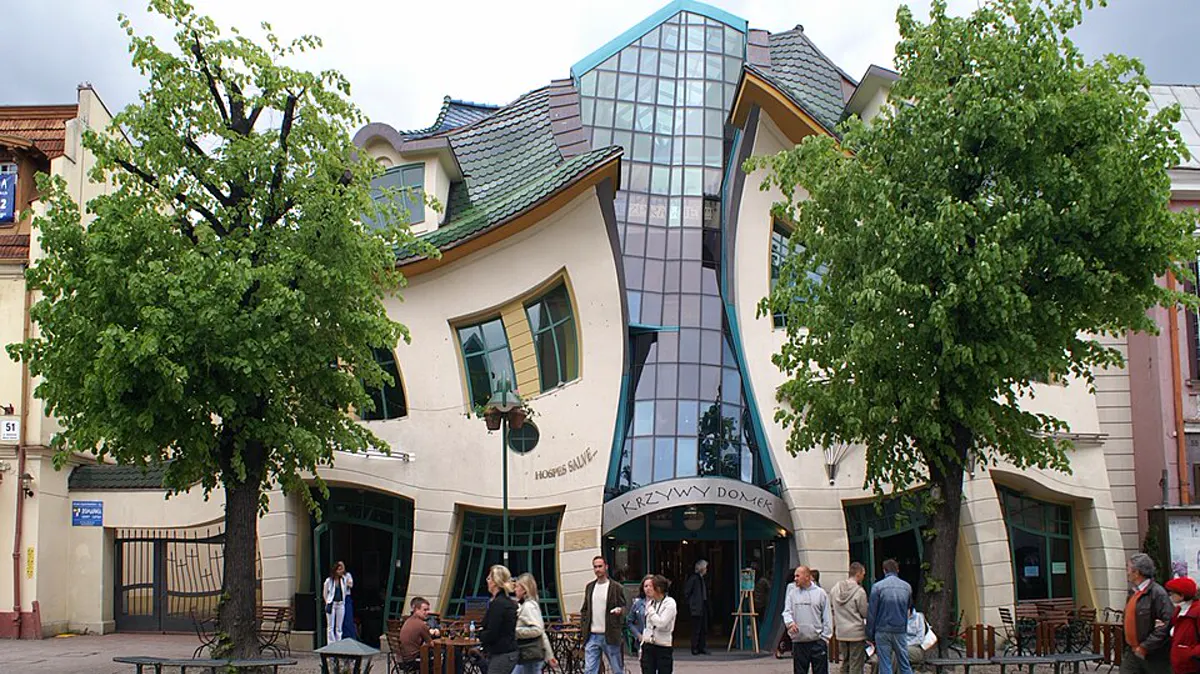
The Tricity's spa town, with the longest wooden pier in Europe, sandy beaches and the crooked Krzywy Domek building on the main promenade. Trains run every few minutes on the SKM line.
Gdynia
22 km · 35 min by SKM train
A modernist port built almost from scratch in the 1920s and 1930s, with the Gdynia Aquarium and the museum ships ORP Blyskawica and Dar Pomorza on the waterfront. The Kamienna Gora viewpoint overlooks the whole bay.
Hel Peninsula
About 90 km by road · 60 to 90 min by seasonal ferry or train
A long sandy spit reaching into the Baltic, with wide beaches, a seal sanctuary (fokarium) at Hel and windswept dunes. Reachable by seasonal boat from Gdansk or Sopot, or by train via Reda.
Torun
170 km · about 2h 40 by train
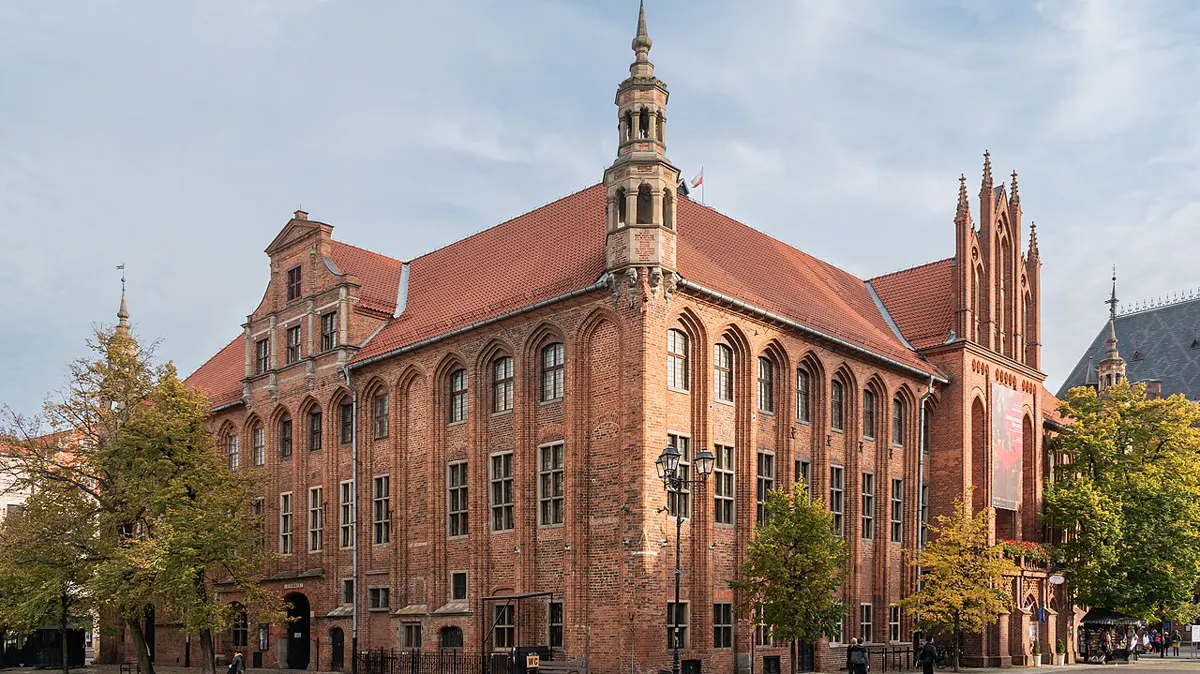
The Gothic birthplace of Copernicus and a UNESCO-listed old town famous for its gingerbread (pierniki). A longer day trip but a striking, undamaged medieval centre.
Kashubia (Kaszuby)
50 to 80 km · 1 to 1.5 h by car
The lake-dotted region southwest of Gdansk, home to the Kashubian ethnic minority and their own language. Kartuzy and the Wdzydze open-air museum give a feel for rural Pomerania.
When to visit Gdańsk
Gdansk has a Baltic maritime climate: cooler and breezier than inland Poland, with sea fog possible in any season. Summer is the peak for beaches and boat trips, while spring and early autumn are quieter and cheaper.
April to May
Spring
Mild and fresh, with the Oliwa and Sopot parks coming into bloom and far fewer crowds. Sea water is still cold, so this is for sightseeing rather than swimming.
June to August
Summer
The high season, with warm days, packed beaches, seasonal ferries to Hel and Westerplatte and the huge St Dominic's Fair (Jarmark Sw. Dominika) filling the streets in late July and August. Book accommodation well ahead.
September to October
Autumn
Often the sweet spot: warm early-September seas, golden light on the brick and thinning crowds. Amber storms sometimes wash fresh pieces onto the beaches after autumn winds.
November to March
Winter
Cold, grey and often windy, with short days but atmospheric Christmas markets on Targ Weglowy in December. Museums and the old town are quiet and cheap, and indoor sights like the Solidarity Centre suit the weather.
Getting to and around Gdańsk
By air
Gdansk Lech Walesa Airport (GDN) is 12 km west of the centre. The PKM/SKM train links it to the main stations across the Tricity in around 30 minutes.
By train
Gdansk Glowny is a red-brick landmark right by the Old Town. It is the southern anchor of the SKM commuter line that threads Gdansk, Sopot and Gdynia together.
By bus
FlixBus and regional coaches stop beside Gdansk Glowny, with easy links along the coast and inland to Malbork Castle.
By car
The S6 and S7 expressways feed the Tricity. Parking in the Main Town is tight in summer, so aim for a guarded lot near the waterfront.
SKM commuter rail
The SKM train is the spine of the Tricity, running every few minutes between Gdansk, Sopot and Gdynia. It is the simplest way to combine all three in a day.
Trams & buses
Trams and buses cover the wider city; a single ZTM Gdansk ticket or a 24-hour pass keeps things simple beyond the centre.
On foot
The Main Town is walkable end to end, from the Golden Gate down Dluga to the Motlawa riverside and the Crane.
Staying connected
- EU roaming
- If you have an EU or UK SIM, roaming works at your normal domestic rate under the roam-like-at-home rules, so most European visitors need to do nothing.
- eSIM
- For visitors from outside Europe, an eSIM from a provider such as Airalo or Holafly is the simplest option, activated before you land with no shop visit.
- Local SIM
- A prepaid SIM from Play, Orange, Plus or T-Mobile costs little and gives generous data. You need your passport to register it, which is a legal requirement.
- Free wifi
- Cafés, hotels, malls and many trams and buses have free wifi, though speeds vary. Do not rely on it for anything sensitive.
Apps to download before you go
A short list of apps that make a Polish trip smoother. Download them before you fly; every link goes straight to the app.

Jakdojade
Public transport
Public transport routes, live departure times and mobile tickets for every Polish city. The first app to install.



Bolt
Rides and taxis
The most widely used ride-hailing app in Poland, usually cheaper than a street taxi, plus e-scooters and shared bikes.

Koleo
Train tickets
Buy Polish train tickets (PKP Intercity and regional) with seat selection, often cheaper than buying at the counter.
Google Maps
Maps and offline
Reliable for walking and public-transport directions nationwide. Download the offline area for your city before you land.

Google Translate
Translation
Install the Polish language pack for offline camera translation of menus and signs.

Revolut
Payments
Hold and spend zloty at the real exchange rate, sidestepping the airport kantor and card DCC markups.

Wise
Payments
A multi-currency account and card that also spends zloty at the real exchange rate, a strong alternative to Revolut.

Booking.com
Stays
The default for hotels and apartments in Poland, with the widest choice and free-cancellation options.
Money, costs and tipping
Poland runs on the zloty, not the euro, and it is one of the better-value city-break destinations in the EU. Cards work nearly everywhere, but a few local habits save you money.
- Pay in zloty, always
- When a card machine or ATM offers to charge you in your home currency, decline it and choose PLN. That "dynamic currency conversion" hides a poor exchange rate and can add 5 to 12 percent.
- Skip airport and street exchange
- Avoid the exchange desks at the airport and the Euronet ATMs in tourist zones, which give weak rates and push DCC. Withdraw from a normal bank ATM (PKO BP, Santander, ING, Pekao) or just pay by card.
- Cash for small things
- Keep a little cash for a milk bar (bar mleczny), a market stall, a toilet (1 to 3 zl), or a rural bus. Everything else takes contactless or Apple/Google Pay.
- Tipping
- Round up or leave about 10 percent in a restaurant if you were happy. Do not say "thank you" when handing over money if you want change back, as it can be taken to mean "keep it".
Safety and local etiquette
Staying safe
Poland is one of the safer countries in Europe, and its cities feel relaxed late into the evening. The risks are the ordinary big-city ones rather than anything unusual.
- Petty theft
- Pickpocketing happens in crowded tourist spots, on packed trams and at big events. Keep your phone and wallet in a front pocket or a zipped bag and you will almost certainly be fine.
- Taxis
- Use an app (Bolt, Uber or Free Now) rather than flagging a random taxi, especially near stations and airports, to avoid inflated fares. The price is fixed and shown up front.
- Nightlife
- Stick to established bars and clubs, watch your drink, and be wary of touts steering you to a "special" venue with a surprise bill. This is rare but worth knowing.
- Emergency number
- Dial 112 for police, ambulance or fire. Operators speak English. Pharmacies (apteka) are widespread and one is always open on a rota.
Local etiquette
Poles are warm once the ice breaks and appreciate a little effort. A few points of etiquette go a long way, especially at the country's many places of memory.
- Greetings
- A firm handshake and eye contact is standard. "Dzień dobry" (good day) and "dziękuję" (thank you) are always welcome, even if the rest is in English.
- Churches and memorials
- Cover shoulders and knees in churches and keep quiet during Mass. At sites such as Auschwitz-Birkenau, dress and behave soberly, and do not take smiling selfies.
- In a home
- If you are invited to someone's home, take off your shoes at the door and bring flowers (an odd number) or chocolates. Never bring an even number of flowers, which is for funerals.
- Toasts
- Vodka is drunk cold in one go with a toast of "na zdrowie" (to health), followed by something to eat. Pace yourself, as refusing every round can seem standoffish.
Who Gdańsk suits
A quick word on who each Polish city suits and how to make it work for you.
Families
Poland is easy with children: milk bars are cheap and quick, ice cream (lody) is everywhere, and museums and parks are stroller-friendly. Trams are free for small children.
Couples
Cobbled old towns, candlelit cellar restaurants and riverside bars make for an easy romantic weekend, and prices leave room for a proper dinner out.
Solo travellers
Cities are safe and walkable, hostels are sociable, and free walking tours are a good way to meet people. English gets you a long way.
Seniors
Compact centres, plenty of cafés to rest in and good public transport make for a gentle pace. Many museums offer reduced tickets.
Accessibility
Newer trams and buses are low-floor and stations are improving, but medieval cobbles and old tenement stairs can be hard going. Check ahead for lifts.
Gdańsk: frequently asked questions
Yes, this is the standard way to see the coast. The SKM commuter train links all three, with Sopot about 20 minutes away and Gdynia about 35, running every few minutes at peak times.
Two days cover the Main Town, the Motlawa riverfront and the Solidarity Centre comfortably. A third day lets you add Malbork Castle, Oliwa or a beach afternoon in Sopot.
It is cold and windy, but the December Christmas market on Targ Weglowy and strong indoor sights like the Solidarity Centre and the WWII Museum carry a winter trip. Pack for sea wind and short daylight.
In summer, yes, off the sandy Brzezno, Jelitkowo and Sopot beaches, with lifeguards on the main stretches. The water stays cool, usually around 17 to 21 degrees Celsius in July and August.
Yes, widely in hotels, restaurants and the main sights, especially among younger staff. Polish is the everyday language, and Kashubian is spoken in the surrounding region.
It is cheaper than Warsaw or Krakow for food, drink and hotels, though riverfront restaurants charge more for the view. A mid-range main runs roughly 40 to 70 PLN.
The Main Town (Glowne Miasto) puts you steps from Dlugi Targ and the Motlawa. Wrzeszcz on the SKM line is cheaper and well connected, and Sopot suits a beach-focused trip.
Guides to Gdańsk
Where to Stay in Gdansk: Best Areas
A practical breakdown of where to base yourself in Gdansk, from the Main Town and Granary Island to cheaper ro...
Read guideAmber in Gdansk: Where to Buy and How to Spot Fakes
Gdansk has cut and sold Baltic amber for centuries, and its workshops carry everything from museum-grade inclu...
Read guideA Weekend in Gdansk
A two-day Tricity plan: Gdansk Main Town and its museums on day one, then Sopot's pier and Gdynia by SKM commu...
Read guideThings to Do in Gdansk
A first-visit guide to Gdansk, grouped by area: the rebuilt Main Town and Long Market, the Motlawa waterfront...
Read guideCities near Gdańsk
About this guide
This guide to Gdańsk is researched and maintained by the ViewPoland editorial team, and was last reviewed in September 2026. We update it as venues, prices and transport change.