Attraction in Gdańsk
Zuraw
The medieval port crane on the Motlawa riverfront is the largest medieval port crane in Europe, once able to lift loads of up to two tonnes using giant human-powered treadwheels. It now forms part of the National Maritime Museum.
Reviewed and updated July 2026
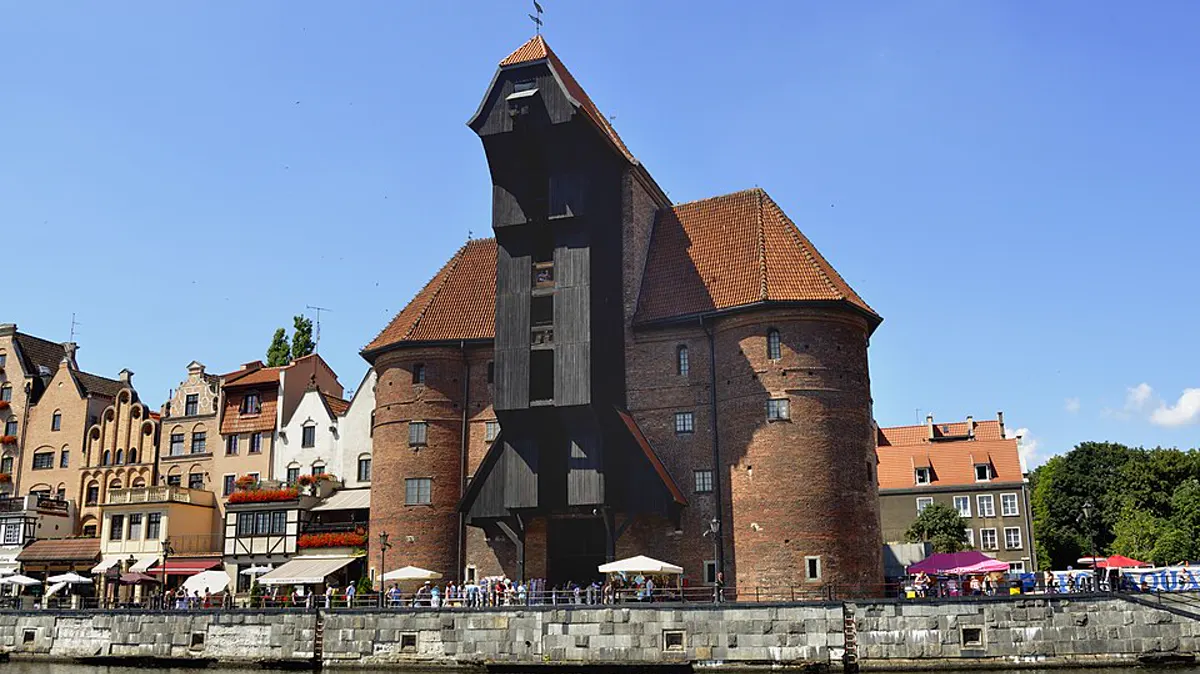
Zuraw, the Crane, is the landmark that defines the Gdansk waterfront. It is a huge medieval port crane on the Motlawa river, a tall brick gate flanked by two wooden housings that lean out over the water. It is the largest medieval port crane in Europe, and it now forms part of the National Maritime Museum.
Why see the Zuraw crane
The Crane is the single most recognisable building on the river and the anchor of any walk along the Royal Route down to the water. Outside it costs nothing to admire and photograph. Inside, it is part of a maritime museum that explains how the port worked and how the crane itself lifted cargo and stepped ships' masts.
How the crane worked
The crane was human-powered. Inside the wooden housings are giant treadwheels, which workers turned by walking inside them, like a mill wheel, to wind up the load on a rope. Working this way it could lift heavy cargo, up to around two tonnes, and hoist masts into place on ships tied up alongside. It was a working part of the port for centuries, a gate and a crane in one.
The medieval crane's history
A crane has stood on this spot since the Middle Ages. The structure you see was built in the 15th century, rebuilt after a fire, and it served the port through the height of the city's Baltic trade. Like most of the waterfront it was badly damaged in 1945 and reconstructed afterwards, with the treadwheel mechanism restored.
How long to spend here
A few minutes to see it from the outside and take photographs. Allow thirty to sixty minutes if you go inside for the museum. The Maritime Museum has other buildings on both banks of the river, linked by a small ferry, which can turn it into a longer visit.
Getting to the Motlawa riverfront
The Crane is on the Motlawa waterfront, on Szeroka, at the river end of the old town. From Dlugi Targ, walk through the Green Gate and turn left along the embankment. From the main railway station it is about fifteen minutes on foot. For wider transport, see the Gdansk guide.
Access to the Crane
The waterfront outside is flat and easy. The historic interior, with its old timber floors and the treadwheel level, involves stairs and is harder to access, so check the museum's official channels if this matters to you.
Nearby on the Motlawa
The Crane sits on the busiest stretch of the waterfront:
- The Motlawa embankment and the bridges across to Granary Island.
- St Mary's Basilica and the market streets, a couple of minutes inland.
- The riverside hotels and restaurants, including the Hilton just across the water by the fish market.
Good to know
The outside is free and always in view. Museum opening hours and ticket prices vary by season, and the crane can close for conservation work, so check the National Maritime Museum's official channels before a visit inside.
Common questions about the Crane
How old is the Crane?
A crane has stood here since the Middle Ages, and the present structure dates from the 15th century. It is regarded as the largest medieval port crane in Europe.
Can you go inside?
Yes. The Crane is part of the National Maritime Museum, and the interior with its treadwheels can be visited when the museum is open. Check current hours before you go.
Frequently asked questions
More attractions in Gdańsk
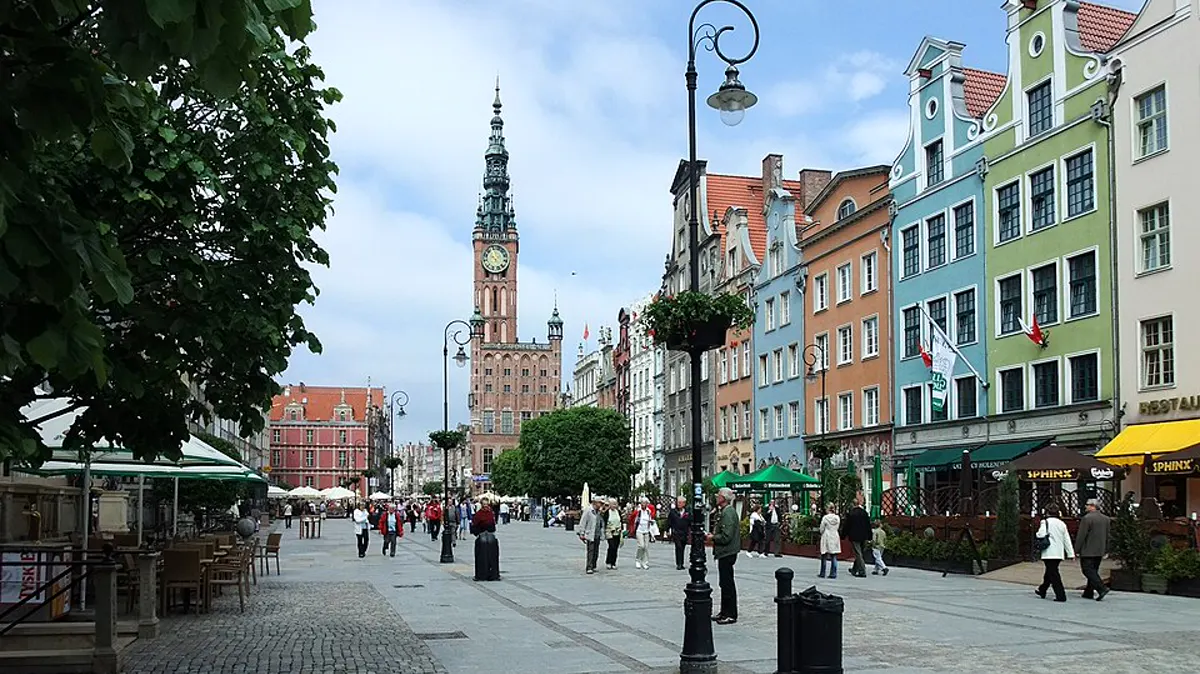
Long Market
The grand main thoroughfare of Gdansk, a wide promenade of merchant facades running from the Golden Gate to the river.
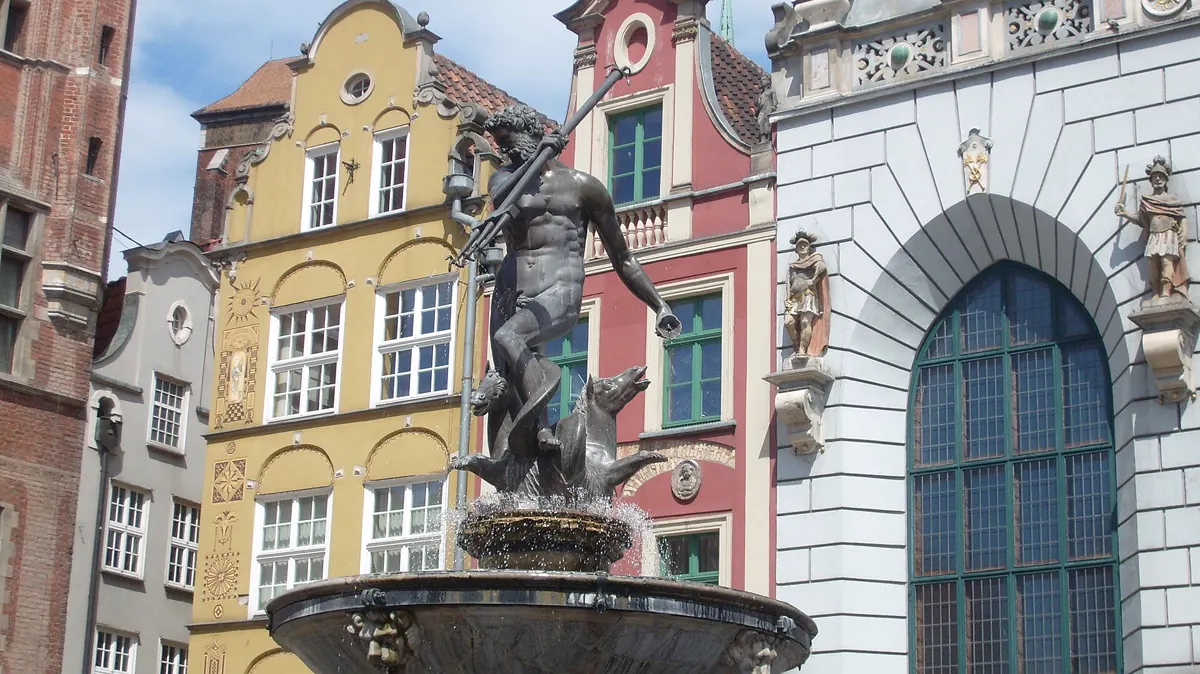
Fontanna Neptuna
The bronze Neptune Fountain, cast in the early 17th century, has stood in front of the Artus Court since 1633 and became the symbol of Gdansk. Local legend claims the god's trident scattered gold flakes into the water, inspiring the herbal liqueur Goldwasser.
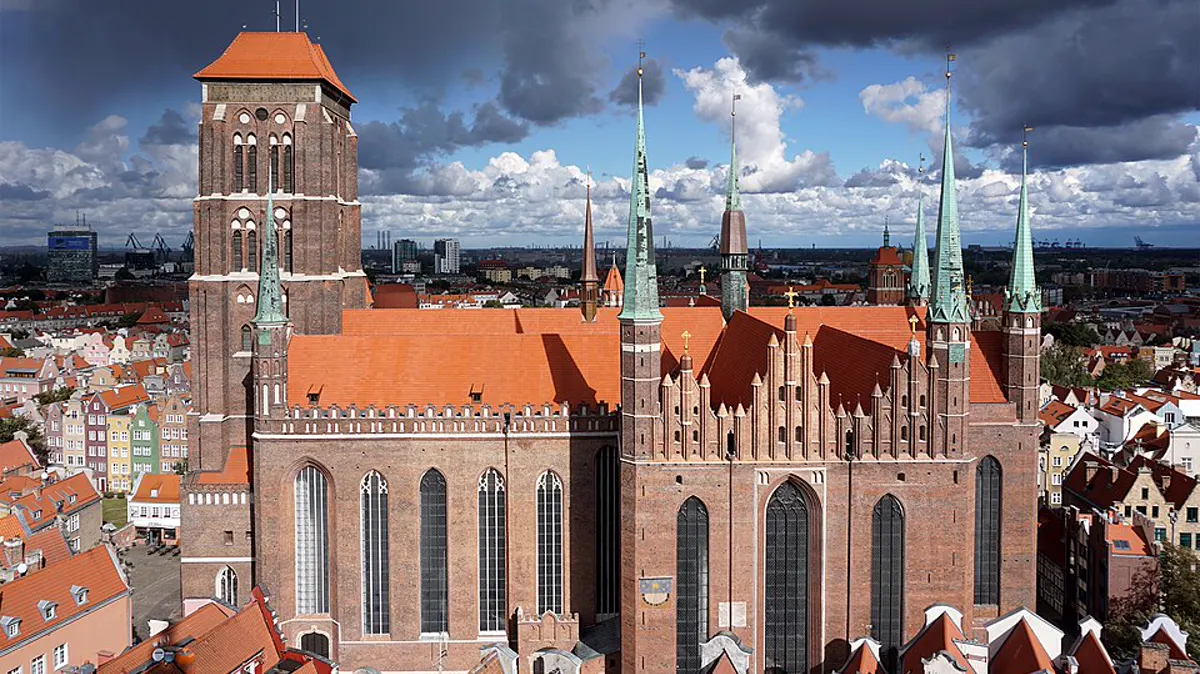
Bazylika Mariacka
One of the largest brick churches in the world, this vast Gothic basilica can hold up to 25,000 people. Climb its 405 steps to a viewing terrace for a sweeping panorama over the red rooftops of the old town.
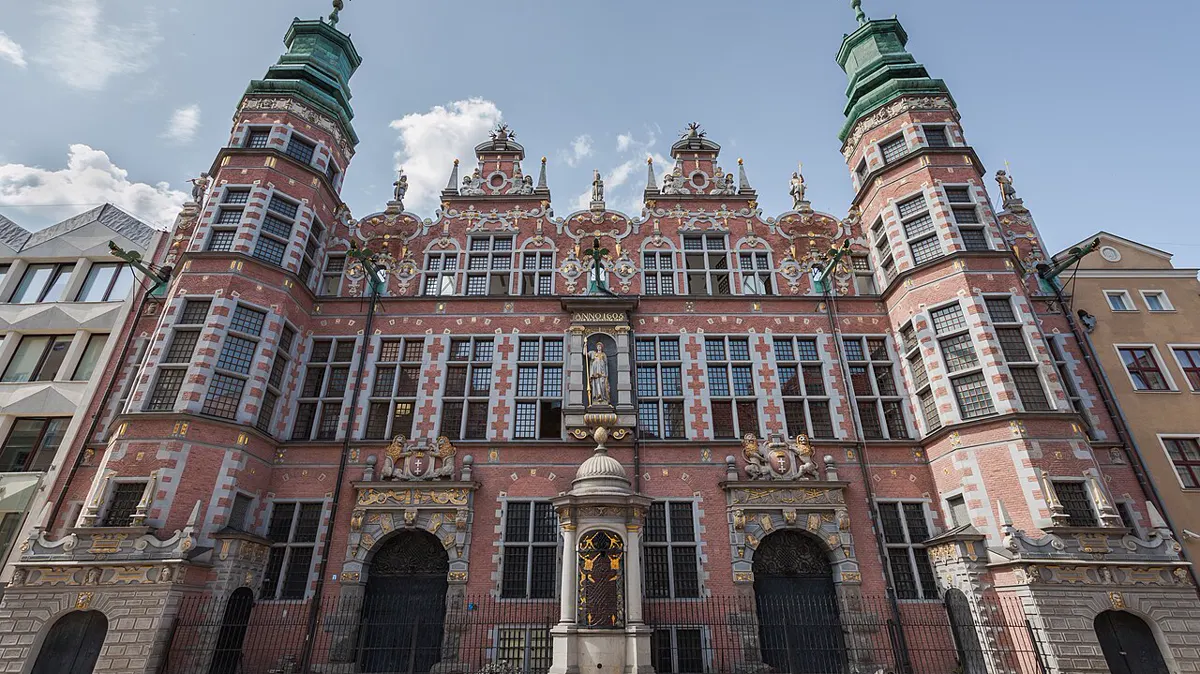
Great Armoury (Wielka Zbrojownia)
The Great Armoury is an ornate former arsenal in Gdansk's Main Town, widely regarded as one of the finest examples of Dutch Mannerist architecture in the city. Its richly decorated facades now front the Academy of Fine Arts and a shopping arcade.
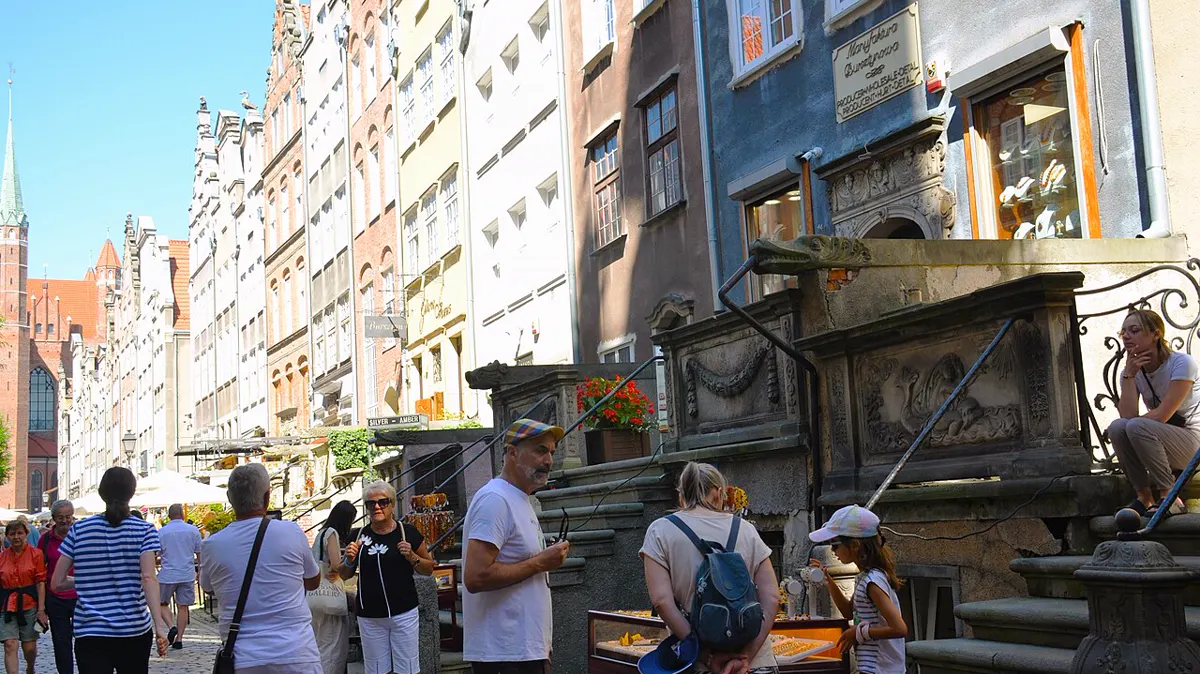
Mariacka Street (ulica Mariacka)
A short cobbled lane in Gdansk running between St. Mary's Basilica and the Motlawa waterfront, lined with reconstructed patrician houses and amber shops. It is widely called the most photogenic street in the city.
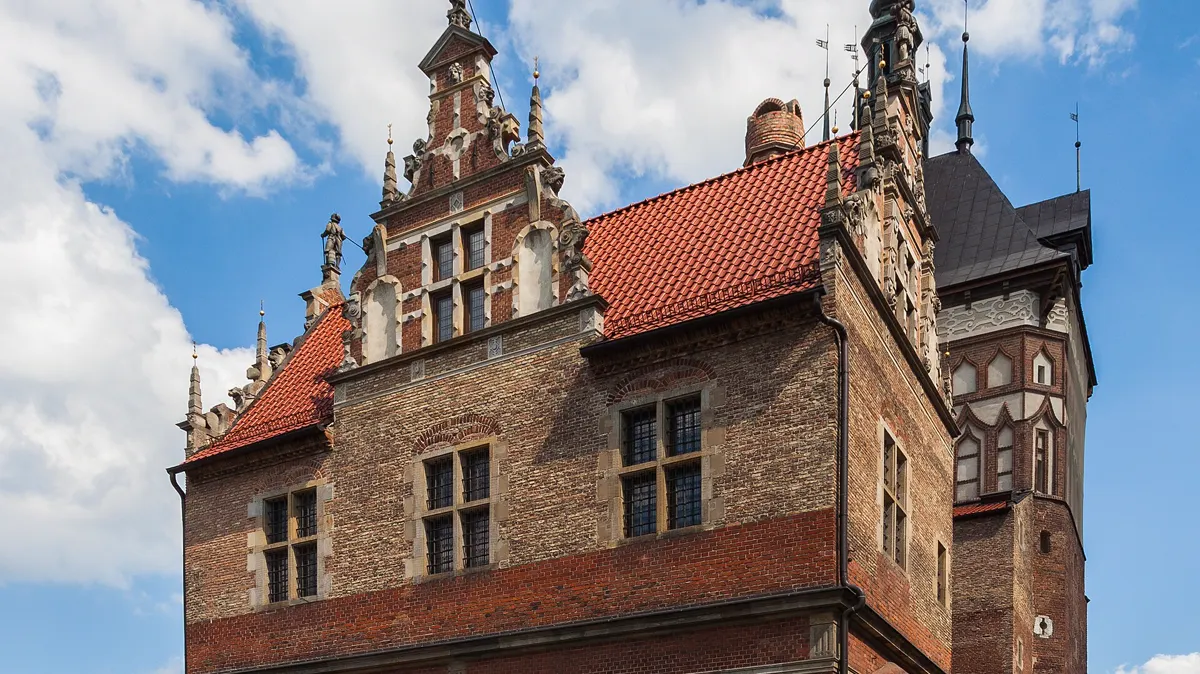
Prison Tower and Torture Chamber
A 16th-century fortified complex in Gdansk's Main Town that once held prisoners and carried out interrogations, now marking the start of the Royal Route.
More to explore in Gdańsk

Restaurant
Eliksir
A refined tasting-menu restaurant in the Garnizon district of Wrzeszcz, making the most of Baltic ingredients.
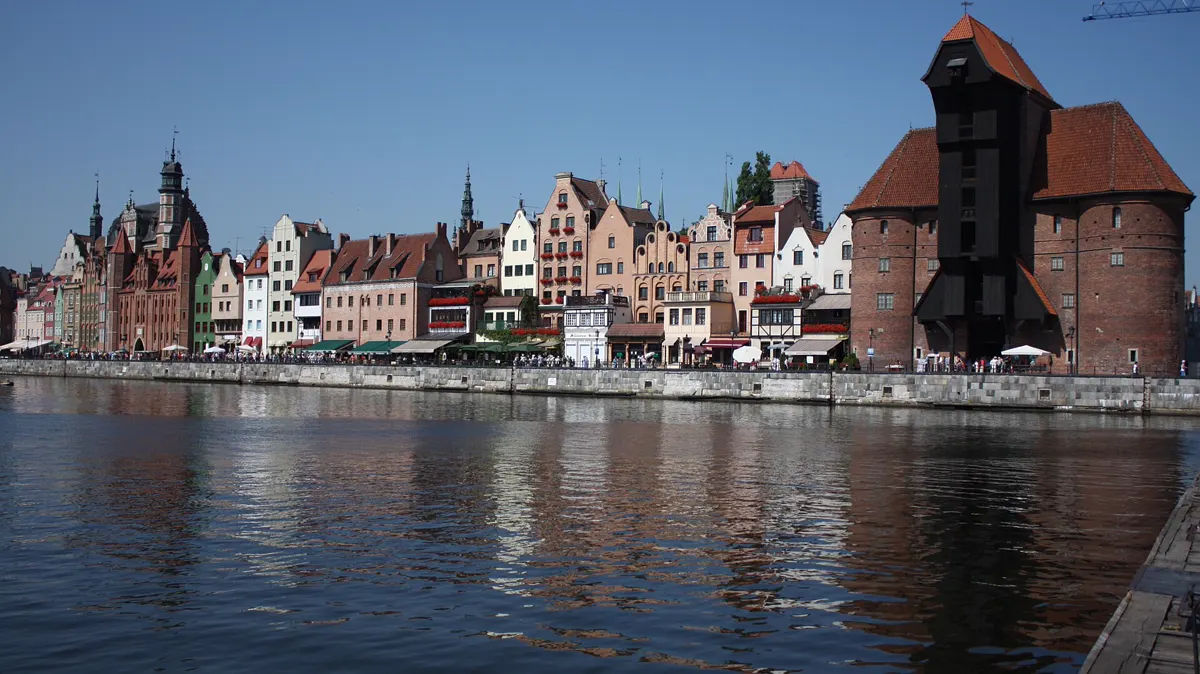
Hotel
Hotel Podewils
A baroque townhouse hotel right on the marina, facing the old crane across the water.
Nature
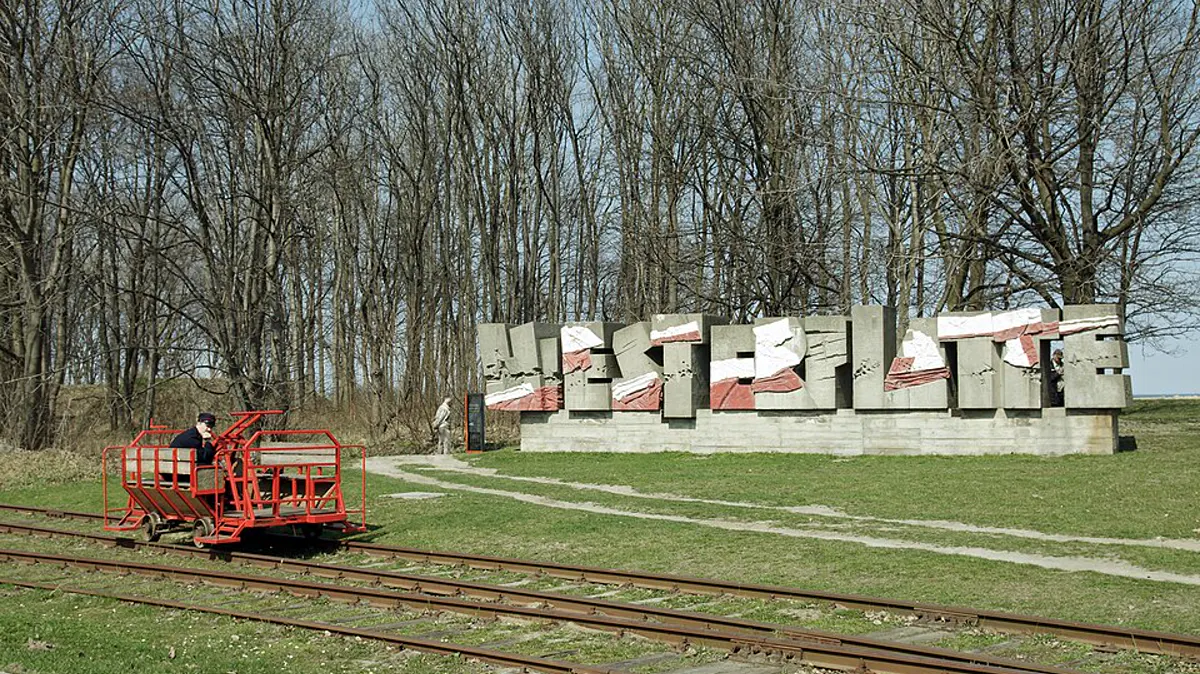
Westerplatte
The seaside peninsula where WWII began, now a memorial park reached by a summer river boat.
Castle
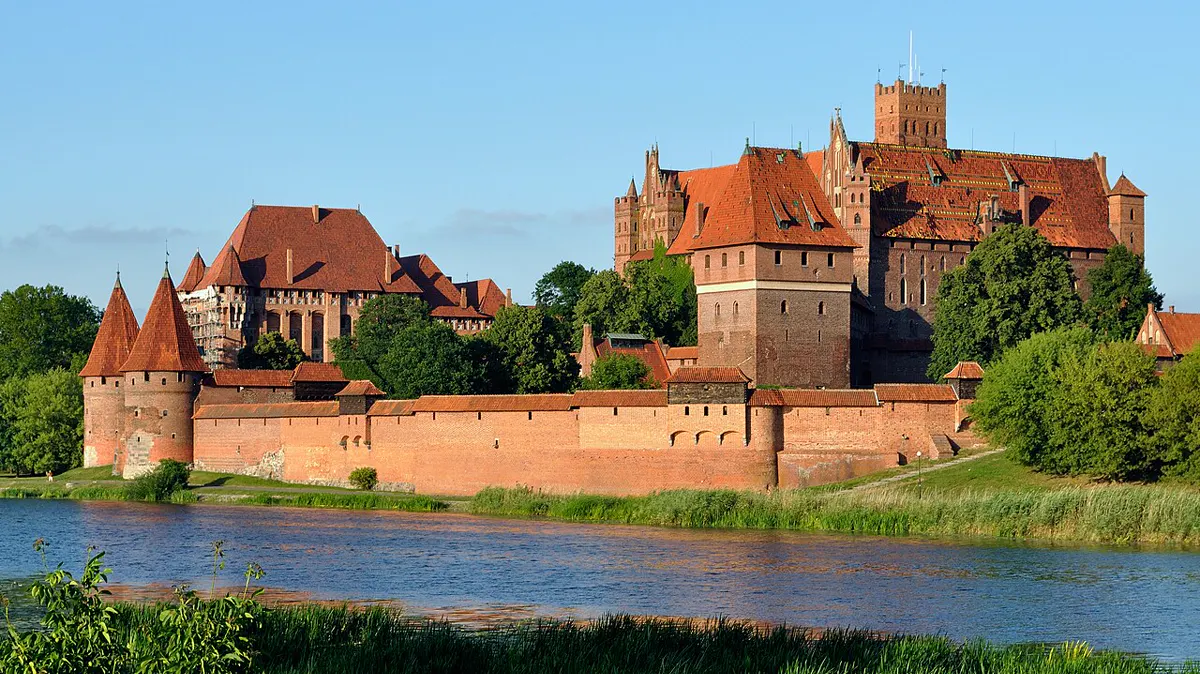
Malbork Castle
The largest castle in the world by land area, a vast red-brick fortress built by the Teutonic Knights on the Nogat river.

Restaurant
Targ Rybny area stalls and fish spots
The old fish market quarter by the Motlawa has casual fried-fish and seafood counters near the water. Baltic cod and herring served fast and simple.
Restaurant
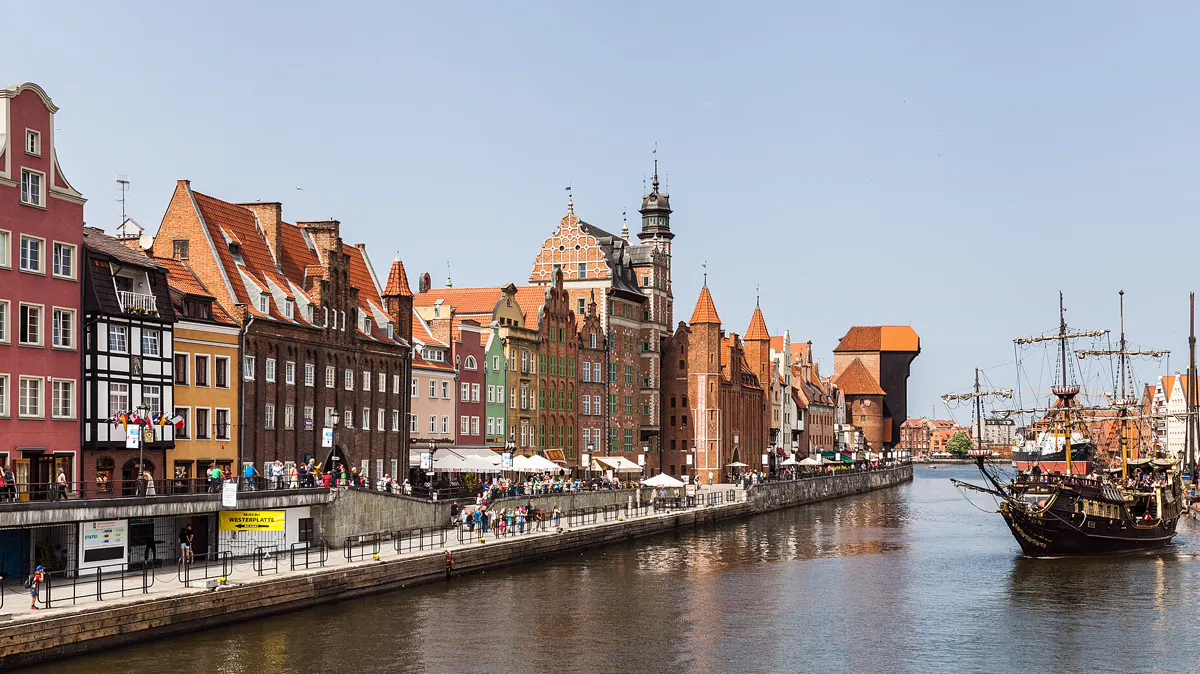
Gdanski Bowke
A riverside tavern on the Motlawa serving Pomeranian classics and its own beer.