Thematic in Gdańsk
Where to Stay in Gdansk: Best Areas
A practical breakdown of where to base yourself in Gdansk, from the Main Town and Granary Island to cheaper rooms in the Old Town, Wrzeszcz and Sopot.
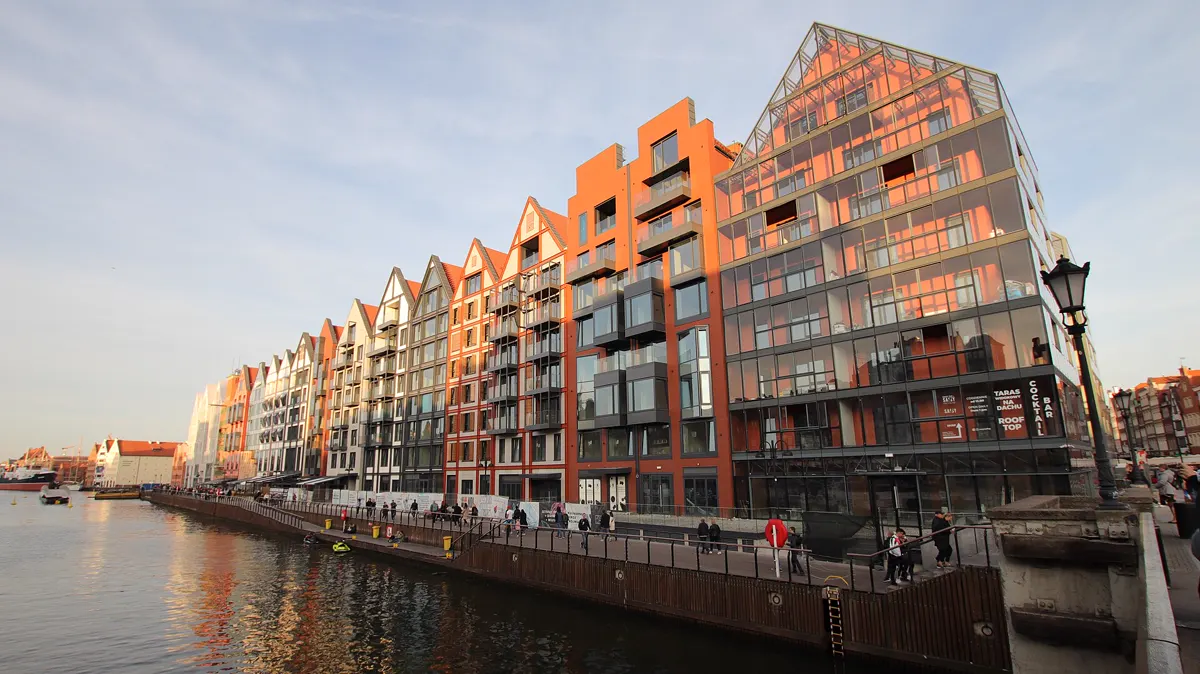
For a first visit to Gdansk, the Main Town is the obvious base: you sleep inside the reconstructed merchant core, and the churches, museums and the river are all within a ten minute walk. Granary Island, straight across the water, gives you the same views with newer rooms and quieter nights. The Old Town and Wrzeszcz cost less and stay walkable or a short train ride away, while Sopot suits anyone who wants the beach first and the sights second.
One thing catches people out. In Gdansk, the Old Town is not the historic showpiece. That is the Main Town (Glowne Miasto), the district of gabled facades and gateways that most photographs show, rebuilt after 1945 to its sixteenth and seventeenth century appearance. The Old Town (Stare Miasto) is a separate, plainer area just north west of it, across the Radunia Canal. Booking sites use both names loosely, so check the map pin rather than the label before you pay.
The Main Town: sights outside the front door
Stay in the Main Town if your trip is short and sightseeing is the point. The royal route runs through it, entering at the Upland Gate and the Golden Gate and continuing along Long Street to the Long Market, where Neptune's Fountain, Artus Court and the Main Town Hall stand in a row. Bazylika Mariacka and the amber shops of Mariacka Street are a minute or two off it.
The trade-off is noise and price. Rooms facing Long Street or the Motlawa waterfront carry a premium, and summer evenings on the main drag run late. Ask for a courtyard-facing room. The Radisson Blu stands on the Long Market itself for people who want zero walking, and Hotel Podewils, an eighteenth century mansion on Szafarnia looking across the water at the Zuraw crane, is the quieter, more characterful option at a similar level.
Granary Island: one footbridge from everything
Granary Island is the best compromise between location and calm. It faces the old quays across a narrow channel, and bridges put you on the waterfront in two or three minutes, opposite the Green Gate. Because the island was redeveloped only in recent years, most hotels here are new builds, which usually means lifts, decent soundproofing and air conditioning.
This is the area to pick if you are travelling with a suitcase and no patience for cobbles, or if you want a river view without paying Main Town rates for it. Hotel Number One by Grano on Jaglana and PURO Gdansk Stare Miasto on Stagiewna both sit on the island, despite what the latter's name suggests. Evenings are usually quieter than the opposite bank, though the marina bars still fill up in season.
The Old Town: value within walking distance
The Old Town gives you the cheapest beds that are still genuinely walkable. It runs north from the Main Town towards the shipyards, taking in the Amber Museum in the Great Mill, which moved into the fourteenth century mill building in 2021, plus St Catherine's Church and St Bridget's Church, with the European Solidarity Centre at its northern edge.
Gdansk Glowny, the main railway station, is a short walk away on the western edge of the old core, which matters if you are arriving by train or planning excursions. Budget travellers can look at La Guitarra Hostel on Grodzka. For a mid-range room near the water without Main Town pricing, Hotel Fahrenheit on the same street and the larger Hilton at the Fish Market end of the quay both work. Streets here empty out after dark and some blocks are ordinary rather than pretty, so read recent reviews for the exact address.
Wrzeszcz: local prices and the SKM line
Wrzeszcz makes sense for longer stays, families needing more space, and anyone happy to commute about ten minutes by train. It is a residential district a few kilometres north west of the centre, with its own high street, a large shopping centre, university campuses and restaurants priced for the people who live there rather than for visitors.
The reason it works is the SKM commuter railway, which links Gdansk Glowny, Wrzeszcz, Oliwa, Sopot and Gdynia along one corridor, with trains every few minutes at busy times. Wrzeszcz is also where the PKM line branches off towards the airport, so arrivals and departures are easy. Read up on ticket types in our guide to public transport in Poland before you travel, and check current timetables with the operator, since they change with the seasons.
Sopot: base here if the beach comes first
Base yourself in Sopot when swimming, spa hotels and a long sandy beach matter more than museum opening hours. The seaside town sits between Gdansk and Gdynia, roughly fifteen to twenty minutes from Gdansk Glowny by SKM train, so day visits to the old core stay simple. Its wooden pier, at about 511 metres, is the longest in Europe.
Two caveats. Sopot is a resort, which means high summer prices, weekend crowds and a nightlife scene along Monte Cassino street that some travellers love and others avoid. In winter the seasonal cafes and beach bars close and the town turns quiet. If you are torn, our comparison of Gdansk or Sopot sets out the differences season by season.
Matching the area to your trip
Short breaks of two or three nights belong in the Main Town or on Granary Island, where you lose no time in transit. That is the assumption behind our weekend in Gdansk itinerary and the wider list of things to do in Gdansk. Stays of five nights or more usually go better in the Old Town or Wrzeszcz, where an apartment with a kitchen tends to cost less per night.
If your plan leans on excursions, weight the choice towards the station. Malbork Castle is under an hour away by train, with the quicker services taking around half that, and most other day trips from Gdansk start from Gdansk Glowny or Gdansk Wrzeszcz.
Good to know
SKM trains between Gdansk, Sopot and Gdynia run on their own tariff, so a standard Gdansk bus and tram ticket will not cover them. Buy an SKM ticket at the station machine or in the operator's app, or a metropolitan ticket that combines local buses, trams and trains. Validate where required, and check current fares and timetables on the official site before you set off. Our overview of public transport in Poland covers the ticketing basics.
Written by ViewPoland Editorial for ViewPoland, an independent English-language guide to Poland. Published 2 August 2026. Last updated 2 August 2026.