Thematic in Zakopane
Where to Stay in Zakopane: Best Areas
Zakopane is small enough that no base is truly wrong, but the gap between a room on Krupowki and one on the western slopes changes the shape of a trip. Here is what each area gives you and what it costs you.
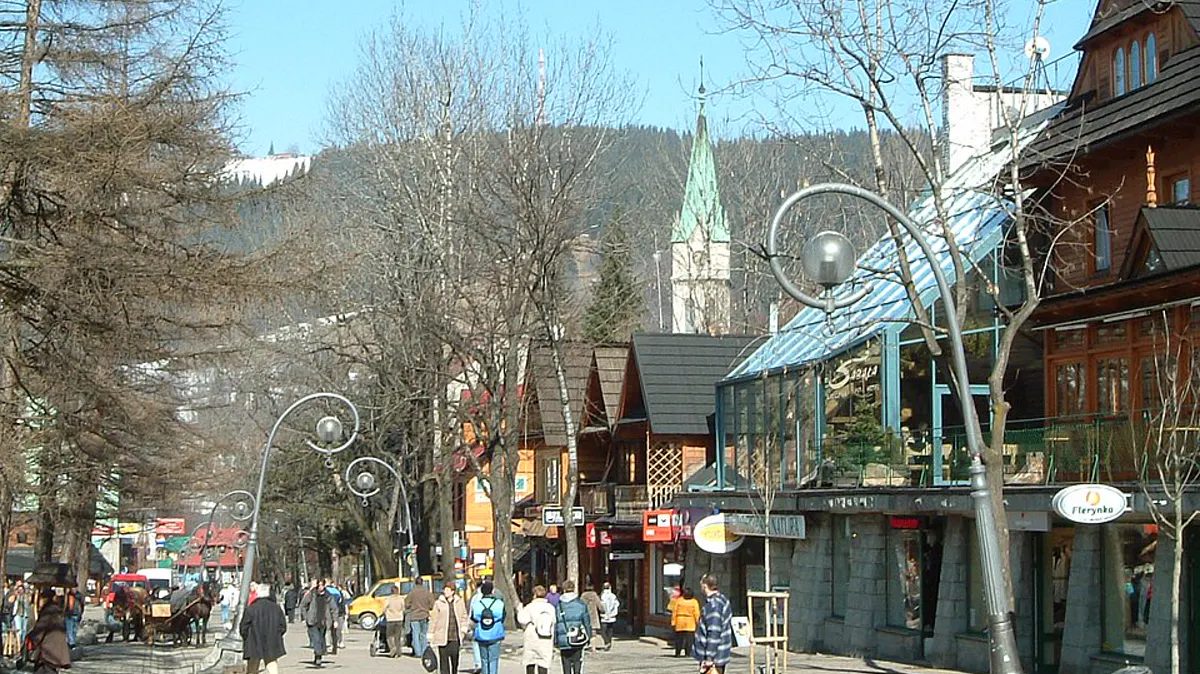
Stay in the centre around Krupowki if you want dinner, buses and shops within a few minutes' walk and you can sleep through noise. Move two or three streets back and you keep most of that convenience while losing the music. Go further, to Koscielisko or the valley roads, and you trade walkability for space, silence and a view of the ridge. The town is compact, so nothing is genuinely far, but the choice decides how much of your day is spent waiting for a bus. Read this alongside our Zakopane destination guide and the list of things to do in Zakopane.
The centre around Krupowki
The centre works best for short trips, first visits and anyone without a car. Krupowki is a pedestrianised street of a little over a kilometre, lined with restaurants, sports shops and cheese stalls, and almost everything urban in Zakopane sits within about ten minutes of it: the Tatra Museum, the old cemetery at Peksowy Brzyzek, the bus and railway stations, and the pick-up points for minibuses heading east.
The cost is noise. Music from bars carries late, especially at weekends and over long holidays, and rooms facing the street get it in full. Historic addresses sit directly on the strip, including Hotel Sabala, while properties a short walk off it on Kosciuszki, such as Grand Hotel Stamary and Willa Marilor, keep the access without the volume. If you sleep lightly, ask for a courtyard room rather than trusting double glazing.
Quiet streets toward the trailheads
The best compromise for hikers is the band of streets rising south and west of the centre, still within a 15 to 25 minute walk of Krupowki but pointed at the mountains. Ulica Koscieliska runs west past old timber houses and the Old Church of Our Lady of Czestochowa, and the side roads climbing south from this part of town lead towards the mouths of Strazyska Valley and Dolina Bialego.
South-east, the road towards Kuznice puts you close to the cable car for Kasprowy Wierch and one of the main approaches to Giewont. Staying here means you can start walking before the first buses fill up, which matters more than anything else in July and August. It also means a slope to climb every time you come home carrying shopping.
Koscielisko, Gubalowka and the valleys
Choose Koscielisko or the northern slopes if the view is the point. Koscielisko spreads west of town along a road on a slope facing the Tatras, and it sits close to the entrance of Dolina Koscieliska at Kiry, with Dolina Chocholowska and Chocholowskie Termy a short drive further west. Rooms tend to be larger and cheaper per square metre than in the centre.
The slopes below Gubalowka give a similar payoff on the town side, with the ridge laid out in front of you and a steep climb back at the end of the night. Both areas need planning. Restaurant choice thins out, evening bus services are sparse, and a taxi home from dinner becomes a routine expense. Check how local transport works before booking, or budget for a hire car.
Nosal, Harenda and the eastern edge
The eastern side suits skiers and drivers. Harenda has its own lifts and the Jan Kasprowicz Museum beside it, and the road east is the one you take for the Bialka valley and the high lakes. Larger resort properties cluster on this side, including Nosalowy Dwor Resort & Spa near the Nosal slopes. You gain parking and space; you lose the ability to walk to a bar. Cheaper hostel beds, such as Goodbye Lenin Hostel on Chlabowka, also sit away from the centre, which is part of why they cost less.
What changes between ski season and summer
The seasons reverse the logic of where to stay. In winter, proximity to a lift beats proximity to restaurants, because ski buses run on fixed loops and the roads clog on snowy mornings. Christmas and New Year are the most expensive nights of the year, followed by the Polish school holidays, which run in staggered two-week blocks from mid-January into early March, and central rooms sell out first.
In summer, the pressure shifts to the trailheads. Car parks in the Morskie Oko area now work on e-tickets booked through the national park rather than on turning up early, while pay-on-arrival car parks at the western valleys still fill by mid-morning, so an address that gets you onto the first bus matters more than a spa does. The shoulder months, roughly late April to early June and late September into October, are quietest and cheapest, though cable cars pause for scheduled maintenance then. Confirm dates, fares and parking rules with the operators and with Tatra National Park before you commit.
If you are still weighing bases across the country, our guides to where to stay in Krakow and typical costs in Poland give a useful benchmark. Plenty of visitors arrive from Krakow, and splitting the stay, a night or two in the centre followed by a few in a valley, works better than committing to one address for a week.
Good to know
Accommodation in Zakopane collects a small local tourist tax per person per night, a couple of zloty at the time of writing, and it is usually added at check-in rather than shown in the online price. The town has been moving collection onto an electronic system, so ask your host what the current rate is. Confirm too whether parking is included, since central properties often charge separately. For wider context on costs, see our notes on prices in Poland.
Written by ViewPoland Editorial for ViewPoland, an independent English-language guide to Poland. Published 2 August 2026. Last updated 2 August 2026.