Thematic in Zakopane
How to Get to Zakopane
Almost everyone reaches Zakopane by bus from Kraków, a road journey of roughly two to two and a half hours, though direct trains are now competitive. Here is how the buses, trains, airports and mountain roads actually work, and how to get from town to the trailheads.
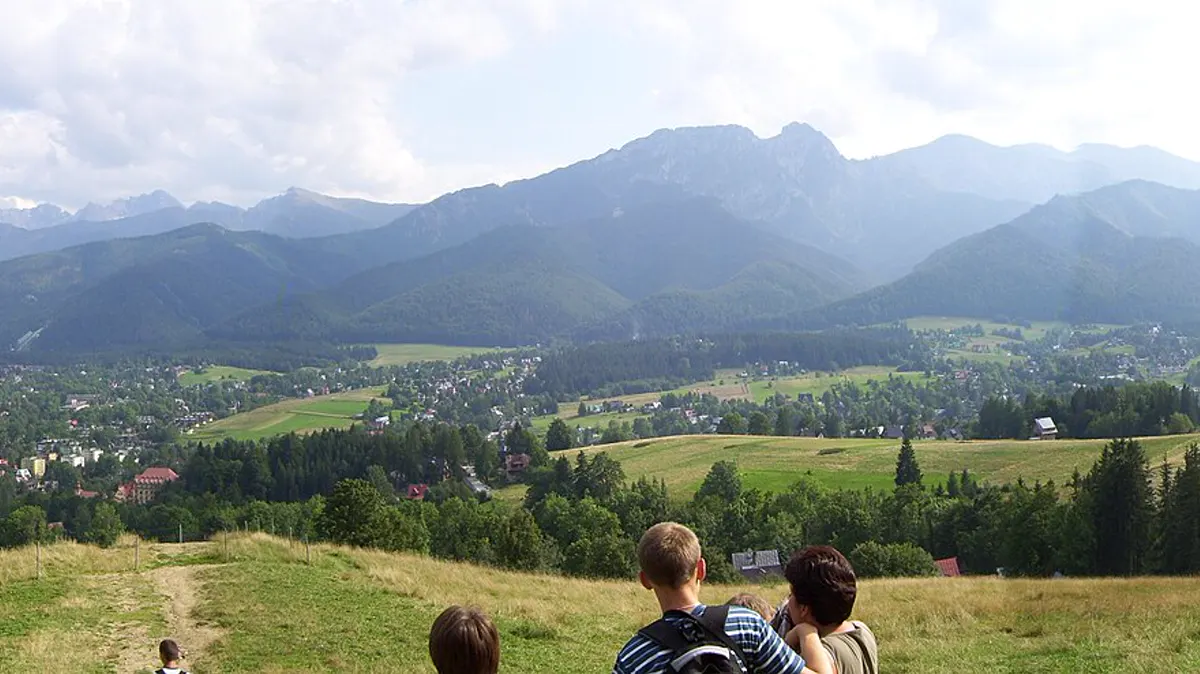
The usual way to reach Zakopane is by bus from Kraków. Coaches and minibuses leave through the day from the bus station beside Kraków Główny railway station, and the run south takes roughly two to two and a half hours on the road everyone calls the Zakopianka. Direct trains run too, but there is no airport in the Tatras, so the town is effectively a satellite of Kraków for anyone arriving from abroad.
Journey times below are approximate and depend on traffic and season. Polish timetables change several times a year, so check departures with the operator before you travel.
Buses and minibuses from Kraków
Buses are the simplest option, and there are many of them. National coach operators and small regional minibus companies both work the route, and at busy times departures can be half an hour or so apart. Fares are cheap by Western European standards; coach companies sell online, while minibus tickets are often paid at a kiosk or to the driver.
Allow longer than two hours on a Friday afternoon heading south or a Sunday afternoon heading back, when half of Kraków is on the same road. Buses arrive at Zakopane's bus station on ulica Chramcówki, ten to fifteen minutes on foot from Krupówki, the main pedestrian street. For the wider comparison, our guide to trains and buses in Poland covers the trade-offs.
The train from Kraków
The train is more competitive than its reputation suggests. Roughly a dozen direct services a day link Kraków Główny with Zakopane, and journey times run from a little under two hours on the fastest express to around three hours on the slower ones. The line loops west through Sucha Beskidzka and Chabówka before turning south to Nowy Targ, so the rail distance is longer than the road, but the track has been modernised and the ride is comfortable.
Where the train clearly earns its place is on longer journeys. Direct services run from Warsaw, including an overnight departure, saving you a change in Kraków. Expect somewhere between five and seven hours depending on the service. Zakopane's railway station sits right next to the bus station, so onward connections are easy either way.
The nearest airports
Kraków Airport at Balice is the closest, roughly 110 km away by road, with the widest choice of European flights. Most people take the airport train into Kraków Główny, which takes under twenty minutes and runs about every half hour, then walk across to the bus station. Some coach operators and transfer companies also run direct services to Zakopane, more often in the ski season.
Katowice Airport at Pyrzowice is the second option, useful if a budget airline gets you there cheaply. It is around 200 km away, and the practical route is a transfer towards Kraków first, then south, which means the better part of half a day. Warsaw's airports are too far to be practical; see our guide to getting around Poland for the wider picture.
Driving and the Zakopianka
Driving from Kraków is straightforward. The S7 expressway runs south to Rabka-Zdrój, then the DK47 carries on through Nowy Targ to Zakopane. It is a little over 100 km and takes about two hours when the road is clear. There is no toll on this stretch, unlike the concession section of the A4 west of Kraków; check current rules on toll roads in Poland if your route changes.
A new dual carriageway between Rdzawka and Nowy Targ opened in late 2024 and takes traffic around the town, leaving the single-carriageway run from Nowy Targ to Zakopane as the main pinch point. Holiday weekends can still double the journey. Parking in central Zakopane is paid and limited, so ask your accommodation what it offers before renting a car. A car helps for the outlying valleys, less so for the town itself.
Winter road conditions
Snow is normal from late November into March, and the exposed climb between Rabka-Zdrój and Nowy Targ can be slow in bad weather. Main roads are cleared and gritted promptly, so the real problems are visibility and queues rather than impassable tarmac.
Winter tyres are not legally compulsory in Poland, which surprises visitors from Germany or Austria. They are strongly advised in the mountains, and insurers can take a dim view of summer tyres after a winter accident. Rental cars are usually fitted with them in season, but confirm it when booking. Read up on Poland in winter before a January trip, and allow extra time if you have a flight to catch.
Getting from Zakopane to the trailheads
Most walks start outside town, and local minibuses do the ferrying. They leave from around the bus station for Kuźnice, where the cable car climbs to Kasprowy Wierch; for Palenica Białczańska, the car park for Morskie Oko, which is followed by a nine kilometre walk up an asphalt road; for Kiry at the mouth of Dolina Kościeliska; and for Siwa Polana at the entrance to the Chochołowska Valley.
Two valleys need no transport at all. Strążyska Valley and Dolina Białego both begin within walking distance of the centre, the sensible choice for an arrival afternoon. The funicular up Gubałówka starts a few minutes from Krupówki. Entry to Tatra National Park is charged at the trailheads, and our list of things to do in Zakopane covers what to fit around the hiking.
Good to know
Buy your return ticket to Kraków as soon as you arrive if you are travelling on a Sunday or at the end of a public holiday, when queues at the bus station build fast and popular departures sell out. Confirm the last departure of the day with the operator, especially if you are connecting to a flight from Kraków.
Written by ViewPoland Editorial for ViewPoland, an independent English-language guide to Poland. Published 2 August 2026. Last updated 2 August 2026.