Attraction in Gdańsk
Green Gate (Zielona Brama)
The Green Gate is a Renaissance gateway from the 1560s that closes the eastern end of Gdansk's Long Market where it meets the Motlawa River, now home to a branch of the National Museum in Gdansk and a photography gallery.
Reviewed and updated July 2026
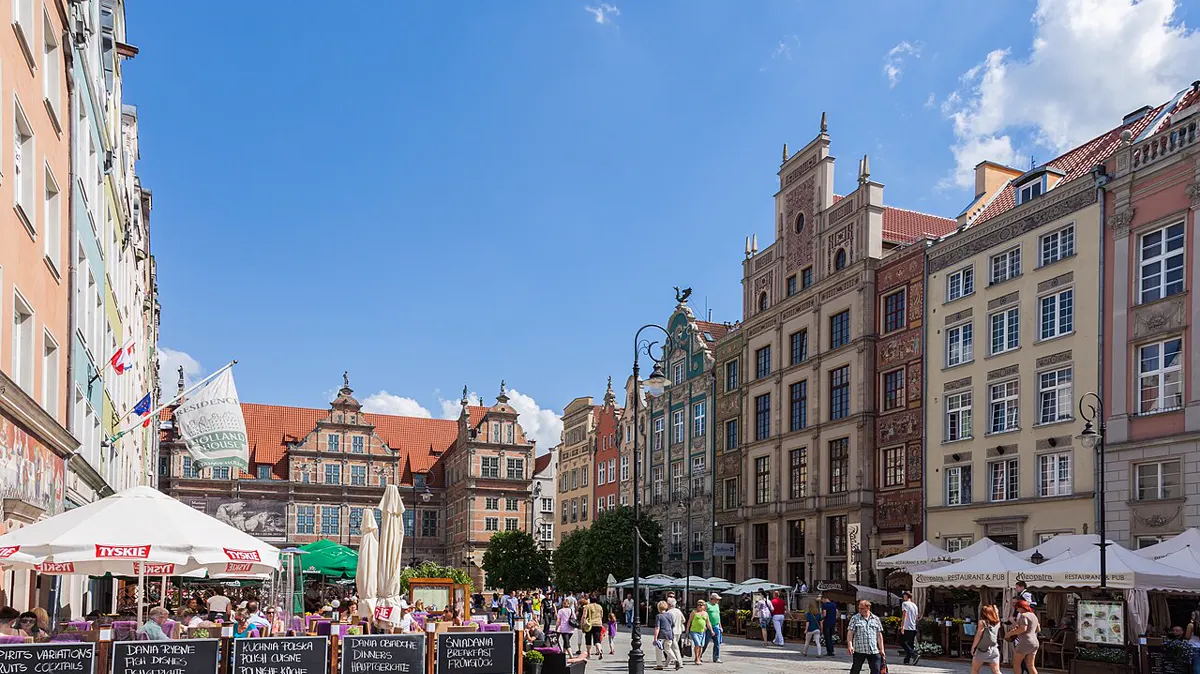
The Green Gate (Zielona Brama) is a Renaissance gateway from the 1560s that closes the eastern end of Gdansk's Long Market where the promenade meets the Motlawa River, and people visit it both as a landmark facade and as an exhibition space, since it now holds a branch of the National Museum in Gdansk along with a photography gallery. It was built as a formal residence for visiting Polish monarchs, though by most accounts no king ever actually stayed there. Standing under its arches puts you on the line between the old merchant heart of the city and the waterfront.
What you see at the gate
The Green Gate reads as a wide, ornate wall of brick and stone with several passageways cut through at ground level, so foot traffic flows straight from the Long Market out to the riverside. The design follows a Renaissance Mannerist style that looks toward the merchant houses of the Low Countries rather than the Gothic churches nearby, which makes it stand out along the street. Walk through and you step directly onto the Motlawa embankment, with the river and the far bank in front of you.
A palace no king used
The gate was raised in the 1560s and intended as a formal residence where Polish monarchs could stay during visits to Gdansk, a nod to the city's standing and wealth at the time. The often repeated story is that no king ever actually lodged there, so the grand purpose remained more symbolic than practical. That gap between intention and use is part of why the building is remembered, and it explains the scale of a structure that is really a ceremonial gateway rather than a working defensive gate.
Museum and photography gallery inside
Today the Green Gate houses a branch of the National Museum in Gdansk together with a photography gallery that runs temporary exhibitions, so what is on show changes over time. It suits visitors who want more than a quick photo of the facade and are happy to step indoors for a short cultural stop. Because the programme rotates, check the National Museum in Gdansk official channels for current exhibitions, opening hours and admission before you go.
Fitting it into a Gdansk visit
The gate sits at one natural end of the Long Market, so it pairs well with a walk that starts at the Golden Gate and passes the town hall and Neptune's Fountain before finishing at the water. From here you are steps from the Motlawa waterfront and the crane and bridges further along the embankment, which makes it an easy pivot point in a day exploring the old town. For where it fits in the wider city, see our Gdansk guide.
Good to know
Because exhibitions inside rotate, check the National Museum in Gdansk official channels for current shows, opening hours and admission before your visit.
Frequently asked questions
More attractions in Gdańsk
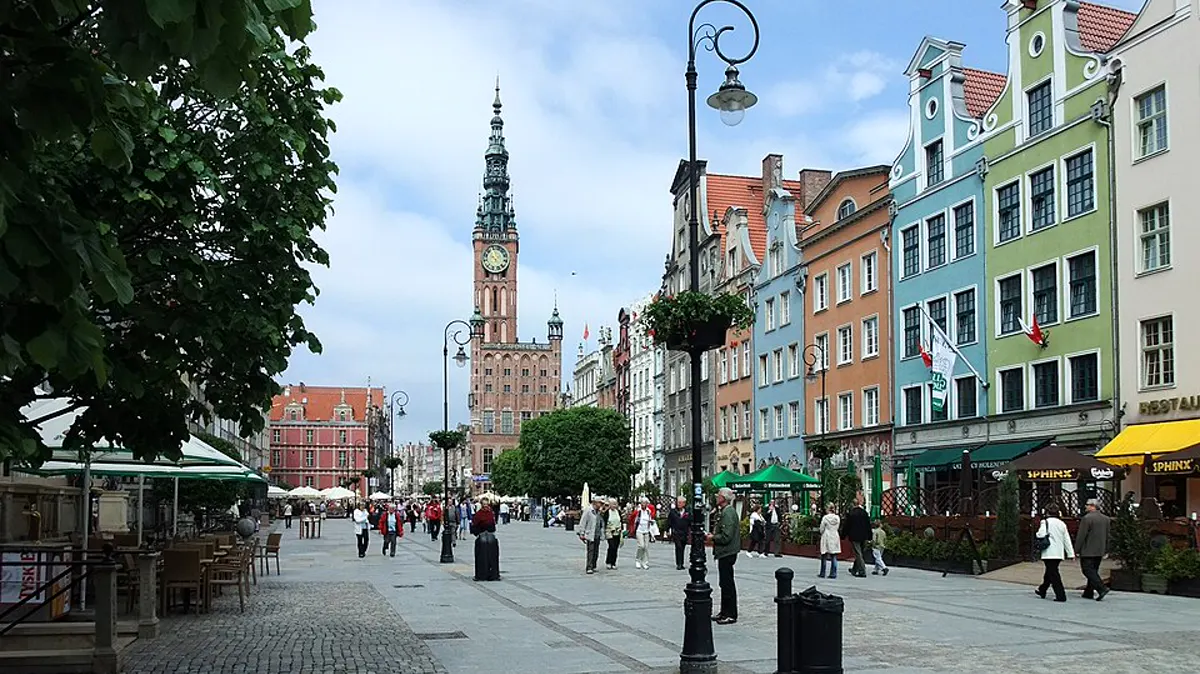
Long Market
The grand main thoroughfare of Gdansk, a wide promenade of merchant facades running from the Golden Gate to the river.
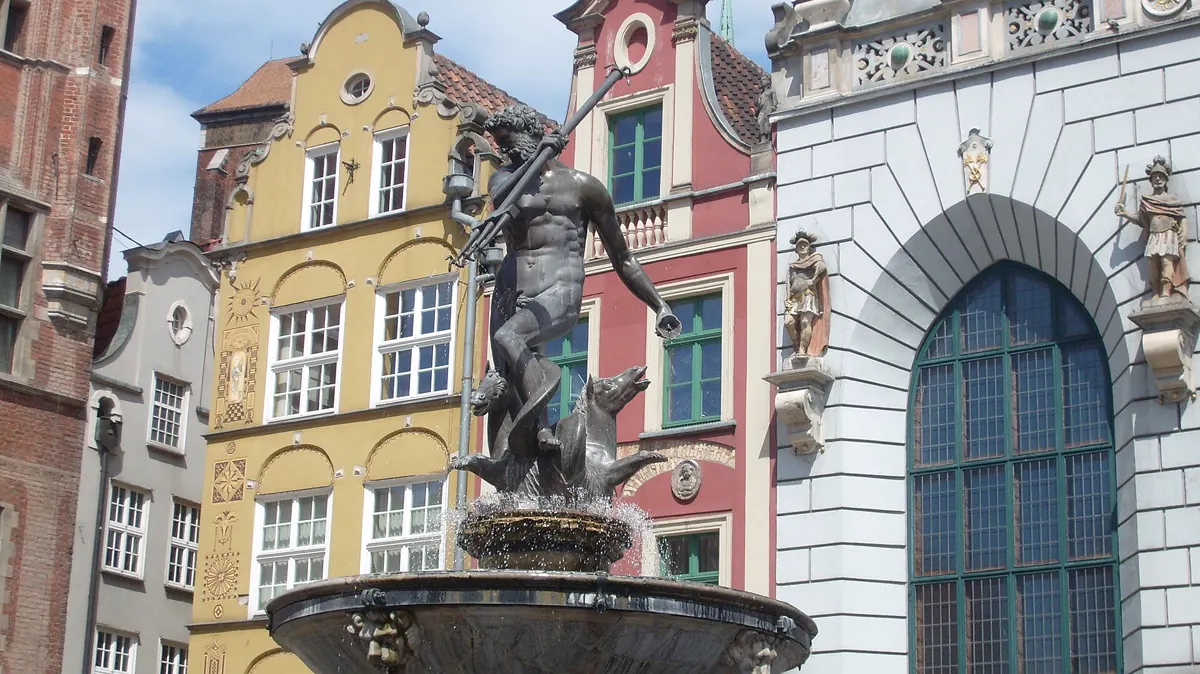
Fontanna Neptuna
The bronze Neptune Fountain, cast in the early 17th century, has stood in front of the Artus Court since 1633 and became the symbol of Gdansk. Local legend claims the god's trident scattered gold flakes into the water, inspiring the herbal liqueur Goldwasser.
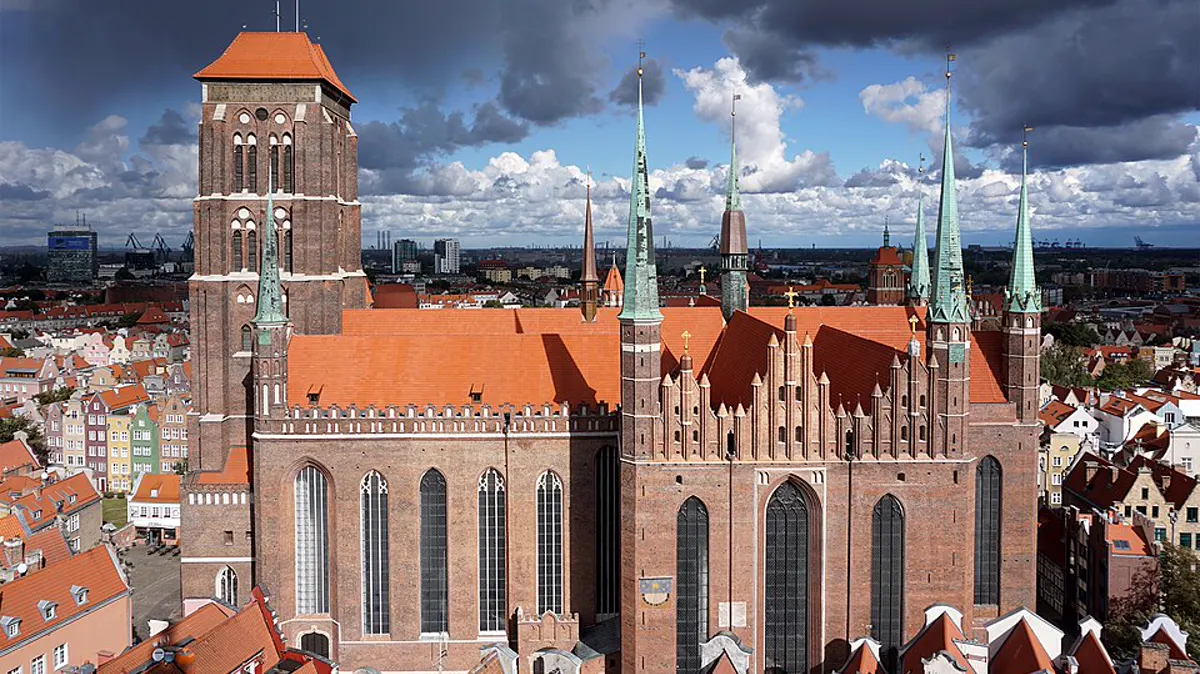
Bazylika Mariacka
One of the largest brick churches in the world, this vast Gothic basilica can hold up to 25,000 people. Climb its 405 steps to a viewing terrace for a sweeping panorama over the red rooftops of the old town.
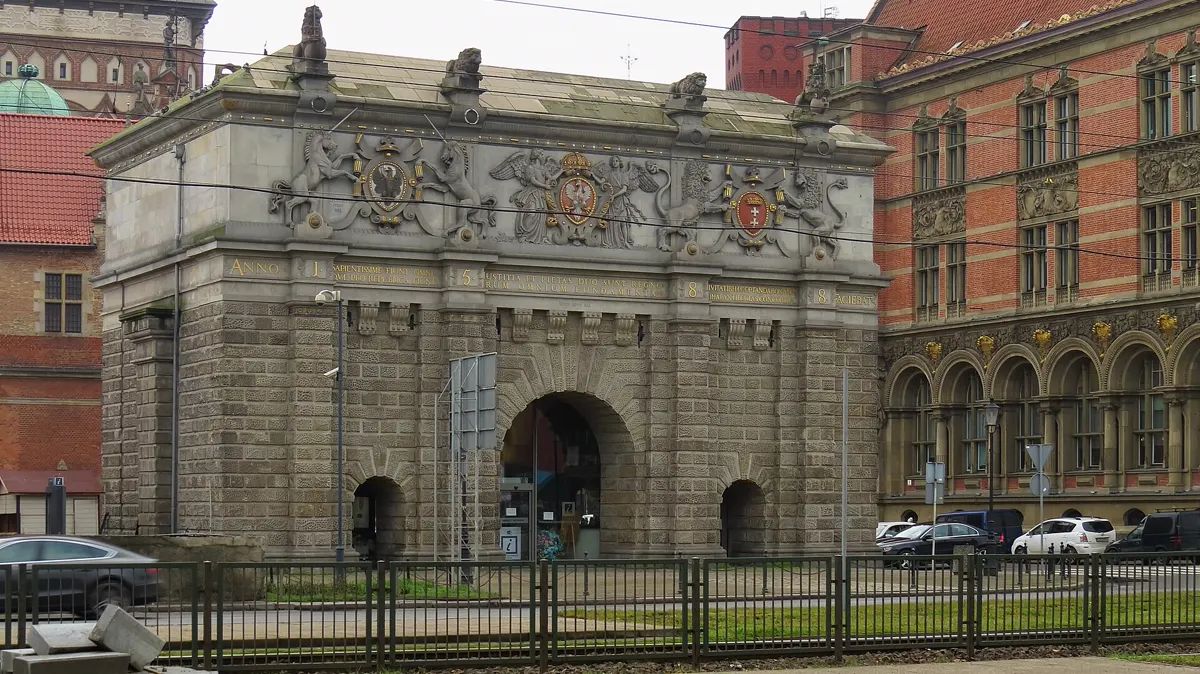
Upland Gate (Brama Wyzynna)
A Renaissance gate from the late 16th century that marks the ceremonial start of Gdansk's Royal Route into the Main Town, carrying the carved coats of arms of Poland, Prussia and Gdansk.
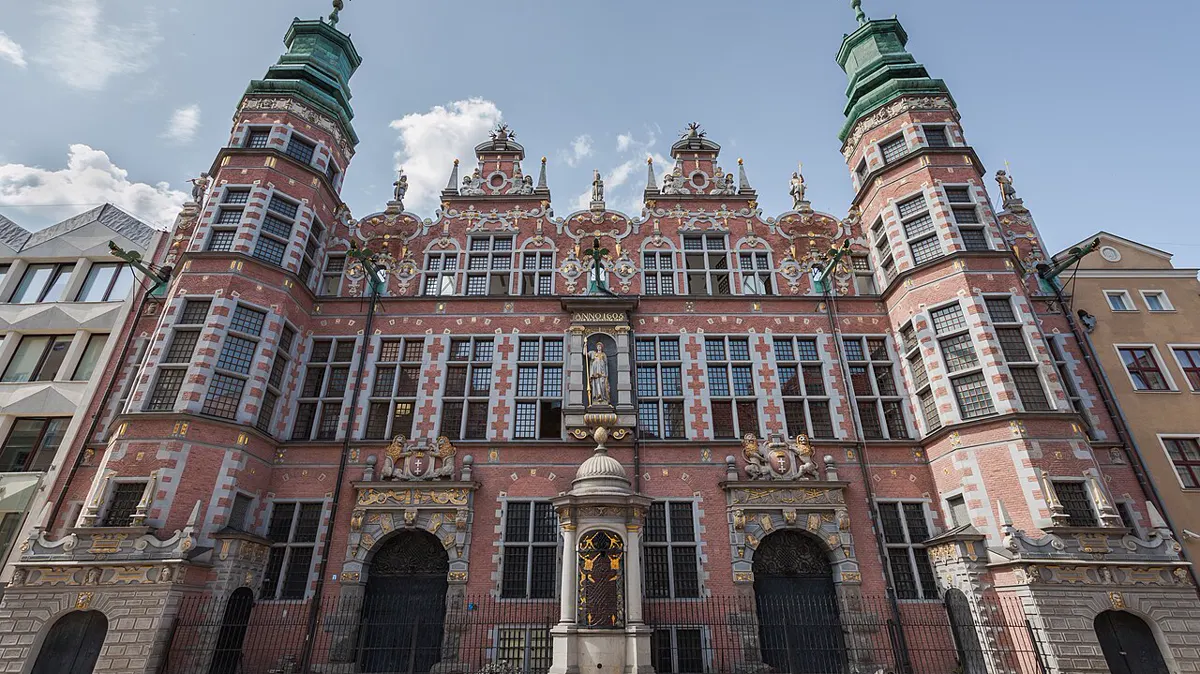
Great Armoury (Wielka Zbrojownia)
The Great Armoury is an ornate former arsenal in Gdansk's Main Town, widely regarded as one of the finest examples of Dutch Mannerist architecture in the city. Its richly decorated facades now front the Academy of Fine Arts and a shopping arcade.
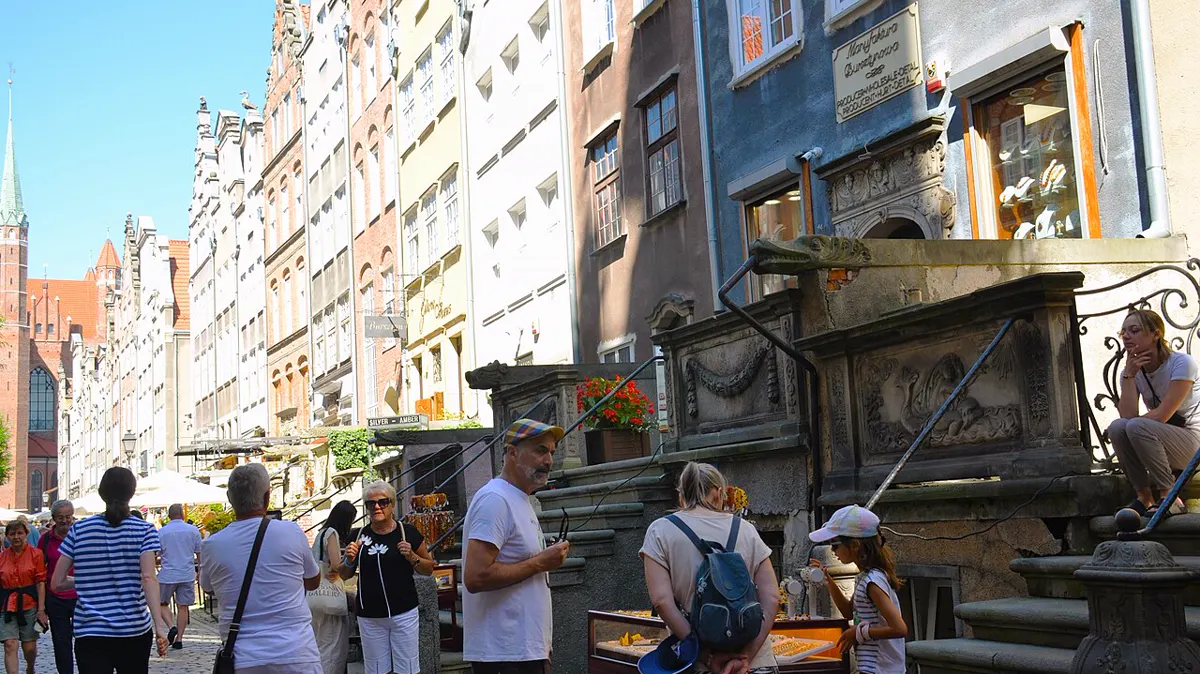
Mariacka Street (ulica Mariacka)
A short cobbled lane in Gdansk running between St. Mary's Basilica and the Motlawa waterfront, lined with reconstructed patrician houses and amber shops. It is widely called the most photogenic street in the city.
More to explore in Gdańsk

Restaurant
Eliksir
A refined tasting-menu restaurant in the Garnizon district of Wrzeszcz, making the most of Baltic ingredients.
Hotel
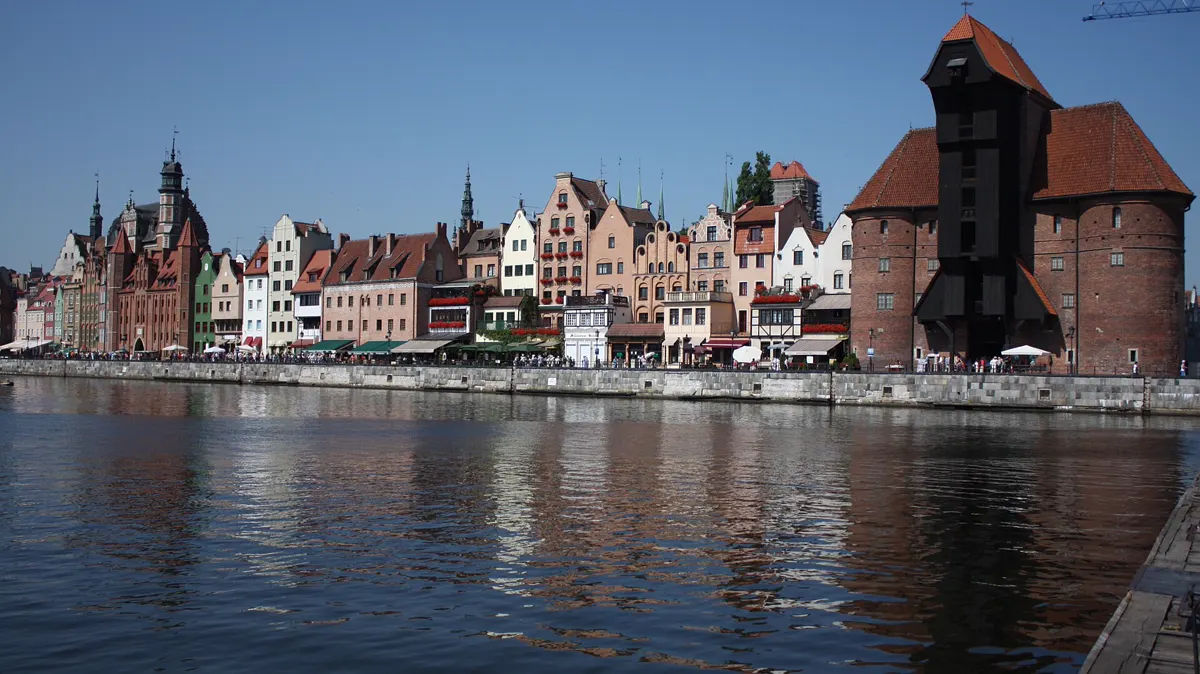
Hotel Podewils
A baroque townhouse hotel right on the marina, facing the old crane across the water.
Nature
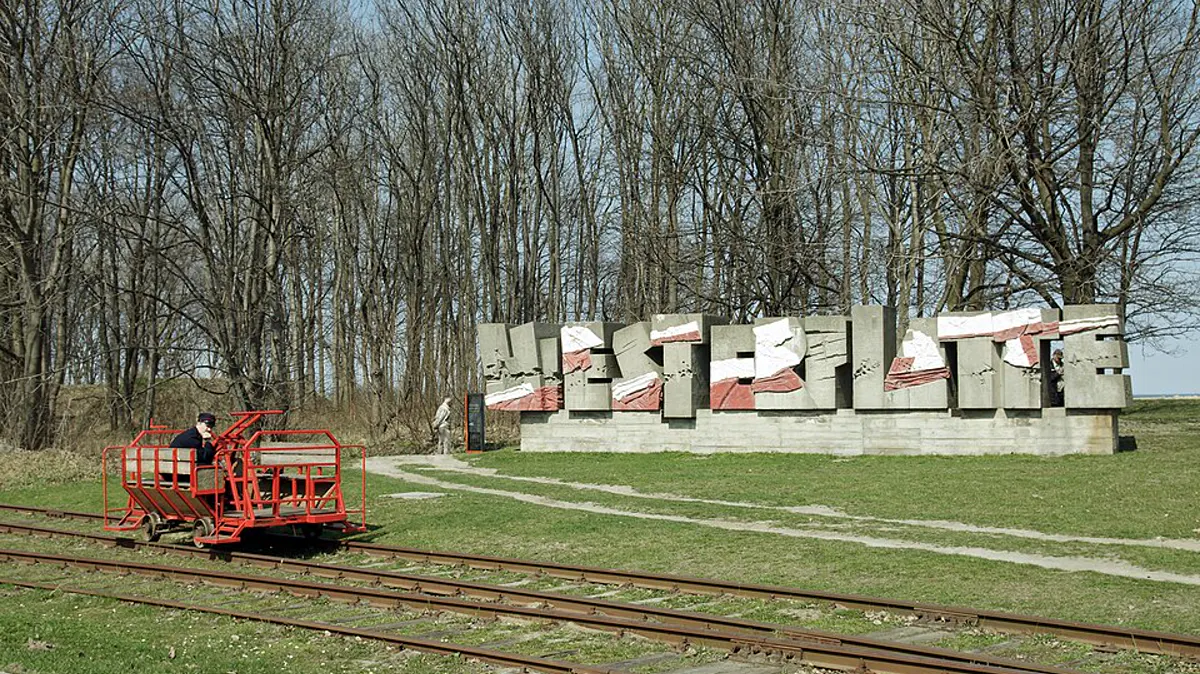
Westerplatte
The seaside peninsula where WWII began, now a memorial park reached by a summer river boat.
Castle
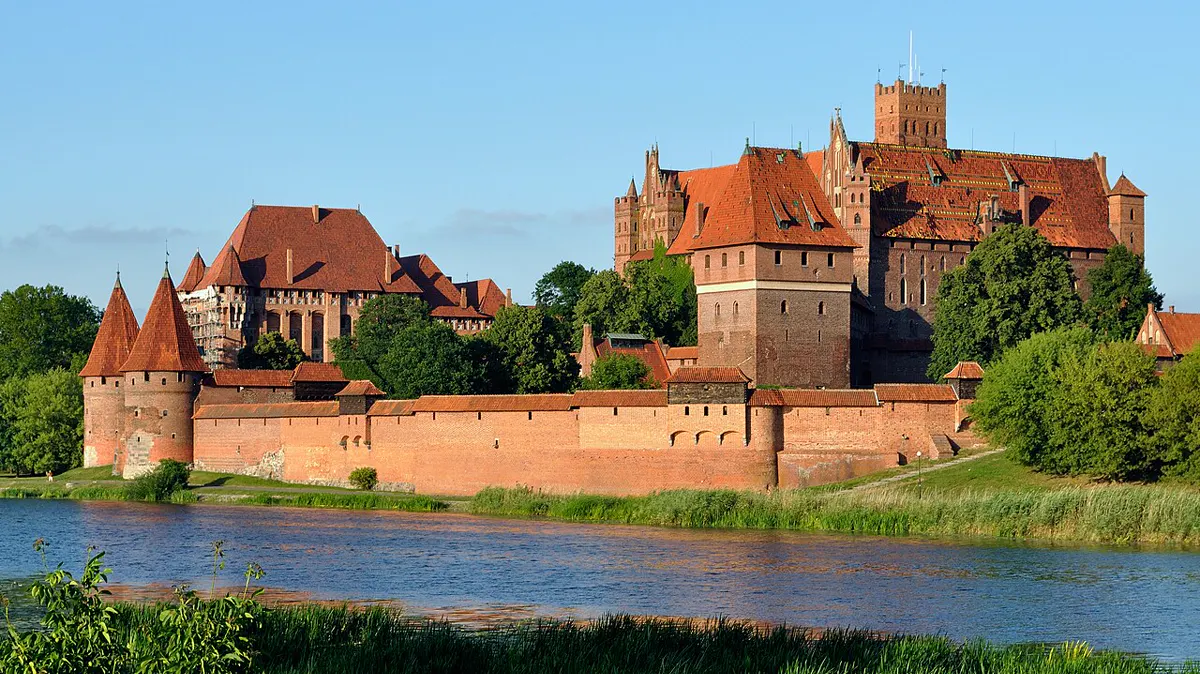
Malbork Castle
The largest castle in the world by land area, a vast red-brick fortress built by the Teutonic Knights on the Nogat river.

Restaurant
Bar Mleczny Neptun
A classic milk bar on Dluga serving pierogi, soups and cutlets at low prices in a self-service canteen setting. The cheapest honest Polish food in the old town.

Restaurant
Pierogarnia Mandu
A much-loved dumpling house handmaking both Polish pierogi and Georgian khinkali.