Attraction in Gdańsk
Granary Island (Wyspa Spichrzow)
Granary Island is a redeveloped quarter on the Motlawa River in Gdansk, once the port's warehouse district and now a riverside area of hotels, restaurants and gable-fronted buildings that mirror the old granaries.
Reviewed and updated July 2026
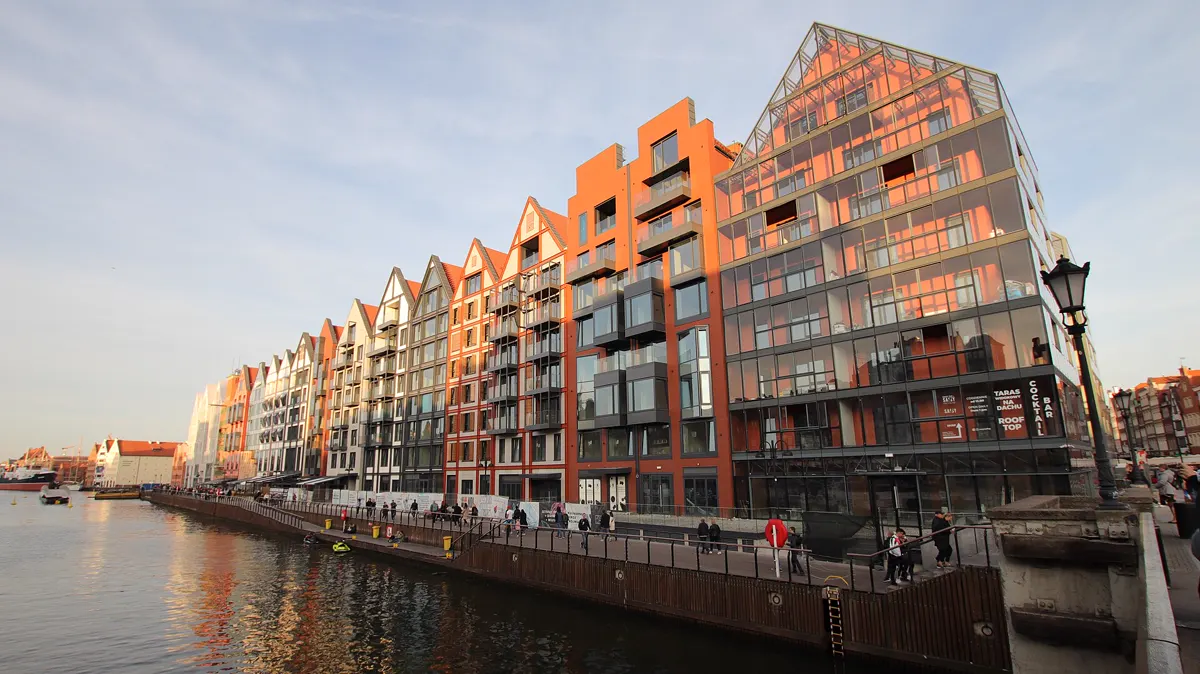
Granary Island (Wyspa Spichrzow) is an island on the Motlawa River in Gdansk, sitting directly opposite the main waterfront, and people come for its riverside promenade and the rows of tall, gable-fronted buildings that recall the granaries that once stood here. It was the warehouse quarter of the medieval port, with the first granaries raised around 1330, and after wartime destruction it has been rebuilt into a district of hotels, apartments and restaurants. The short walk across the bridges from the old waterfront makes it an easy addition to a day in the city.
What you see on the island today
The island is lined with modern buildings whose narrow, gabled facades deliberately echo the silhouettes of the old granaries, so the skyline reads as a nod to the port's warehouse past rather than a faithful reconstruction. At ground level you find restaurants, cafes and hotels, and the riverside promenade running along the Motlawa is the main draw for a slow walk. From the water's edge you look straight across to the historic quay, the Crane and the merchant houses of the old town. It is a good spot to pause between sightseeing, particularly towards the end of the day.
From medieval warehouses to wartime ruin
Granary Island was the storage heart of Gdansk's port, and the first granaries were built here around 1330. Over the centuries it filled with warehouses used to hold grain and other goods moving through the Baltic trade, and at its peak the island held hundreds of them. That dense quarter was almost entirely destroyed during the Second World War, leaving the island largely empty for decades. The buildings you see now come from a later redevelopment that chose to reference the lost granaries in their shape and scale.
Who it suits and how to visit
The island works best for anyone who enjoys walking by the water, sitting down for a meal with a view, or staying close to the old town without being in the middle of it. There is no single ticketed sight here, so a visit is really about the promenade, the architecture and the outlook across the river. Families and couples tend to use it as a relaxed break, and the restaurants make it a natural choice for dinner. For opening times or events at individual venues, check their official channels.
Fitting it into a day in Gdansk
Because the island faces the main waterfront across a narrow stretch of the Motlawa, it slots neatly into a route through the old town, reached on foot over the pedestrian bridges. Many visitors cross after seeing the historic quay and the Crane, then follow the promenade before heading back for the evening. It pairs well with the riverside sights covered in our Gdansk guide, and the change of perspective from the far bank is worth the short walk on its own.
Good to know
The island is reached on foot over bridges across the Motlawa from the main waterfront, so no boat or ticket is needed to walk the promenade.
Frequently asked questions
More attractions in Gdańsk
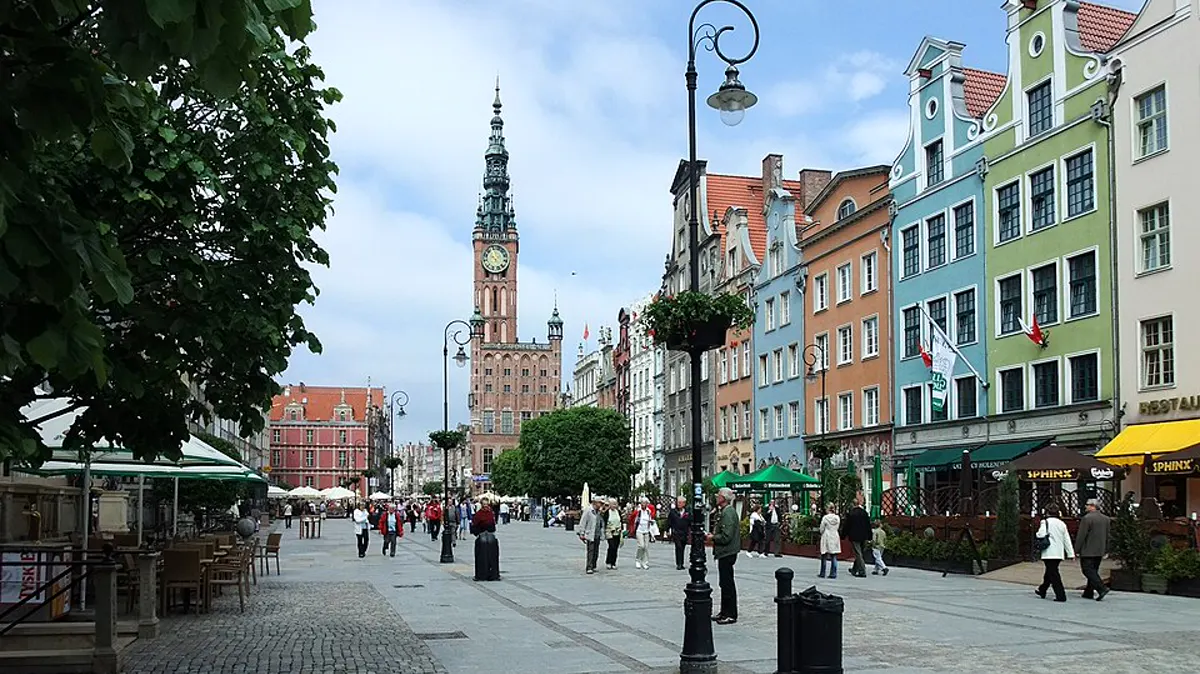
Long Market
The grand main thoroughfare of Gdansk, a wide promenade of merchant facades running from the Golden Gate to the river.
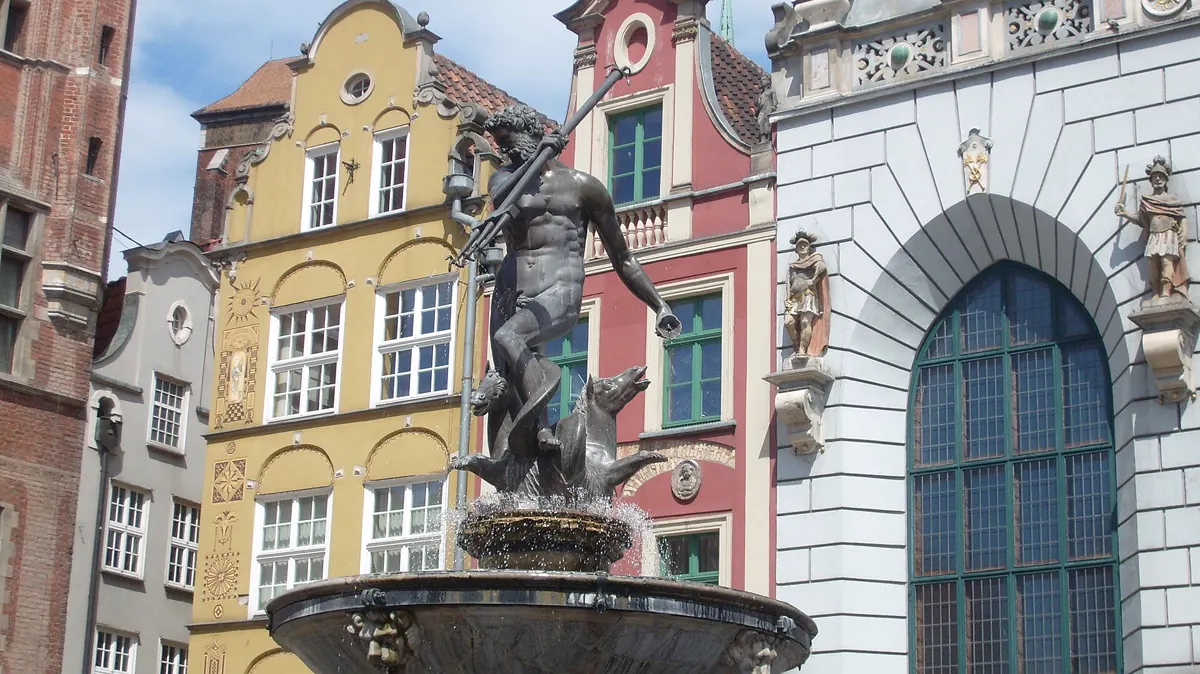
Fontanna Neptuna
The bronze Neptune Fountain, cast in the early 17th century, has stood in front of the Artus Court since 1633 and became the symbol of Gdansk. Local legend claims the god's trident scattered gold flakes into the water, inspiring the herbal liqueur Goldwasser.
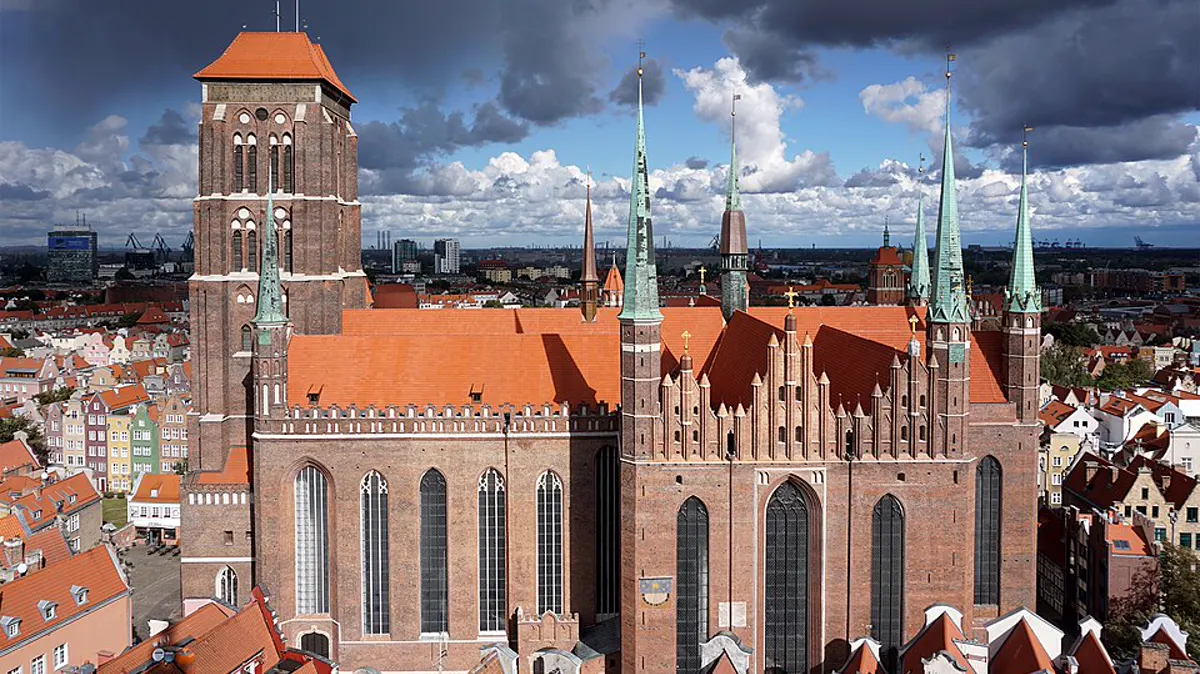
Bazylika Mariacka
One of the largest brick churches in the world, this vast Gothic basilica can hold up to 25,000 people. Climb its 405 steps to a viewing terrace for a sweeping panorama over the red rooftops of the old town.
St. Catherine's Church
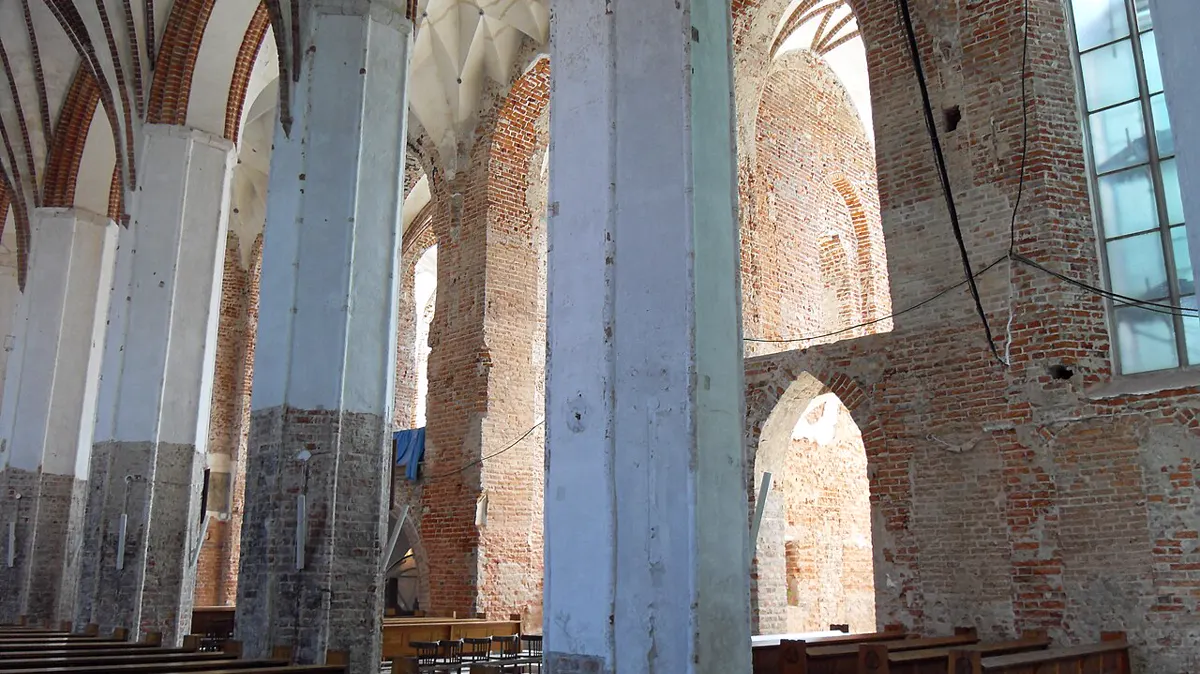
St. Catherine's Church is the oldest church in Gdańsk and the burial place of astronomer Johannes Hevelius. Its bell tower holds the Museum of Tower Clocks, home to the world's first pulsar clock.
Upland Gate (Brama Wyzynna)
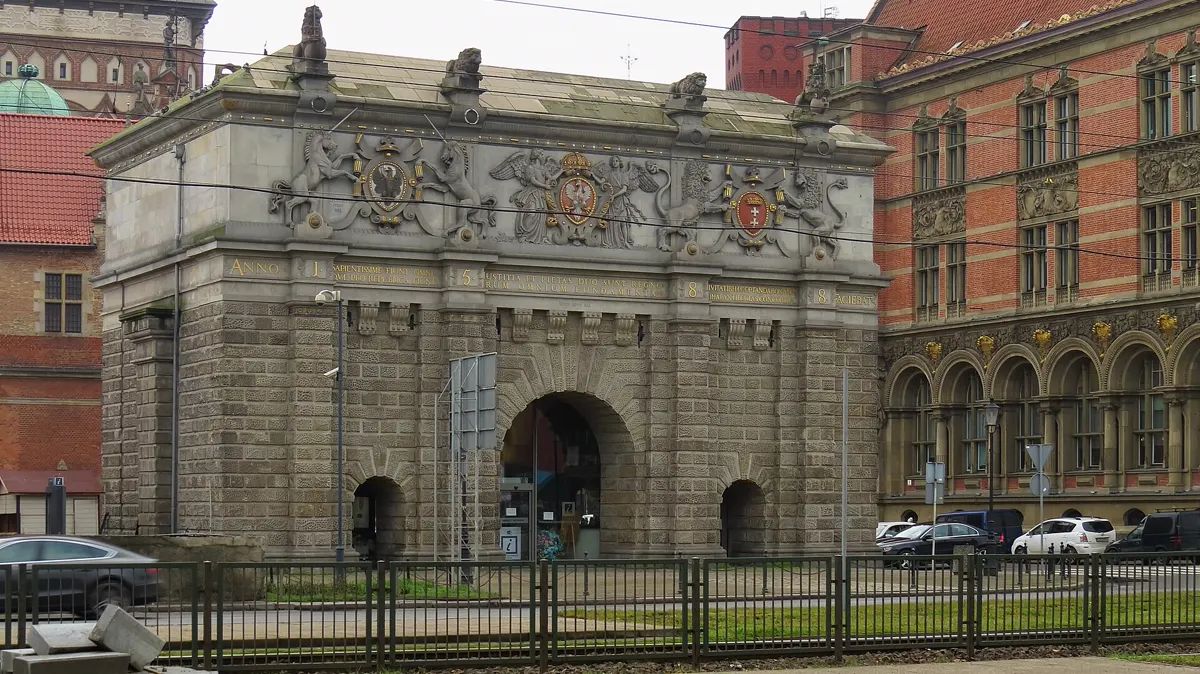
A Renaissance gate from the late 16th century that marks the ceremonial start of Gdansk's Royal Route into the Main Town, carrying the carved coats of arms of Poland, Prussia and Gdansk.
Great Armoury (Wielka Zbrojownia)
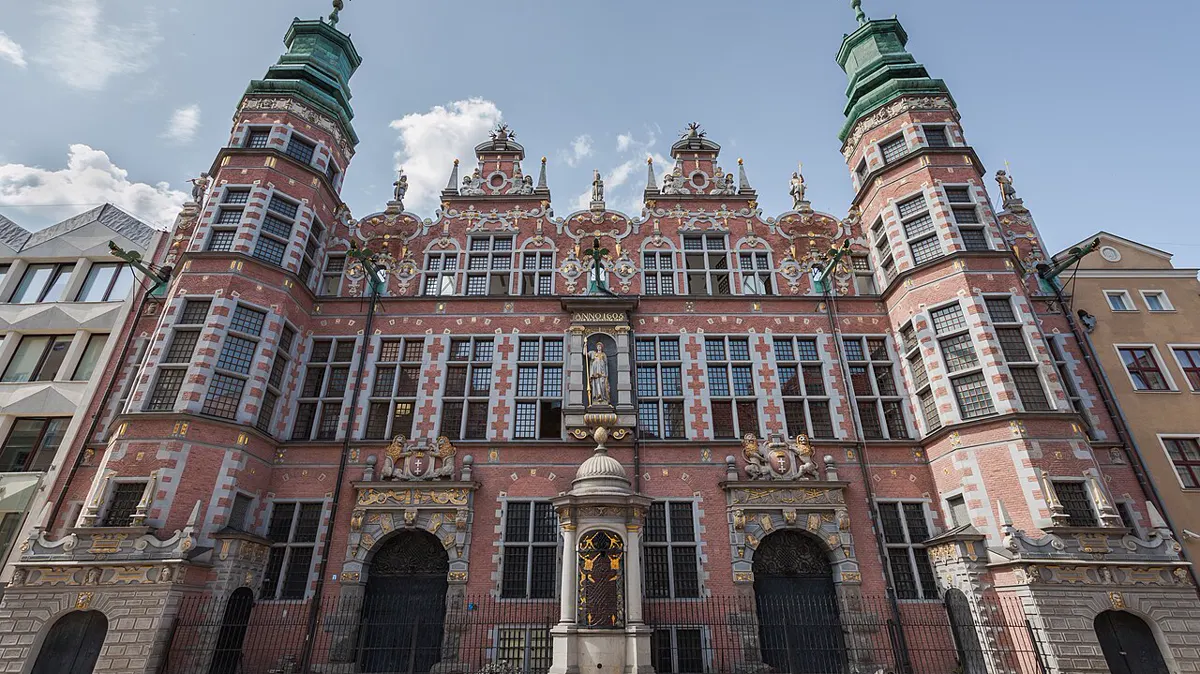
The Great Armoury is an ornate former arsenal in Gdansk's Main Town, widely regarded as one of the finest examples of Dutch Mannerist architecture in the city. Its richly decorated facades now front the Academy of Fine Arts and a shopping arcade.
More to explore in Gdańsk

Restaurant
Eliksir
A refined tasting-menu restaurant in the Garnizon district of Wrzeszcz, making the most of Baltic ingredients.
Hotel
Hotel Podewils
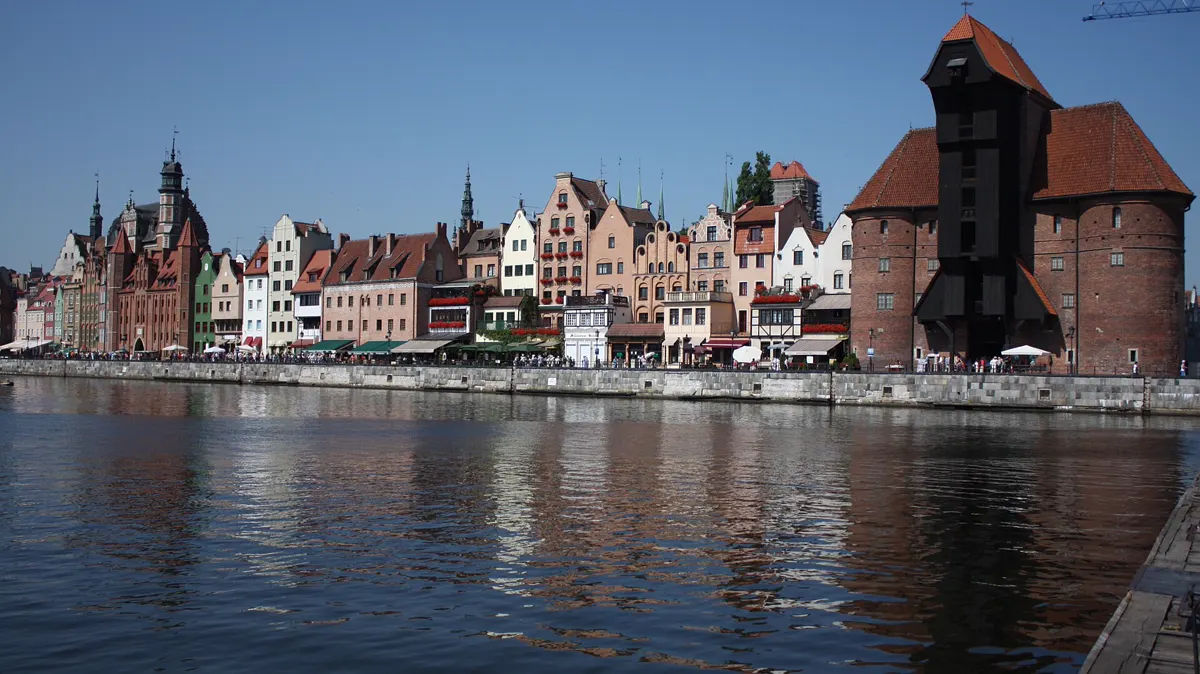
A baroque townhouse hotel right on the marina, facing the old crane across the water.
Nature
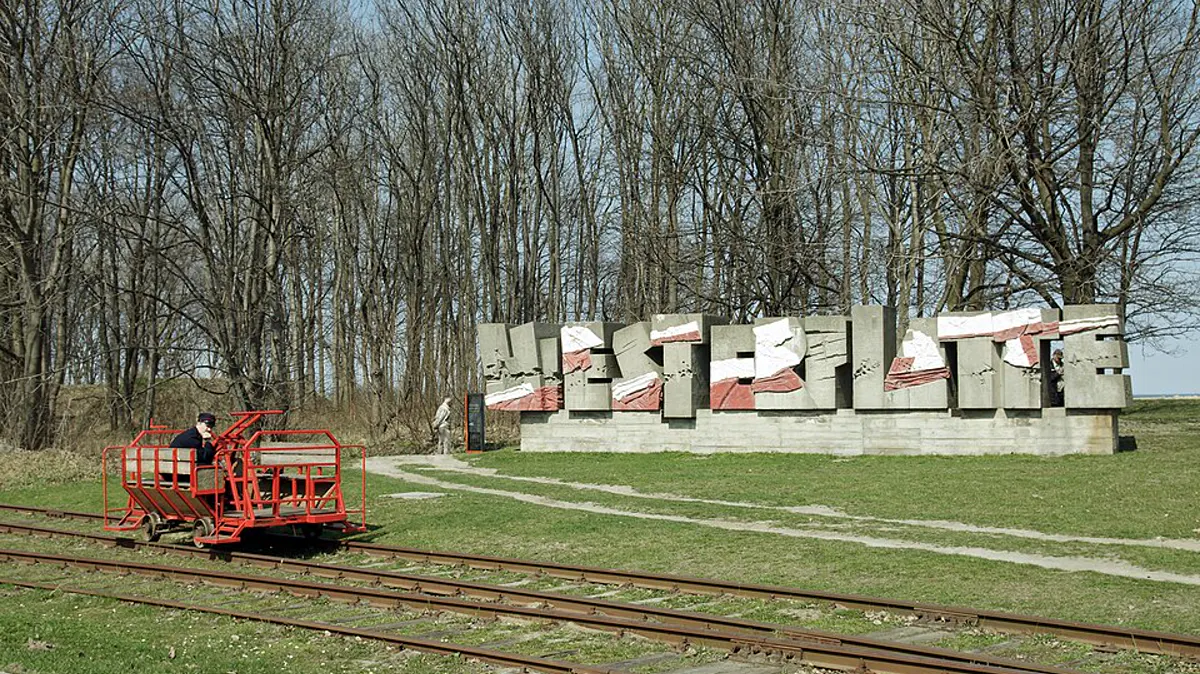
Westerplatte
The seaside peninsula where WWII began, now a memorial park reached by a summer river boat.
Castle
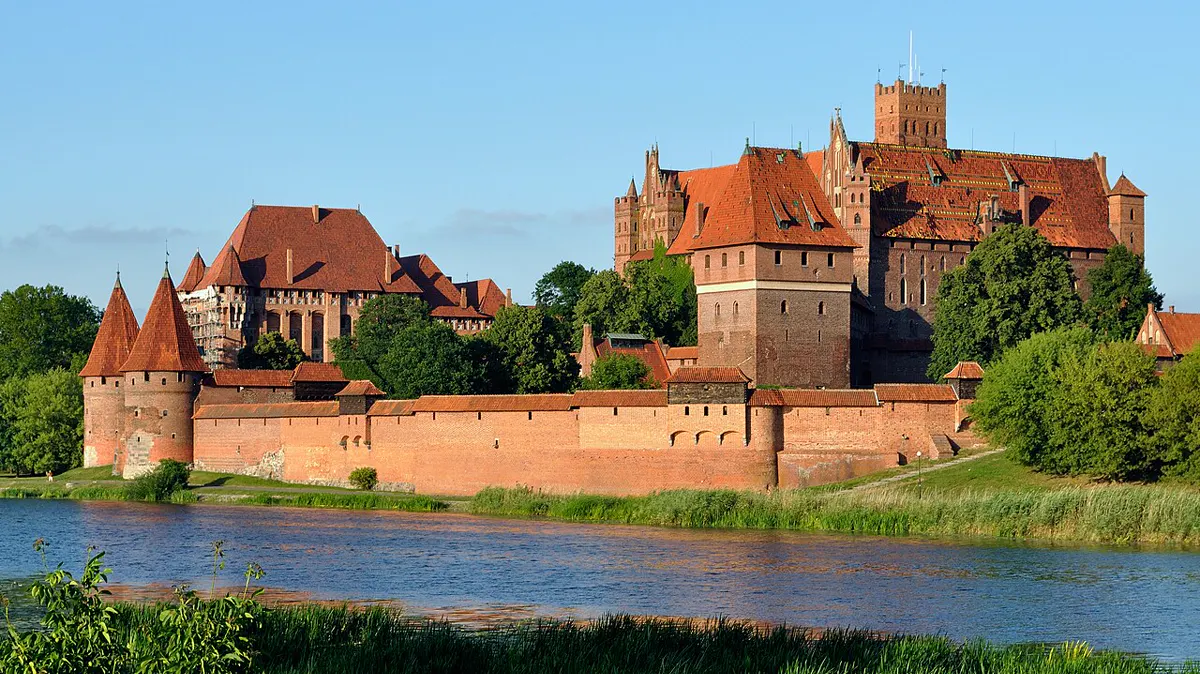
Malbork Castle
The largest castle in the world by land area, a vast red-brick fortress built by the Teutonic Knights on the Nogat river.

Restaurant
Mercato (Hotel Hilton)
The Hilton's riverside restaurant on the Motlawa, Italian-leaning with a strong seafood list and terrace views of the crane. A polished option right on the waterfront.

Restaurant
Bar Mleczny Neptun
A classic milk bar on Dluga serving pierogi, soups and cutlets at low prices in a self-service canteen setting. The cheapest honest Polish food in the old town.