Thematic
First Time in Poland: Everything You Need to Know
A practical first-timer's overview of Poland: which cities to choose, how many days to stay, getting around by train, money, language, safety, food and the best time to visit.
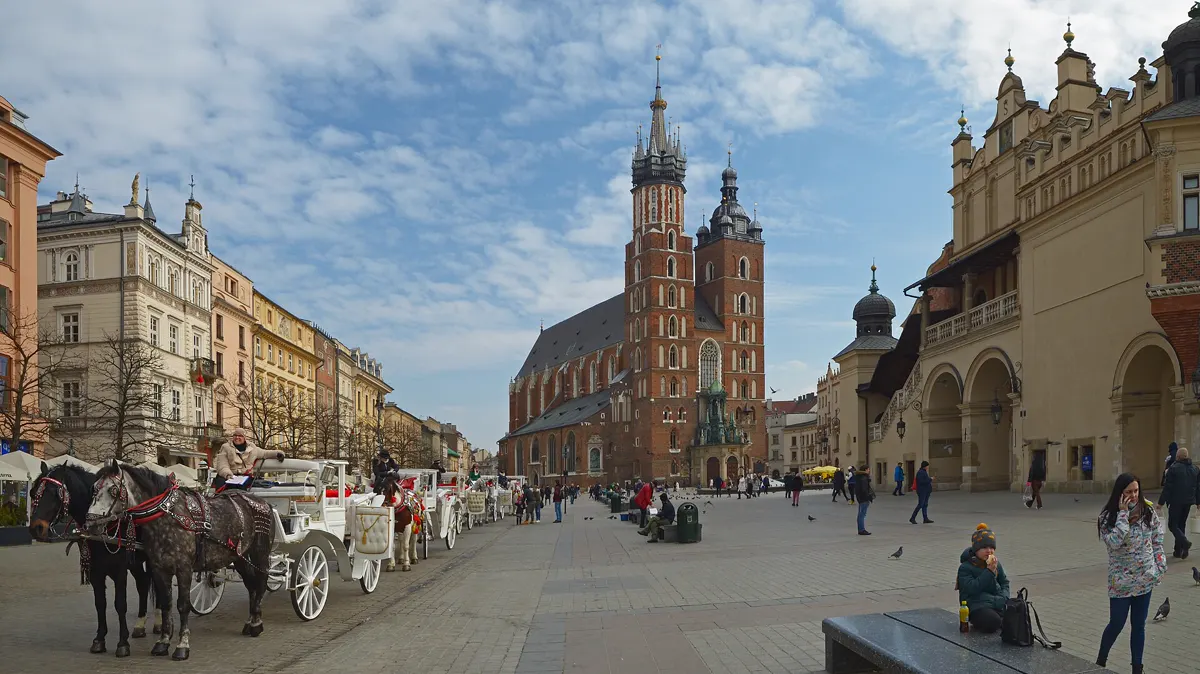
A first trip to Poland usually comes down to a few practical questions: which cities to choose, how long to stay, and how to move between them. The short answer for most first-timers is to base yourself in Krakow and add one or two of Warsaw, Gdansk or Wroclaw, then link them by train. This page is a starting point that sends you to our detailed guides, including a full 10-day Poland itinerary, rather than repeating everything here.
Which cities to pick
Pick cities by what you want to see, not by size. Krakow suits history and a compact walkable old town, and it is the easiest base for day trips. Warsaw is the capital and works well for modern history, museums and food. Gdansk gives you the Baltic coast and a rebuilt merchant old town. Wroclaw is smaller and relaxed, with a market square and river islands.
If you can only choose one pairing, our Krakow or Warsaw comparison lays out the trade-offs. Short on time in a single city? The three days in Krakow plan covers the essentials without rushing.
How many days you need
Plan on at least four to five days for one city with day trips, and seven to ten if you want to combine two or three cities. Krakow alone can fill three days in the old town and Kazimierz, plus a day for the Wieliczka Salt Mine or the Auschwitz-Birkenau Memorial.
Add a night or two in Warsaw or Gdansk and you have a full week. If you are weighing a shorter versus longer trip, the 7 days or 10 days comparison helps you decide how much to fit in.
Getting around by train
Trains are the simplest way to travel between major cities. Fast intercity services connect Warsaw, Krakow, Gdansk, Wroclaw and Poznan, and the Warsaw to Krakow route takes roughly two and a half hours on the quickest trains. Book ahead for the lowest fares and check the operator's official site for current times, since timetables change.
Our guide to getting around Poland covers tickets, seat reservations and regional links. Deciding between rail and a hire car? The train or car comparison explains when each makes sense.
Money, cards and language
Poland uses the zloty (PLN), not the euro, so bring or withdraw local currency. Cards are accepted almost everywhere, contactless is standard, and you can pay by phone in most shops, cafes and on public transport. Keep a little cash for small kiosks, markets and older milk bars.
Polish is the national language, and English is widely spoken by younger people and in tourist areas. A few words such as dzien dobry (good day) and dziekuje (thank you) go a long way. On safety, Poland is a low-crime country by European standards, and normal city precautions against pickpockets in crowded spots are enough.
Food to try
Start with pierogi (filled dumplings), zurek (sour rye soup) and bigos (hunter's stew), then work outward from there. Milk bars, the low-cost canteens known as bary mleczne, are a good way to eat traditional dishes cheaply, and our roundup of the best milk bars in Poland points you to reliable ones.
For a fuller picture of regional dishes, drinks and what to order where, see the Polish food guide.
Best time to visit
Late spring to early autumn, roughly May to September, gives you the warmest weather and the longest days, and it is the busiest stretch in Krakow and on the coast. Shoulder months such as April, May and September mean thinner crowds and lower prices while the weather stays reasonable.
Winter is cold but rewarding for Christmas markets and snow in the mountains near Zakopane. For a month-by-month breakdown of weather, events and crowds, read when to visit Poland.
Good to know
Buy intercity train tickets a few days ahead for the cheapest fares, and confirm current times on the official operator site, since schedules shift by season. See our getting around Poland guide for booking steps.
Written by ViewPoland Editorial for ViewPoland, an independent English-language guide to Poland. Published 24 July 2026. Last updated 24 July 2026.