The complete guide · Warmia and Masuria
Olsztyn
The capital of Warmia and Masuria and the gateway to the Land of a Thousand Lakes, with a castle that Copernicus once defended.
Overview
Olsztyn is the capital of Warmia-Masuria in Poland's north-east, a city of about 170,000 built around a Brick Gothic castle on the Lyna river. It was founded in the 14th century by the Warmian Cathedral Chapter, and the castle, raised between 1346 and 1353, served as the seat of the chapter's administrators. The most famous of them was Nicolaus Copernicus, who managed the region's estates and organised its defence from here between 1516 and 1521.
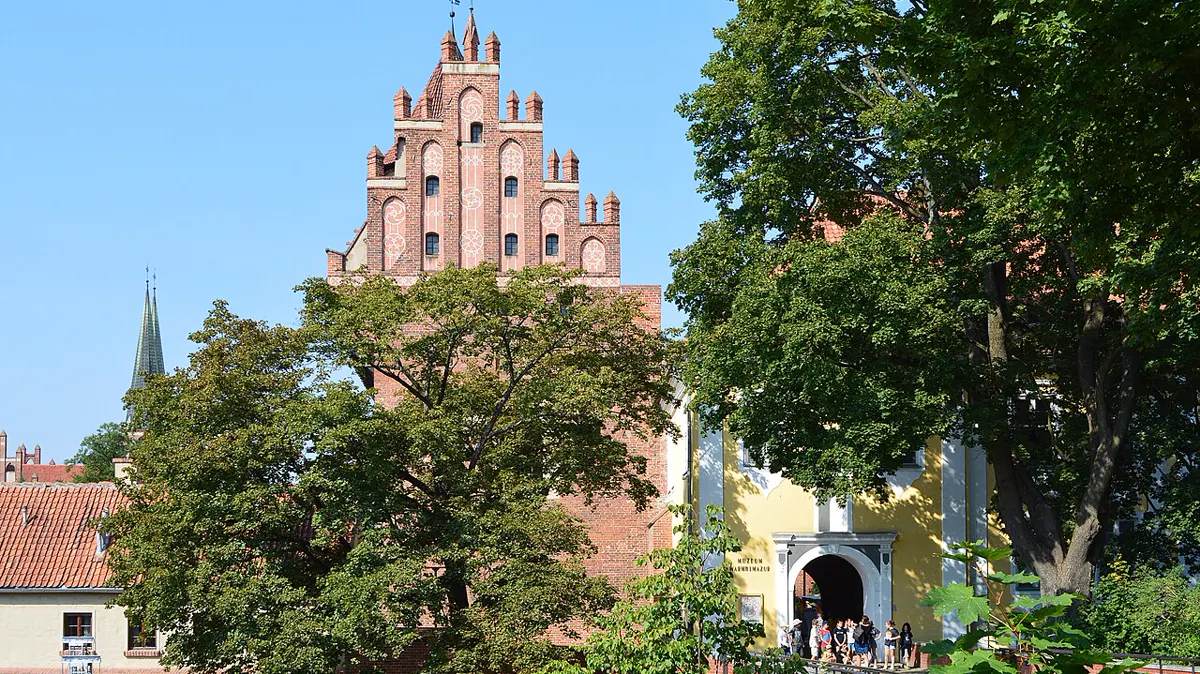
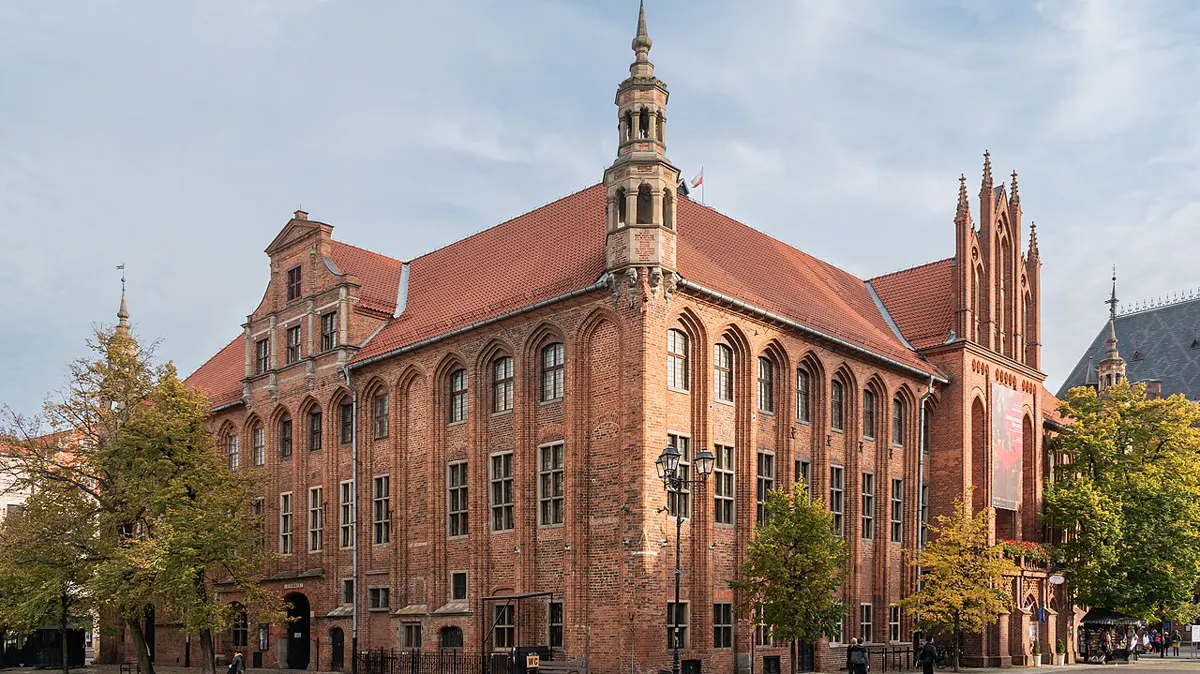
The old town is compact and easily walked: the castle, the Gothic co-cathedral of St James, the Old Town Hall on the market square, and the High Gate, the last survivor of the medieval town gates. Copernicus left a physical mark here too, an astronomical table he drew on a castle cloister wall around 1517 to track the sun and fix the equinoxes. It is described as the only surviving instrument he built and used himself.
Most travellers come to Olsztyn as a base rather than a destination in itself. Lakes lie inside the city limits, Lake Ukiel the largest, and beyond the city opens the Masurian Lake District, more than 2,000 lakes stretching east. The Krutynia, rated among the finest canoe routes in Europe, begins within easy reach. Trains from Warsaw take about two and a half hours, which makes the city an easy gateway to the lakeland.
Olsztyn at a glance
Airport
Olsztyn-Mazury Airport (SZY) at Szymany, about 55 km south; Warsaw and Gdansk airports are common alternatives via train
Population
About 170,000
Founded
14th century (Warmian Cathedral Chapter)
Good to know
Brick Gothic Warmian castle where Copernicus administered the region, main base for the Masurian lakes and the Krutynia canoe route
Currency
Polish zloty (PLN, zl). Not the euro.
Language
Polish. English is widely spoken in tourism and by younger people.
Time zone
Central European Time (UTC+1, or UTC+2 in summer).
Emergency
112 from any phone, free, English-speaking operators.
Tap water
Safe to drink everywhere in Poland.
Cards
Contactless is accepted almost everywhere, even for small amounts.
Sockets
Type E, 230V. UK and US visitors need an adapter.
Visas
Poland is in the Schengen Area and uses the EU entry rules.
Top things to see in Olsztyn
Co-Cathedral Basilica of St James in Olsztyn
A red-brick Gothic hall church at the centre of Olsztyn's Old Town, raised for a Latin greeting.
High Gate (Wysoka Brama)
The last of Olsztyn's three medieval gates and the most striking surviving piece of the old city walls.
Olsztyn Old Town
A compact market square of gabled burgher houses, ringed by fragments of the medieval walls.
Copernicus Bench
A bronze bench monument in Olsztyn showing Nicolaus Copernicus seated with an astrolabe and a scroll, unveiled in 2003 near the castle where he once l...
New Town Hall (Nowy Ratusz), Olsztyn
Olsztyn's Neo-Renaissance New Town Hall, opened in 1916, is the seat of the city's municipal authorities and one of its most recognisable public build...
Central Park (Park Centralny), Olsztyn
Central Park is a 13-hectare English-style riverside park along the Łyna in central Olsztyn, best known for its elliptical fountain whose submerged he...
Stefan Jaracz Theatre
Olsztyn's main drama theatre, housed in a 1920s municipal building and named after the actor Stefan Jaracz. Its grey symmetrical facade is a recognisa...
Railway Viaducts over the Łyna
A pair of monumental red-brick railway viaducts crossing the Łyna river valley in Olsztyn, the older dating from 1871-1872. Their tall arched spans an...
Castle Park (Podzamcze Park)
A landscaped riverside park below Olsztyn's Warmian Chapter Castle, set on the site of former water mills and revitalised in the late 2010s, near the...
Museums, castles and nature in Olsztyn
Museums
Olsztyn Planetarium and Astronomical Observatory
A Copernicus-themed planetarium under a 15-metre dome, paired with an observatory set inside a 19th-century water tower.
Castles
Olsztyn Castle (Castle of the Warmian Cathedral Chapter)
The 14th-century Gothic castle where Nicolaus Copernicus lived, worked and left behind the only astronomical instrument of his that survives.
Parks and nature
Masurian Lakes
A glacial maze of interconnected lakes and forest in the northeast, Poland's prime region for sailing, kayaking and slow summers on the water.
Lake Ukiel (Jezioro Krzywe)
The biggest lake inside the city itself, with a 22 km shoreline of beaches, marinas and water sports.
Where to base yourself: the neighbourhoods
Stare Miasto (Old Town)
The medieval core on the Lyna, gathered around the market square and its rebuilt Old Town Hall. Within a short walk are the castle, the co-cathedral of St James, and the High Gate, plus most of the city's cafes and restaurants.
Zamek Kapituly Warminskiej (Warmian Castle)
The 14th century chapter castle above the river, now the Museum of Warmia and Masuria. Its cloister holds the astronomical table drawn by Copernicus, and the courtyard and tower anchor the old town.
Jezioro Ukiel
Olsztyn's largest lake, in the north-west of the city, ringed by beaches, a promenade, a marina, and watersports centres. The main spot for swimming, sailing, and paddling without leaving town.
Kortowo
The lakeside campus district of the University of Warmia and Mazury on Lake Kortowskie, green and busy with students. Known for its beaches, boathouses, and the summer Kortowiada festival.
Las Miejski
A large city forest within the boundaries, threaded with walking and cycling trails and dotted with small lakes. A rare stretch of managed woodland reaching almost into the centre.
Zatorze
The residential district north of the main railway station, mixing pre-war tenements with everyday city life. Handy for arrivals and a short walk or tram ride from the old town.
How to spend one, two or three days in Olsztyn
Day 1
Copernicus and the old town
- Morning: Start at the Warmian castle and the Museum of Warmia and Masuria, then find the astronomical table Copernicus drew on the cloister wall. Walk out through the courtyard to the river.
- Afternoon: Cross into the old town for the market square and Old Town Hall, the Gothic co-cathedral of St James, and the High Gate. Wander the lanes and stop for Warmian cooking at a square-side restaurant.
- Evening: Visit the Planetarium, opened in 1973 for the 500th anniversary of the astronomer's birth, or climb St Andrew's Hill to the observatory in its old water tower for the view.
Day 2
A day on the water
- Morning: Head to Lake Ukiel for the beaches, promenade, and marina. Rent a kayak, a paddleboard, or a sailing dinghy, or simply cycle the shore path.
- Afternoon: Paddle a stretch of the Lyna, which runs right through the city, or move on to Lake Kortowskie by the university. Both give an easy taste of the lakeland close to the centre.
- Evening: Return to the old town for dinner, leaning on the region's freshwater fish and dumplings, then a drink on the market square.
Day 3
Into Masuria
- Morning: Drive to Sorkwity or Krutyn to start a section of the Krutynia canoe route, one of Europe's best-loved paddling trails, winding through forest, reed, and clear lakes.
- Afternoon: Alternatively, visit the Grunwald battlefield and its museum, site of the 1410 clash between Poland-Lithuania and the Teutonic Order, or the open-air museum of timber architecture at Olsztynek.
- Evening: Return to Olsztyn, or push deeper into Masuria and stay lakeside near Mikolajki or Gizycko if you have more days.
Where to eat and drink in Olsztyn
Start with what the region does best: Dzyndzalki, Plince z pomocka, Freshwater fish and fish soup and Pierogi with wild mushrooms.
Cudne Manowce
A Warmian and Masurian kitchen set on the Old Town walls, with a terrace above the Lyna river.
Restauracja Przystan
A large two-level restaurant built out over the docks of Lake Ukiel, leaning on regional and freshwater dishes.
Where to stay in Olsztyn
Hotel Wilenski
A central 4-star hotel with Art Deco interiors and a small spa, a few minutes' walk from the Old Town.
Przystan Hotel & Restaurants
A 4-star lakeside spa hotel on Lake Ukiel, with a wellness centre and lake views from most rooms.
Manor Hotel
A pool-equipped hotel in the Gutkowo district, a short drive out from the centre of Olsztyn.
What to eat and drink in Olsztyn
Local to Olsztyn
Dzyndzalki
Small Warmian dumplings filled with curd cheese and served with groats or fried onion, a homely regional speciality. A dish you find on Warmia-Masuria menus more than anywhere else.
Plince z pomocka
Warmian potato pancakes served with pomocka, a savoury sauce of pork fat and cracklings. Plain country cooking rooted in the region's potatoes.
Freshwater fish and fish soup
With thousands of lakes around, the table leans on pike, perch, and other lake fish, fried, smoked, or in hearty soups. Smoked fish is sold at lakeside stalls across Masuria.
Pierogi with wild mushrooms
Dumplings stuffed with forest mushrooms gathered from the surrounding woods, a regional take on the Polish staple. Autumn is the season when the mushroom dishes multiply.
Miodowka and local honey
Warmia-Masuria's woods and meadows feed a strong beekeeping tradition, sold as honey and honey liqueurs (miodowka). A regional souvenir alongside the smoked fish.
Polish classics worth ordering
Polish cooking is hearty, seasonal and built on soups, dumplings and slow-cooked meat. These are the classics worth seeking out in any city, best at a milk bar or an old-school restaurant rather than a tourist trap.
Pierogi
Half-moon dumplings stuffed with anything from potato and curd cheese (ruskie) to meat, cabbage and mushroom, or sweet fruit. Boiled or pan-fried in butter.
Żurek
A tangy soup of soured rye flour, usually with white sausage and a boiled egg, sometimes served in a bread bowl. The taste of a Polish Easter.
Bigos
The "hunter's stew" of sauerkraut, fresh cabbage and several meats, simmered for days until deep and smoky. Better the second day.
Kotlet schabowy
A breaded, flattened pork cutlet, the Polish Sunday dinner, served with potatoes and mizeria (cucumber in cream) or cabbage.
Gołąbki
Cabbage leaves rolled around minced meat and rice, baked in a tomato or mushroom sauce. The name means "little pigeons".
Placki ziemniaczane
Crisp potato pancakes, eaten savoury with sour cream or, in the mountains, drowned in a goulash (placki po zbojnicku).
Rosol
A clear, golden chicken broth with fine noodles, the traditional start to a Polish Sunday lunch.
Sernik and paczki
For something sweet: sernik (a dense baked cheesecake made with twarog curd) and paczki (rose-jam doughnuts), devoured by the million on Fat Thursday.
Drinks
Poland is a vodka country first, but it also has a serious craft-beer scene and a tradition of homemade fruit liqueurs.
- Wodka
- Drunk cold and neat, in company, with a toast and a bite to follow. Clean rye or potato brands (Belvedere, Chopin, Wyborowa) are the benchmark.
- Nalewki
- Homemade fruit and herb liqueurs, from cherry (wisniowka) to honey-spiced krupnik, often stronger and smoother than they look.
- Craft beer
- Poland has hundreds of craft breweries and multitap bars in every city. Ask for a local piwo rzemieslnicze rather than the mass lagers.
- Non-alcoholic
- Kompot (a jug of stewed fruit) is the homemade soft drink, and in winter grzane piwo (mulled beer) and grzaniec (mulled wine) warm up the markets.
Best day trips from Olsztyn
Olsztynek
26 km · 30 min by car or train
A small town whose open-air museum gathers dozens of timber buildings from Warmia, Masuria, and beyond, from cottages and windmills to a wooden church. One of the best folk-architecture parks in the country.
Grunwald
50 km · 50 min by car
The field where the combined Polish-Lithuanian armies broke the Teutonic Knights in 1410, one of medieval Europe's largest battles. A monument, museum, and a July re-enactment mark the site.
Krutynia canoe route
From Sorkwity, about 50 km east
A roughly 100 km paddling trail from Sorkwity to Ruciane-Nida through the Masurian forests and lakes, often rated among Europe's finest. Do a single relaxed stage or the whole multi-day run.
Frombork
100 km · 1 h 30 min by car
The cathedral town on the Vistula Lagoon where Copernicus lived, worked, and is buried, with a hilltop cathedral and museum devoted to him. A pilgrimage for anyone following his trail.
Gizycko
105 km · 1 h 30 min by car
A sailing town at the heart of the Great Masurian Lakes, between Lake Niegocin and Lake Kisajno, guarded by the 19th century Boyen Fortress. The place to board a yacht or lake cruise.
Wolf's Lair (Wilczy Szaniec)
90 km · 1 h 30 min by car
Hitler's overgrown wartime headquarters in the forest near Ketrzyn, a field of massive ruined concrete bunkers. The site of the failed July 1944 assassination plot against him.
When to visit Olsztyn
Olsztyn works year-round for the old town, but the lakes set the calendar. Late spring through early autumn is the season for swimming, sailing, and canoeing, while the quieter months suit the museums and castle.
April to May
Spring
Fresh and green, with the forests and lakeshores coming to life and few crowds. Pleasant for walking the old town and the city forest before the summer season opens on the water.
June to August
Summer
Warm and busy, the peak for the beaches at Lake Ukiel, sailing on the Masurian lakes, and paddling the Krutynia. Book accommodation early, especially deeper into the lakeland.
September to October
Autumn
Golden forests, comfortable sightseeing, and thinning crowds. A fine time for the Krutynia and lakeside walks once the summer rush has gone.
November to March
Winter
Cold and often snowy, with the water season closed but the castle, museums, and planetarium open. A quiet time for the old town, and frozen lakes draw ice anglers and skaters.
Getting to and around Olsztyn
By train
Olsztyn Glowny, capital station of the Warmia-Masuria region, links to Warsaw in about 2h 20m on the fastest Intercity services, with connections toward Gdansk and the Masurian lakes.
By car
The S51 expressway skirts the city toward Olsztynek, where it meets the S7 running down to Warsaw and up to Gdansk. Central parking is paid, so leave the car near your hotel.
By bus
FlixBus and regional coaches serve Olsztyn from the terminal beside the main station, with links across the region and to the lake resorts.
By air
Olsztyn-Mazury Airport (SZY) is at Szymany, about 55 km south, with a small set of seasonal and low-cost routes. A direct train from Szymany Lotnisko reaches Olsztyn Glowny in under an hour.
Trams & buses
Olsztyn runs a modern tram network, reopened in 2015 with three lines and since expanded to five, alongside MPK city buses that reach the outer districts and the lakeside.
On foot
The Old Town, the Gothic castle where Copernicus once managed the estates and the market square sit close together and are best explored on foot.
Lakes & green
The city holds eleven lakes within its limits. Lake Ukiel and the surrounding forest paths are an easy ride or walk from the centre for a break from sightseeing.
Staying connected
- EU roaming
- If you have an EU or UK SIM, roaming works at your normal domestic rate under the roam-like-at-home rules, so most European visitors need to do nothing.
- eSIM
- For visitors from outside Europe, an eSIM from a provider such as Airalo or Holafly is the simplest option, activated before you land with no shop visit.
- Local SIM
- A prepaid SIM from Play, Orange, Plus or T-Mobile costs little and gives generous data. You need your passport to register it, which is a legal requirement.
- Free wifi
- Cafés, hotels, malls and many trams and buses have free wifi, though speeds vary. Do not rely on it for anything sensitive.
Apps to download before you go
A short list of apps that make a Polish trip smoother. Download them before you fly; every link goes straight to the app.

Jakdojade
Public transport
Public transport routes, live departure times and mobile tickets for every Polish city. The first app to install.



Bolt
Rides and taxis
The most widely used ride-hailing app in Poland, usually cheaper than a street taxi, plus e-scooters and shared bikes.

Koleo
Train tickets
Buy Polish train tickets (PKP Intercity and regional) with seat selection, often cheaper than buying at the counter.
Google Maps
Maps and offline
Reliable for walking and public-transport directions nationwide. Download the offline area for your city before you land.

Google Translate
Translation
Install the Polish language pack for offline camera translation of menus and signs.

Revolut
Payments
Hold and spend zloty at the real exchange rate, sidestepping the airport kantor and card DCC markups.

Wise
Payments
A multi-currency account and card that also spends zloty at the real exchange rate, a strong alternative to Revolut.

Booking.com
Stays
The default for hotels and apartments in Poland, with the widest choice and free-cancellation options.
Money, costs and tipping
Poland runs on the zloty, not the euro, and it is one of the better-value city-break destinations in the EU. Cards work nearly everywhere, but a few local habits save you money.
- Pay in zloty, always
- When a card machine or ATM offers to charge you in your home currency, decline it and choose PLN. That "dynamic currency conversion" hides a poor exchange rate and can add 5 to 12 percent.
- Skip airport and street exchange
- Avoid the exchange desks at the airport and the Euronet ATMs in tourist zones, which give weak rates and push DCC. Withdraw from a normal bank ATM (PKO BP, Santander, ING, Pekao) or just pay by card.
- Cash for small things
- Keep a little cash for a milk bar (bar mleczny), a market stall, a toilet (1 to 3 zl), or a rural bus. Everything else takes contactless or Apple/Google Pay.
- Tipping
- Round up or leave about 10 percent in a restaurant if you were happy. Do not say "thank you" when handing over money if you want change back, as it can be taken to mean "keep it".
Safety and local etiquette
Staying safe
Poland is one of the safer countries in Europe, and its cities feel relaxed late into the evening. The risks are the ordinary big-city ones rather than anything unusual.
- Petty theft
- Pickpocketing happens in crowded tourist spots, on packed trams and at big events. Keep your phone and wallet in a front pocket or a zipped bag and you will almost certainly be fine.
- Taxis
- Use an app (Bolt, Uber or Free Now) rather than flagging a random taxi, especially near stations and airports, to avoid inflated fares. The price is fixed and shown up front.
- Nightlife
- Stick to established bars and clubs, watch your drink, and be wary of touts steering you to a "special" venue with a surprise bill. This is rare but worth knowing.
- Emergency number
- Dial 112 for police, ambulance or fire. Operators speak English. Pharmacies (apteka) are widespread and one is always open on a rota.
Local etiquette
Poles are warm once the ice breaks and appreciate a little effort. A few points of etiquette go a long way, especially at the country's many places of memory.
- Greetings
- A firm handshake and eye contact is standard. "Dzień dobry" (good day) and "dziękuję" (thank you) are always welcome, even if the rest is in English.
- Churches and memorials
- Cover shoulders and knees in churches and keep quiet during Mass. At sites such as Auschwitz-Birkenau, dress and behave soberly, and do not take smiling selfies.
- In a home
- If you are invited to someone's home, take off your shoes at the door and bring flowers (an odd number) or chocolates. Never bring an even number of flowers, which is for funerals.
- Toasts
- Vodka is drunk cold in one go with a toast of "na zdrowie" (to health), followed by something to eat. Pace yourself, as refusing every round can seem standoffish.
Who Olsztyn suits
A quick word on who each Polish city suits and how to make it work for you.
Families
Poland is easy with children: milk bars are cheap and quick, ice cream (lody) is everywhere, and museums and parks are stroller-friendly. Trams are free for small children.
Couples
Cobbled old towns, candlelit cellar restaurants and riverside bars make for an easy romantic weekend, and prices leave room for a proper dinner out.
Solo travellers
Cities are safe and walkable, hostels are sociable, and free walking tours are a good way to meet people. English gets you a long way.
Seniors
Compact centres, plenty of cafés to rest in and good public transport make for a gentle pace. Many museums offer reduced tickets.
Accessibility
Newer trams and buses are low-floor and stations are improving, but medieval cobbles and old tenement stairs can be hard going. Check ahead for lifts.
Olsztyn: frequently asked questions
Yes, chiefly as the gateway to the Masurian lakes, but the compact Brick Gothic Old Town and the castle where Copernicus administered Warmia are worth a look in their own right. He even left an astronomical table drawn on a cloister wall around 1517.
A day covers the castle and Old Town. Use the city as a two to three-night base to explore the surrounding lakes and the Krutynia canoe route.
Yes. Lakes lie inside the city limits, Lake Ukiel being the largest, and the wider lake district opens to the east. The Krutynia, rated among Europe's finest canoe routes, starts within easy reach.
Trains from Warsaw take about 2.5 hours. The small Olsztyn-Mazury airport at Szymany lies 55 km south with limited flights, so most travelers arrive by rail.
In hotels and among students, yes, but this regional city sees fewer foreign visitors, so English thins out in everyday shops. A few Polish phrases help.
No, it is inexpensive by Polish standards, though lakeside accommodation in the July and August peak costs more.
Cities near Olsztyn
About this guide
This guide to Olsztyn is researched and maintained by the ViewPoland editorial team, and was last reviewed in September 2026. We update it as venues, prices and transport change.