Story from Kraków
Christmas Markets in Poland
Where and when to find the best Christmas markets in Poland, from Krakow's main square to Wroclaw and Gdansk, and what to eat and buy.
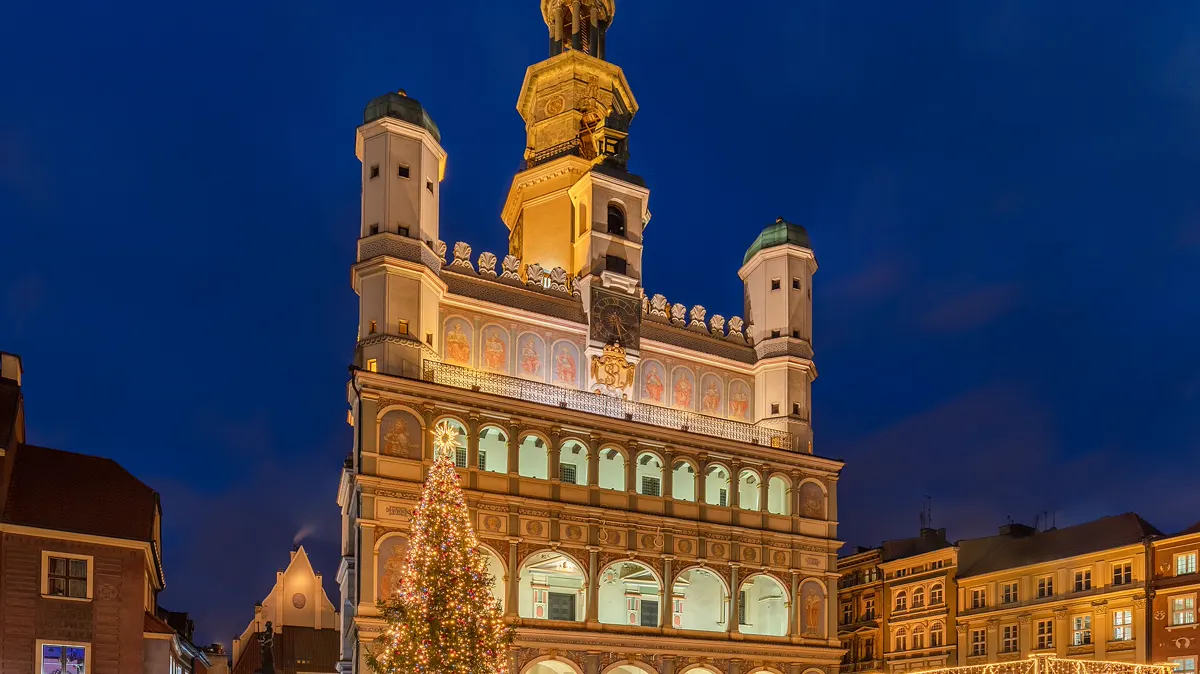
Polish Christmas markets open with Advent and run through the festive season, filling the main squares with wooden stalls, lights and the smell of mulled wine and grilled sausage. Most start in the last week of November and stay up into the new year; Krakow's ran to the first days of January in 2025. They are among the better reasons to visit Poland in winter, when the cities are cold, dark by mid afternoon and quieter than at any other time of year. Wrap up, come hungry, and give yourself an evening in the square.
Krakow
The market on Krakow's Main Market Square, the largest medieval square in Europe, is the most atmospheric in the country. Stalls fill the space around the Cloth Hall, with the twin towers of St Mary's Basilica above and the hourly hejnal trumpet still sounding over the crowds. Krakow has a long tradition of nativity craft, and the market is the best place to see the szopki, elaborate nativity scenes built like miniature versions of the city's churches. The craft is listed by UNESCO. For the rest of what stands on and around the square, see the Krakow guide.
Wroclaw
Wroclaw runs one of the most highly rated markets in Poland, and it spreads well beyond a single square. The heart of it is the Market Square, with more stalls on the adjoining Salt Square (Plac Solny) and down the streets between the two. The setting, a broad square of colourful merchant houses around the old town hall, does a lot of the work, and the food and craft zones are among the largest anywhere in the country. See the Wroclaw guide for the city's islands, bridges and market square in daylight.
Gdansk and the Baltic
On the coast, Gdansk holds its main market on the Coal Market, Targ Weglowy, by the Golden Gate at the head of the old town, with stalls running on toward Dluga Street and the Long Market. Amber is the thing to buy here. The city has traded Baltic amber for centuries and it fills the stalls as jewellery and ornaments, worked and raw. A market by the sea also means a proper cold, so the mulled wine and hot food earn their keep here more than anywhere. The Gdansk guide covers the brick Gothic core the market sits inside.
Warsaw
Warsaw sets its market in the rebuilt Old Town, around the market square and the Royal Castle. The scale is smaller than Krakow's or Wroclaw's, but the setting, a historic centre reconstructed from rubble after 1945, gives it a particular weight. The lanes off the square hold smaller clusters of stalls. It works well alongside the capital's indoor sights on a short winter break, when a couple of hours in a museum makes a warm break between the stalls; the Warsaw guide has the detail.
Which one to choose
If you can only manage one, choose by what you want around it. Krakow has the finest setting and the nativity tradition. Wroclaw has the largest market and, by many accounts, the best of the lot. Gdansk pairs a smaller market with amber and the sea. Warsaw suits a city break built around museums, with the market as the evening. All four are within a few hours of each other by fast train, so a determined trip could take in two.
What to eat and drink
The food is half the reason to go. Warm up with grzane wino, hot spiced wine, or a cup of Polish mead. Eat grilled oscypek, the smoked highland sheep cheese, served with cranberry, along with kiełbasa sausage from the grill, pierogi and gingerbread. The markets are also a good crash course in regional food before you sit down to a proper meal; our Polish food guide explains what to order and where.
What to buy
Beyond amber in Gdansk and szopki in Krakow, the stalls sell hand painted glass baubles, carved wooden decorations, wool and sheepskin from the mountains, and honey and gingerbread by the box. Prices in the busiest corners are set with tourists in mind, so walk the whole market once before you buy, and look at the smaller stalls around the edges for better value.
When to go
Markets are busiest at weekends and in the final week before Christmas, when the squares can be shoulder to shoulder after dark. For a calmer visit, come on a weekday in early December, go in the afternoon before the evening rush, and bring proper winter layers, as it is cold once the sun drops. For a wider view of the seasons, see our guide on when to visit Poland.
Good to know
Market dates shift a little each year and some stalls close on Christmas Day itself. Check the city's official tourist site for the current year's opening and closing dates before you lock in travel.
Written by ViewPoland Editorial for ViewPoland, an independent English-language guide to Poland. Published 28 June 2026. Last updated 1 July 2026.