Things to do in Lublin
Things to Do in Lublin
What to see in Lublin: the castle chapel with its 1418 Byzantine frescoes, the Old Town and its underground route, the Jewish heritage at the Grodzka Gate and the Yeshiva, and the Majdanek memorial.
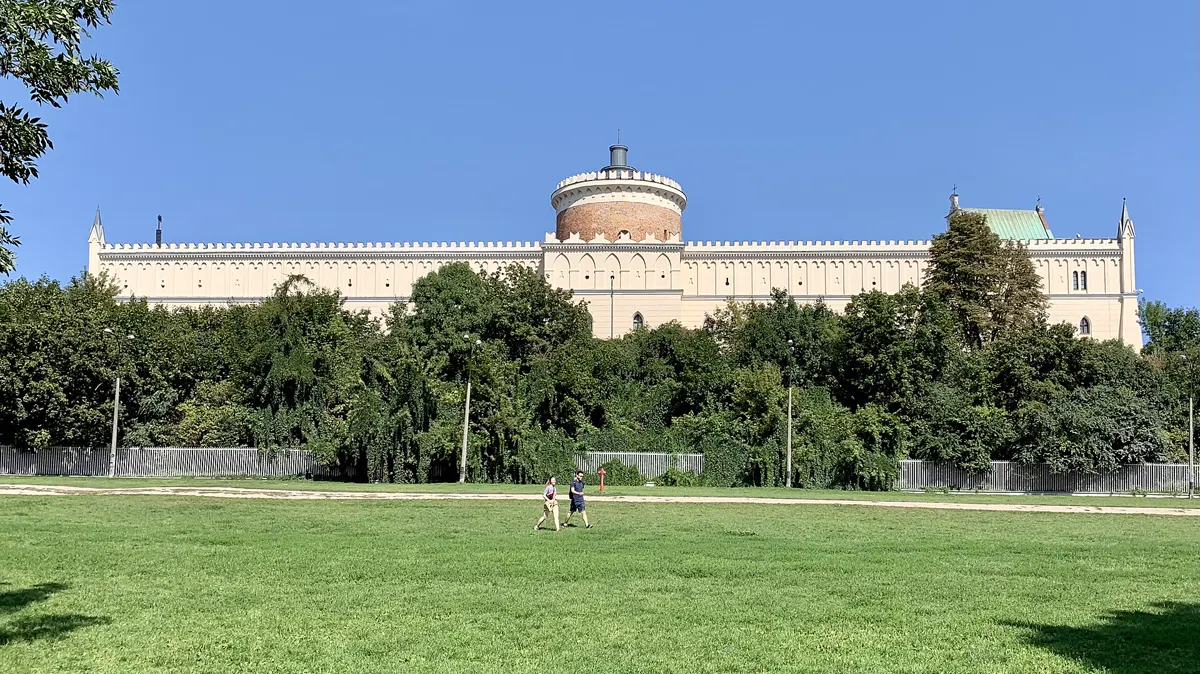
Lublin is the biggest city in eastern Poland and the least visited of its historic centres, which is the main argument for going. One day covers the Old Town, the castle and the chapel that is the reason to come. A second day gives room for the Jewish heritage sites and the Majdanek memorial on the edge of town, which needs unhurried time rather than a slot between other things.
Lublin Castle and the Holy Trinity Chapel frescoes
The single best thing in the city is inside Lublin Castle. The Holy Trinity Chapel is covered floor to ceiling with Ruthenian-Byzantine frescoes painted in 1418: Eastern painting under a Western Gothic vault, which is a combination you will not find in many places. It is a small room and it takes as long as you want to give it.
The castle sits on its own hill just north of the Old Town, close enough to walk and high enough to orient yourself. Hades nearby is a friendly, good-value stop for Polish plates if you need one before or after.
Lublin Old Town and the underground route
The Old Town winds through narrow lanes and hidden courtyards, with painted Renaissance facades around a market square built around the freestanding Crown Tribunal, once the highest court of appeal for the Lesser Poland province. Beneath it runs the Lublin Underground Route, a 280 metre trail through connected merchant cellars where fourteen chambers of scale models trace the city from the eighth to the eighteenth century.
The Krakow Gate is the city's best-known landmark, a fourteenth century brick tower that guarded the road west and now holds a small history museum. For height, the neo-Gothic Trinitarian Tower is the tallest in the Old Town and has a viewing gallery over the rooftops. The cathedral, a former Jesuit church, is worth a look for its Baroque trompe-l'oeil frescoes and its acoustic Whispering Sacristy.
Jewish Lublin: the Grodzka Gate and the Yeshiva
The Grodzka Gate, also called the Jewish Gate, once linked the Christian and Jewish quarters of the city. It now houses the NN Theatre Centre, a municipal institution built around preserving the memory of a community that no longer exists, with exhibitions and one of the largest oral-history archives in Poland.
On Lubartowska Street, the Yeshiva Chachmei Lublin was a grand pre-war rabbinical academy, restored this century to hold a reconstructed synagogue and a museum on its own history. The two sites work best visited in that order, gate first.
Krakowskie Przedmieście and Litewski Square
Krakowskie Przedmieście is the main pedestrian promenade, running from the Krakow Gate past cafes and townhouses to the New Town Hall. It is where the city actually spends its evenings. Grand Café is the straightforward coffee-and-cake pause along it, and Kardamon just off it is one of the more ambitious kitchens in town.
The promenade ends at Litewski Square, a renovated public space with fountains and monuments. The cast-iron Union of Lublin obelisk marks the 1569 treaty that joined Poland and Lithuania into a single commonwealth and gave the city its place in the history books.
The Majdanek memorial
On the edge of the city stands Majdanek, the preserved site of a German Nazi concentration and extermination camp, kept as a memorial to its victims. It is unusually intact and unusually close to a living city, which is part of what makes it difficult. Treat it as its own half day rather than an item on a list, and do not plan something light immediately afterwards.
Green space and a day off the sightseeing
The Saxon Garden is the elegant nineteenth century park in the centre, a shaded promenade of old trees and fountains. The UMCS botanical garden covers 21 hectares in the Sławinek valley with around 6,700 plant taxa and opens from April to the end of October. In summer, Zemborzycki Lake on the southern edge has beaches, walks and watersports. The open-air village museum on the northwest edge recreates rural life of the region in the eighteenth and nineteenth centuries across dozens of relocated buildings.
How many days do you need in Lublin
One day covers the castle chapel, the Old Town, the underground route and the promenade. Two days lets you add the Jewish heritage sites and Majdanek without compressing either. The centre is walkable and the city is noticeably cheaper than Kraków or Gdańsk. See our Lublin city guide for where to stay and eat, and costs in Poland for what to budget.
Plan Majdanek properly
The memorial sits on the edge of the city and asks for a full, unhurried half day. It is not something to fit between the castle and dinner.
Written by ViewPoland Editorial for ViewPoland, an independent English-language guide to Poland. Published 13 August 2026. Last updated 13 August 2026.