Attraction in Warsaw
Ghetto Heroes Monument
A 1948 memorial in Warsaw's Muranow district honouring the Jews who fought and died in the 1943 Warsaw Ghetto Uprising, and the site of Willy Brandt's famous 1970 gesture of contrition.
Reviewed and updated July 2026
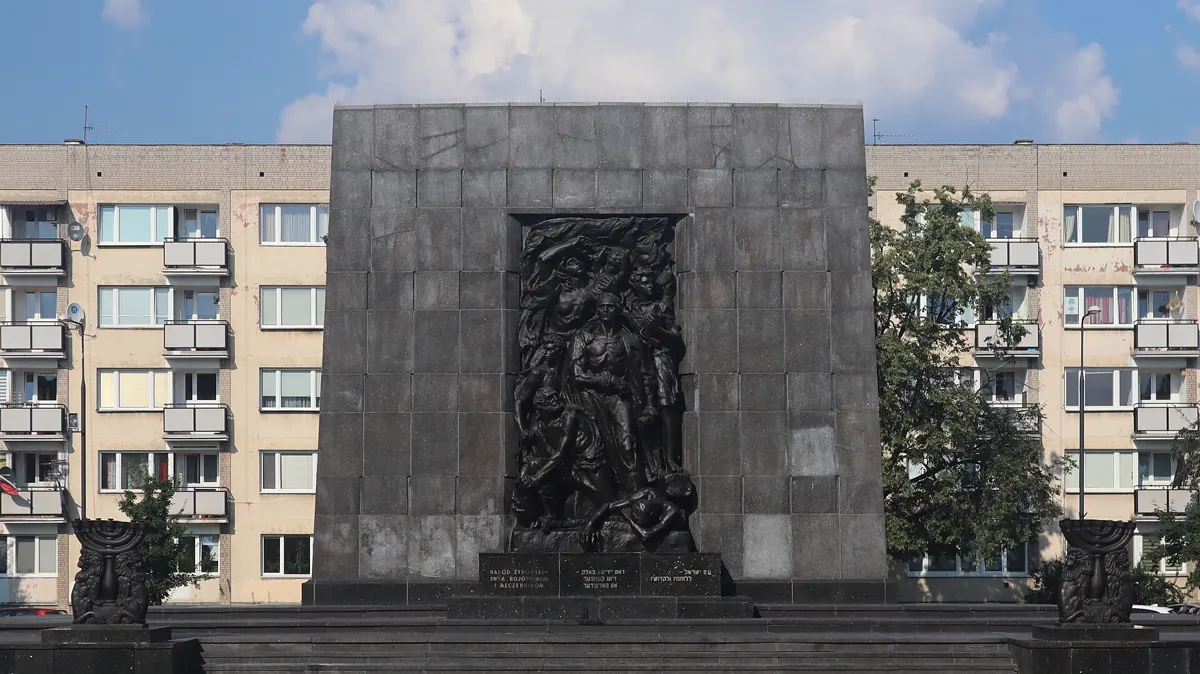
The Ghetto Heroes Monument is a 1948 memorial in Warsaw's Muranow district that commemorates the 1943 Warsaw Ghetto Uprising and the Jews who fought and died there. People come to stand where one of the twentieth century's defining acts of resistance took place, on ground that was once the ghetto itself, and to see a work whose stone and setting carry the weight of that history.
What you see at the monument
The memorial was created by sculptor Nathan Rapoport with architect Leon Marek Suzin, and its central bronze relief shows the fighters of the uprising as figures of defiance and strength. It rises from a broad wall of dark stone, part of it made from material the Nazis had originally ordered for a planned victory monument, a detail that turns the memorial into a quiet reversal of intent. The plaza in front gives space to take in the whole work rather than crowding it.
The history it marks
In April 1943 the remaining Jews of the Warsaw Ghetto rose against deportation to the death camps, holding out for weeks against German forces before the ghetto was destroyed. The monument was unveiled in 1948 on the site of that former ghetto, one of the first major memorials raised in the aftermath of the war. It remembers both the armed fighters and the wider Jewish community that was annihilated here.
Where Willy Brandt knelt
The monument is known worldwide as the place where West German Chancellor Willy Brandt spontaneously knelt in 1970, an unscripted act of contrition that became one of the most recognised images of postwar reconciliation. Standing on the spot gives that moment a physical setting many visitors find moving. A separate marker nearby commemorates the gesture itself.
Fitting it into a Warsaw visit
The monument stands directly in front of the POLIN Museum of the History of Polish Jews, so the two are naturally seen together, with the memorial framing the museum's forecourt. Muranow was rebuilt after the war over the rubble of the ghetto, and walking the surrounding streets adds context to what you have seen. Pair it with the museum and other Jewish heritage sites when you plan your time in the city using our Warsaw guide.
Good to know
The monument sits on an open public square in front of the POLIN Museum and can be visited freely at any time, with no ticket needed.
Frequently asked questions
More attractions in Warsaw
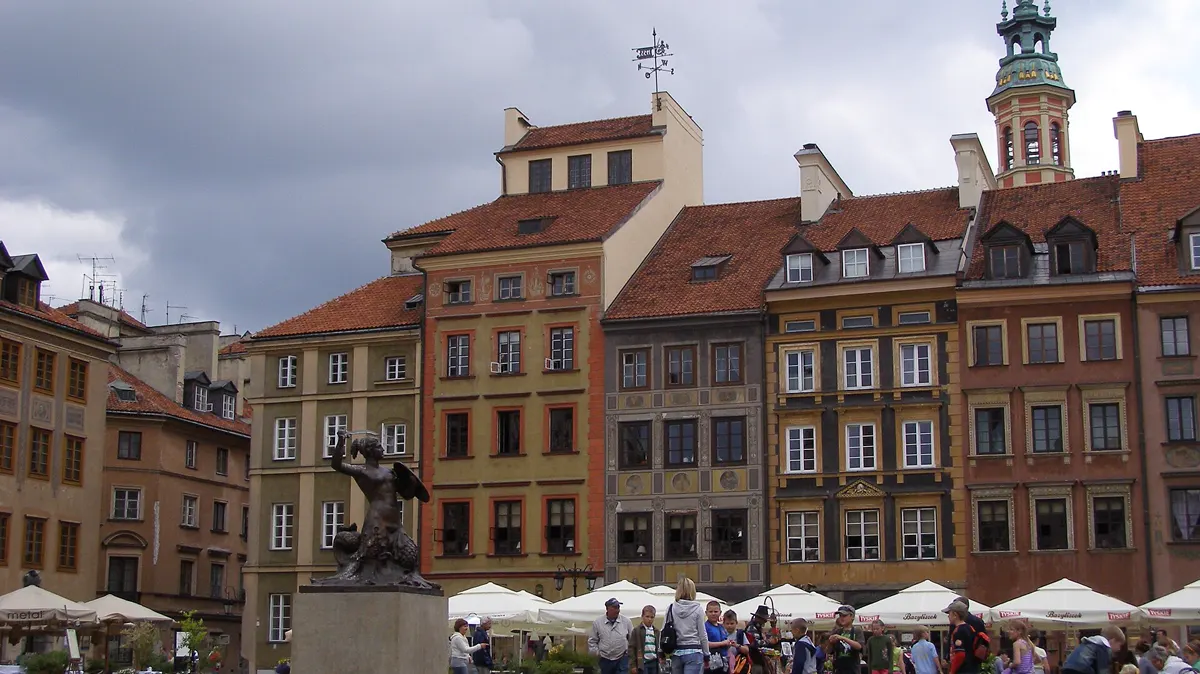
Old Town Market Square
The reconstructed heart of Warsaw Old Town, a UNESCO-listed feat of post-war rebuilding ringed by colourful townhouses.
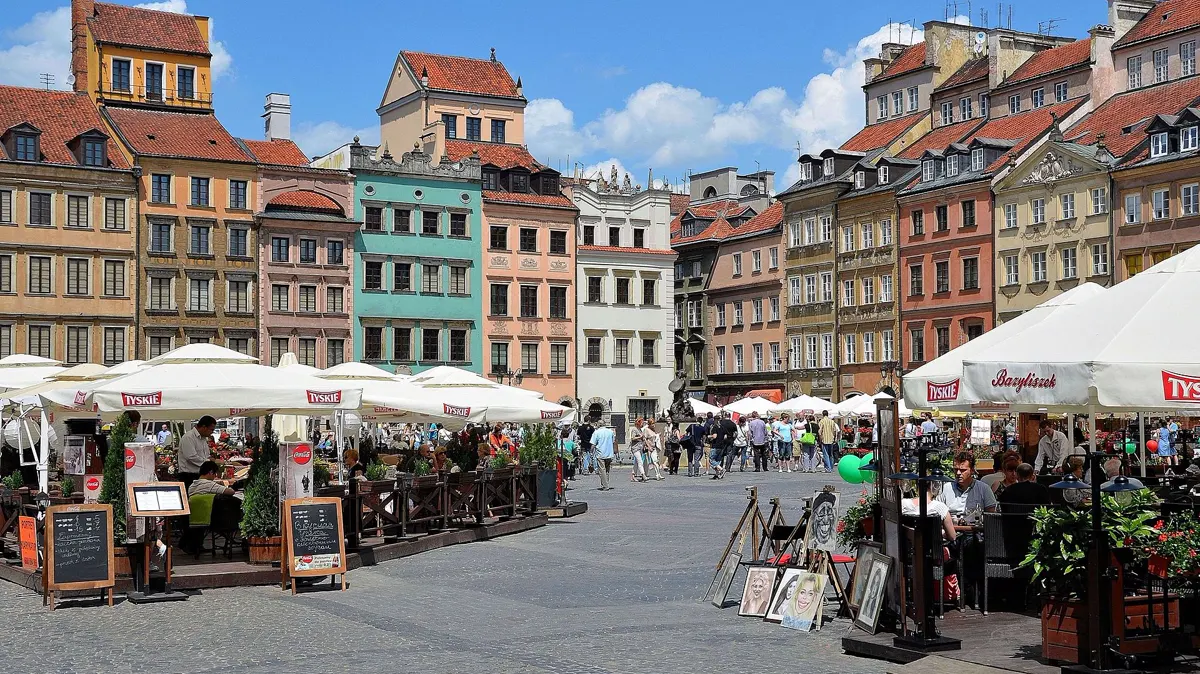
Stare Miasto (Warsaw)
Warsaw's Old Town was rebuilt from rubble after World War II so faithfully that UNESCO added it to the World Heritage list. Its Market Square is lined with pastel merchant houses and centred on the bronze Mermaid statue, the city's symbol.
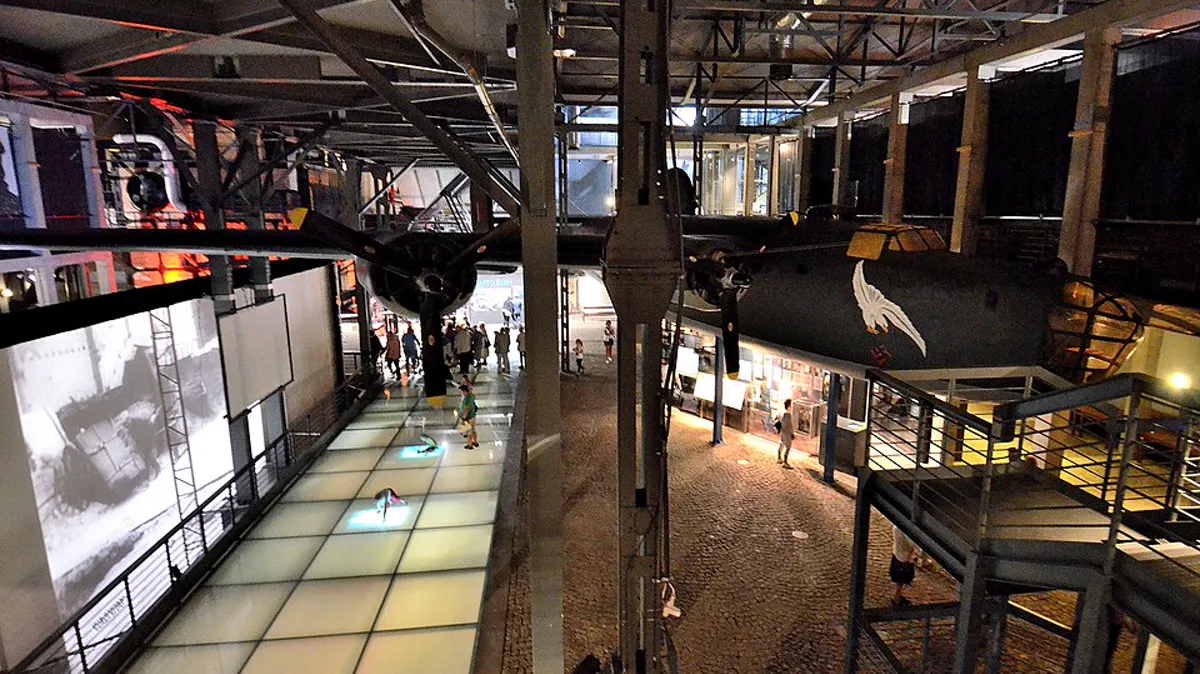
Muzeum Powstania Warszawskiego
The Warsaw Uprising Museum documents the 63-day insurrection of 1944 through survivor recordings, a replica Liberator bomber, and a beating-heart sound installation. It sits in a former tram power station in the Wola district.
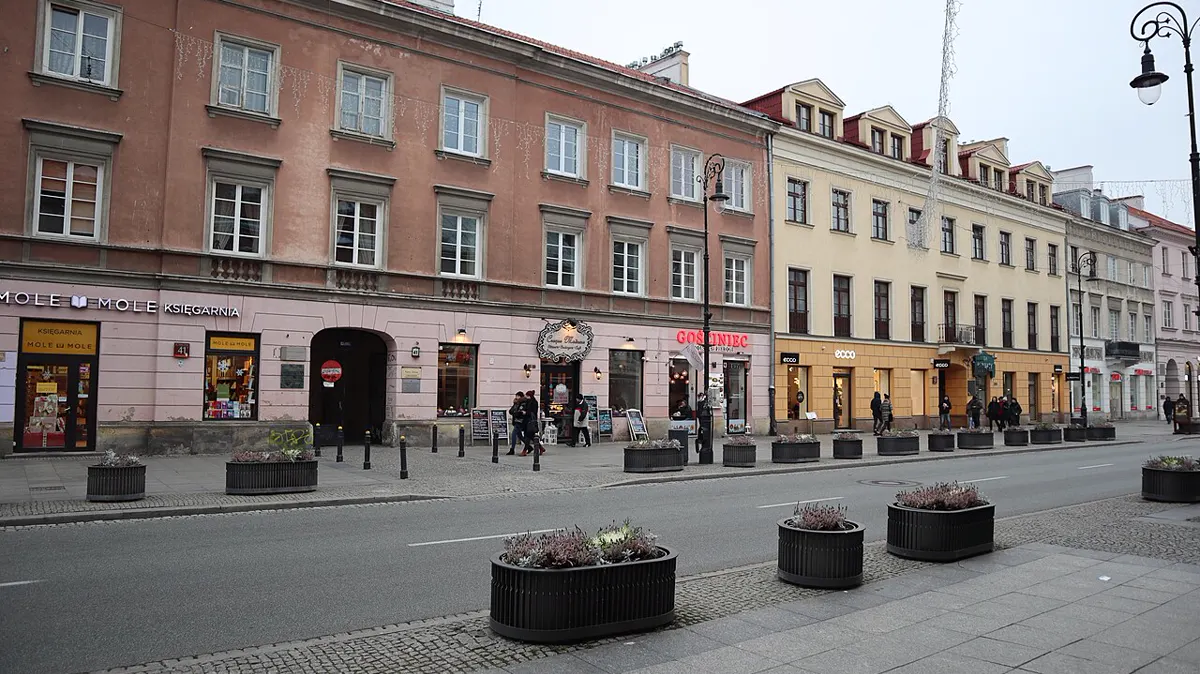
Nowy Swiat Street (Ulica Nowy Swiat)
Nowy Swiat is one of Warsaw's most elegant historic streets, a largely pedestrian promenade of pastel Neoclassical townhouses lined with cafes, shops and restaurants along the Royal Route.
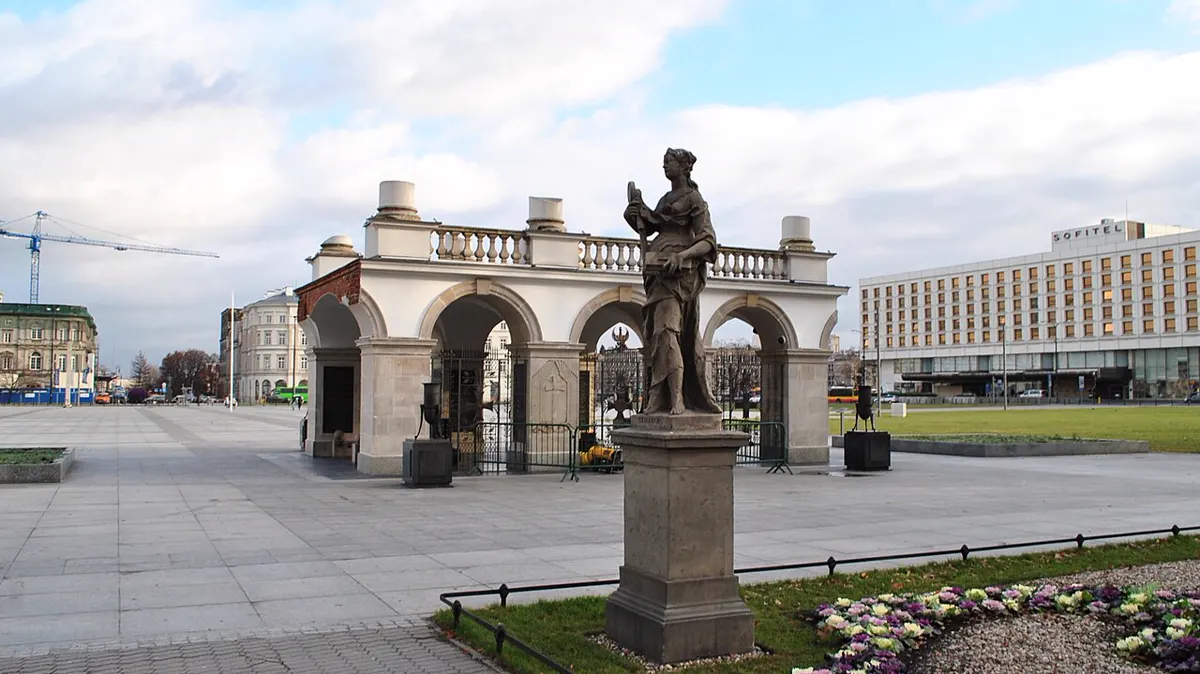
Tomb of the Unknown Soldier and Saxon Garden
A national war memorial with an eternal flame and round-the-clock honour guard on Pilsudski Square, backed by one of Warsaw's oldest public parks.
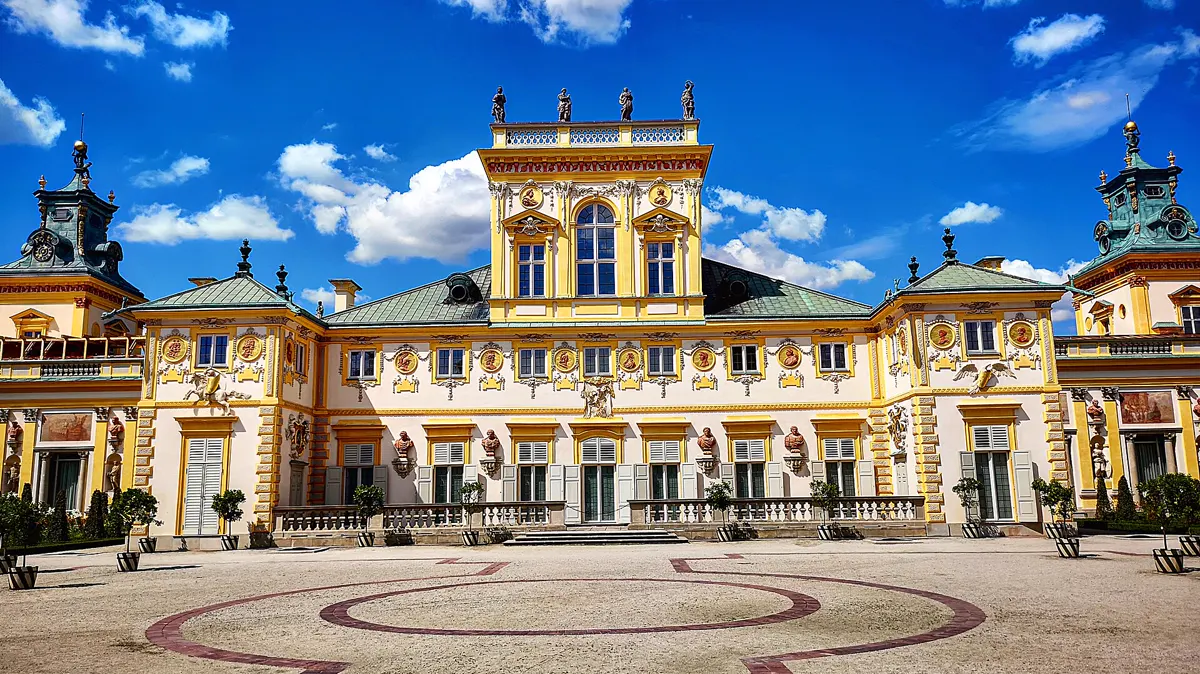
Palac w Wilanowie
Wilanow Palace was the baroque summer residence of King Jan III Sobieski and survived the war intact, earning it the nickname the Polish Versailles. Its formal gardens and gilded interiors draw crowds year round.
More to explore in Warsaw
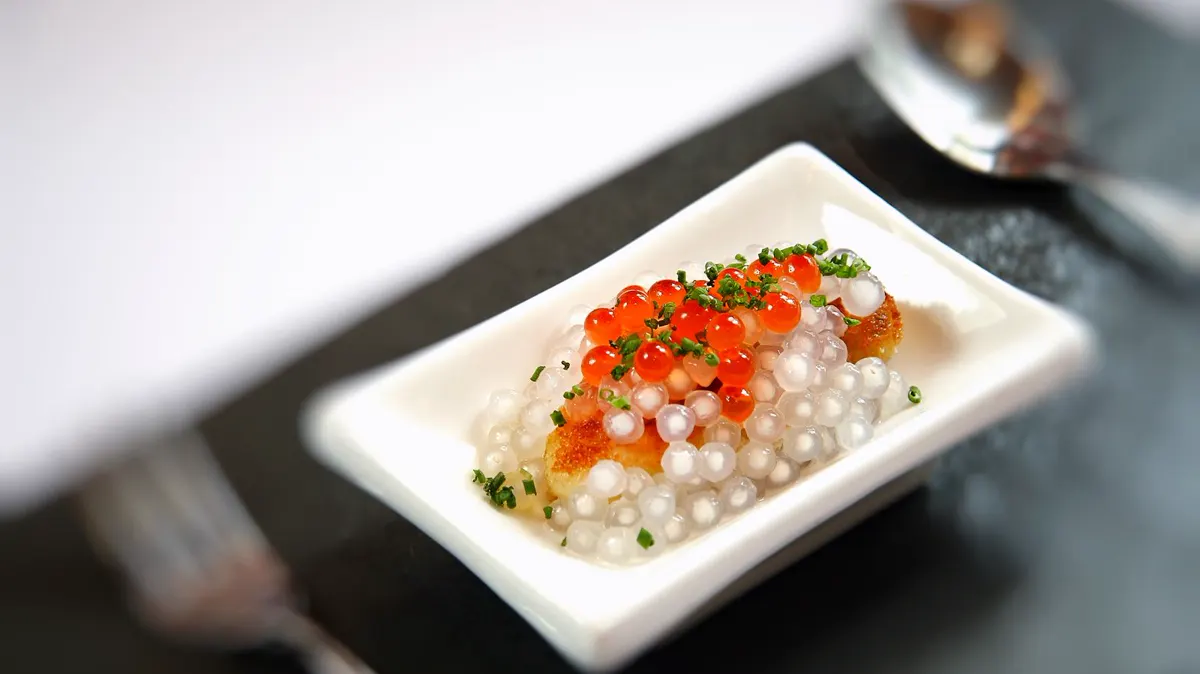
Restaurant
Nolita
A Michelin Guide-listed kitchen turning Polish produce into precise modern tasting menus.
Hotel
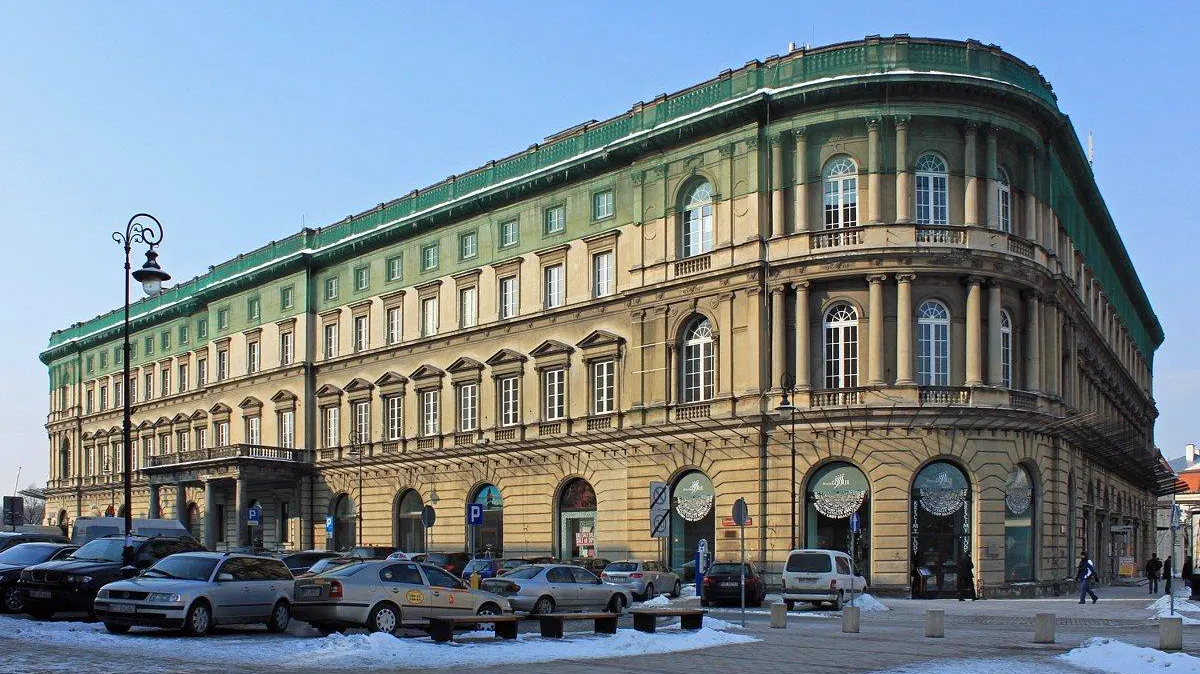
Raffles Europejski Warsaw
A landmark 19th-century hotel on the Royal Route, reborn with a serious art collection.
Castle
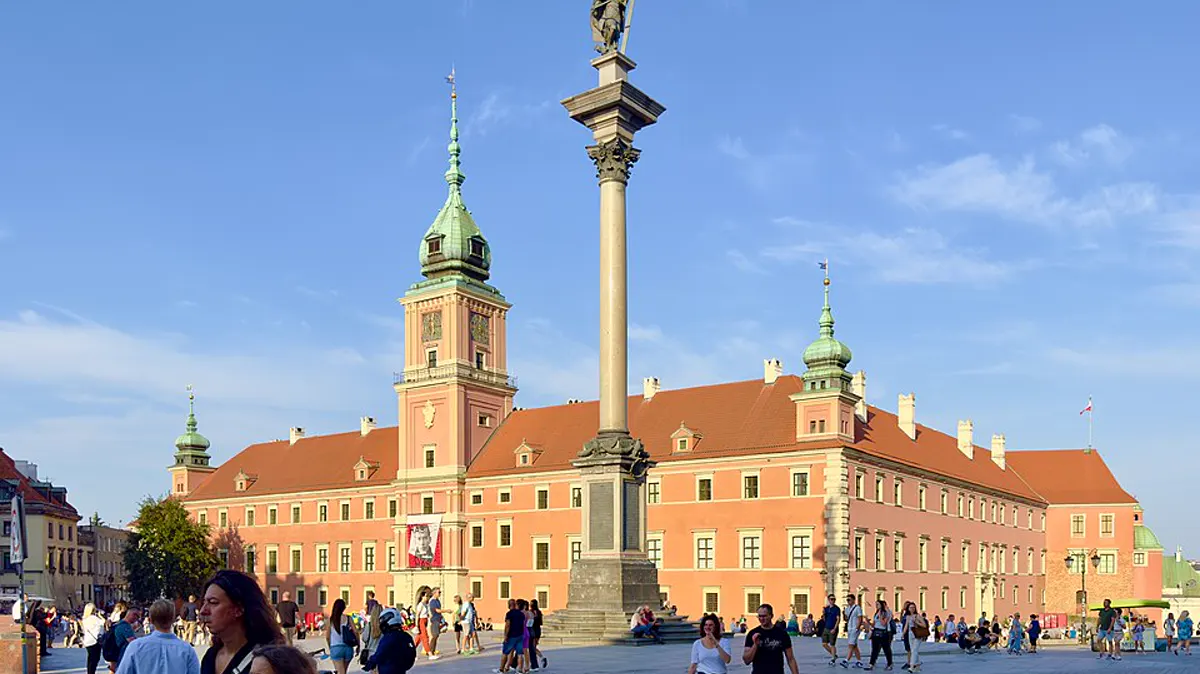
Royal Castle
The reconstructed seat of Polish kings and parliament on Castle Square, rebuilt from rubble after wartime destruction.
Museum
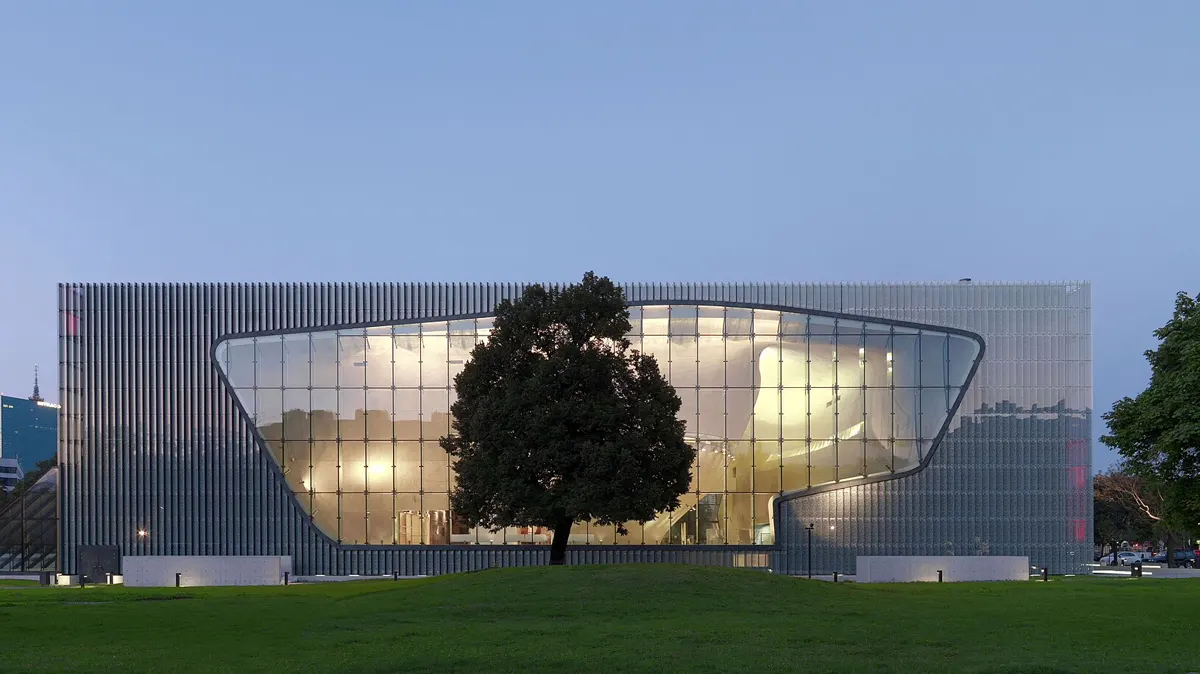
POLIN Museum of the History of Polish Jews
An award-winning museum tracing a thousand years of Jewish life in Poland, on the site of the former Warsaw Ghetto.
Restaurant
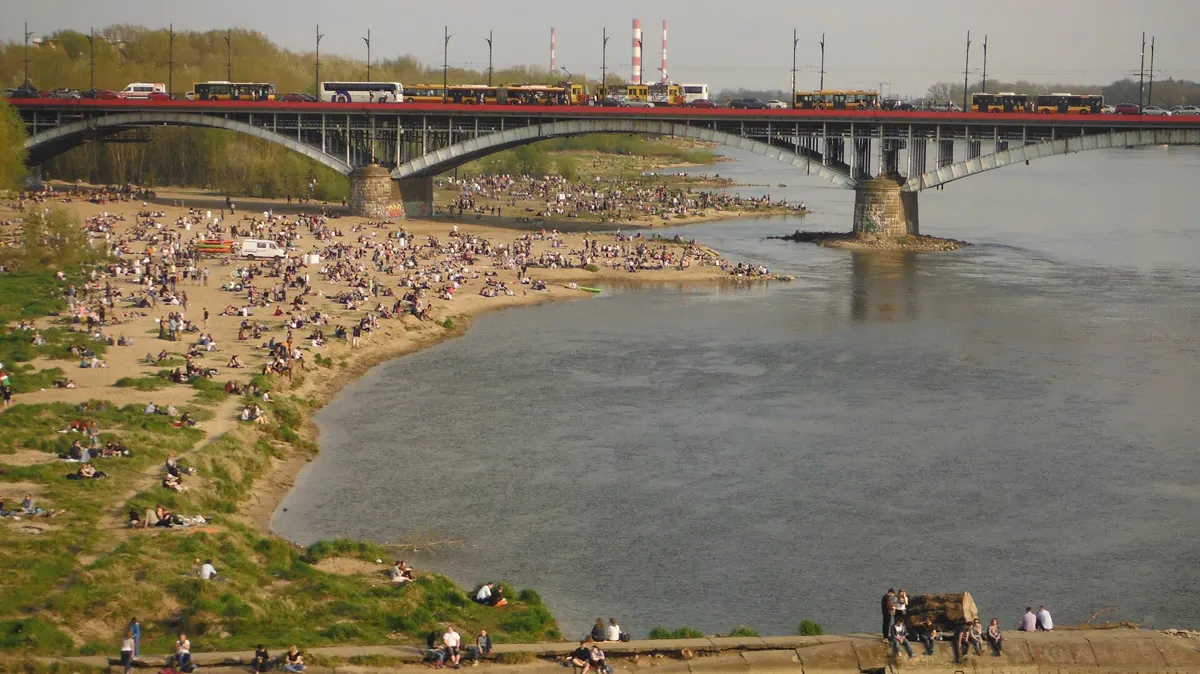
Cud nad Wisla
A riverside bar on the Praga bank of the Vistula, open in warmer months with deckchairs, DJs, and a sunset view of the left-bank skyline. Casual and seasonal.
Restaurant
Zapiecek
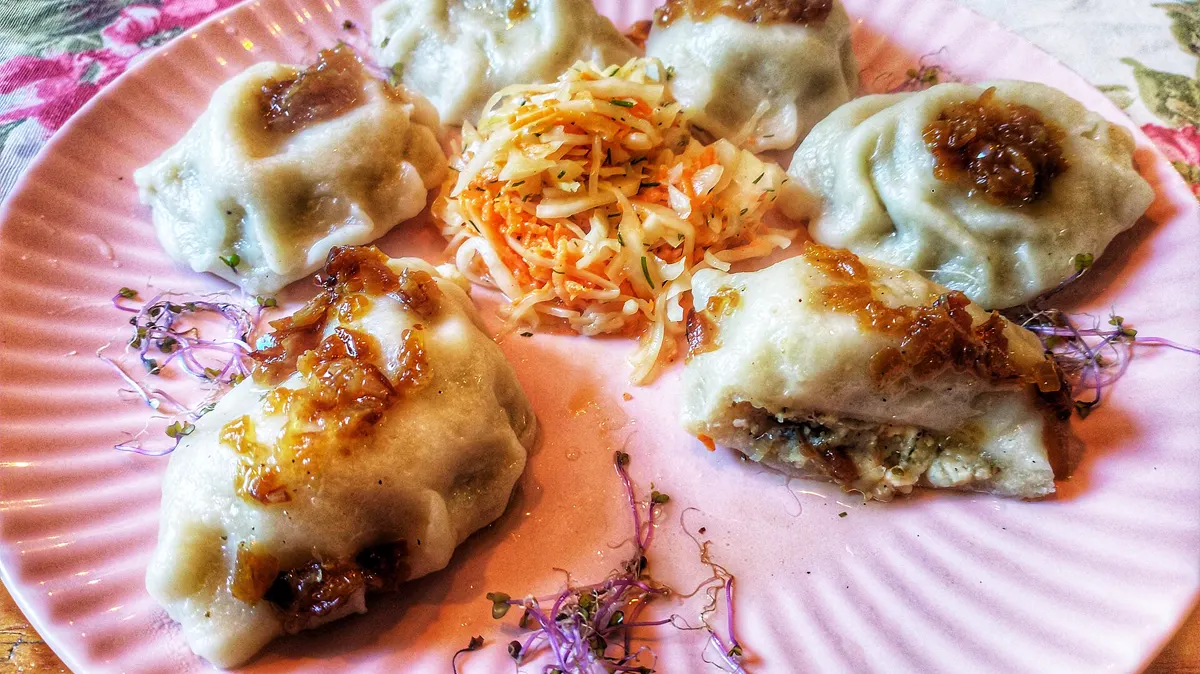
A dependable chain of folk-styled pierogi houses along the Royal Route, good for a first taste of Polish dumplings.