Attraction in Warsaw
PGE Narodowy (National Stadium)
Warsaw's national stadium is Poland's largest football arena, built for Euro 2012 and known for its red-and-white latticework facade and retractable roof.
Reviewed and updated July 2026
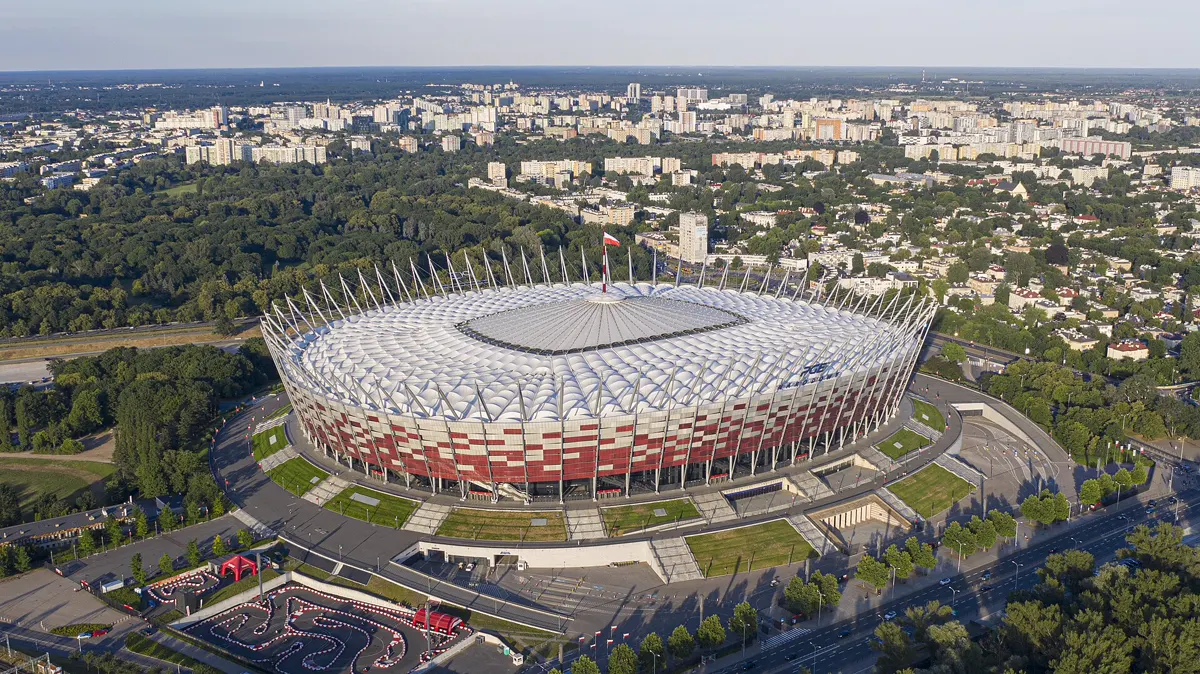
PGE Narodowy, Poland's National Stadium, is the country's largest football arena with about 58,000 seats, and people visit for match days, big-name concerts and a look at one of Warsaw's landmark modern buildings. It opened on 29 January 2012, built for the UEFA Euro 2012 championship that Poland co-hosted, and stands on the Praga bank of the Vistula directly opposite the city centre. Its red-and-white latticework facade, a nod to the national colours, and a retractable roof make it easy to pick out on the skyline.
What to see at the stadium
The exterior is the first thing most people notice: a woven red-and-white lattice that wraps the whole bowl and lights up after dark. Above the pitch sits a retractable roof that can close over the arena, one of the features that lets the venue run events through the colder months. Inside, the seating bowl holds roughly 58,000 for football, and the concourses and upper levels give wide views back across the river towards central Warsaw. In winter the stadium turns part of its grounds into a popular ice rink, which draws families as much as football fans.
Built for Euro 2012
The stadium was officially opened on 29 January 2012 and constructed specifically for the UEFA Euro 2012 football championship, which Poland co-hosted. It replaced an older arena on the same Praga-Poludnie site and quickly became the home of Poland's national football team. Since then its role has widened well beyond the pitch, taking in international matches, other sports events and large concerts, so the calendar rarely stays quiet for long.
Who it suits and how to visit
Football supporters come for national team fixtures, but the stadium works for a broader crowd too: concertgoers, families heading to the winter ice rink, and travellers who want to see contemporary Polish architecture up close. Match and event tickets, along with any guided tours of the interior, are handled through the venue's official channels, so check those for what is on during your dates. Prices and opening times vary by event, so confirm before you go rather than turning up on spec.
Fitting it into a Warsaw trip
Because it sits on the Praga side of the Vistula, right across from the centre, the stadium pairs naturally with a walk along the riverbank or a wander through the Praga district, which has its own galleries and old brick tenements. From most central sights it is a short hop across one of the bridges. If you are planning the wider trip, our Warsaw guide sets out how the eastern bank connects to the Old Town and the main museums.
Good to know
The stadium hosts events year-round, so check the official calendar and buy tickets in advance, as access to the interior usually depends on there being a match, concert or tour on that day.
Frequently asked questions
More attractions in Warsaw
Old Town Market Square
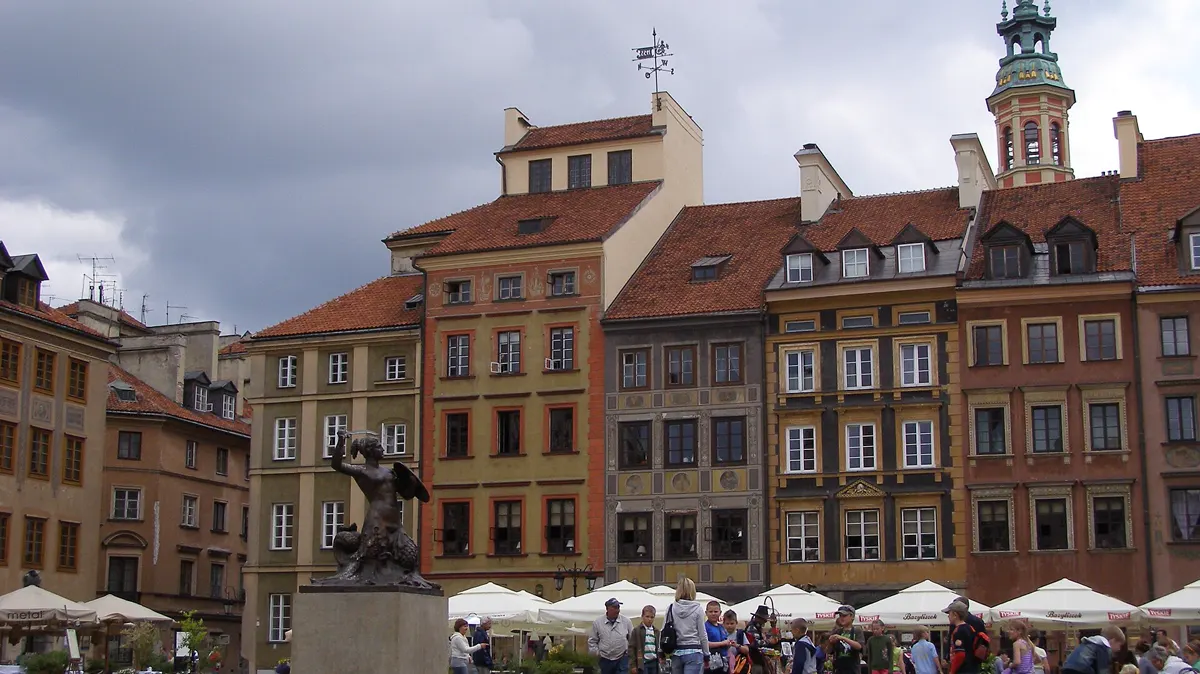
The reconstructed heart of Warsaw Old Town, a UNESCO-listed feat of post-war rebuilding ringed by colourful townhouses.
Stare Miasto (Warsaw)
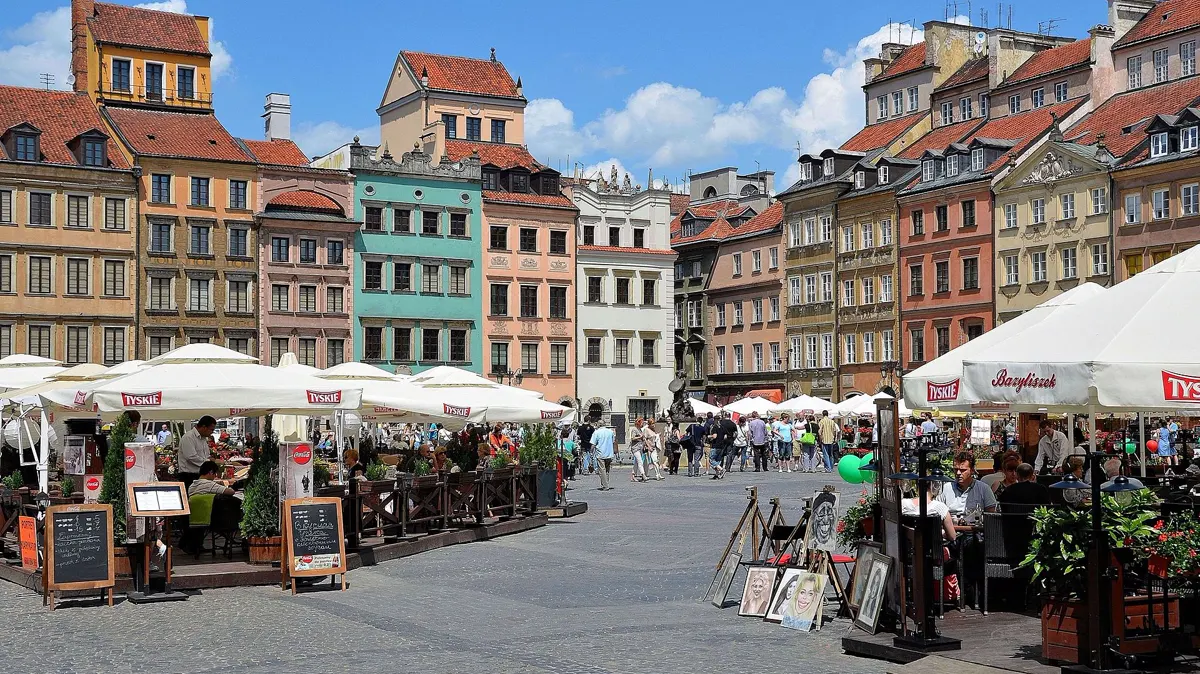
Warsaw's Old Town was rebuilt from rubble after World War II so faithfully that UNESCO added it to the World Heritage list. Its Market Square is lined with pastel merchant houses and centred on the bronze Mermaid statue, the city's symbol.
Muzeum Powstania Warszawskiego
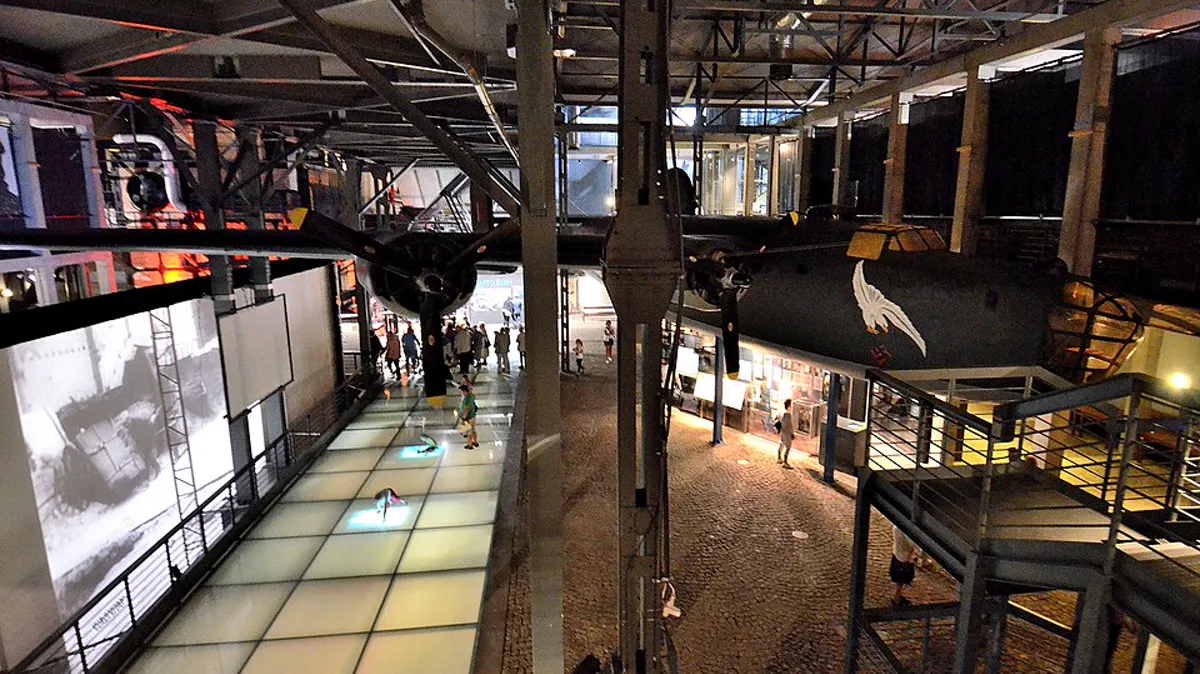
The Warsaw Uprising Museum documents the 63-day insurrection of 1944 through survivor recordings, a replica Liberator bomber, and a beating-heart sound installation. It sits in a former tram power station in the Wola district.
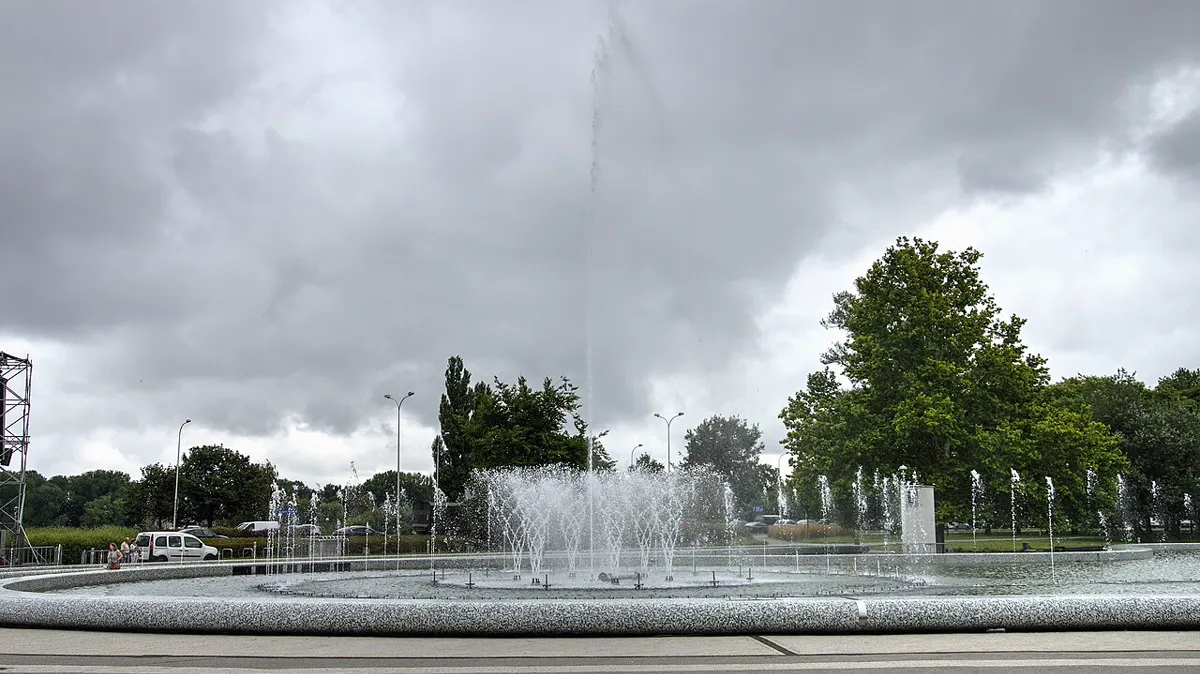
Multimedia Fountain Park
Multimedia Fountain Park sits just north of Warsaw's Old Town near the Vistula, where free summer evening shows combine water, light, laser and music.
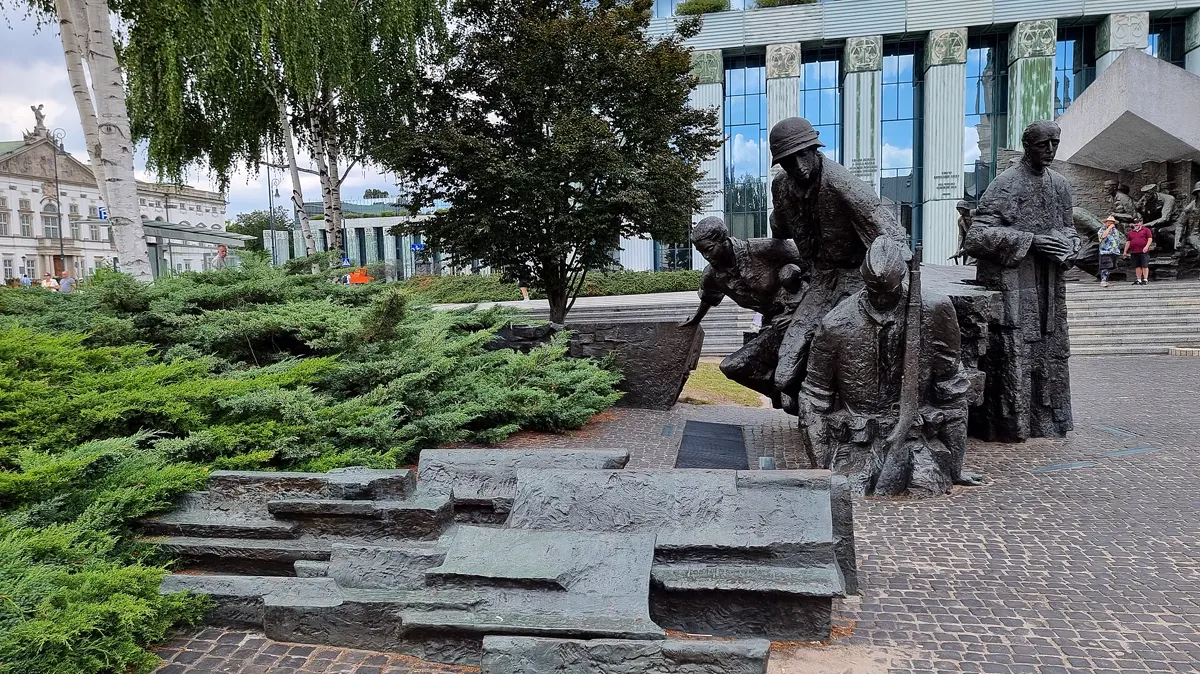
Warsaw Uprising Monument
A large bronze monument on Krasinski Square commemorating the 1944 Warsaw Uprising, the 63-day fight by the Polish resistance against German occupation.
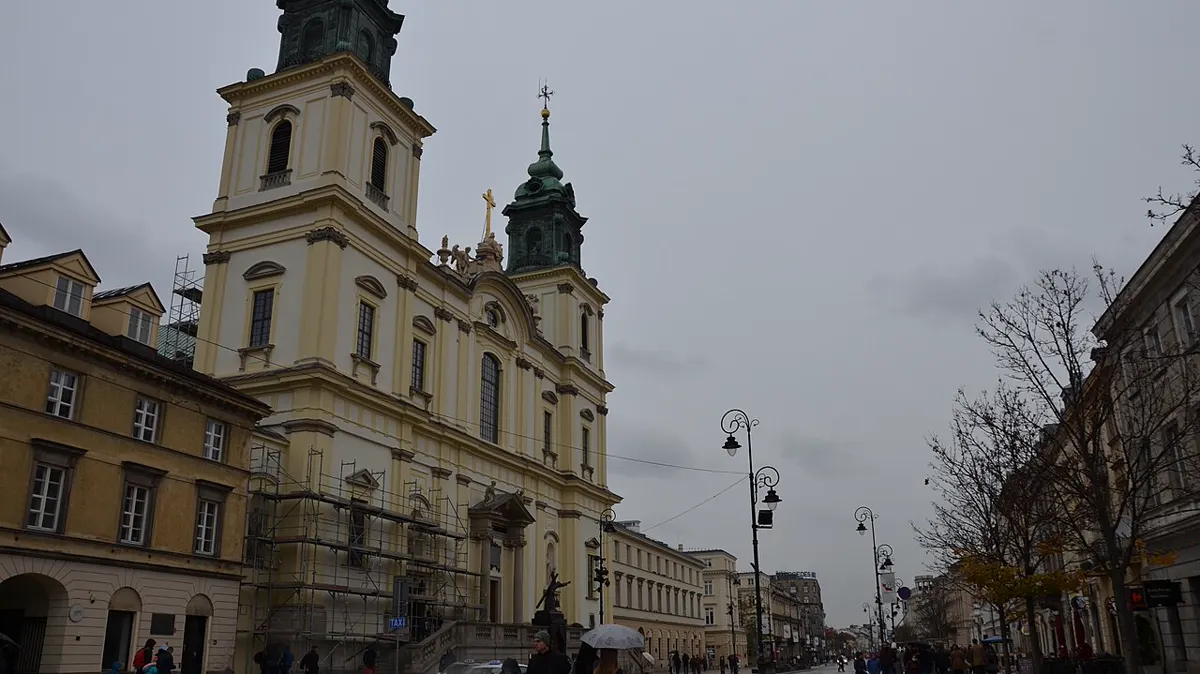
Holy Cross Church (Kosciol sw. Krzyza)
A major Baroque church on Warsaw's Royal Route, best known as the resting place of Frederic Chopin's embalmed heart, sealed inside a pillar of the nave.
More to explore in Warsaw
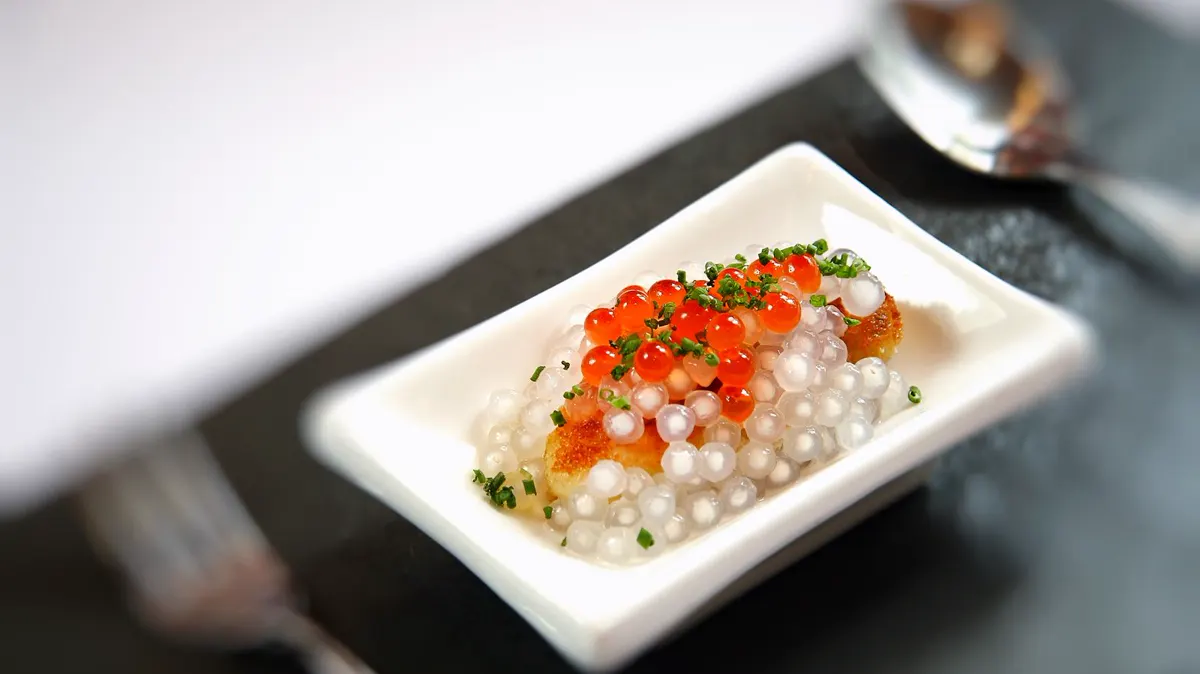
Restaurant
Nolita
A Michelin Guide-listed kitchen turning Polish produce into precise modern tasting menus.
Hotel
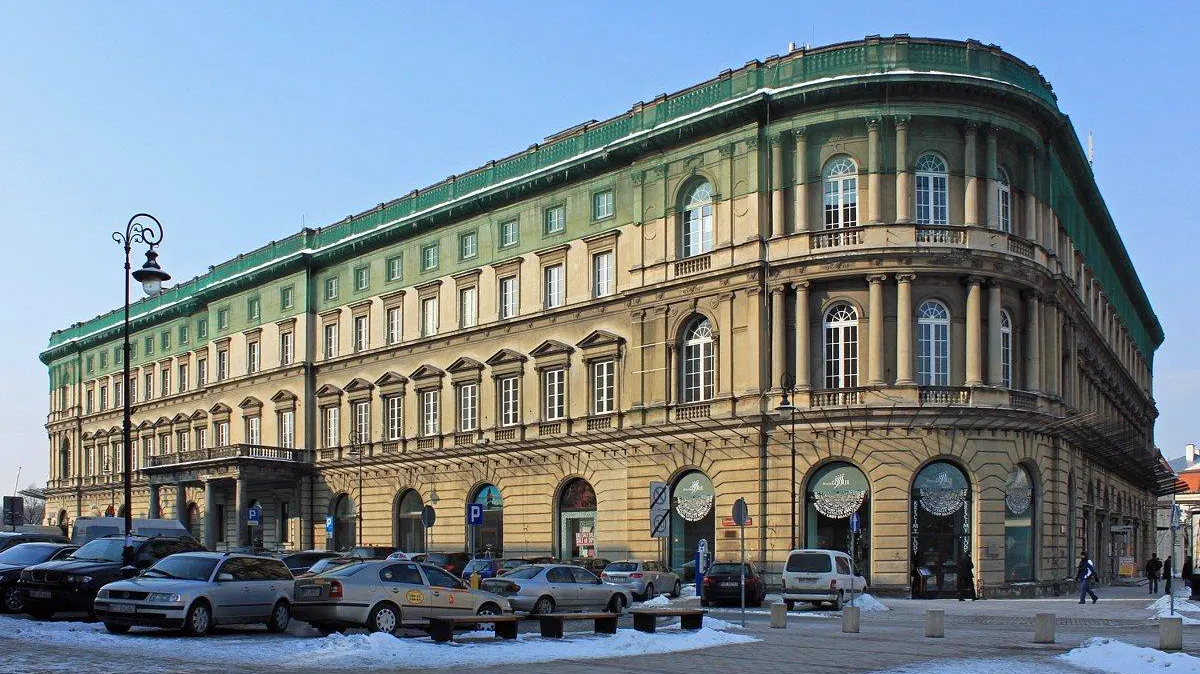
Raffles Europejski Warsaw
A landmark 19th-century hotel on the Royal Route, reborn with a serious art collection.
Castle
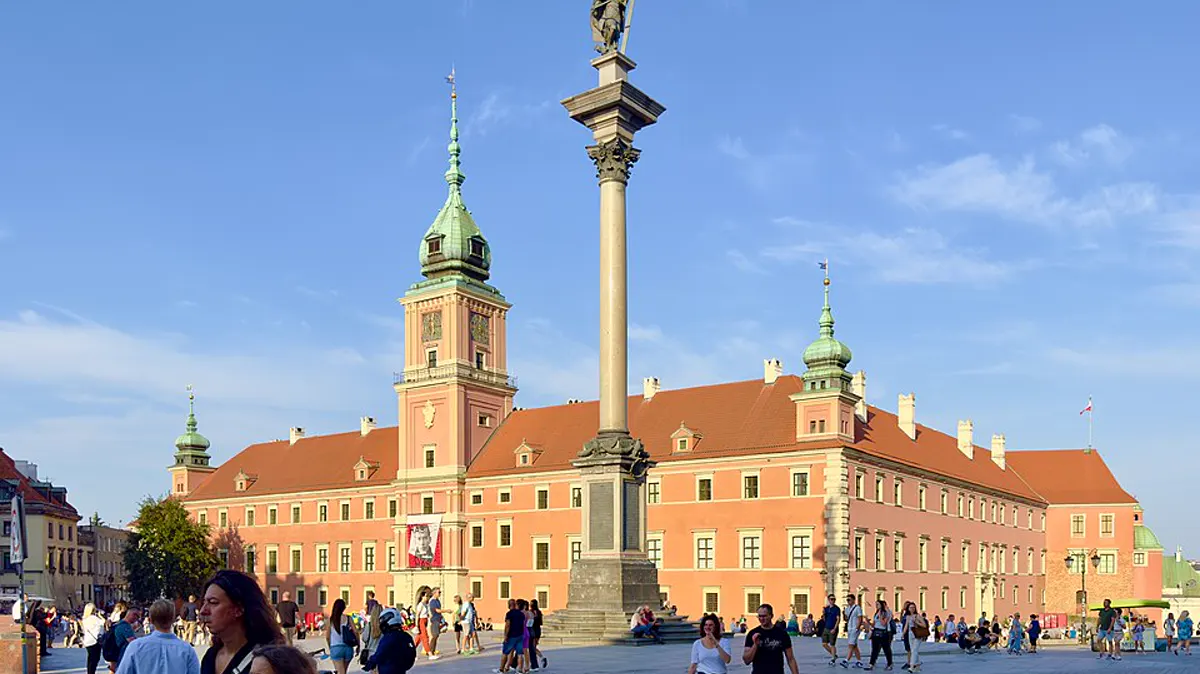
Royal Castle
The reconstructed seat of Polish kings and parliament on Castle Square, rebuilt from rubble after wartime destruction.
Museum
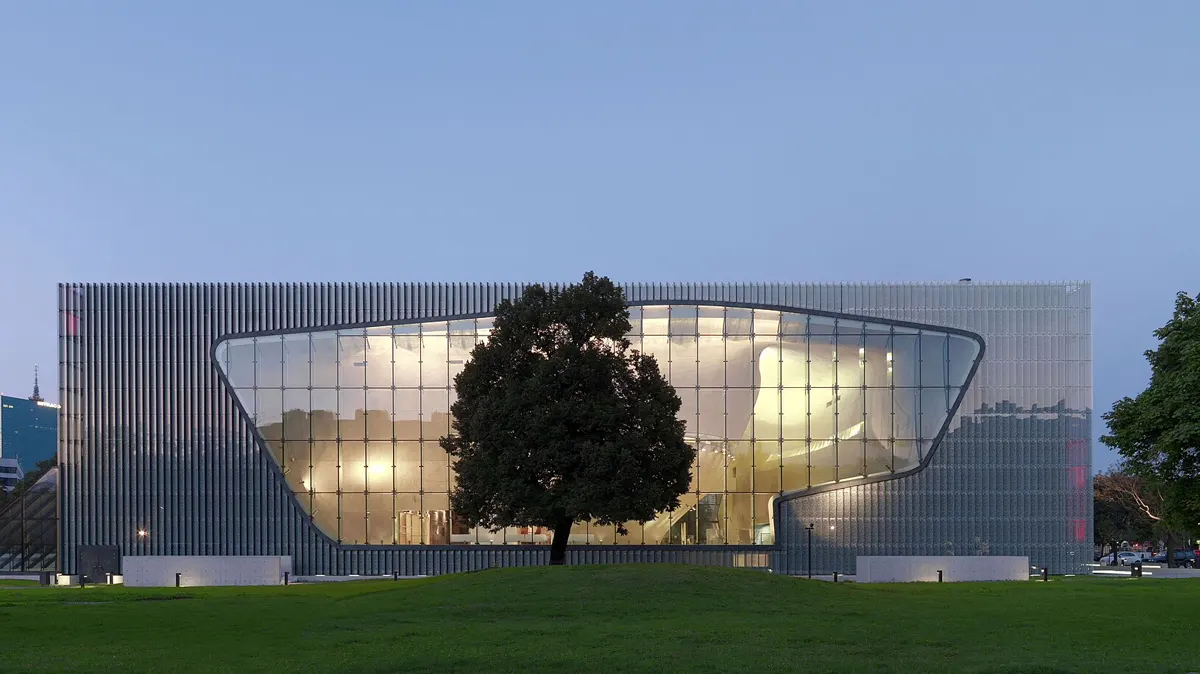
POLIN Museum of the History of Polish Jews
An award-winning museum tracing a thousand years of Jewish life in Poland, on the site of the former Warsaw Ghetto.

Hotel
Oki Doki Hostel
A colourful, long-running hostel right on Plac Dabrowskiego in the centre.

Restaurant
Relaks
A pioneering third-wave coffee spot in Srodmiescie with a small, focused menu and serious espresso. A neighbourhood favourite for a mid-walk break.