The complete guide · Silesia
Katowice
The capital of industrial Upper Silesia, reinventing coal-era grit as culture, with a UNESCO music title, a striking concert hall and a historic miners' settlement.
Overview
Katowice is the capital of Upper Silesia and the anchor of a metropolitan area of roughly two million people, the largest conurbation in Poland. It grew rich and fast on coal and steel after gaining city rights in 1865, and for most of the 20th century it was a place people passed through rather than visited. That has changed. The mines have closed and the city has rebuilt its identity around culture, design, and its own industrial heritage, joining the UNESCO Creative Cities Network as a City of Music in 2015.
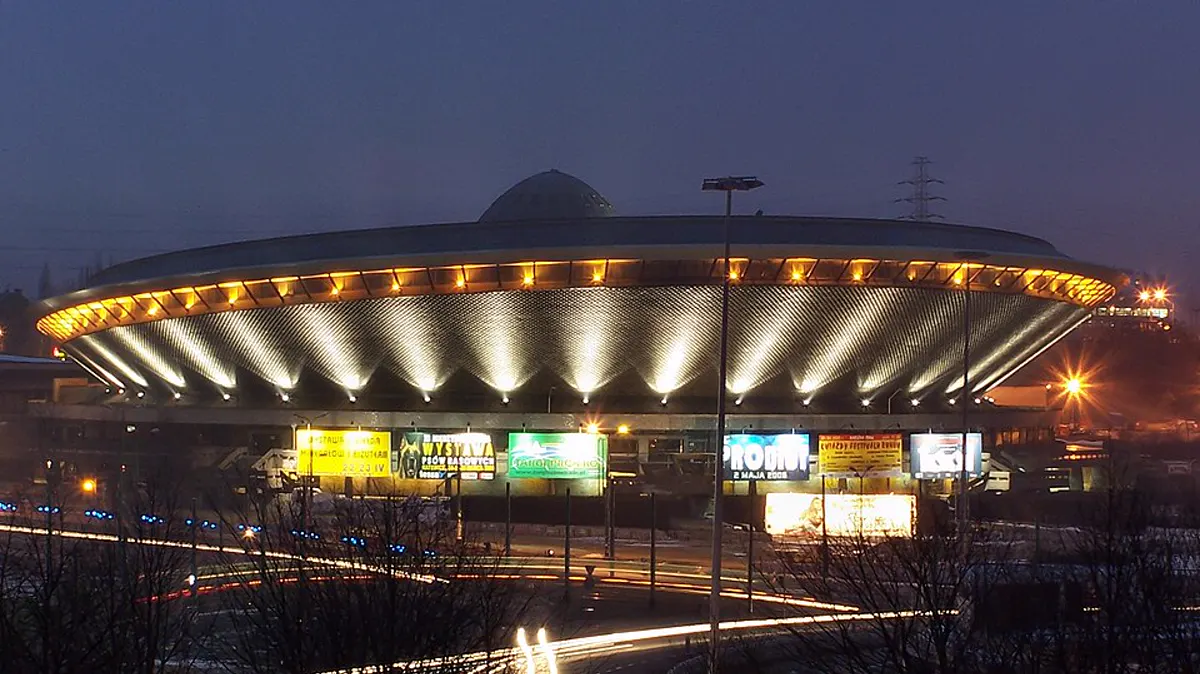
The clearest sign of the shift is the Culture Zone, laid out on the site of the former Katowice coal mine, which worked from 1823 until 1999. Three buildings share the ground: the Spodek, the flying-saucer arena finished in 1971 and still the city's best-known silhouette; the NOSPR concert hall of 2014, home of the Polish National Radio Symphony Orchestra; and the Silesian Museum of 2015, whose main galleries sit underground beneath the old pithead, with the original mine buildings kept above.
Away from the centre, Katowice keeps two of the finest workers' districts in Europe, the red-brick Nikiszowiec and the garden colony of Giszowiec, both built for the Giesche mining company in the early 20th century. Add the bar-lined Mariacka street for the evening and the surrounding Silesian towns for day trips, and the city rewards two or three days. Katowice Airport at Pyrzowice lies about 34 km north, and fast trains reach Krakow in around ninety minutes.
Katowice at a glance
Airport
Katowice Airport (Pyrzowice, KTW), about 34 km north; Krakow Airport is a common alternative about 80 km away
Population
About 285,000 in the city, within a metropolitan area of roughly two million
Founded
City rights granted in 1865
Good to know
Post-industrial Silesian capital reborn around its Culture Zone (Spodek, NOSPR, Silesian Museum), the historic miners' districts Nikiszowiec and Giszowiec, and Mariacka street nightlife
Currency
Polish zloty (PLN, zl). Not the euro.
Language
Polish. English is widely spoken in tourism and by younger people.
Time zone
Central European Time (UTC+1, or UTC+2 in summer).
Emergency
112 from any phone, free, English-speaking operators.
Tap water
Safe to drink everywhere in Poland.
Cards
Contactless is accepted almost everywhere, even for small amounts.
Sockets
Type E, 230V. UK and US visitors need an adapter.
Visas
Poland is in the Schengen Area and uses the EU entry rules.
Top things to see in Katowice
Nikiszowiec
A complete early-twentieth-century miners settlement of red-brick courtyards, now a protected monument and the most atmospheric corner of Katowice.
Spodek
Katowice's 1971 saucer-shaped arena is the city's best-known building and its main venue for concerts, sport and trade fairs.
NOSPR (Polish National Radio Symphony Orchestra)
The purpose-built home of Poland's National Radio Symphony Orchestra, with acoustics by the designer of some of the world's leading concert halls.
Silesian Insurgents' Monument
Three great steel wings honouring the Silesian Uprisings, frequently described as the largest and heaviest monument in Poland.
Cathedral of Christ the King
The largest cathedral in Poland by volume, built in monumental Neoclassical style and crowned by a tall central dome rising high above the interior. I...
Market Square (Rynek w Katowicach)
Katowice's central square, rebuilt in a modern form between 2015 and 2016, is the main pedestrian gathering point downtown, combining three linked pub...
Kościuszko Park
Kościuszko Park is one of Katowice's oldest and largest green spaces, home to a 1510 wooden church and Poland's only parachute tower.
Parachute Tower (Wieża Spadochronowa)
The Parachute Tower in Kościuszko Park is the only surviving parachute training tower in Poland, a 1930s landmark tied to Katowice's defence in Septem...
Mariacka Street (ulica Mariacka)
Mariacka Street is Katowice's pedestrian nightlife strip in the city centre, lined with bars, restaurants and cafes and shaded by cherry trees that fl...
Museums, castles and nature in Katowice
Museums
Silesian Museum
A major regional museum built into the shafts and tunnels of a closed Katowice coal mine, with most of its galleries underground.
Parks and nature
Valley of Three Ponds (Dolina Trzech Stawow)
A large lakeside park in southern Katowice for walking, cycling and water sports, and home to the OFF Festival.
Where to base yourself: the neighbourhoods
Srodmiescie (city centre)
The commercial core around the market square and the main railway station, threaded by Aleja Korfantego and the huge steel Silesian Insurgents' Monument. Most hotels, shopping, and transport connections are here, with Mariacka street a short walk away.
Culture Zone (Strefa Kultury)
The regenerated district on the former Katowice coal mine, holding the Spodek arena, the NOSPR concert hall, the Silesian Museum, and the International Congress Centre. The city's main draw for architecture, concerts, and exhibitions.
Nikiszowiec
A patronal workers' estate of connected red-brick blocks around a central square with St Anne's church, designed by Emil and Georg Zillmann and built from 1908. It is a listed Monument of History and has a museum branch, cafes, and a monthly craft market.
Giszowiec
A garden-city colony founded in 1907 for the Giesche company, again by the Zillmann brothers, laid out with low cottages, gardens, and a central square shaded by lindens. Much was rebuilt under communism, but the original core keeps its village feel.
Mariacka
A pedestrianised street below St Mary's Church that has become the centre of the city's nightlife, packed with bars, cafes, and small restaurants. Quiet by day and busy after dark.
Park Kosciuszki and Brynow
The green quarter south of the centre, built around Kosciuszko Park with its wooden church moved here in the 1930s and a surviving 1930s parachute tower. A calm counterpoint to the industrial districts.
How to spend one, two or three days in Katowice
Day 1
The centre and the Culture Zone
- Morning: Start on the market square and walk Mariacka and the main streets, passing the Silesian Insurgents' Monument, to get a feel for the rebuilt centre.
- Afternoon: Cross to the Culture Zone. Go underground at the Silesian Museum, walk around the NOSPR concert hall and the Spodek, and take in the contrast between the old pithead and the new architecture.
- Evening: Return to Mariacka for dinner and drinks, the busiest and most sociable corner of the city after dark.
Day 2
The miners' districts
- Morning: Take a tram or bus out to Nikiszowiec. See St Anne's church, the central square, and the Katowice History Museum branch, and stop at a cafe in one of the brick courtyards.
- Afternoon: Continue to nearby Giszowiec to walk the garden colony and its square under the lindens, then compare the two very different visions of a company town.
- Evening: Head back to the centre for Silesian food, roulade with dumplings and red cabbage in a traditional restaurant.
Day 3
Silesian day trip
- Morning: Choose a trip from the surrounding region. Tarnowskie Gory offers a UNESCO listed silver mine with an underground boat ride, while Pszczyna has a grand castle and a bison reserve.
- Afternoon: For families, the vast Silesian Park in neighbouring Chorzow packs in a zoo, a planetarium, an open-air ethnographic museum, and a cable car.
- Evening: Return to Katowice for a final dinner, or catch a concert at NOSPR if the programme suits.
Where to eat and drink in Katowice
Start with what the region does best: Rolada slaska, Kluski slaskie, Krupniok and Wodzionka.
Browar Mariacki
A brewpub on Mariacka Street brewing its own beer in a converted warehouse, with Silesian and grilled dishes alongside.
Wspolwinni Katowice
A MICHELIN Guide listed restaurant near the Culture Zone, with a seasonal menu that crosses southern European and modern Polish cooking.
Amfora Restaurant & Cocktail Bar
A Middle Eastern restaurant and cocktail bar with a back garden, one of the more distinctive kitchens in central Katowice.
Where to stay in Katowice
Hotel Monopol Katowice
Katowice's five-star hotel by the station, in a 1903 building with restaurants and a spa with an indoor pool.
Vienna House Easy by Wyndham Katowice
A large four-star hotel near the centre with 203 rooms, including apartments with kitchenettes, a short walk from the station.
Hotel Diament Plaza Katowice
A four-star hotel in a historic central building, a few minutes' walk from Katowice's main railway station.
What to eat and drink in Katowice
Local to Katowice
Rolada slaska
Silesian beef roulade rolled around bacon, onion, and pickled cucumber, then slow-braised. The signature Sunday dish of the region, served with silesian dumplings and red cabbage.
Kluski slaskie
Round white potato dumplings with a dimple in the top that catches the gravy, the standard accompaniment to roasted and braised meats across Upper Silesia.
Krupniok
Silesian blood sausage made with groats and offal, sold at butchers and market stalls and often fried for breakfast. A robust local staple with deep roots in the mining communities.
Wodzionka
A very simple bread soup of stale bread, garlic, lard, and hot water, born of poverty in the coal districts. Plain but genuinely local, and still cooked at home and in some restaurants.
Kolocz slaski
A yeast sheet cake in poppy seed, cheese, or apple versions topped with crumble, traditionally baked for Silesian weddings and celebrations. Sold by weight in local bakeries.
Polish classics worth ordering
Polish cooking is hearty, seasonal and built on soups, dumplings and slow-cooked meat. These are the classics worth seeking out in any city, best at a milk bar or an old-school restaurant rather than a tourist trap.
Pierogi
Half-moon dumplings stuffed with anything from potato and curd cheese (ruskie) to meat, cabbage and mushroom, or sweet fruit. Boiled or pan-fried in butter.
Żurek
A tangy soup of soured rye flour, usually with white sausage and a boiled egg, sometimes served in a bread bowl. The taste of a Polish Easter.
Bigos
The "hunter's stew" of sauerkraut, fresh cabbage and several meats, simmered for days until deep and smoky. Better the second day.
Kotlet schabowy
A breaded, flattened pork cutlet, the Polish Sunday dinner, served with potatoes and mizeria (cucumber in cream) or cabbage.
Gołąbki
Cabbage leaves rolled around minced meat and rice, baked in a tomato or mushroom sauce. The name means "little pigeons".
Placki ziemniaczane
Crisp potato pancakes, eaten savoury with sour cream or, in the mountains, drowned in a goulash (placki po zbojnicku).
Rosol
A clear, golden chicken broth with fine noodles, the traditional start to a Polish Sunday lunch.
Sernik and paczki
For something sweet: sernik (a dense baked cheesecake made with twarog curd) and paczki (rose-jam doughnuts), devoured by the million on Fat Thursday.
Drinks
Poland is a vodka country first, but it also has a serious craft-beer scene and a tradition of homemade fruit liqueurs.
- Wodka
- Drunk cold and neat, in company, with a toast and a bite to follow. Clean rye or potato brands (Belvedere, Chopin, Wyborowa) are the benchmark.
- Nalewki
- Homemade fruit and herb liqueurs, from cherry (wisniowka) to honey-spiced krupnik, often stronger and smoother than they look.
- Craft beer
- Poland has hundreds of craft breweries and multitap bars in every city. Ask for a local piwo rzemieslnicze rather than the mass lagers.
- Non-alcoholic
- Kompot (a jug of stewed fruit) is the homemade soft drink, and in winter grzane piwo (mulled beer) and grzaniec (mulled wine) warm up the markets.
Best day trips from Katowice
Silesian Park (Chorzow)
8 km, 20 min by tram
A huge green park between Katowice and Chorzow with a zoo, a planetarium, an open-air ethnographic museum, an amusement park, and a cable car. The region's main outdoor day out for families.
Tarnowskie Gory
35 km, 40 min by car
A historic silver, lead, and zinc mining town whose underground workings joined the UNESCO World Heritage list in 2017. Visitors tour the Historic Silver Mine and take a boat through the flooded Black Trout Adit.
Pszczyna
45 km, 45 min by train
A neat baroque town dominated by a grand castle, once home of the von Pless family, with lavish preserved interiors. A European bison reserve sits in the park on the edge of town.
Auschwitz-Birkenau
45 km, 1 h by car
The memorial and museum on the site of the German Nazi concentration and extermination camp near Oswiecim. A demanding but important visit; book an entry slot in advance.
Gliwice
25 km, 30 min by train
A Silesian city best known for its Radio Tower, one of the tallest wooden structures in the world, and the staged 1939 border incident that opened the Second World War.
Krakow
80 km, 1 h 20 by train
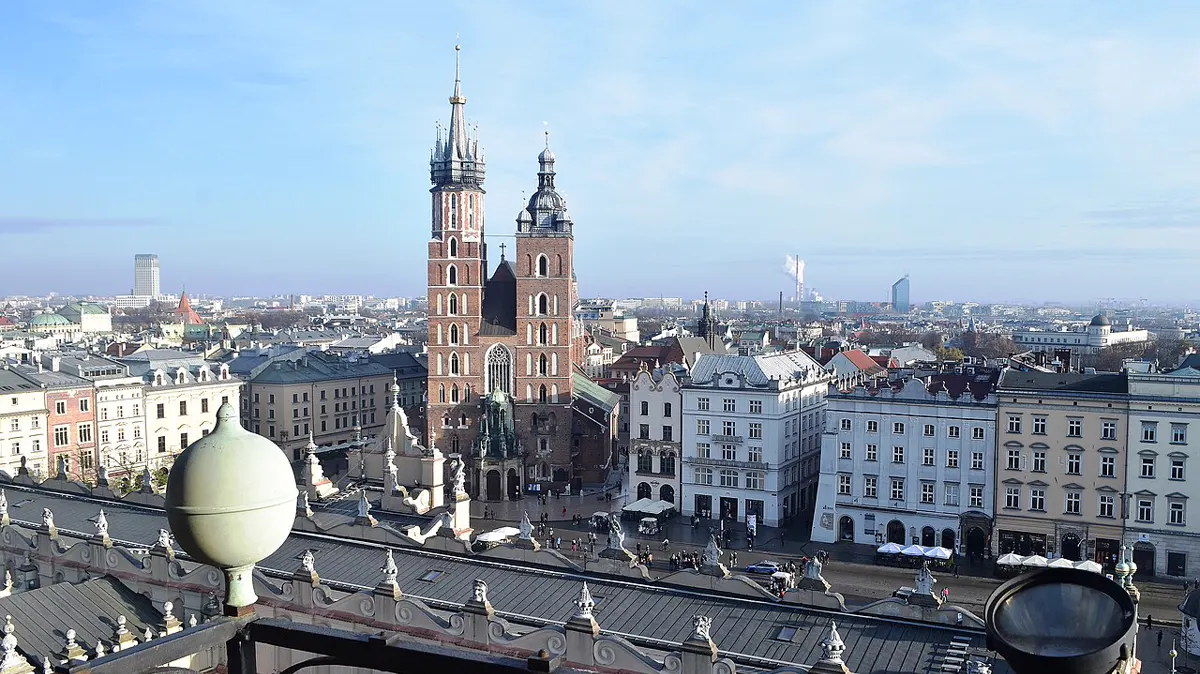
Poland's former royal capital, an easy fast-train ride away, with its medieval market square, Wawel castle, and the Kazimierz district. A full day at least.
When to visit Katowice
Katowice is an all-year city with plenty indoors, so weather matters less than the events calendar. Summer brings the big music festivals, winter fills the arena with esports and concerts, and spring and autumn are the most comfortable for walking the districts.
April to May
Spring
Mild and pleasant for exploring Nikiszowiec, Giszowiec, and the parks before the summer heat. A good, uncrowded time for the museums and the Culture Zone.
June to August
Summer
Warm and lively, with major festivals including the OFF Festival and Tauron Nowa Muzyka drawing crowds to the city. Outdoor terraces on Mariacka come into their own.
September to October
Autumn
Cooler and calmer, strong for architecture and the indoor cultural programme, with the concert season at NOSPR back in full swing. Clear light suits the brick of the miners' estates.
November to March
Winter
Cold and often grey, but the Spodek stays busy with concerts and the Intel Extreme Masters esports event, and the museums and concert hall are at their best. Dress warmly for the walk between districts.
Getting to and around Katowice
By train
Katowice Glowny is a central hub with fast trains to Krakow in about 1h 20m and to Warsaw in around 2h 30m on the quickest services. Regional lines fan out across the Silesian conurbation.
By air
Katowice Airport (KTW) is in Pyrzowice, about 34 km north near the A1 and S1 junction. The AP1 airport bus runs to Katowice Glowny; it is a busy Wizz Air and Ryanair base.
By car
The A4 motorway crosses the city east to west, linking Krakow and Wroclaw. The centre is a paid parking zone, so the tram network is the easier way to move once you arrive.
By bus
FlixBus and regional coaches use the central bus station near Katowice Glowny, with dense connections across Upper Silesia and beyond.
Trams & buses
The Silesian tram system is one of the largest in Europe, threading Katowice with Chorzow, Bytom and the neighbouring towns. ZTM buses fill in the rest of the metropolitan network.
Tickets
One ZTM ticket covers trams and buses across the metropolis; buy in the app or at machines. A time or 24-hour ticket suits a day spent hopping between the Silesian cities.
On foot
The remodelled centre around the Rynek, Mariacka street and the Strefa Kultury with the Silesian Museum and NOSPR hall is compact and easy to cover on foot.
Staying connected
- EU roaming
- If you have an EU or UK SIM, roaming works at your normal domestic rate under the roam-like-at-home rules, so most European visitors need to do nothing.
- eSIM
- For visitors from outside Europe, an eSIM from a provider such as Airalo or Holafly is the simplest option, activated before you land with no shop visit.
- Local SIM
- A prepaid SIM from Play, Orange, Plus or T-Mobile costs little and gives generous data. You need your passport to register it, which is a legal requirement.
- Free wifi
- Cafés, hotels, malls and many trams and buses have free wifi, though speeds vary. Do not rely on it for anything sensitive.
Apps to download before you go
A short list of apps that make a Polish trip smoother. Download them before you fly; every link goes straight to the app.

Jakdojade
Public transport
Public transport routes, live departure times and mobile tickets for every Polish city. The first app to install.


Bolt
Rides and taxis
The most widely used ride-hailing app in Poland, usually cheaper than a street taxi, plus e-scooters and shared bikes.

Koleo
Train tickets
Buy Polish train tickets (PKP Intercity and regional) with seat selection, often cheaper than buying at the counter.
Google Maps
Maps and offline
Reliable for walking and public-transport directions nationwide. Download the offline area for your city before you land.

Google Translate
Translation
Install the Polish language pack for offline camera translation of menus and signs.

Revolut
Payments
Hold and spend zloty at the real exchange rate, sidestepping the airport kantor and card DCC markups.
Wise
Payments
A multi-currency account and card that also spends zloty at the real exchange rate, a strong alternative to Revolut.

Booking.com
Stays
The default for hotels and apartments in Poland, with the widest choice and free-cancellation options.
Money, costs and tipping
Poland runs on the zloty, not the euro, and it is one of the better-value city-break destinations in the EU. Cards work nearly everywhere, but a few local habits save you money.
- Pay in zloty, always
- When a card machine or ATM offers to charge you in your home currency, decline it and choose PLN. That "dynamic currency conversion" hides a poor exchange rate and can add 5 to 12 percent.
- Skip airport and street exchange
- Avoid the exchange desks at the airport and the Euronet ATMs in tourist zones, which give weak rates and push DCC. Withdraw from a normal bank ATM (PKO BP, Santander, ING, Pekao) or just pay by card.
- Cash for small things
- Keep a little cash for a milk bar (bar mleczny), a market stall, a toilet (1 to 3 zl), or a rural bus. Everything else takes contactless or Apple/Google Pay.
- Tipping
- Round up or leave about 10 percent in a restaurant if you were happy. Do not say "thank you" when handing over money if you want change back, as it can be taken to mean "keep it".
Safety and local etiquette
Staying safe
Poland is one of the safer countries in Europe, and its cities feel relaxed late into the evening. The risks are the ordinary big-city ones rather than anything unusual.
- Petty theft
- Pickpocketing happens in crowded tourist spots, on packed trams and at big events. Keep your phone and wallet in a front pocket or a zipped bag and you will almost certainly be fine.
- Taxis
- Use an app (Bolt, Uber or Free Now) rather than flagging a random taxi, especially near stations and airports, to avoid inflated fares. The price is fixed and shown up front.
- Nightlife
- Stick to established bars and clubs, watch your drink, and be wary of touts steering you to a "special" venue with a surprise bill. This is rare but worth knowing.
- Emergency number
- Dial 112 for police, ambulance or fire. Operators speak English. Pharmacies (apteka) are widespread and one is always open on a rota.
Local etiquette
Poles are warm once the ice breaks and appreciate a little effort. A few points of etiquette go a long way, especially at the country's many places of memory.
- Greetings
- A firm handshake and eye contact is standard. "Dzień dobry" (good day) and "dziękuję" (thank you) are always welcome, even if the rest is in English.
- Churches and memorials
- Cover shoulders and knees in churches and keep quiet during Mass. At sites such as Auschwitz-Birkenau, dress and behave soberly, and do not take smiling selfies.
- In a home
- If you are invited to someone's home, take off your shoes at the door and bring flowers (an odd number) or chocolates. Never bring an even number of flowers, which is for funerals.
- Toasts
- Vodka is drunk cold in one go with a toast of "na zdrowie" (to health), followed by something to eat. Pace yourself, as refusing every round can seem standoffish.
Who Katowice suits
A quick word on who each Polish city suits and how to make it work for you.
Families
Poland is easy with children: milk bars are cheap and quick, ice cream (lody) is everywhere, and museums and parks are stroller-friendly. Trams are free for small children.
Couples
Cobbled old towns, candlelit cellar restaurants and riverside bars make for an easy romantic weekend, and prices leave room for a proper dinner out.
Solo travellers
Cities are safe and walkable, hostels are sociable, and free walking tours are a good way to meet people. English gets you a long way.
Seniors
Compact centres, plenty of cafés to rest in and good public transport make for a gentle pace. Many museums offer reduced tickets.
Accessibility
Newer trams and buses are low-floor and stations are improving, but medieval cobbles and old tenement stairs can be hard going. Check ahead for lifts.
Katowice: frequently asked questions
Yes. The old coal capital of Upper Silesia has rebuilt itself around the Culture Zone (the Spodek arena, the NOSPR concert hall and the Silesian Museum) and the historic miners' districts of Nikiszowiec and Giszowiec.
One day covers the Culture Zone and the center. A second day makes room for Nikiszowiec, Giszowiec and a nearby day trip such as Pszczyna or Tarnowskie Gory.
Yes. Oswiecim lies about 40 km away, roughly 40 minutes by car (a bit longer by train), which is closer than from Krakow. As always, book a timed ticket in advance.
Yes. The early 20th-century red-brick miners' colony is one of the best-preserved workers' districts in Europe, built for the Giesche company, and it sits a short bus or tram ride from the center.
Yes. A large student population and a steady flow of business conferences mean English is common in the center and in hotels.
It is mid-priced and generally cheaper than Krakow. Business-hotel rates can rise around big conferences and events at the Spodek and NOSPR.
Cities near Katowice
About this guide
This guide to Katowice is researched and maintained by the ViewPoland editorial team, and was last reviewed in September 2026. We update it as venues, prices and transport change.