Thematic
The Cheapest Cities to Visit in Poland
Lodz, Katowice, Lublin, Torun, Bydgoszcz and Bialystok cost noticeably less than Krakow, Warsaw or Gdansk, and accommodation explains most of the gap. Here is how far your money goes in each, with rough 2026 ranges.
Lodz, Katowice, Lublin, Torun, Bydgoszcz and Bialystok are the cheapest cities to visit in Poland, and the gap between them and Krakow, Warsaw or Gdansk is wide enough to change how long a trip can last. The same daily budget that buys a modest room and one restaurant meal in the tourist centres usually stretches to a better room and two meals out in a regional city. If you want the national picture first, our overview of whether Poland is expensive sets the baseline.
Accommodation is what actually splits the cities
Accommodation is the main driver, and nothing else is close. As of 2026, a mid-range double room in central Krakow or Warsaw commonly falls somewhere around 300 to 500 zloty a night in season, while a comparable room in Lodz, Bydgoszcz or Bialystok often sits nearer 180 to 300 zloty. Treat those as bands, not quotes. Hotel pricing moves with events, school holidays and flight capacity, so the figure that matters is the one you see for your own dates.
Eating out is the second lever. A main course in a tourist-facing restaurant near a main square in the big three often lands around 50 to 80 zloty, against roughly 35 to 60 zloty for a similar plate in a regional city, as of 2026. Across two people and five days, that difference stops being trivial.
After those two, differences shrink fast: museum tickets, tram fares and supermarket shopping vary far less between Polish cities than beds and restaurant tables do.
Krakow, Warsaw and Gdansk sit at the top
These three cost more because they compete for international demand, not domestic demand alone. Krakow carries the steepest premium in its old town, where prices tend to drop noticeably two or three streets outside the Planty ring. Warsaw often runs higher midweek, when business travel fills the hotels, and can soften at weekends. Krakow frequently does the reverse in summer.
Gdansk is the most seasonal of the three. July and August on the Baltic coast, with Sopot next door absorbing the same visitors, produce the year's highest rates, and the shoulder months are a different city financially. Our guide to the best time to visit Poland covers when those peaks fall.
Lodz and Katowice give the biggest savings
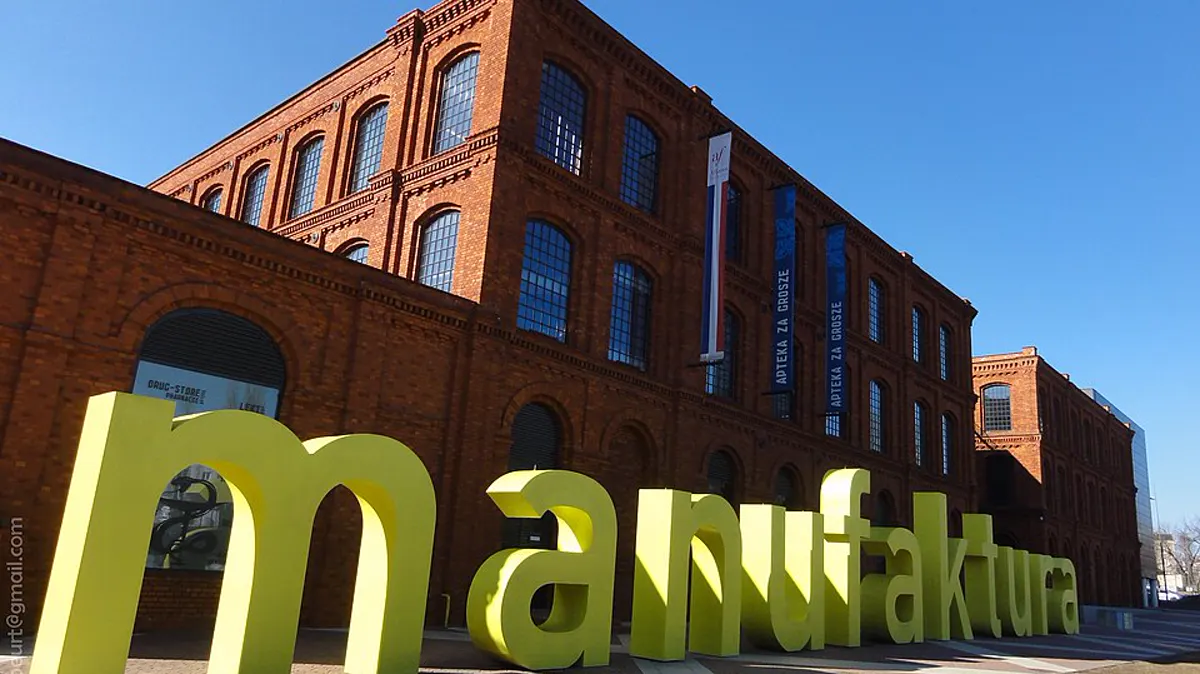
Lodz is the clearest value case in the country: a city of well over 600,000 people with hotel rates closer to a small town than a metropolis, because it has never been a mass tourism destination. Piotrkowska Street and Manufaktura, the converted Poznanski factory complex, will fill a full day without charging you tourist-centre prices for lunch.
Katowice is similar, with one caveat: it hosts large congresses and arena events, and on those dates central hotel prices can jump above Krakow's. Check whether anything big is on before booking. Outside those weeks it is consistently cheap, and the Silesian Museum, built on a former coal mine site, and the Nikiszowiec miners' district justify the stop.
Lublin and Torun are cheap and properly touristy
If you want a preserved old town without big-three prices, Lublin is the strongest option. Rooms and restaurants run well below Krakow, and the Ruthenian-Byzantine frescoes in the castle's Holy Trinity Chapel, completed in 1418, are among the more remarkable interiors in Poland. Admission to the State Museum at Majdanek, the memorial at the former German Nazi camp on the edge of the city, is free, though opening times vary by season, so check its own site before you go.
Torun is cheaper than Krakow or Gdansk, but not cheap in the way Lodz is. Its medieval centre has been UNESCO-listed since 1997 and it is a popular domestic weekend break, so summer Saturdays in a small accommodation stock push rates up. Come midweek and the saving is obvious again.
Bydgoszcz and Bialystok sit at the bottom
Bydgoszcz and Bialystok are the least expensive here, largely because few foreign visitors base themselves in either. Bydgoszcz has its riverside Mill Island and the Opera Nova on the Brda. Bialystok has the Branicki Palace and its gardens, and works as a base for Podlasie and Bialowieza Forest, about 80 kilometres away by road. Neither fills a week, but both are unusually good value for a night or two on a longer route.
What costs roughly the same wherever you go
Plenty of your spending barely moves between cities. A single ticket on city public transport stays under 10 zloty everywhere on this list, and day passes are cheap in all of them. Supermarket prices are close to identical. A meal in a milk bar, the state-subsidised canteens still found in many Polish cities, stays modest whether you eat it in Warsaw or Lublin. Everything is priced in zloty, not euro, and cards work nearly everywhere.
How to make an expensive city behave like a cheap one
Most of the premium in Krakow, Warsaw and Gdansk is geographic rather than citywide. Staying one tram stop out, as our notes on where to stay in Krakow explain, often cuts the room rate substantially while adding ten minutes to your day. Eat where the lunch menu is written only in Polish. Move between cities by train or coach rather than by car, which our comparison of trains and buses in Poland breaks down, and see our budget itinerary for a route that mixes both price tiers.
Good to know
Under the Polish Museums Act, state museums set aside one day a week when the permanent exhibition is free, and the day differs by museum and sometimes by season. Check the museum's own website before planning around it, and see our list of the best museums in Krakow for where this pays off most.
Written by ViewPoland Editorial for ViewPoland, an independent English-language guide to Poland. Published 2 August 2026. Last updated 2 August 2026.