Story from Gdańsk
A Summer on the Baltic Coast
Poland's Baltic coast comes alive in summer with long sand beaches, the Tri-City of Gdansk, Sopot and Gdynia, and cool, clean water.
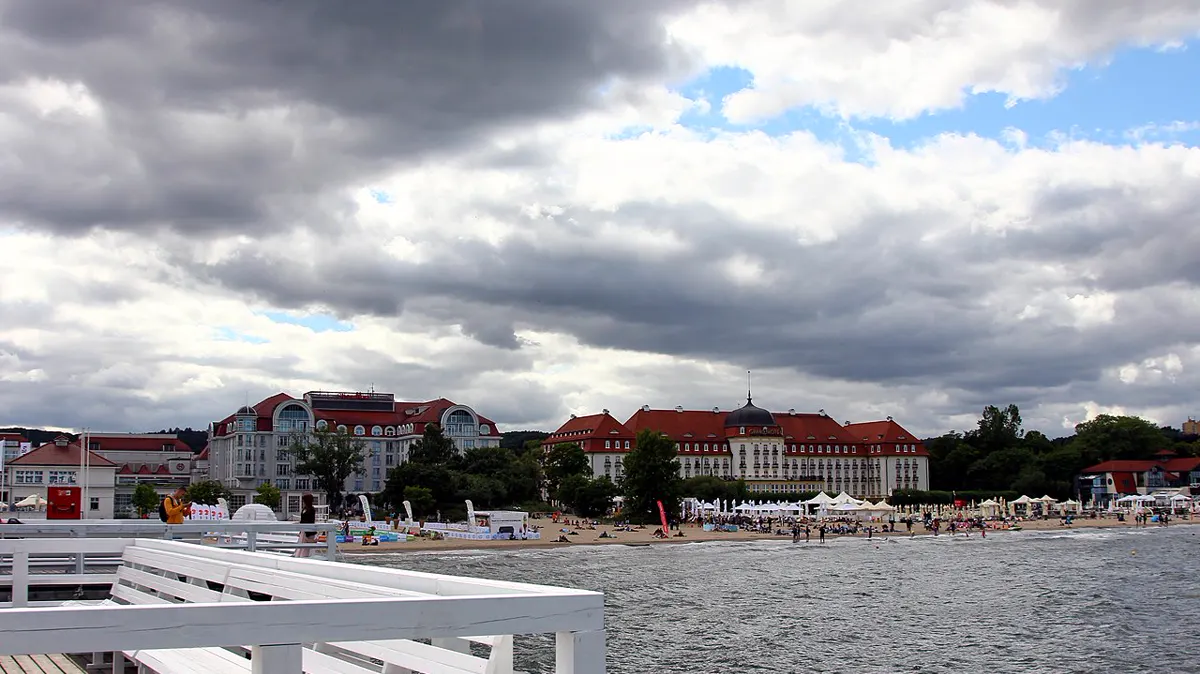
Poland has more than 400 kilometres of Baltic coastline, and in summer it turns into the country's seaside. Wide sand beaches back onto pine woods and low dunes, the old resort towns fill up, and the sea, cool but clean, is swimmable from roughly June to August. It is a different Poland from the medieval squares inland: slower, salt aired, built for doing very little. For a lot of visitors it makes the natural second half of a summer trip, a few flat days by the water after the cities.
The Tri-City
The obvious base is the Tri-City, where three very different places sit in a row along the Bay of Gdansk, linked by an SKM commuter train that runs every few minutes. Historic Gdansk anchors the south end, the resort town of Sopot sits in the middle, and the modern port of Gdynia closes the north. You can sleep in one and dip into the others in under half an hour, which is the easiest way to pair a city break with beach time. Gdynia, the youngest of the three, was built almost from scratch between the wars and has a clean-lined modernist waterfront and a couple of museum ships along the quay.
Gdansk: brick, water and history
Gdansk was one of the great Hanseatic ports, and its rebuilt Main Town still reads that way, tall merchant houses along the Long Market and a working waterfront on the Motlawa. Walk Dluga Street and the Long Market down to the river, where the medieval port crane, the Zuraw, still stands over the quay. The city carries a heavy twentieth century as well. The Museum of the Second World War and the memorial at Westerplatte, where the war's first shots were fired in 1939, both sit within reach of the centre. For a greener half day, the district of Oliwa has a medieval cathedral known for its organ and the wooded Oliwa Park around it.
Sopot: the resort
Sopot made its name as a spa town in the nineteenth century and still trades on it. The pier, the molo, reaches more than 500 metres into the Baltic and is the longest wooden pier in Europe. At its root the beach runs wide and sandy in both directions, and a small marina sits alongside. Behind the front, the Spa Square and the pedestrian Bohaterow Monte Cassino street climb inland past bars and cafes and the playful Crooked House. Sopot is short on heavyweight sights and long on atmosphere, which in summer is exactly the point.
Beaches beyond the cities
The coast does not end at the Tri-City. West and east of it the shore runs to long, thinly built beaches. The Hel Peninsula, a narrow spit of sand curling far out into the bay, is a favourite for wide strands and steady wind, which makes it one of the best places in the country for windsurfing and kitesurfing. Further west, the shifting dunes of Slowinski National Park move slowly inland with the wind and rank among the more unusual landscapes in Poland. Inland from Gdansk, the vast Teutonic fortress at Malbork makes an easy rail day trip; see our guide to the best castles in Poland for what to expect there.
What the sea is actually like
Set your expectations for the water. The Baltic here is cool even in August, so a swim is refreshing rather than warm, and it can turn choppy when the wind gets up. The trade off is clean water, gently shelving beaches and none of the Mediterranean heat. July and August are the warmest and busiest weeks, when the beaches and the Sopot pier fill and prices climb. June and early September are quieter, with pleasant if less reliable weather and far more room on the sand. Bring something warmer than you would pack for a southern coast, as evenings by the sea cool down fast.
Eating on the coast
The coast is the place to eat fish in Poland. Look for fresh and smoked Baltic catch, herring and cod among them, sold from harbour stalls and beach bars as well as proper restaurants. A plate of fried fish and a beer by the water is one of the simple pleasures of a coast summer here. For the wider picture on regional cooking, milk bars and what to order around the country, see our Polish food guide.
Getting around the Tri-City
The SKM commuter train links Gdansk, Sopot and Gdynia every few minutes and takes well under half an hour end to end. It is a separate service from the regional trains that share the same platforms, so buy a ticket for the SKM specifically and validate it before you board.
How to plan it
Two to four days suit the coast. Base yourself in Gdansk or Sopot, give a day or two to the Tri-City, and add a beach day on the Hel Peninsula or a long fish lunch by the harbour. It pairs well with a wider trip: fast trains link Gdansk with Warsaw and the rest of the country in a few hours, so a summer week can hold both the coast and a city or two inland without much strain. Come in July or August for the warmest sea and the fullest resorts, or in June and September for the quiet.
Written by ViewPoland Editorial for ViewPoland, an independent English-language guide to Poland. Published 28 June 2026. Last updated 1 July 2026.