Best of
Best Castles in Poland
From the Teutonic fortress at Malbork to the royal seats at Wawel and Warsaw, the Polish castles most worth your time.
Poland's castles run from austere brick fortresses built for war to royal palaces rebuilt stone by stone after it. Each tells a different chapter of the country's history: conquest, coronation, destruction and reconstruction. These four are the ones to prioritise, and they are spread across the country, so most fit neatly into a wider trip. Below is what makes each one worth the visit, followed by how to choose if you only have time for one.
Malbork Castle: the largest of all
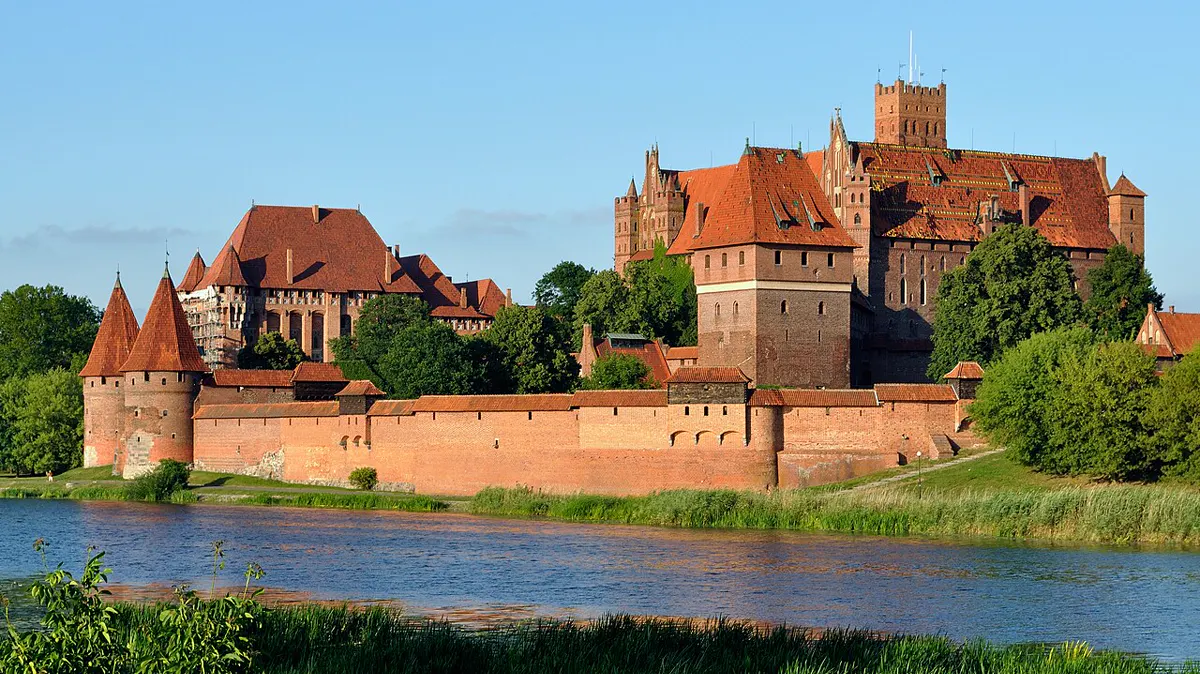
Malbork, around 60 kilometres southeast of Gdansk on the Nogat river, is the largest brick castle in the world and the largest castle of any kind measured by land area. The Teutonic Knights began building it in the thirteenth century and made it the capital of their monastic state, expanding it into three linked castles behind a ring of walls and moats. It is a UNESCO World Heritage Site.
The complex divides into the High, Middle and Low Castles, taking in the Grand Master's Palace, the great vaulted refectory, the church and a vast network of courtyards and defences. A route with an audio guide leads you round and takes the best part of an afternoon. Frequent trains link Gdansk to Malbork in under an hour, which makes it the standout day trip from the coast; the view of the whole fortress from across the river is the one to photograph.
Wawel Castle: the royal heart
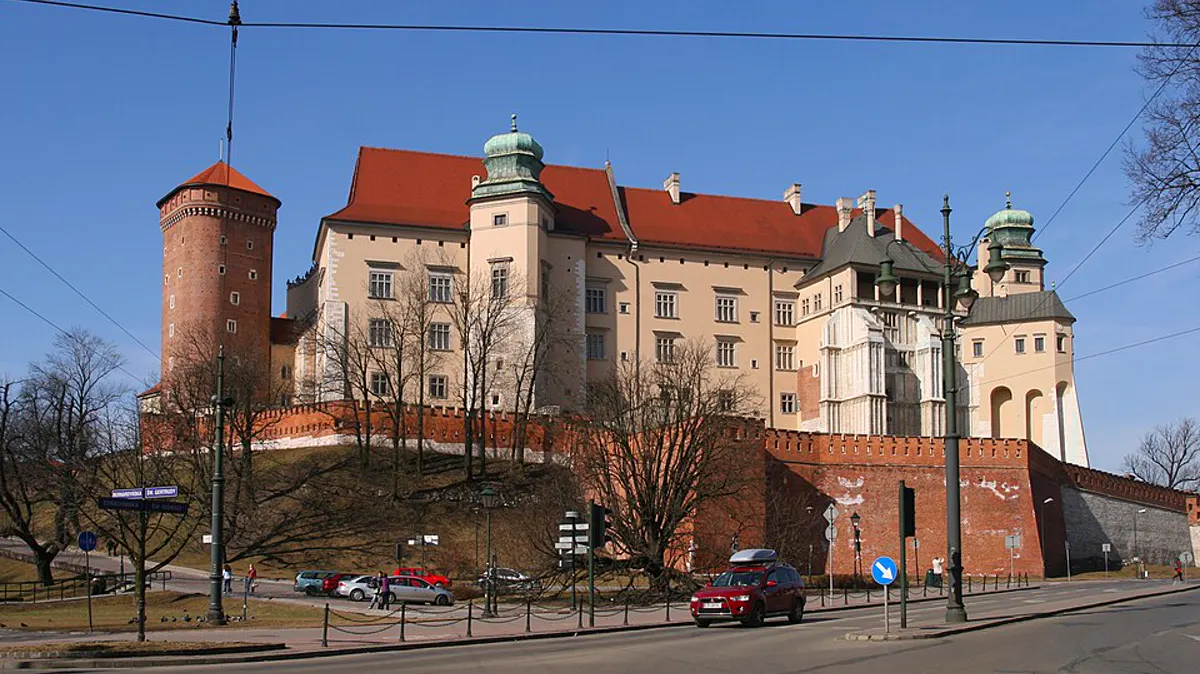
Wawel Castle in Krakow was the seat of Polish kings for centuries, and it is less a fortress than a symbol of the nation. On the hill above the Vistula, a Renaissance palace built around an arcaded courtyard sits beside the Gothic cathedral where most Polish monarchs were crowned and where many of them, along with national poets and heroes, are buried.
The hill splits into separately ticketed parts: the State Rooms and Royal Private Apartments, the Crown Treasury and Armoury, and the cathedral with its royal tombs and the great Sigismund Bell. The courtyard and grounds are free to walk through. Numbers inside are capped and tickets are timed, so book ahead in summer and allow around half a day for the main interiors. Wawel is a ten-minute walk from the Main Market Square, so it needs no special trip.
The Royal Castle in Warsaw
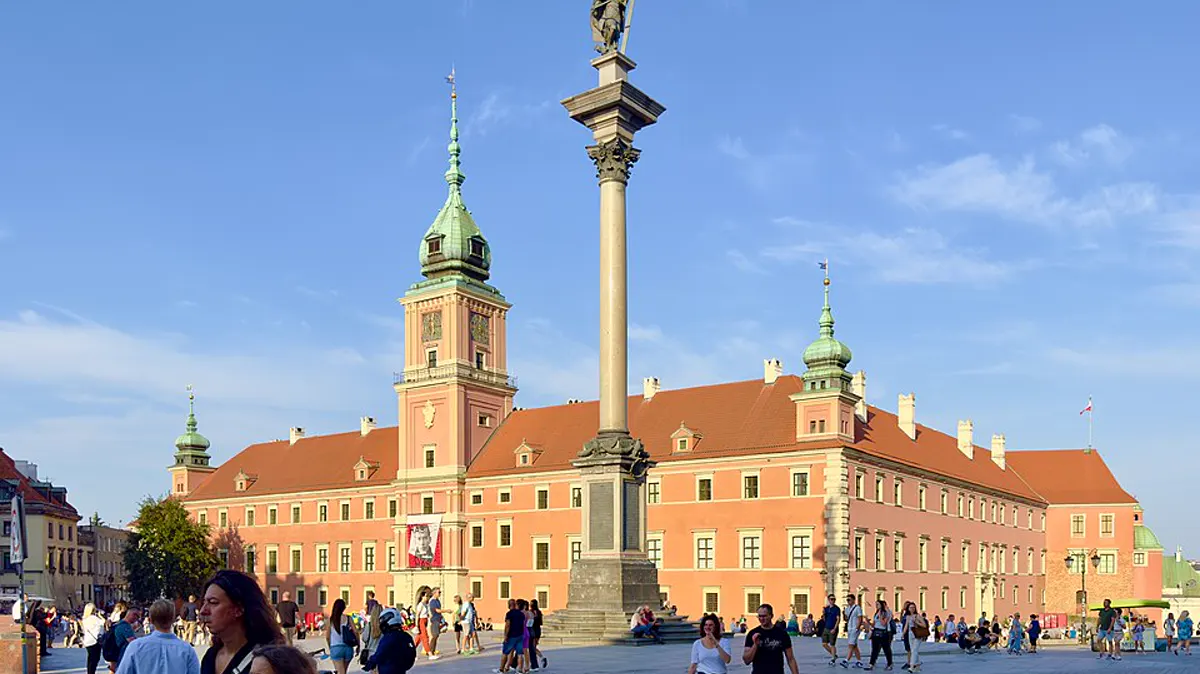
The Royal Castle in Warsaw is a story of resilience. It stands at the entrance to the Old Town on Castle Square, marked by the column of King Sigismund III, and it served as the residence of monarchs and the seat of the Polish parliament before the partitions. Europe's first modern codified constitution was adopted in its halls in 1791.
German forces blew the castle up after the 1944 Uprising, leaving only fragments. The building you see was reconstructed between 1971 and 1984, largely with public donations, and many original furnishings and artworks that had been hidden during the war were returned to the restored interiors. It anchors the rebuilt Old Town, itself a reconstruction, and together they explain how Warsaw rebuilt its history after near-total loss.
Lublin Castle
In the east, Lublin Castle stands on a hill above the old town of Lublin. The neo-Gothic building you see today was raised in the 1820s and served as a prison for well over a century, including under the Nazi German occupation, a history the museum inside does not shy away from. Two much older parts survive within the walls: a round Romanesque keep from the thirteenth century, the oldest structure on the hill, and the Gothic Chapel of the Holy Trinity.
The chapel is the reason to come. Its walls and vaults are covered with Rutheno-Byzantine frescoes completed in 1418, painted by an Orthodox workshop under the patronage of King Wladyslaw Jagiello. The result is a Catholic chapel decorated in the Eastern style, a rare surviving meeting of Latin and Byzantine art that reflects the mixed cultures of the old Polish-Lithuanian borderland.
Other castles worth the detour
Beyond the big four, two more reward a detour if your route passes nearby. Ksiaz Castle, in the hills of Lower Silesia near Walbrzych, is the third largest castle in Poland, a rambling pile above a wooded gorge with a tunnel network dug beneath it during the Second World War. Moszna Castle, in the Opole region, is a fanciful nineteenth-century residence bristling with towers and turrets. Neither is on the main tourist circuit, which is part of their appeal.
How to choose and how to get there
If you only have time for one, choose by interest: Malbork for sheer medieval scale, Wawel for royal history, Warsaw for the story of a city rebuilt, Lublin for the frescoes and the eastern setting. All four sit in or beside cities on the rail network, so you rarely need a car to reach them; see getting around Poland for the train connections. Malbork in particular is an easy half-day from Gdansk, and pairs well with the other options in the day trips that anchor a longer stay.
Good to know
Wawel's exhibitions are separately ticketed, timed and capped, so book ahead in summer; the grounds themselves are free. Malbork rewards a full afternoon and an early start to beat the tour groups. Check each site's official channels for opening days, as some close one day a week.
Written by ViewPoland Editorial for ViewPoland, an independent English-language guide to Poland. Published 28 June 2026. Last updated 1 July 2026.