Attraction in Kraków
Father Bernatek Footbridge
A pedestrian and cycle bridge over the Vistula that connects Kazimierz with Podgorze, known for nine acrobat sculptures suspended above the water and its collection of love padlocks.
Reviewed and updated July 2026
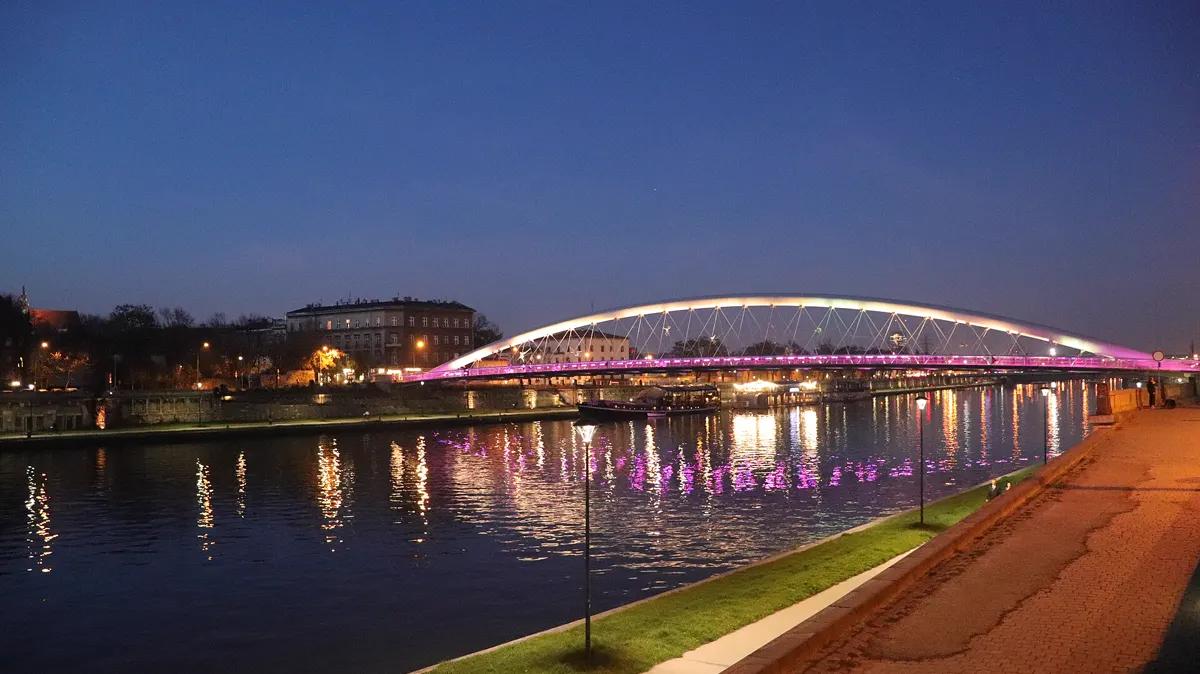
The Father Bernatek Footbridge is a pedestrian and cycle bridge over the Vistula that links the districts of Kazimierz and Podgorze, and people cross it both to move between the two neighbourhoods and to see the nine acrobat sculptures that appear to balance and dangle above the river. Completed in 2010 and named after the monk Father Laetus Bernatek, it has become one of Kraków's more photographed river crossings, partly for those figures and partly for the love padlocks couples fasten to its railings.
The acrobats above the water
The feature most visitors come for is a set of nine acrobat figures by sculptor Jerzy Kedziora, suspended so that they seem to swing, balance and hang out over the Vistula. The bridge itself was designed by architect Andrzej Getter as a leaf-shaped twin walkway, which gives it a curved, split profile rather than a single straight span. Look up as you cross and the figures read differently depending on where you stand, and they catch the eye against the open sky over the river.
A modern crossing with a monk's name
The footbridge was completed in 2010 and carries the name of Father Laetus Bernatek, a monk connected to the nearby hospital run by his order. It replaced the need for a longer detour between Kazimierz on the north bank and Podgorze on the south, opening a direct route for people on foot and on bikes. As a purpose-built pedestrian and cycle link rather than a road bridge, it belongs to a newer layer of Kraków's riverfront than the historic core.
The bridge of love
Couples fasten padlocks to the railings here, which has earned the crossing a reputation as Kraków's bridge of love. The practice has built up over the years since the bridge opened, and the locks are part of what many people photograph alongside the acrobats. It suits anyone wandering between the two districts, families, cyclists and photographers, and it works equally well as a quick shortcut or an unhurried stop.
Fitting it into a Kraków visit
The footbridge sits naturally on a route between Kazimierz, the former Jewish quarter, and Podgorze, so it pairs well with time spent in either district rather than being a destination on its own. From the Kazimierz side you are within walking distance of the neighbourhood's squares and cafes, while the Podgorze side leads towards sites tied to the wartime history of the city. See our Kraków guide for how these areas connect and what to plan around the crossing.
Good to know
The bridge is open to walk or cycle across at any time and there is no ticket, though it is worth returning after dark when the walkway is LED-lit and the acrobat figures stand out against the sky.
Frequently asked questions
More attractions in Kraków
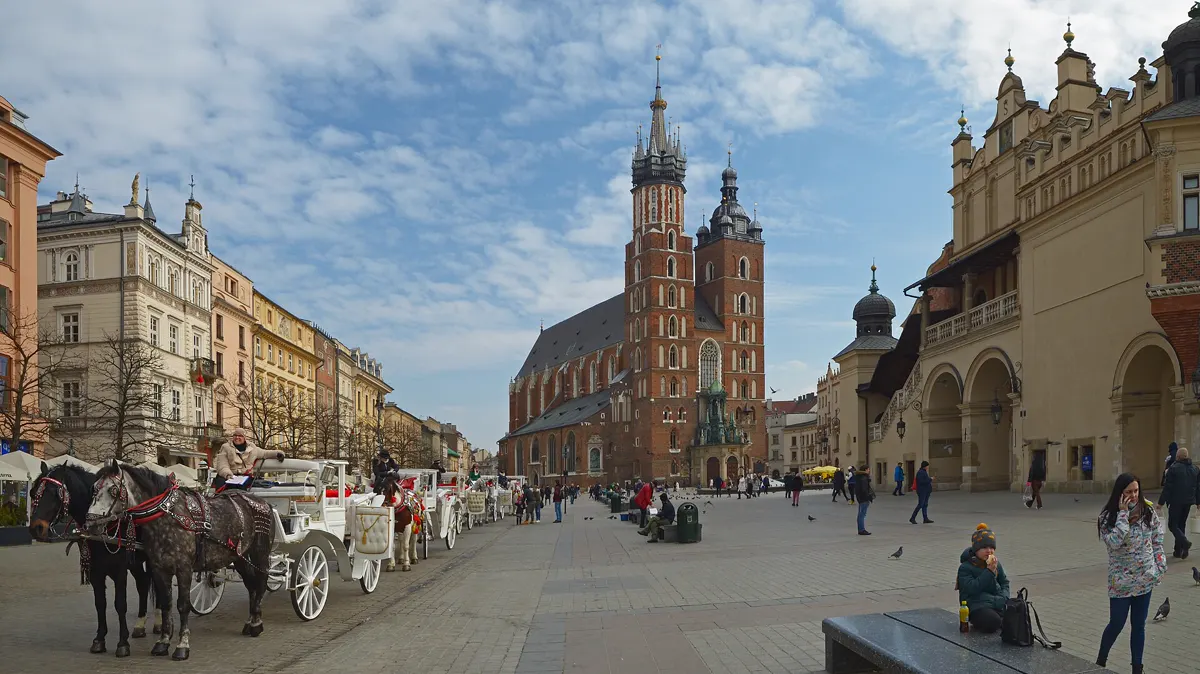
Main Market Square
Europe's largest medieval market square, the social centre of Krakow, with the Cloth Hall running down its middle.
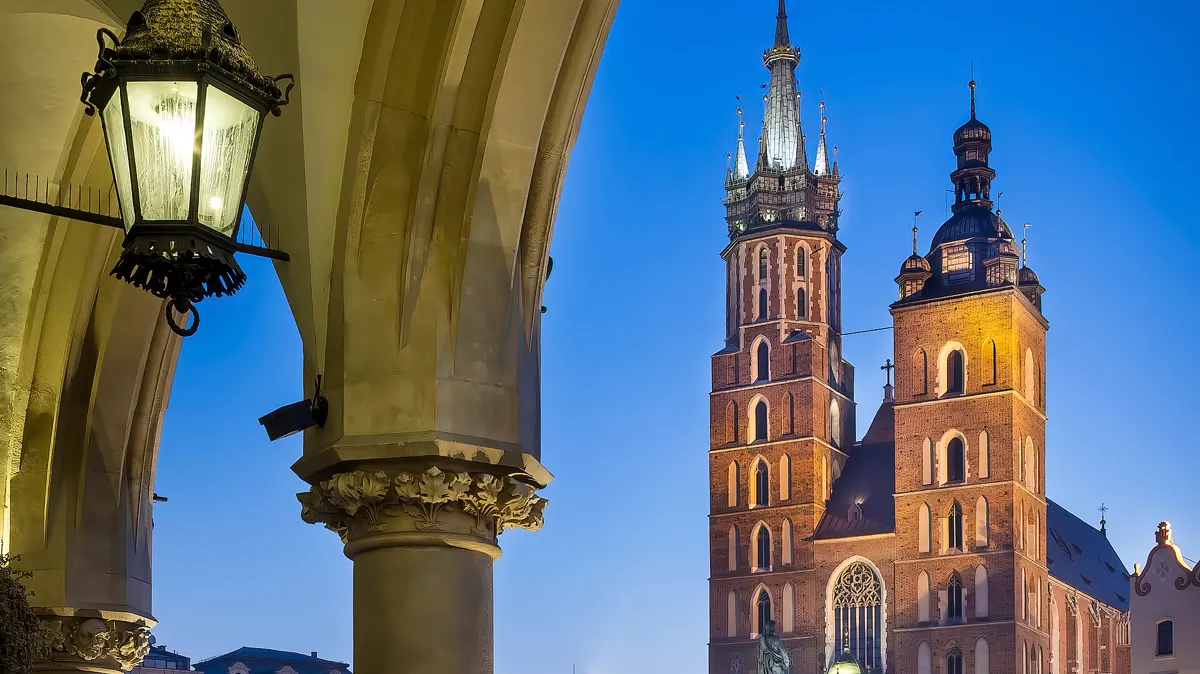
St Mary's Basilica
The brick Gothic church on the main square, famous for its mismatched towers and a carved wooden altarpiece by Veit Stoss.
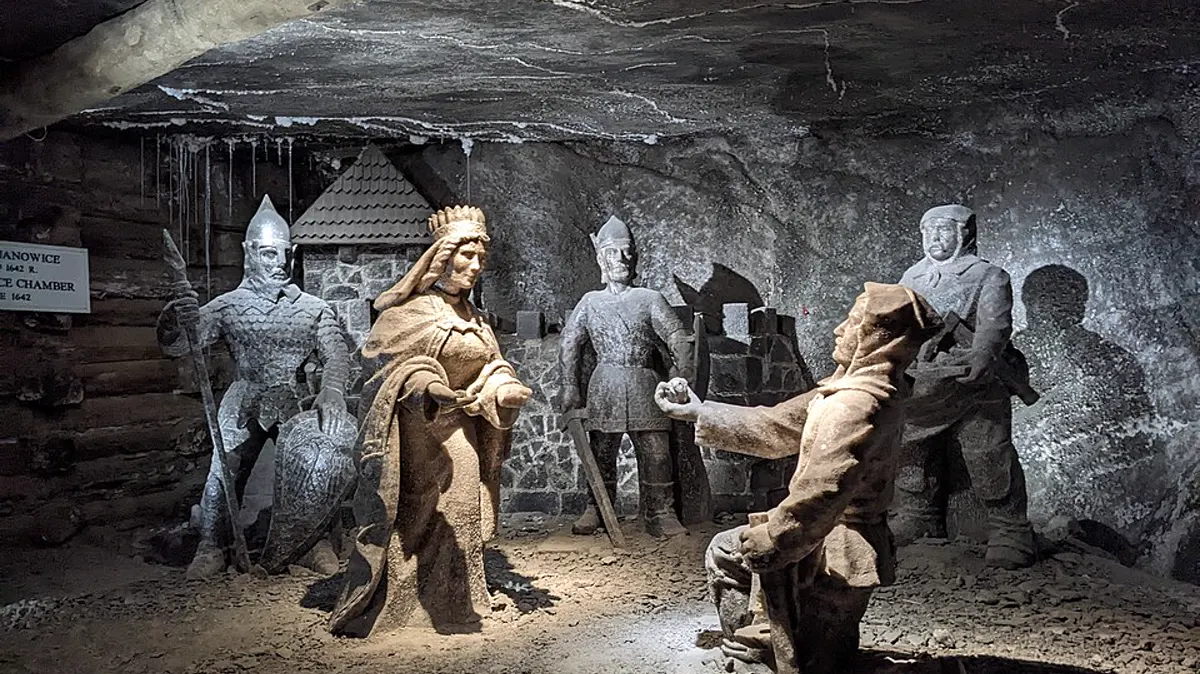
Wieliczka Salt Mine
A UNESCO-listed salt mine worked for seven centuries, with underground chapels, lakes and chambers carved entirely from rock salt.
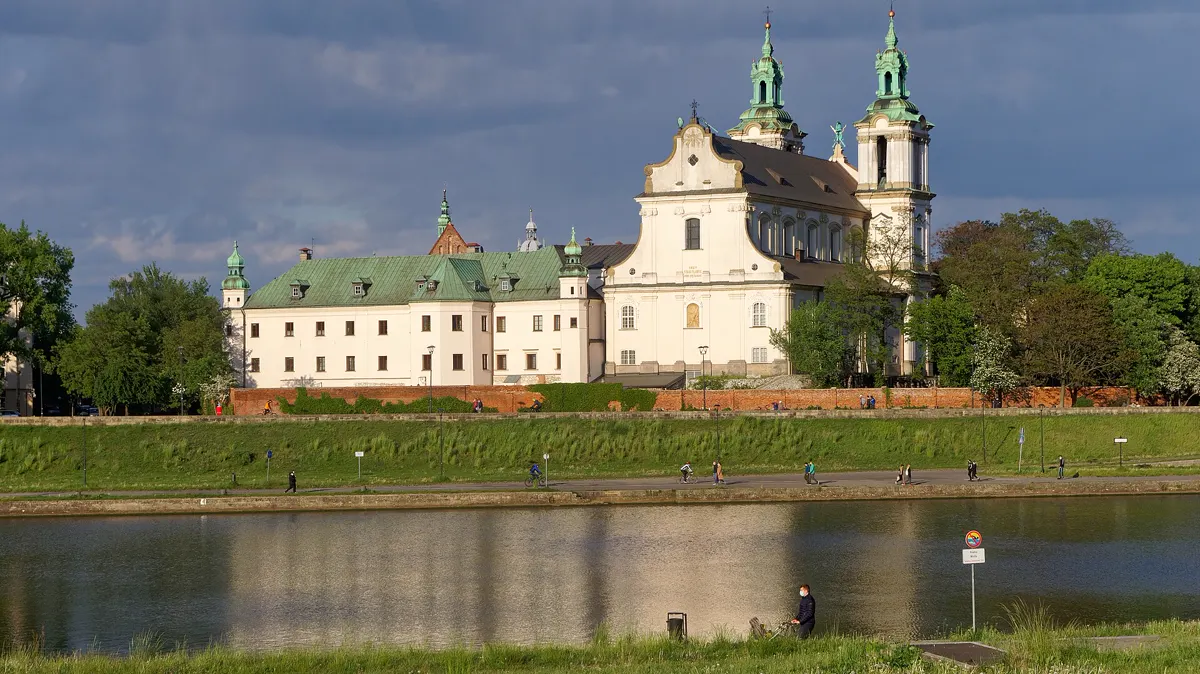
Skałka (Church on the Rock)
A Baroque Pauline church on Skałeczna Street in Kazimierz, built on the spot linked to the killing of Bishop Stanislaus in 1079, with a crypt that serves as a national pantheon for eminent Poles.
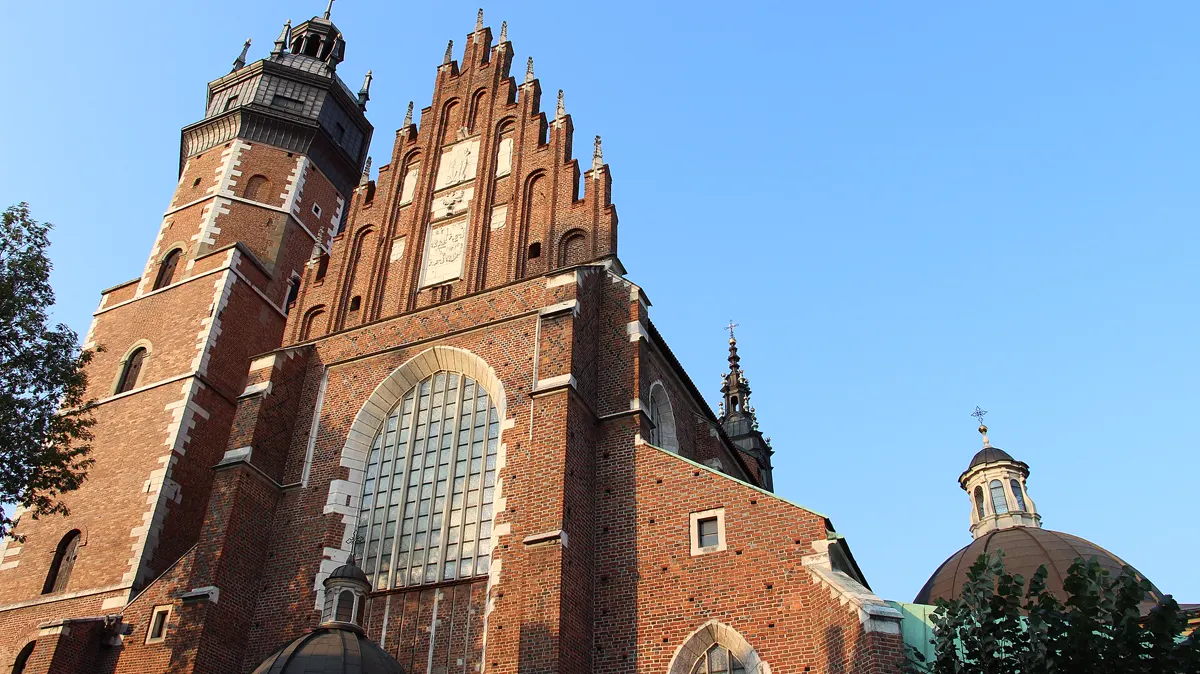
Corpus Christi Basilica
A towering Gothic basilica in Kraków's Kazimierz district, founded by King Casimir III the Great in 1335 and known for its 70-metre tower, five historic bells and a rare boat-shaped Baroque pulpit.
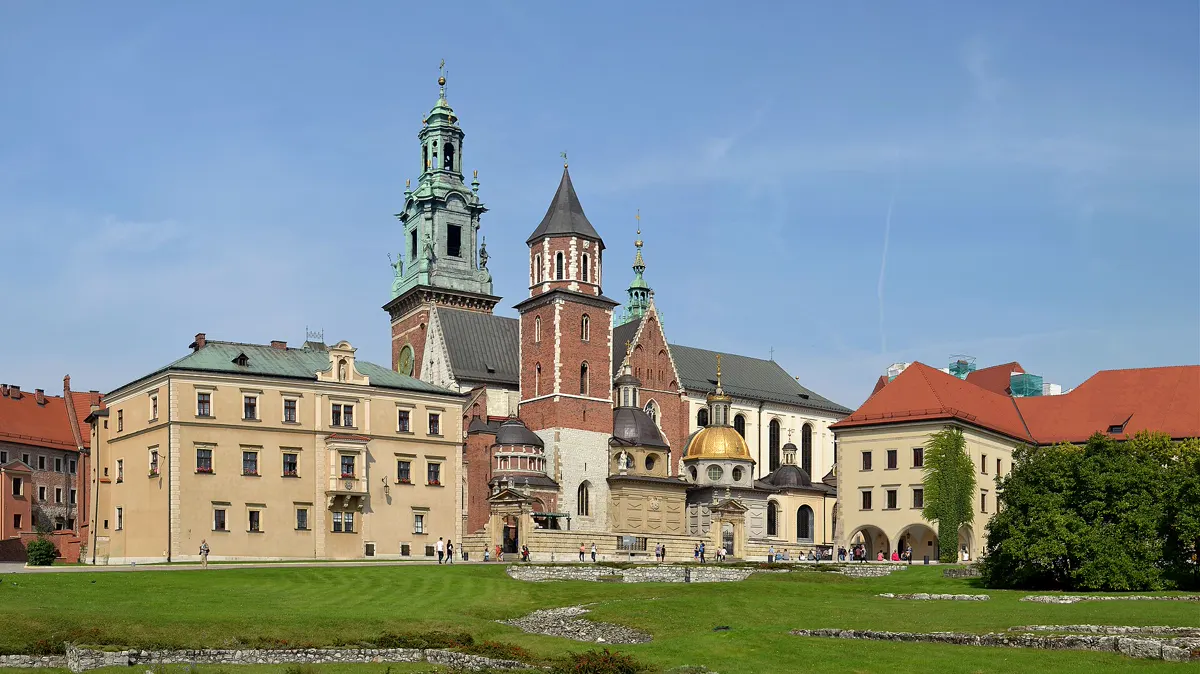
Wawel Cathedral
The coronation and burial church of Polish kings on Wawel Hill, holding royal tombs, national heroes and the famous Sigismund Bell.
More to explore in Kraków
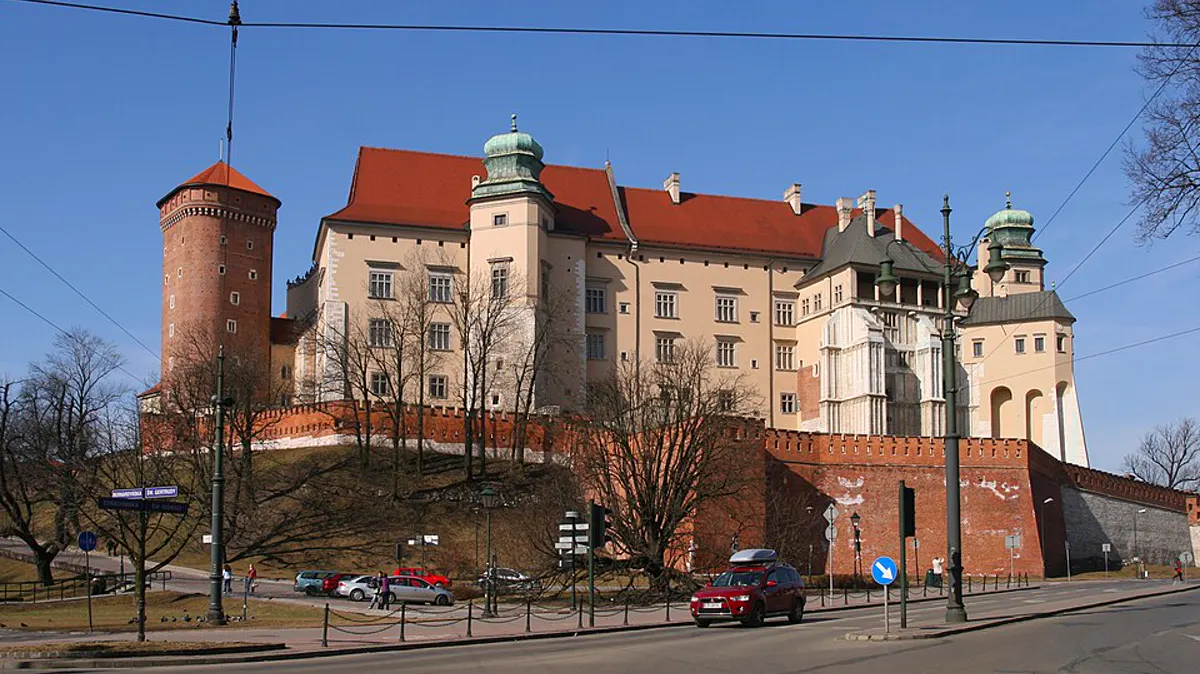
Castle
Wawel Castle
The royal castle and cathedral on the hill above the Vistula, the symbolic heart of the Polish nation for a thousand years.

Restaurant
Bottiglieria 1881
Krakow's Michelin-starred tasting-menu room, a modern Polish kitchen paired with a deep wine cellar.
Hotel
Hotel Copernicus
A Relais & Châteaux townhouse on the oldest street in the city, with a rooftop terrace facing Wawel.
Museum
Rynek Underground
An atmospheric archaeology museum beneath the Main Square, walking you through the medieval market on its original cobbles.
Museum
Auschwitz-Birkenau Memorial
The preserved site of the largest German Nazi concentration and extermination camp, now a memorial and museum to its victims, west of Krakow.
Restaurant
Endzior
The round pavilion on Plac Nowy griddling the giant open-faced zapiekanki Krakow is known for.