Attraction in Kazimierz Dolny
Jewish Cemetery and Wailing Wall Memorial
A memorial wall in Kazimierz Dolny built from around 600 surviving Jewish tombstones, split by a vertical crack that stands for the fate of Poland's Jews.
Reviewed and updated July 2026
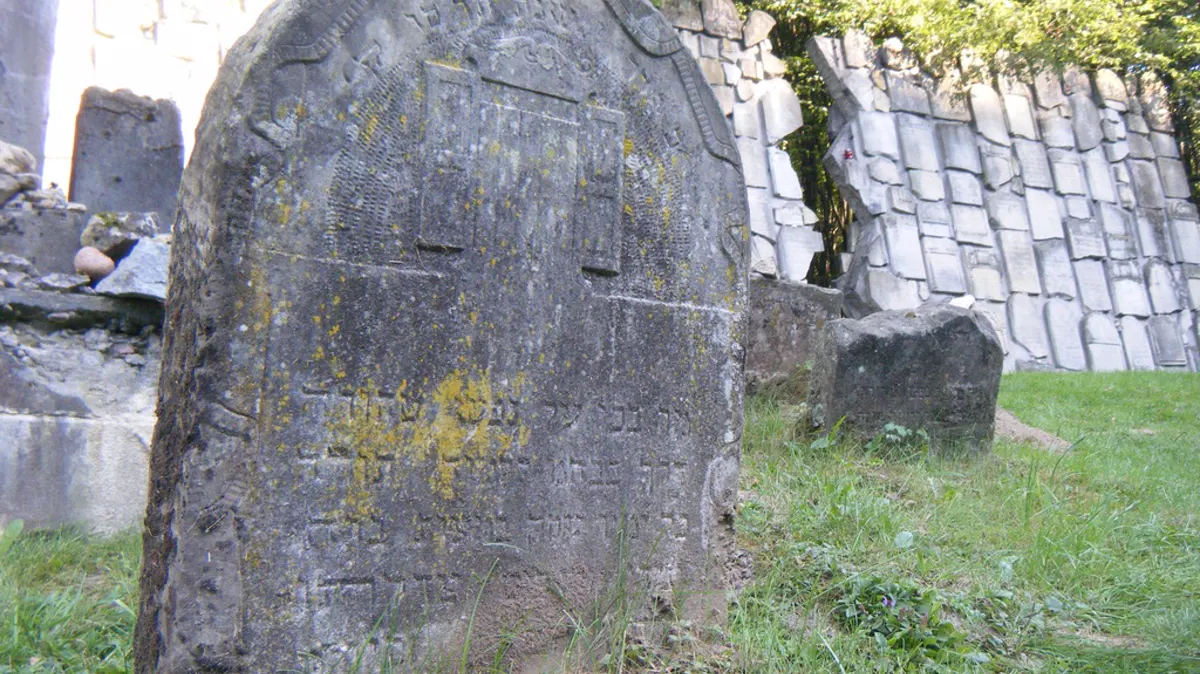
The Jewish Cemetery and Wailing Wall Memorial in Kazimierz Dolny is a lapidarium-monument raised in 1984 from the fragments of around 600 surviving Jewish tombstones, or matzevot, and it draws visitors as one of the most direct reminders of the town's lost Jewish community. It stands on the site of the 'new' Jewish cemetery, established on land donated in 1851 by Herszek Mandelsberg and later devastated during the Second World War. People come here to read the recovered gravestones and to see a wall deliberately split down the middle, a design that turns broken stone into an act of remembrance.
The cracked wall and its meaning
The centrepiece is a long wall assembled from the broken matzevot that survived the war, designed by Tadeusz Augustynek. A single vertical crack runs down the middle of it, symbolising the tragic fate of Polish Jews, and the whole structure echoes the Wailing Wall in Jerusalem. Following Jewish tradition, the stones are arranged into separate men's and women's sections, so the layout itself carries meaning rather than being decorative. Many of the tombstones still show carved Hebrew inscriptions and traditional symbols, which reward a slow, close look.
From cemetery to memorial
This is the town's 'new' Jewish cemetery, set up on land that Herszek Mandelsberg donated in 1851. During the Second World War it was devastated, and its tombstones were scattered or destroyed, as happened at Jewish burial grounds across occupied Poland. In 1984 the surviving fragments, roughly 600 of them, were gathered and rebuilt into the lapidarium-monument you see today. The transformation from a functioning cemetery into a memorial is the heart of the site's history, so it is worth knowing that story before you arrive.
Who it suits and how to visit
The memorial sits in the Czerniawy area, on the road heading towards Opole Lubelskie, a little outside the main square. It suits travellers interested in Jewish heritage, wartime history and the fuller story of Kazimierz Dolny, which was a town with a large Jewish population for centuries. There is no ticket booth or grand entrance, so approach it as a quiet place of reflection rather than a conventional attraction. Out of respect, men usually cover their heads at Jewish memorial sites, and visitors are asked not to disturb the stones.
Fitting it into a Kazimierz Dolny trip
The memorial pairs naturally with the rest of a visit to town, and you can plan the surrounding sights using our Kazimierz Dolny guide. Because it lies on the edge of Kazimierz rather than by the market square, it works well as a short detour by car or on foot when you are exploring beyond the centre. Set aside time to read the inscriptions and simply take in the site, then continue to the castle ruins, the parish church or the riverside. Seeing the memorial alongside the town's other landmarks gives a more honest picture of its layered past.
Good to know
The memorial is on the road towards Opole Lubelskie in the Czerniawy area, so it is easiest to reach by car or as a short walk out from the town centre.
Frequently asked questions
More attractions in Kazimierz Dolny
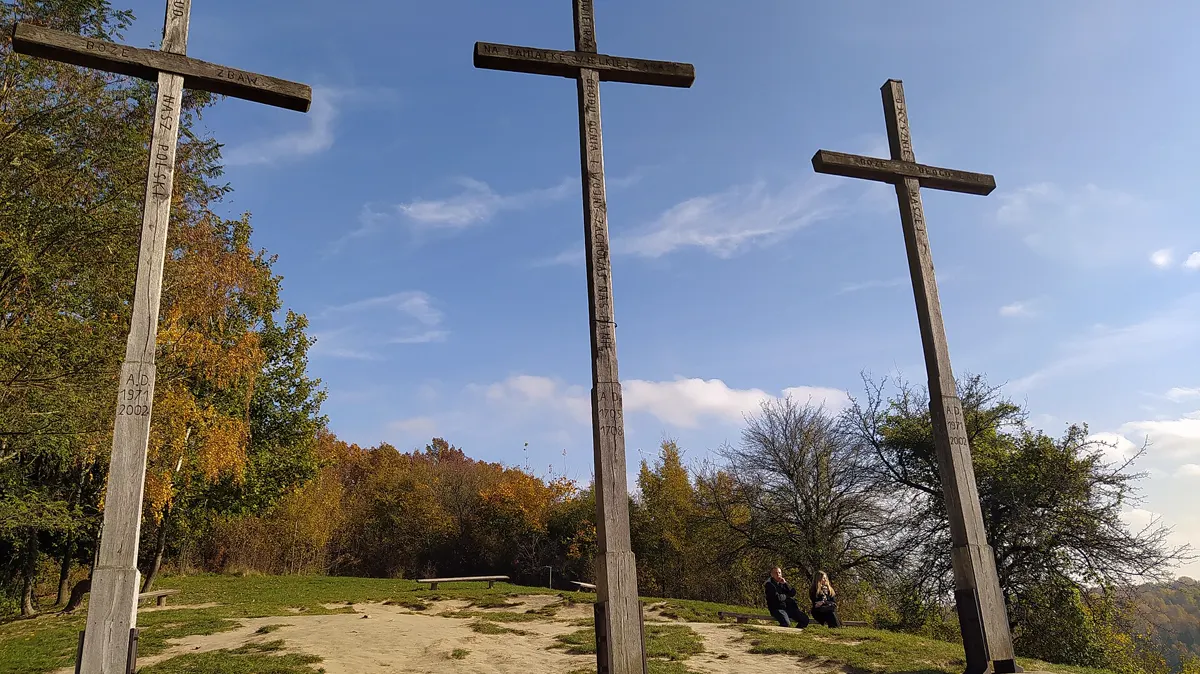
Three Crosses Mountain (Gora Trzech Krzyzy)
A short climb to three hilltop crosses raised after a 1708 plague, with the best wide view over the town and the Vistula bend.
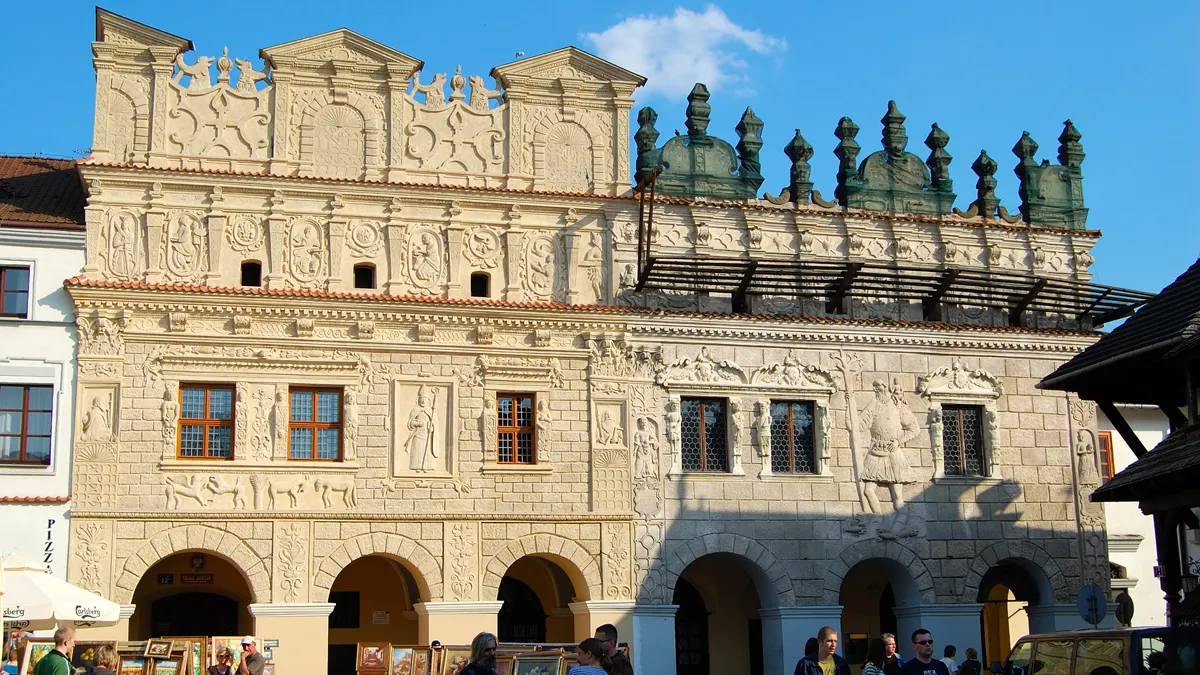
Przybyla Houses on the Market Square
Two richly carved Renaissance merchant houses of about 1615, whose facades of saints dominate the market square.
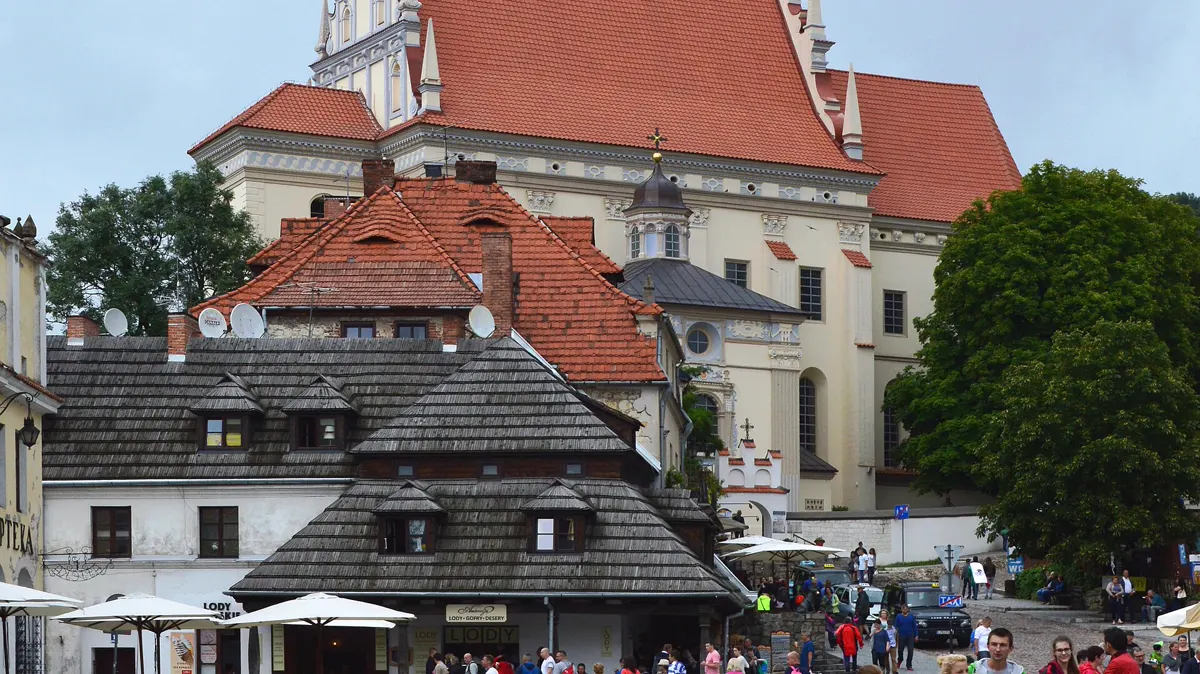
Parish Church of St John the Baptist and St Bartholomew (Fara)
The town's white-fronted parish church, rebuilt in the 1610s, home to one of Poland's oldest preserved organs.
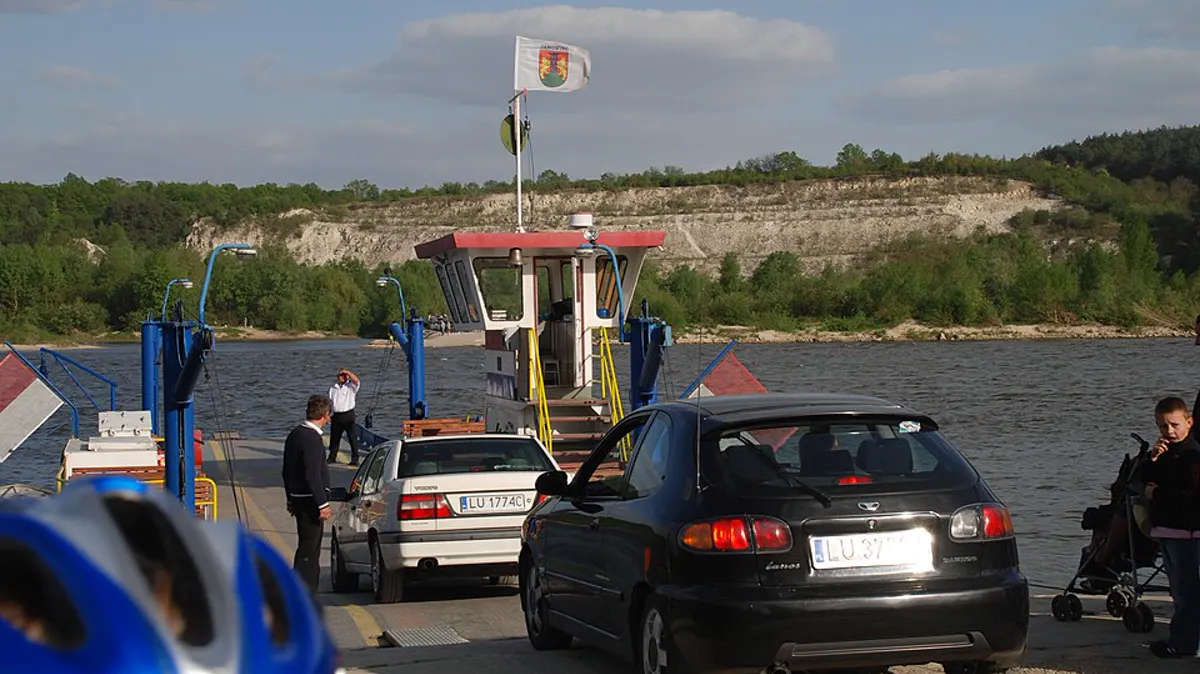
Kazimierz Dolny to Janowiec Ferry
A short Vistula ferry crossing to Janowiec and its Renaissance castle ruins, running on a route used for centuries.
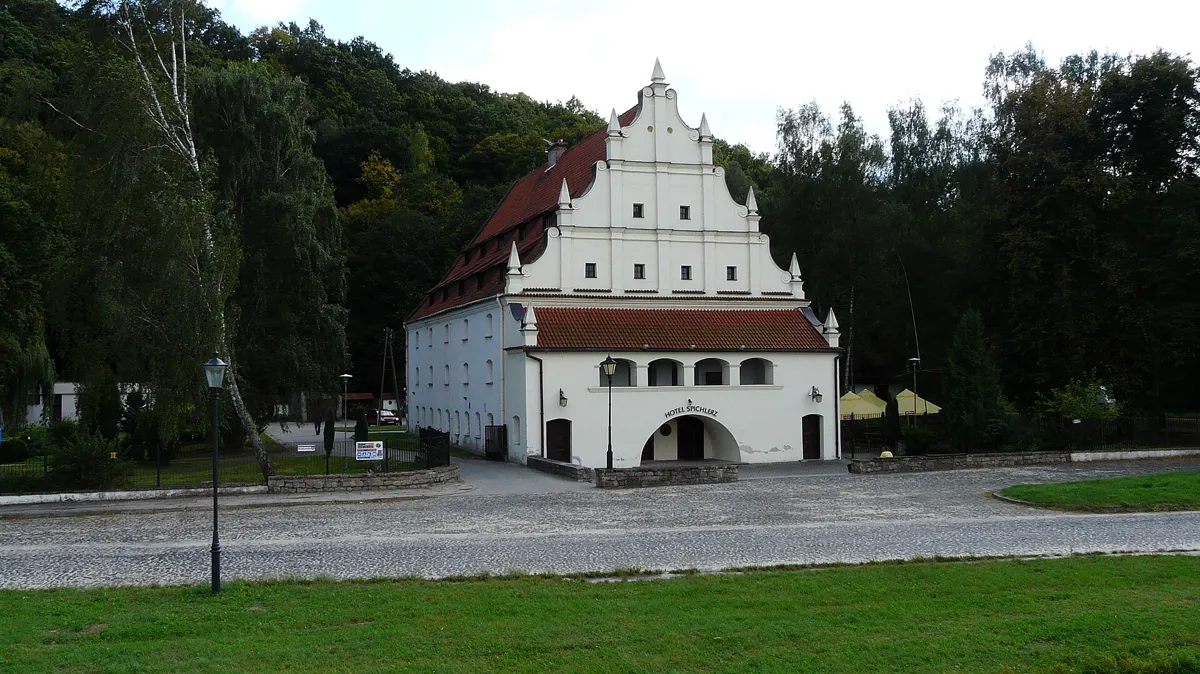
Granaries of Kazimierz Dolny
Tall Renaissance and Mannerist grain warehouses built in the 16th and 17th centuries, standing along the Vistula as a record of Kazimierz Dolny's years as a river trading port.
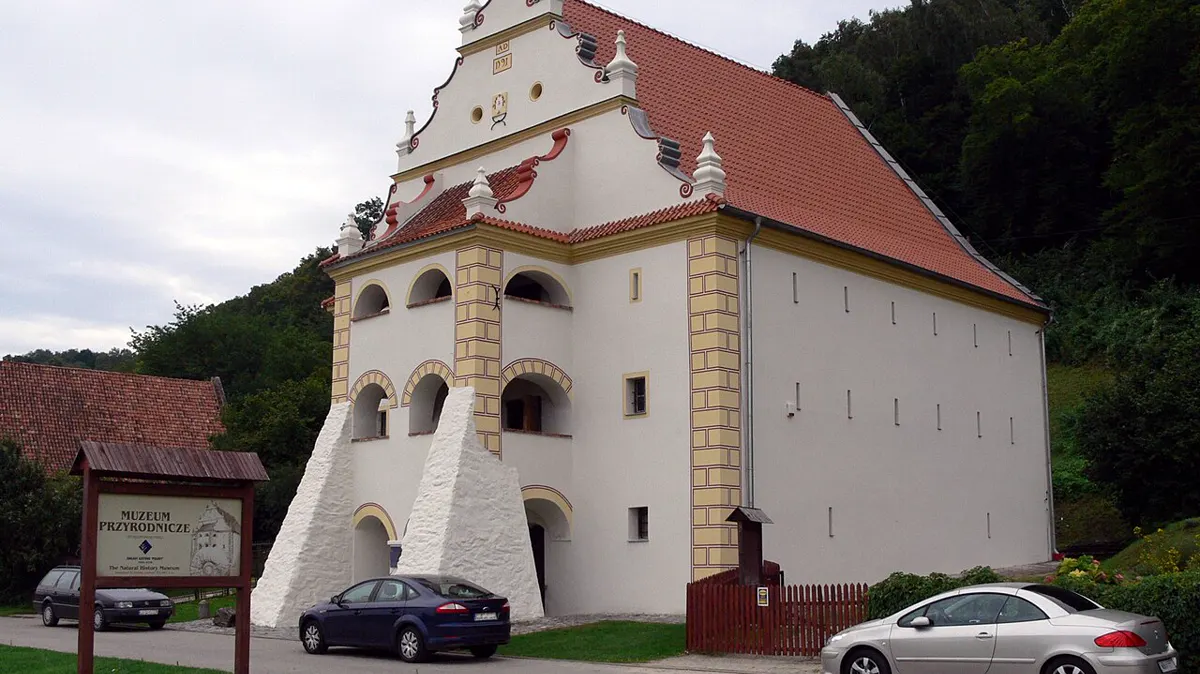
Natural History Museum (Muzeum Przyrodnicze)
A branch of the Vistula River Museum set in a late 16th-century granary on Pulawska Street, presenting the geology, plants and animals of the Vistula gorge and Kazimierz Landscape Park.
More to explore in Kazimierz Dolny
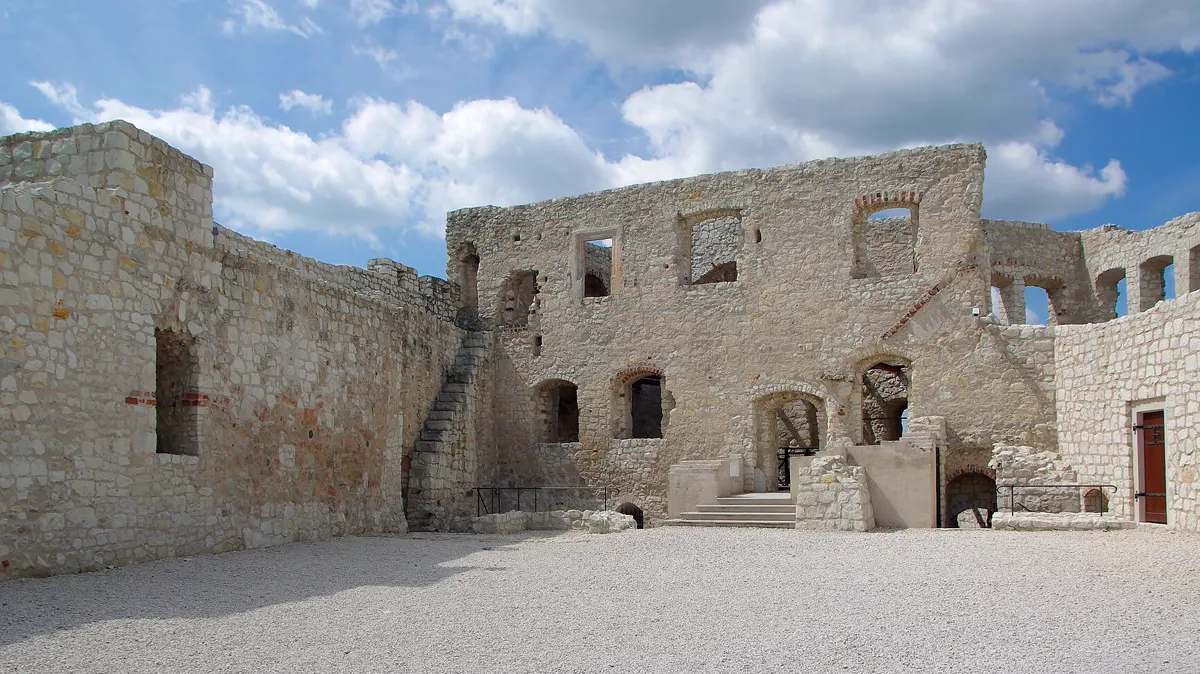
Castle
Kazimierz Dolny Castle and Tower
The limestone ruins of a 14th-century royal castle and an older hilltop tower that once watched over the Vistula ferry crossing.
Nature
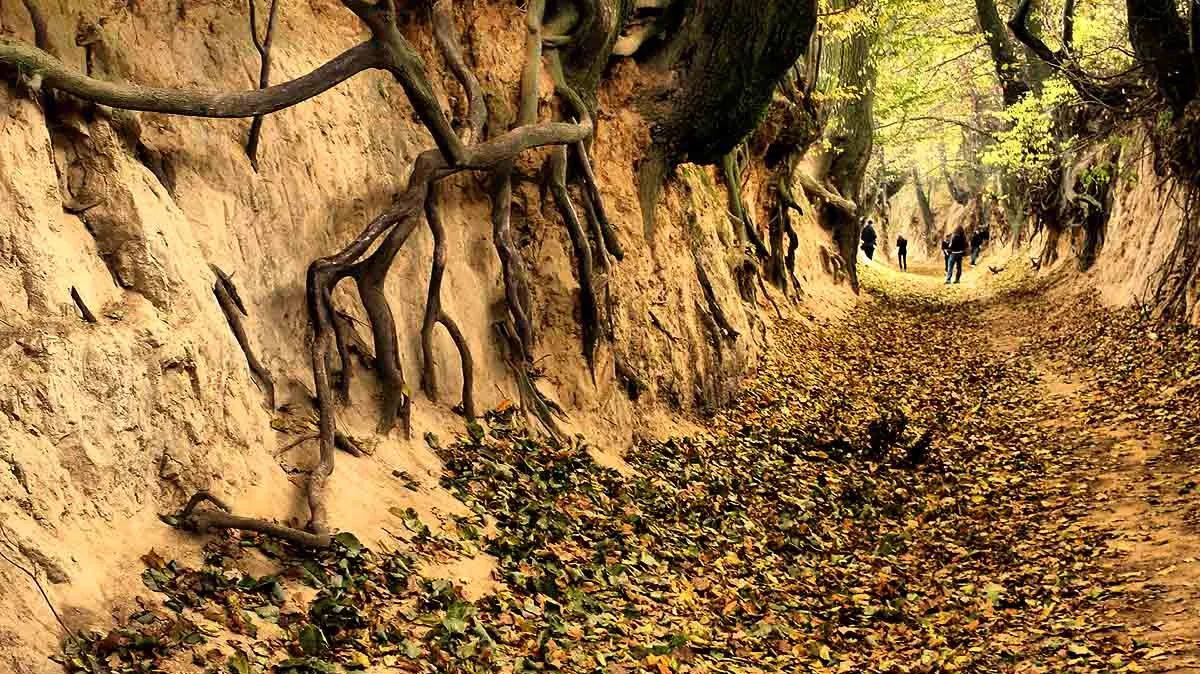
Korzeniowy Dol Gorge
A steep-walled loess ravine near the town where ancient tree roots twist out of the earthen banks along an easy path.
Museum
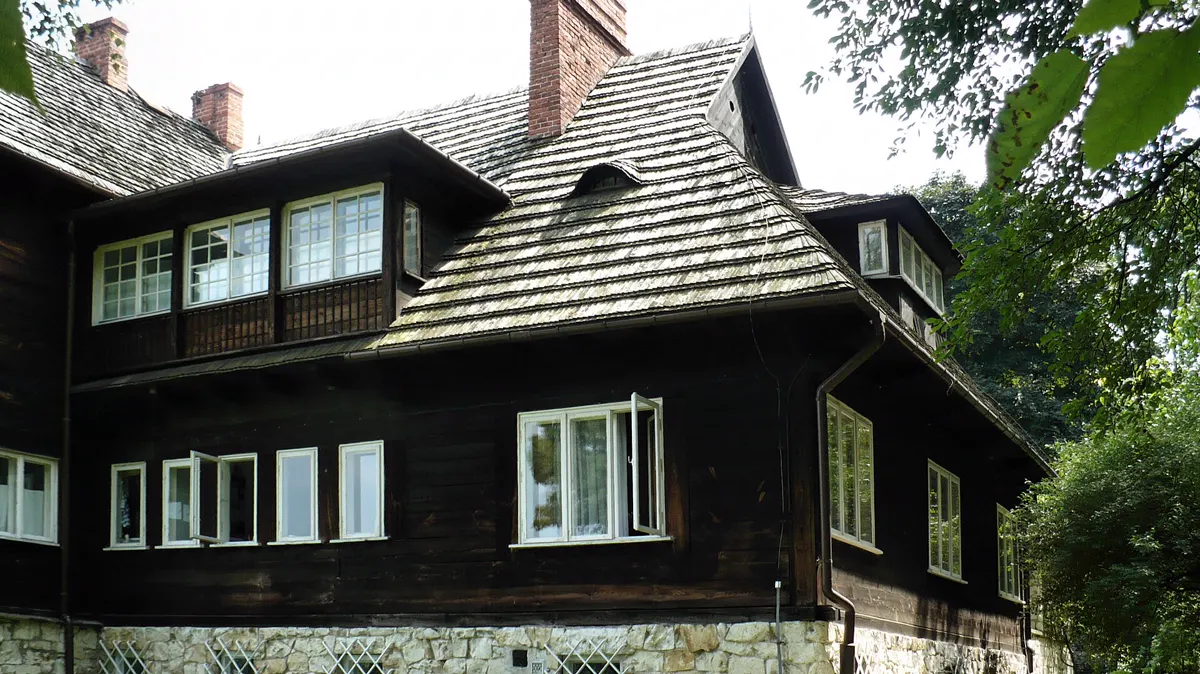
Kuncewicz House (Dom Kuncewiczow)
The preserved 1930s villa of writer Maria Kuncewiczowa, kept with its original furnishings as a literary house museum.

Restaurant
Piekarnia Sarzynski
The bakery that made the Kazimierz rooster its symbol, hand-shaping and baking the sweet yeast pastry daily.

Restaurant
Herbaciarnia u Dziwisza
An antique-filled tea room and gallery pouring a long list of teas alongside homemade cakes.

Hotel
Krol Kazimierz Hotel & SPA
A large riverside spa hotel set inside a converted 17th-century grain warehouse, with a pool and sauna complex.